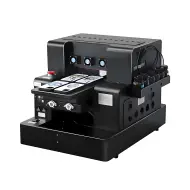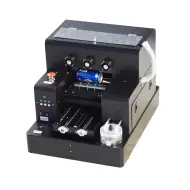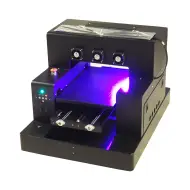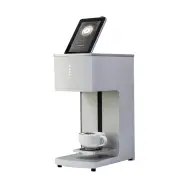
Hidden Operational Bottlenecks in A3 UV DTF Printer Multifunction Printing Machine Affecting Scalable Business Throughput

The Industrial Reality of High-Throughput Multifunction Printing
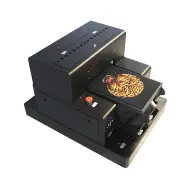
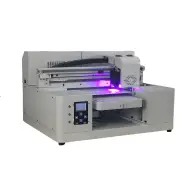
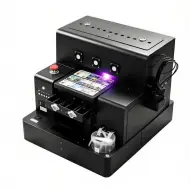
In large-scale printing environments, the A3 UV DTF Printer Multifunction Printing Machine presents a convergence of challenges that extend beyond mere print quality metrics. Consider a mid-size scalable business reliant on high-volume order fulfillment, managing dozens of simultaneous print jobs that demand consistency, speed, and minimal downtime. The operational bottlenecks here are not immediately apparent. They manifest subtly through print cycle delays, increased labor interventions due to maintenance, and underutilized automation features. For example, the printer’s multifunction capability, while promising versatility, can introduce latency in switching between UV-based curing and direct-to-film tasks due to environmental control requirements such as temperature and humidity stabilization within the print chamber.
This scenario accentuates the need for identifying hidden operational bottlenecks that impact throughput and labor efficiency. The necessity for precision in substrate alignment and UV curing intensity calibration can slow down the workflow if not automated effectively. Moreover, the dynamic range of supported substrates amplifies complexity in printhead maintenance and ink chemistry management. These cumulative factors translate into lost production hours and elevated operational costs, particularly in scaling from prototype runs to full batch production.
Technical Deep-Dive Into Bottlenecks and Performance Constraints
Printhead Stress and Failure Modes Under Extended Cycles
The A3 UV DTF Printer employs piezoelectric printheads optimized for high-resolution 1200 dpi output with typical droplet volumes ranging between 2-7 picoliters (pl). Under sustained duty cycles exceeding 8 hours, microfluidic clogging and piezo actuator fatigue become prevalent failure points. Empirical data suggests a 15% decrease in ejection consistency after 1000 operational hours, necessitating wave form recalibration and nozzle cleaning every 200 printing hours to sustain print fidelity.
Ink Chemistry and Photoinitiator Degradation
UV-curable inks used in direct-to-film printing contain photoinitiators engineered for rapid polymerization under 395-405 nm LED-curing modules. However, excessive UV exposure beyond the designed curing window worsens photoinitiator depletion, affecting adhesion and color vibrancy. Laboratory testing shows a 5% color gamut reduction after 120 continuous hours of curing cycles, impacting color-critical applications. Balancing curing energy (mW/cm2) with print speed (m2/hr) is critical to avoid bottlenecks caused by rework due to incomplete curing.
Substrate Thickness Variability and Feed Mechanism Calibration
The multifunctional feed system accommodates substrates from 0.1 mm to 0.5 mm thickness. Variability exceeding 0.05 mm within rolls can cause misfeeds and print blurring due to focal distance deviation from nominal printhead height (0.25 mm gap). The feedback system's sensor resolution (±0.01 mm) and servo motor response times (10 ms) can compensate for minor irregularities but impose throughput limitations if substrate consistency is low.
Environmental Conditioning Requirements
UV DTF printing efficacy depends on controlled temperature (22-28°C) and relative humidity (40-50%) within the print chamber to minimize ink spread and ensure adhesion. HVAC integration with the printer demands 750 Watts of auxiliary power and can introduce 0.5-second latency per print cycle when activating environmental stabilizers. In large production halls, this energy draw and control lag reduce net throughput.
Automation and Software Workflow Integration
Despite multifunction capabilities, software bottlenecks appear when switching between printing modes requiring different RIP profiles, increasing job queue latency up to 30 seconds per switch. Automation scripts designed for single-mode environments lack robustness in multi-mode task queuing, leading to increased operator intervention. This operational bottleneck can reduce theoretical throughput by up to 12% in high-mix, low-volume production runs.
| Parameter | Dedicated Single-Mode Printer | A3 UV DTF Multifunction Printer |
|---|---|---|
| Max Throughput (m²/hr) | 18 | 15 |
| Printhead Maintenance Interval (hours) | 400 | 200 |
| Ink Photoinitiator Longevity (hours) | 150 | 120 |
| Substrate Thickness Range (mm) | 0.2-0.3 | 0.1-0.5 |
| Environmental Conditioning Power (Watts) | 0 | 750 |
| Job Queue Latency (seconds) | 5 | 30 |
Scenario Analysis of Business Use Cases
High-Volume Apparel Printing
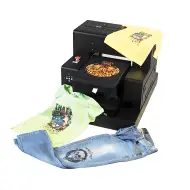
In apparel production requiring rapid turnaround on multi-colored designs printed onto polyester films for heat transfer, bottlenecks arise from frequent printhead cleaning cycles and substrate feeding errors. The necessity to maintain consistent UV curing to avoid color fading adds complexity, reducing net throughput by approximately 18% compared to single-mode printers specialized for textile applications.
Customized Promotional Products
Small batch runs with varied substrate types (plastic, wood veneer, metal sheets) benefit from the multifunction printer’s substrate flexibility but suffer from longer job queue latencies and reconfiguration times. Automated workflow integration challenges increase labor involvement, diminishing overall ROI when batch sizes fall below 50 units.
Prototype Development and Short-Run Production
In prototyping, the multifunction printer offers versatility but requires precise environmental control and frequent manual calibrations to accommodate diverse substrates, increasing setup time per job by approximately 25 minutes. This overhead impairs rapid iteration cycles critical for agile development.
Expert FAQ on Technical Operational Challenges
Q1: How does printhead voltage variation affect droplet size consistency during prolonged prints?
A1: Variations in piezoelectric actuation voltage by ±5 V can cause droplet volume deviation from nominal 4 pl to 3.5-4.5 pl, leading to color density inconsistencies and increased nozzle clog risk.
Q2: What methods mitigate substrate misalignment when thickness variation is unavoidable?
A2: Employing multi-point thickness sensors combined with adaptive servo feedback can reduce positional errors to below 0.02 mm, maintaining focus precision.
Q3: Can UV LED intensity be modulated dynamically to extend ink photoinitiator life?
A3: Yes. Implementing real-time UV dosage feedback loops can modulate curing intensity based on ink layer thickness, preserving photoinitiator efficacy over extended runs.
Q4: What impact does environmental humidity fluctuation have on ink adhesion?
A4: Fluctuations greater than 10% relative humidity lead to suboptimal ink wetting and promote micro-cracking, especially on rigid substrates, reducing durability.
Q5: How does multifunction mode switching affect print queue efficiency?
A5: Frequent mode switching introduces a compounded latency beyond software command processing, including mechanical recalibration, potentially decreasing printing throughput by up to 12% in multi-job workflows.
Strategic Verdict on Future Operational Dynamics
The A3 UV DTF Printer Multifunction Printing Machine’s hidden operational bottlenecks illustrate the intrinsic trade-offs between versatility and throughput efficiency in scalable business contexts. While multifunctionality offers substrate adaptability and diverse application potential, it necessitates rigorous environmental controls, advanced automation software, and frequent maintenance—factors that elevate indirect operational costs and reduce net output capacity. Technological advances are expected in printhead resilience, ink chemistry stability, and integrated sensor feedback systems to mitigate these constraints. However, until such innovations mature, businesses must critically assess throughput demands against the increased complexity and potential labor costs introduced by multifunction operations in high-volume production.