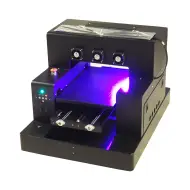
How Hidden Operational Bottlenecks Expose Limits in the TX800 Head A3 UV Flatbed Printer
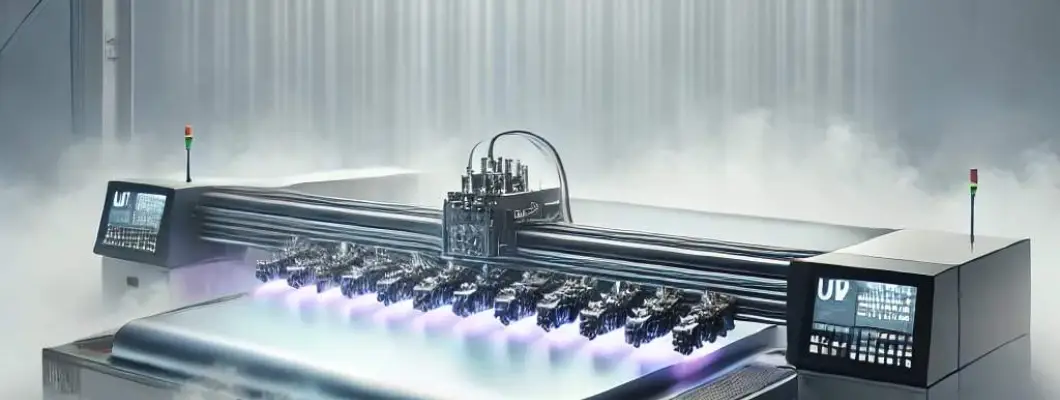
The Industrial Reality of Bottlenecks in High-Precision UV Flatbed Printing
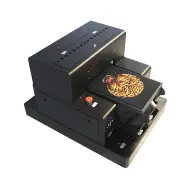
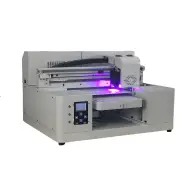
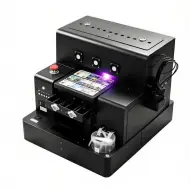
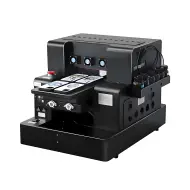
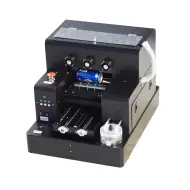
The TX800 Head A3 UV Flatbed Printer, designed to provide cutting-edge flatbed UV printing for A3-sized substrates, confronts inherent technical challenges that reveal operational bottlenecks beyond surface capabilities. In a high-throughput production environment where precision and uptime govern profitability, even minor inefficiencies cascade into significant delays and quality degradation.
For instance, manufacturers attempting to integrate the TX800 into on-demand custom print workflows quickly encounter the interaction between printhead firing frequency, ink curing cycles, and substrate handling precision. The printer’s architecture mandates a delicate balancing act: print speed versus curing time, head temperature versus ink viscosity stability, and mechanical positioning accuracy versus production volume demands.
Operational bottlenecks commonly manifest in several forms. Initial examples include suboptimal synchronization between UV LED curing modules and multi-pass print sequences. Given the A3 flatbed format, substrate changes and head recalibration cycles interrupt continuous output, reducing effective throughput. Compounding this, the complexity of ink chemistry combined with the head's piezoelectric nozzle technology introduces sporadic maintenance needs that must be scheduled to avoid print quality degradation from nozzle clogging or inconsistent droplet formation.
Moreover, the printer’s controller processing unit faces computational constraints when handling high-resolution bitmap data at full 1440 dpi resolution across dense color layers, which can stall data throughput pipelines. This shortfall translates into latency between image rendering and physical deposition, amplifying print cycle duration and imposing workflow adjustments that ripple across production lines.
These operational bottlenecks underscore a gap in performance between the TX800’s advertised specifications and the realities of continuous industrial application. Effective deployment requires understanding these constraints and planning workflow around their impact on asset utilization and maintenance scheduling, rather than solely relying on peak throughput figures.
Technical Deep Dive into TX800 Bottleneck Contributors
Printhead Thermal Management and Ink Rheology
The TX800 utilizes piezoelectric printheads optimized for UV-curable inks. Each nozzle ejects droplets typically sized between 5 and 12 picoliters (pl). Precise temperature regulation is critical since the ink’s viscosity is highly temperature-dependent, affecting droplet size and trajectory. Thermal drift above 35°C leads to increased viscosity variance of ±10%, resulting in inconsistent droplet formation and print defects.
The printhead incorporates micro-heaters to maintain temperature around 30°C. However, when operating at maximum speed—up to 12 m2/h—the cumulative heat from rapid firing demands active cooling solutions to stabilize nozzle temperature. Absence of robust thermal controls leads to spontaneous nozzle clogging, identifying a bottleneck limiting continuous operation beyond 6 hours without maintenance.
UV LED Curing Intensity Versus Speed Synchronization
The TX800 integrates UV LED arrays emitting at 395 nm with adjustable irradiance up to 1000 mW/cm2. Optimal curing demands matching ink polymerization time to print head speed to avoid uncured ink smears. At print speeds exceeding 8 m2/h, the curing time per droplet can drop below 250 ms, risking partial polymerization and surface tackiness. To compensate, the printer reduces speed or implements multiple passes—both detrimental to throughput.
Controller Data Throughput and Raster Processing
Rendering high-resolution images at 1440 dpi with 8-bit CMYK plus white ink channels creates raw raster files exceeding 100 MB per A3 sheet. The onboard processor handles these in real-time but is limited to ~60 MB/s transfer rates over PCIe lanes. When operating near maximum resolution and color layering, raster processing queues form, extending inter-print delays by up to 15%
Substrate Handling and Surface Calibration Constraints
The TX800’s flatbed mechanism offers ±0.02 mm positioning accuracy but requires calibration cycles after substrate changes or thickness variations. Each calibration takes roughly 3 minutes, non-parallelizable with printing. High-mix production environments with frequent substrate swaps experience throughput losses due to this operational overhead.
Maintenance Cycle Impact on Continuous Uptime
Nozzle health correlates directly with print quality. The TX800’s piezo nozzles require daily cleaning and biweekly deeper maintenance, involving manual flushing and alignment recalibration. Each maintenance session consumes 30–45 minutes of downtime, significantly impacting effective daily throughput if not scheduled efficiently.
| Parameter | TX800 Nominal Spec | Practical Limit Under Load |
|---|---|---|
| Max Print Speed (m2/h) | 12 | 8 (due to curing constraints) |
| Nozzle Temperature Stability (°C) | 30 ±2 | 30 ±5 under heavy use |
| Raster Data Throughput (MB/s) | 60 | 45 (due to bus contention) |
| Calibration Time per Substrate (min) | 3 | 3 (static) |
| Maintenance Downtime (min/day) | 30 | 45 |
Scenario Analysis of Operational Bottlenecks in Business Use Cases
Case 1 High-Volume Packaging Prototyping
A packaging design house printing multi-layer proofs on rigid plastic substrates faces limitations when rapid color iteration is needed. The bottleneck in UV curing at high speeds forces the team to reduce throughput, increasing turnaround times. Frequent substrate changes amplify calibration delays, offsetting nominal speed gains and raising labor costs.
Case 2 Fine Art Color Proofing
An art reproduction studio demands extreme color fidelity on diverse media. The printer’s precision head thermal management and raster processing constraints limit batch size per session, requiring multiple runs and increasing consumable waste. Maintenance intervals must be strictly adhered to, disrupting tight deadlines.
Case 3 On-Demand Promotional Item Production
A promotional goods supplier uses the TX800 for short-run customization on polycarbonate panels. Despite the printer’s advertised speed, bottlenecks in data processing and substrate calibration lead to unpredictable throughput variability, complicating job scheduling and customer delivery promises.
Expert FAQ on TX800 Operational Bottlenecks
Why does increasing print speed degrade UV curing quality?
UV polymerization demands a minimum energy dose. Increasing speed reduces exposure time per droplet, resulting in uncured areas. The TX800’s LED intensity maxes out at 1000 mW/cm2, limiting curing speed gains without sacrificing quality.
Can printhead temperature variation be actively controlled during operation?
Partially yes. The TX800 employs micro-heaters and passive cooling but lacks dynamic active cooling tailored to printing cycles, making temperature spikes inevitable under continuous operation.
What impact does raster data complexity have on real-time throughput?
Complex images with heavy color layering increase file size, causing longer buffer processing times inside the controller, which introduces latency between data receipt and nozzle firing.
Is substrate calibration automatable for faster transitions?
The current flatbed design requires manual or semi-automated calibration; full automation is unfeasible due to mechanical tolerance checks, making calibration a fixed bottleneck.
How critical is maintenance scheduling for maximizing uptime?
Planning maintenance within low-demand periods is vital. Unplanned nozzle clogs degrade print quality quickly. Proactive maintenance minimizes defective output but reduces instantaneous uptime.
Strategic Verdict on TX800 Operational Bottlenecks
The TX800 Head A3 UV Flatbed Printer’s technical architecture positions it between prosumer and industrial realms. Operational bottlenecks related to curing kinetics, thermal management, data processing, and substrate handling expose the gap between nominal print rates and sustainable throughput in real-world environments. Integrators must recognize these performance constraints as intrinsic rather than incidental.
Future iterations would benefit from enhanced active thermal controls, accelerated UV LED intensities, and smarter raster pipeline optimization to narrow this gap. Until then, throughput gains come at the expense of reliability and quality consistency, enforcing a conservative operational envelope for high-precision industrial printing.