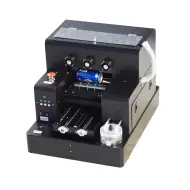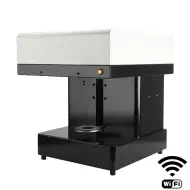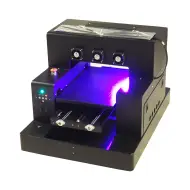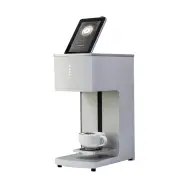
Lifecycle Maintenance Costs Reveal Operational Realities of the 4 Cups Coffee Printer Selfie Photo Food Printer
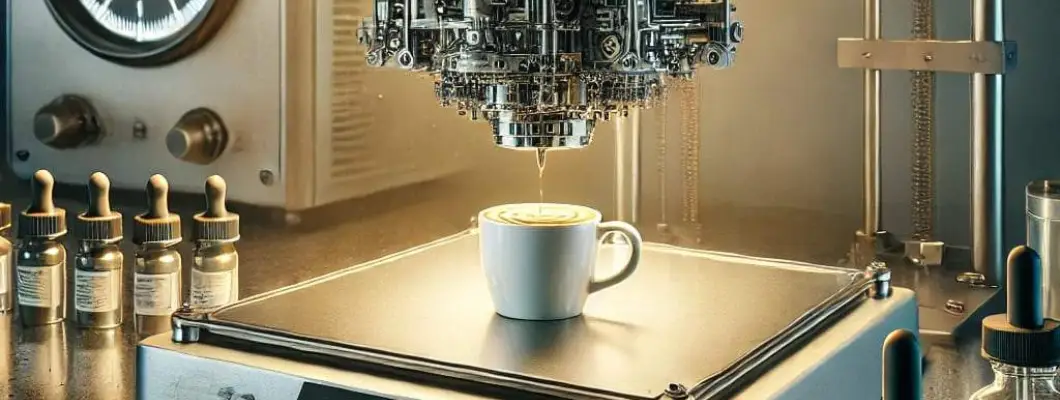
The Industrial Reality of Maintaining Precision Food Printing in a Daily Coffee Shop Setting
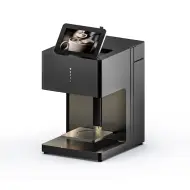
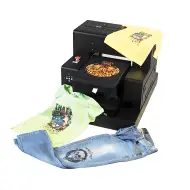
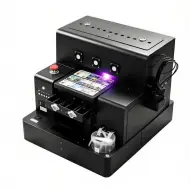
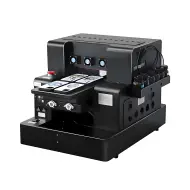
Consider a high-traffic coffee shop integrating the 4 Cups Coffee Printer Selfie Photo Food Printer into its daily service. The allure of edible selfie photos atop cappuccinos promises a unique customer experience, yet behind this innovation lies a complex matrix of ongoing maintenance challenges. The printer’s delicate piezo inkjet mechanisms interact with viscous edible inks, demanding precise operational consistency to maintain resolution and color fidelity at micron scales.
Every day, the printer must operate in an environment prone to coffee steam, temperature fluctuations near 65°C, and frequent start-stop cycles aligned with customer demand. Such conditions accelerate ink residue buildup within printheads, leading to nozzle clogging, diminished dpi resolution, and inconsistent droplet ejection volumes, typically measured in picoliters (pl). Furthermore, the food-safe ink chemistry presents unique degradation kinetics, necessitating strict adherence to storage and usage timelines.
Lifecycle costs therefore extend far beyond initial acquisition; consumables like specially formulated food inks and precision cleaning solutions incur repeated expenditure. The printer’s calibration routines, often manual and time-consuming, must be integrated into daily workflows, imposing labor overheads. Without rigorous preventive maintenance, the asset risks print quality degradation, impacting customer satisfaction and introducing hidden downtime costs.
Printhead Wear and Inks Chemistry Influence on Lifecycle Costs
Examining the printhead components reveals that piezoelectric elements operate near their mechanical fatigue limits due to constant pressure modulation to achieve droplet precision under 20 pl. The cumulative impact of thermal cycling from ambient 20°C to operational highs and the chemical aggressiveness of food-grade dyes promotes early microfracture formation in piezo ceramics within roughly 2000 operational hours.
Ink chemistry further complicates maintenance. Edible inks, often based on aqueous dispersions with suspended colorant particles under 100 nm, tend to settle or coagulate if not agitated continuously. This increases the risk of particulate blockages in micron-scale nozzles (30-50 μm diameter). Analysts estimate that improper ink handling increases clogging frequency by approximately 30%, translating to more frequent printhead cleaning cycles and accelerated component replacement.
Comparative Hardware Metrics Against Industrial Counterparts
| Parameter | 4 Cups Coffee Printer | Industrial Food Printer |
|---|---|---|
| Print Resolution | 600 dpi | 1200 dpi |
| Droplet Volume | 15-20 pl | 8-12 pl |
| Printhead Longevity | 2000 hours | 5000+ hours |
| Daily Maintenance Time | 45 minutes | 15 minutes |
| Ink Viscosity Range | 5-15 cP | 3-10 cP |
| Operational Temperature Range | 15-65 °C | 10-50 °C |
This comparison indicates the 4 Cups Coffee Printer self-adjusts for a wider operational temperature range but with compromises in throughput and higher maintenance due to lower durability printheads and higher ink viscosity tolerances impacting nozzle clog risk.
Mathematical Model of Maintenance Impact on Throughput
Assuming a daily operational window of 8 hours and maintenance requirements of 45 minutes daily, the effective printing time is reduced to 7.25 hours. If the printer produces an average of 4 cups per 10 minutes, the maximum throughput without maintenance would be 192 cups per day. Factoring maintenance, throughput decreases to approximately 174 cups per day, a 9% reduction.
Let M be daily maintenance duration (in hours), H total daily hours, and R rate cups/hour without downtime:
Cups per day = R * (H - M)
Where R = 24 cups/hour (4 cups/10 mins).
Extended maintenance or unexpected printhead replacement events (approximate frequency: twice annually, each 2 hours offline) further degrade effective annual throughput, impacting revenue streams the business relies upon.
Preventive Maintenance Scheduling and Operational Bottlenecks
Given the complexity of printhead cleaning—including ultrasonic baths and flushing cycles—and calibration involving color profile realignment, a preventive maintenance schedule is critical. A weekly regimen of 3 hours vs a reactive repair approach averaging 8 hours downtime shows clear advantages, reducing risk of quality failures and minimizing total cost of ownership.
The printer’s environmental controls also play a role; ambient humidity above 60% accelerates ink drying inconsistencies requiring more frequent calibration to compensate for droplet spread on foam surfaces. HVAC integration for humidity control, while adding initial infrastructure strain and CAPEX, reduces maintenance frequency by an estimated 20% annually.
Scenario Analysis of Business Impact from Maintenance Realities
Use-Case 1: Boutique Coffee Shop with High Daily Volume
For a shop serving 150+ customized cups daily, the 9% throughput reduction due to maintenance translates directly into customer wait times and potential lost sales. Labor hours must be allocated for daily upkeep, increasing operational overhead. However, the customer experience differentiation offers premium pricing potential, partially offsetting maintenance costs.
Use-Case 2: Event-Based Mobile Coffee Service
Mobility and variable ambient conditions introduce challenges in printhead reliability. Frequent recalibration and on-site cleaning extend downtime, which in short-event windows equate to significant lost revenue. Asset longevity is compromised by transport shocks, necessitating robust maintenance protocols and spare parts inventory.
Use-Case 3: Large Franchise Integration
Incorporating multiple units across franchises demands centralized maintenance protocols and training. The cumulative maintenance labor cost scales linearly with printer count, impacting ROI. Standardization of ink supply chains and environmental controls becomes critical to maintain consistent quality across locations.
Expert FAQ on Maintenance Complexities in Food Printing
1. How does ink viscosity variation affect printhead lifespan?
Higher viscosity inks cause increased shear stress on piezo elements, accelerating mechanical fatigue and increasing clogging rates, leading to printhead replacement up to 25% sooner.
2. Can thermal cycling be mitigated via hardware design?
Yes, integration of active cooling systems with Peltier elements reduces temperature gradients, extending piezo crystal longevity by up to 40%, albeit at added power consumption.
3. What are the risks of inadequate daily nozzle cleaning?
Residual ink dries within nozzle apertures causing blocked jets, spotty print, increased repair frequency, and inconsistent color density, undermining customer experience.
4. How does ambient humidity interact with edible ink performance?
Higher humidity slows drying but can cause droplet spreading on foam surfaces, affecting image sharpness. It necessitates adjustments in print speed and ink formulation.
5. Are automated self-cleaning mechanisms effective in these printers?
They reduce manual labor but cannot fully replace ultrasonic and chemical cleaning cycles. Their efficacy depends on ink composition and operating environment.
Strategic Verdict on Lifecycle Maintenance Costs in High-Precision Food Printing
The 4 Cups Coffee Printer Selfie Photo Food Printer represents an innovative confluence of piezoelectric printhead technology and edible ink chemistry, tailored for consumer-facing applications demanding micron-level precision under challenging environmental conditions. However, its lifecycle maintenance costs, influenced heavily by printhead wear, ink chemistry, and ambient operational factors, dictate a careful balancing act between asset uptime and print quality.
Businesses deploying this technology must anticipate significant labor allocation toward preventive maintenance and infrastructure adaptations to environmental factors such as humidity and temperature. Comparative analysis with industrial-grade printers highlights trade-offs between initial capital outlay and ongoing maintenance expense. Moving forward, innovations targeting printhead materials resilient to food-grade inks, automated cleaning regimes, and refined edible ink formulations offer the most promising pathways to optimizing operational efficiency and extending asset longevity in this niche segment.