Balancing Family Legacy With Modern Print Innovation Challenges and Realities
The Industrial Impact of Balancing Traditional Legacy with Modern Innovation in Print
The printing industry remains one sector where the collision between entrenched legacy practices and modern print technology creates both operational challenges and tangible opportunities. Ashley Cooney's leadership journey at Hudson Printing underscores a critical engineering reality: managing multi-generational family-run print businesses involves more than just adopting new machinery; it demands seamlessly integrating cutting-edge production workflows into legacy infrastructures to optimize throughput without sacrificing quality or cultural trust.
Hudson Printing exemplifies a complex, multi-service print operation encompassing digital printing, wide-format, bindery, fulfillment, embroidery, fabrication, and promotional products. The operational complexity there reflects industrial print realities where varied printing disciplines coexist, requiring diversified equipment assets and skill sets on the shop floor. Each service line carries distinct physical process parameters—digital color management demands precision inkjet control, while fabrication requires robust mechanical handling and finishing precision. Managing these under one roof testingly balances throughput optimization, maintenance cycles, color consistency, and labor skill adaptation.
On shop floors across the industry, the integration of digital and traditional print technologies influences equipment uptime and failure modes. The industrial impact of managerial decisions in technology adoption directly shifts throughput capabilities and operational costs. Moreover, family businesses face additional interpersonal complexities where trust and leadership transitions intertwine with technology change. Ashley Cooney's experience reveals that technical upskilling and process ownership from the ground level remain unavoidable for sustainable modern print innovation. The lesson for the broader sector is clear—technological upgrades must synchronize with workforce development and cohesion to prevent disruptions.
Technical Anatomy of Modern Multi-Service Print Operations
1. Diversified Print Technology Integration
Hudson Printing's operation spans various print technologies, each with specific technical demands and throughput profiles. Digital printing leverages advanced production inkjet heads with high dpi (dots per inch) density and fast scan rates, enabling short-run, variable-data print jobs with rapid turnaround. Wide-format printing employs solvent, UV LED, or latex inks dispensed via precision print heads on substrates that range from vinyl wraps to fine art papers, demanding exacting media transport controls and ink curing systems.
2. Bindery and Finishing Automation
Post-print processes, including binding and finishing, introduce mechanical complexity with automated cutters, folders, and stitching machines. Achieving synchronization between digital print speed and bindery processing rate requires precise production scheduling and equipment maintenance, ensuring minimal bottlenecks and defect rates. Advanced sensors and control loops in finishing machines measure paper thickness, alignment accuracy, and binding tension.
3. Fulfillment and Inventory Technologies
Incorporating fulfillment services necessitates backend integration for order management, inventory tracking, and logistics coordination. Barcode scanning, RFID tagging, and automated packing systems facilitate efficient dispatching of printed materials. Technically, this requires robust IT infrastructure and software interfaces linked to the print production environment.
4. Embroidery and Fabrication Digital Control
Hudson’s embroidery and fabrication lines demand CNC machinery combined with digital design software, blending traditional craftsmanship with computer numerical control for precision apparel decoration and rigid product fabrication. This convergence adds multi-modal production challenges—handling textile materials versus rigid substrates under one operational umbrella.
5. Cross-Departmental Data and Quality Management
Modern print innovation depends on integrative workflow software platforms that link prepress, print, finishing, and fulfillment departments through shared job tickets, color profiles, and client specifications. Measurement devices for color accuracy (spectrophotometers), substrate weight, and finish quality feed into these systems for real-time quality assurance and job tracking.
| Technology Segment | Typical Resolution (dpi) | Throughput | Operational Challenges | Integration Complexity |
|---|---|---|---|---|
| Production Inkjet Digital Printing | 600-1200+ | High speed (up to 3000 ft/min) | Ink stability, nozzle maintenance | Medium to High |
| Wide-Format UV/latex | 300-1080 | Medium speed | Media compatibility, curing | Medium |
| Bindery Automation | N/A | Variable (per job) | Mechanical jams, alignment | Medium |
| Embroidery CNC | N/A | Low to Medium | Material handling, thread tension | High |
| Fulfillment Automation | N/A | High | Inventory accuracy, software sync | High |
Financial and Scaling Scenarios Shaping ROI in Multi-Service Print Shops
Small Print Shop Scenario
A small-scale print shop considering expansion into diversified services faces capital allocation dilemmas. The upfront investment in digital printing equipment is capital intensive (often exceeding $250,000), with additional spending on bindery and finishing tools. ROI depends heavily on efficient workflow integration to minimize downtime and manual labor costs. For family businesses, internal leadership transitions may add friction to adopting costlier digital-first equipment. Thus, strategic pacing of modern print innovation matters—incremental upgrades aligned with staff training can preserve cash flow while gradually enlarging service capabilities.
Mid-scale Multi-Department Operation
At this level, companies resemble Hudson Printing, combining multiple print disciplines. Their ROI calculus shifts to optimizing operational throughput and minimizing bottlenecks across departments. Sophisticated IT systems for job tracking and color management have upfront and ongoing maintenance costs but distinctly improve yield and reduce error reprints. Workforce training—while initially costly—produces gains in error detection and maintenance cycles. The expense of technological upgrades must be justified by increased client capacity and market reach, focusing on higher-margin personalized print products.
Large Industrial Hub
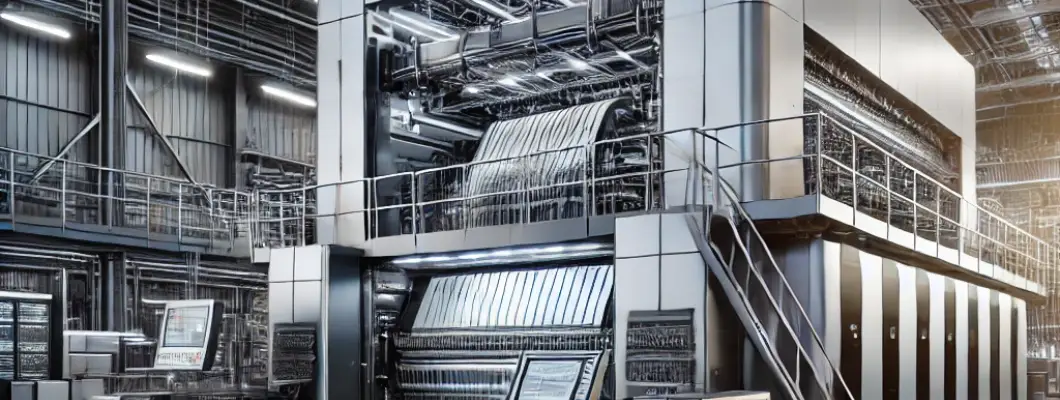
Industrial print hubs invest heavily in high-throughput print presses, robotic material handling, and state-of-the-art finishing modules. Their capital expenditure ranges in the multimillions, factoring in hardware scalability and production redundancy to avoid downtime through swift maintenance substitution. They benefit from economies of scale but face risks in rapidly depreciating equipment amid fast technological shifts. Leveraging platforms like GNFEI.COM for benchmarking print production hardware offers insights into procurement and operational efficiency. Their ROI models emphasize throughput maximization per shift and predictive maintenance to avoid catastrophic production halts.
Expert Q&A Addressing High-Level Operational and Technical Concerns
Q1: How can family-run printing businesses balance legacy workflow familiarity with adopting disruptive print technologies?
Answer: Success requires transparent communication and phased adoption. Technologically, integrating new equipment should not abruptly replace existing processes but rather complement them. Training programs focusing on upskilling from the production floor upwards help reduce resistance. Leveraging incremental automation and pilot testing new print hardware within less critical workflows can operationalize change without disrupting core outputs.
Q2: What are the critical technical considerations when combining digital inkjet and traditional wide-format printing within a single facility?
Answer: The main factors include substrate compatibility, differing ink chemistries (aqueous vs. solvent/UV), drying or curing technologies, and color profile standardization. Coordinating print queues to avoid cross-contamination of inks and maintenance regimes to prevent nozzle degradation are essential. Advanced color management software and RIP (Raster Image Processor) tools must be configured to accommodate multi-source print drivers.
Q3: How does leadership style affect operational productivity in print environments transitioning to automation?
Answer: Leadership that encourages collaborative problem-solving and empowerment fosters smoother workflow transition. Micromanagement can impair innovation adoption by stifling employee initiative. Instead, creating accountability frameworks and encouraging cross-functional team development addresses both technical and cultural inertia effectively.
Q4: What role does real-time data reporting play in optimizing print shop maintenance cycles?
Answer: Real-time data analytics from print heads, finishing machinery sensors, and environmental controls enable predictive maintenance. By monitoring metrics like nozzle health, tension strain, and temperature variations, shops can schedule downtime during non-peak hours, reducing unexpected failures and prolonging equipment life.
Q5: In multi-service print operations, how do you mitigate the risk of operational silos reducing overall efficiency?
Answer: Implementing integrated MIS (Management Information Systems) and job workflow automation connects all departments under a single operational umbrella. Standardizing communication protocols and data sharing across print, bindery, and fulfillment prevents delays. Cultivating a culture of shared objectives with cross-training personnel supports smoother production handoffs.
Strategic Verdict on Sustaining Family Legacy Through Print Innovation
Balancing a family legacy with the relentless pace of modern print innovation demands a strategic approach combining technical acumen, operational discipline, and cultural leadership. Businesses like Hudson Printing illustrate that technical longevity arises from embracing diversified service portfolios powered by scalable and interoperable print technology platforms. Operational success hinges on workforce empowerment paired with rigorous maintenance and quality controls. Adopting digital print equipment, wide-format solutions, and finishing automation delivers competitive differentiation when integrated thoughtfully with legacy assets.
For print shops navigating this nexus, resources such as GNFEI.COM provide vital technical benchmarks and hardware specifications to guide procurement and lifecycle management decisions. Ultimately, a transparent, ground-up educational approach and cultural adaptability fortify the resilience of family-owned print businesses into the industrial future, ensuring a continued fusion of heritage with innovation.