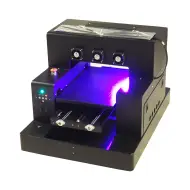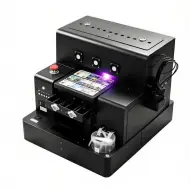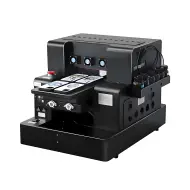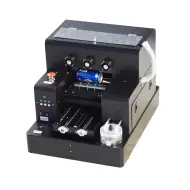
Lifecycle Maintenance Costs and Workflow Realities of A3 T-shirt Printing Machines with DTG and DTF Capabilities
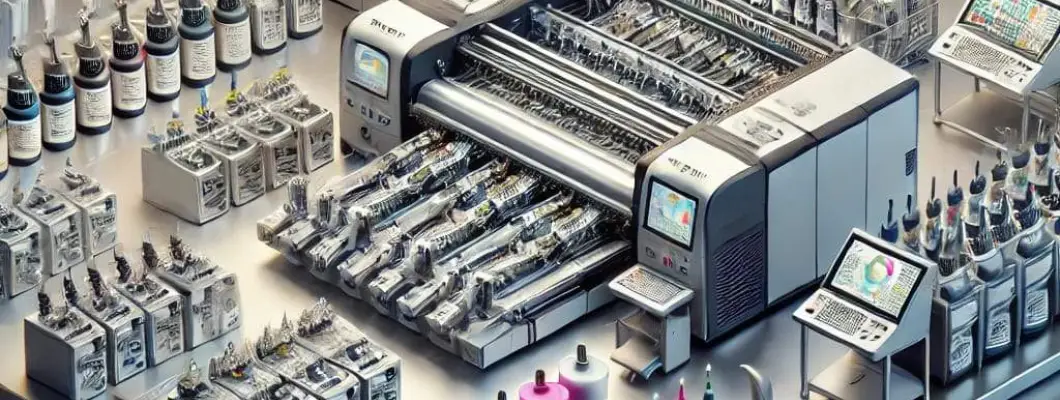
The Industrial Reality of Maintaining A3 DTG and DTF Printing Machines
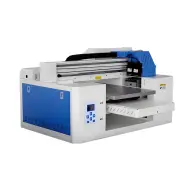
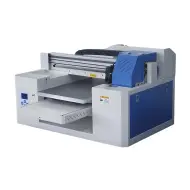
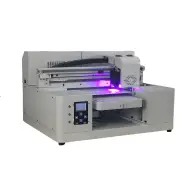
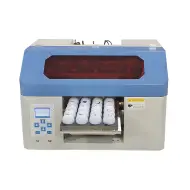
When integrating an A3 T-shirt printing system capable of both Direct-to-Garment (DTG) and Direct-to-Film (DTF) workflows into production environments, the lifecycle maintenance demands present a critical operational dimension beyond initial hardware costs. Unlike traditional analog textile printing, these digital systems combine precision inkjet technology with complex ink chemistries, requiring proprietary maintenance cycles to ensure consistent output quality.
The dual-mode nature—DTG printing ink directly onto fabric versus DTF printing onto transfer films—introduces differentiated wear patterns and consumable lifespans that must be accounted for in maintenance scheduling. Precision printheads operate with micron-scale droplet placement at resolutions typically exceeding 1200 dpi, placing high mechanical and chemical stress on nozzle assemblies. These factors accelerate clogging and degradation, particularly in mixed-use scenarios where ink formulations vary between water-based reactive inks used in DTG versus solvent or polymer-based inks in DTF.
Consider a mid-sized apparel production line utilizing this A3 printer for limited-run custom orders. Daily uptime expectations of 8 to 10 hours push the envelope on recommended head usage cycles, exposing latent issues in automated cleaning protocols and replacement parts availability. The necessity of frequent maintenance—often daily nozzle checks and weekly deep cleans—can reduce net throughput, increase operational costs, and strain technical staff resources. Furthermore, the environmental conditions of textile manufacturing floors, including dust and ambient temperature fluctuations, accelerate hardware depreciation and complicate warranty adherence.
Asset depreciation does not follow a linear trajectory here; printhead degradation can result in sudden quality drops requiring mid-cycle component swaps. Without meticulous tracking of cumulative ink volume output and operational hours, unplanned downtime becomes frequent. Thus, lifecycle maintenance cost analysis extends beyond routine service fees into predictive asset management incorporating real-time sensor telemetry and ink consumption data.
Technical Deep-Dive into Maintenance Costs and Printhead Physics
Printhead Architecture and Failure Points
The A3 DTG and DTF printer leverages piezoelectric inkjet printheads with nozzle diameters in the range of 20 to 40 micrometers, precision-engineered for rapid droplet ejection at up to 12,000 drops per second per nozzle. Given a 600 dpi native resolution horizontally and up to 1200 dpi vertically, the density of nozzles can exceed 180 across the print width.
The primary failure modes are nozzle clogging due to ink particle sedimentation and mechanical wear of the piezo elements caused by continuous flexing under voltage cycling. The chemical composition of inks—aqueous pigment suspensions for DTG and polymer adhesives for DTF—interact differently with printhead wettability surfaces, accelerating degradation at rates varying by approximately 15% between modes.
Cleaning Regimens and Fluid Dynamics Considerations
Routine maintenance employs both passive and active cleaning. Passive involves wiping and capping stations that prevent ink drying between jobs, while active includes flushing solvents through the nozzle paths. The fluid dynamics of ink flow demand that cleaning solvents have matched surface tension and viscosity to avoid damage; typical solvents have viscosities near 1.5 mPa·s and surface tensions around 30 mN/m.
Failure to maintain optimal cleaning intervals results in exponential clogging risk. Based on operational data, performing a forced cleaning cycle after every 10 hours of run-time limits nozzle failure incidence to below 2%, whereas skipping leads to increases above 7% within 5 operational days.
Lifespan Modeling with Hypothetical Usage Math
Assuming an average daily throughput of 200 garments, each requiring an average ink volume of 3 ml, the printhead experiences 600 ml of total ink flow daily. Over a 250-day annual cycle, ink volume reaches 150 liters. Manufacturer test data suggests nozzles maintain reliable operation up to 120 liters before failure probability rises steeply.
This indicates that printhead replacement intervals should be scheduled at approximately 200 operational days or 24 months, whichever comes first, under consistent usage conditions. Accelerated usage or poor maintenance can halve this lifespan. This creates a significant asset depreciation curve that must be budgeted capital-wise and operationally.
Hardware Comparison Table
| Specification | DTG Printhead | DTF Printhead |
|---|---|---|
| Nozzle Diameter (µm) | 20 | 30 |
| Ink Type | Aqueous Pigment | Polymer-based Adhesive |
| Max Resolution (dpi) | 1200 | 600 |
| Optimal Cleaning Interval (hours) | 10 | 8 |
| Estimated Lifespan (operating days) | 200 | 180 |
Ink Chemistry Impact on Maintenance Frequency
The difference in ink viscosity and particulate load requires modified cleaning protocols between DTG and DTF modes. DTF inks have a higher polymer concentration leading to faster nozzle residue buildup, necessitating more frequent cleaning cycles and solvent usage, increasing operational costs by an estimated 12% over DTG-only workflows.
Scenario Analysis Demonstrating Operational Impact
Use Case 1 Mid-Sized Custom Apparel Business
Running 10-hour shifts with average batch sizes of 150 garments, the maintenance overhead causes a 12% reduction in throughput over 12 months due to printhead wear and cleaning downtime. Factoring in replacement printhead costs of $850, and solvent expenses of $650/year, total maintenance adds up to 18% of annual operational costs.
Use Case 2 High-Precision Artisan Studio
Here, seasonal high-detail runs emphasize DTG mode. Strict adherence to cleaning protocols keeps printhead lifespan close to optimal 200 days. However, the studio absorbs downtime costs at $45/hour due to low redundancy, making maintenance windows strategically critical to avoid productivity penalties exceeding 5% of revenue.
Use Case 3 Industrial Scale Transfer Production Facility
In a 24/7 production environment, the DTF printhead requires replacement every 180 days with automated cleaning systems to reduce manual labor. Maintenance labor costs decrease but solvent consumption rises by 20%. Downtime impacts are mitigated by redundant printhead arrays, assuring >95% uptime but increasing CAPEX.
Expert FAQ on A3 DTG and DTF Printer Maintenance
How does mixed-mode printing affect printhead lifespan?
Switching frequently between DTG and DTF inks without tailored cleaning accelerates nozzle clogging due to incompatible ink residues, reducing lifespan by up to 30%. Dedicated cycles or purging protocols per mode mitigate this.
What environmental controls improve asset longevity?
Maintaining a dust-free environment with temperature stabilized between 20–25°C and relative humidity of 45–55% prevents ink drying variations and mechanical stress on printhead components.
Are third-party inks viable without increasing maintenance?
Non-certified inks often have inconsistent particle sizes and viscosities, causing increased clogging frequency and voiding warranties. Their use typically doubles cleaning cycle frequency.
What are the main cost drivers in solvent consumption?
Solvent usage hinges on cleaning cycle frequency and volume; excessive forced cleaning increases volumes by 25–30%, while insufficient cleaning increases nozzle failure risk, leading to costly replacements.
Can predictive maintenance software integrate with these printers?
Advanced telemetry modules track ink consumption, printhead temperature, and cycle counts. When paired with AI-driven analytics, they enable predictive maintenance scheduling to minimize downtime and extend component life.
Strategic Verdict on Maintenance and Lifecycle Realities
The multifunctional A3 DTG and DTF printing technology combines diverse ink chemistries and precision mechanics into a single asset, complicating lifecycle maintenance beyond conventional printing hardware. Operational success depends on rigorous maintenance discipline, environment control, and intelligent asset management. Businesses must incorporate maintenance cost projections into their financial planning, accepting that printhead and consumable replacements form significant ongoing expenditure rather than one-time CAPEX.
The future trajectory suggests increased automation in cleaning processes, refined ink formulations designed to reduce residue buildup, and integration of predictive maintenance analytics will push operational uptime higher. However, the fundamental wear characteristics stemming from micro-mechanical and chemical interactions will remain a limiting factor, necessitating strategic balance between throughput goals and asset longevity.