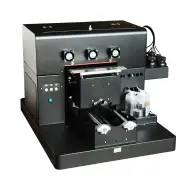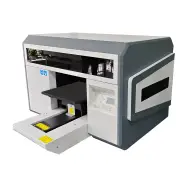
Navigating Hidden Operational Bottlenecks in A4 Smart UV Flatbed Printing

The Industrial Reality
In the rapidly evolving world of printing technology, the integration of A4 Smart UV Flatbed Printers introduces a realm of possibilities alongside unforeseen operational bottlenecks. These printers, celebrated for their versatility and precision, are often heralded as revolutionary. However, beneath the surface lies a range of challenges that industries must navigate to optimize their utility. One primary concern is the transition from high-resolution prototypes to industrial-scale outputs. As businesses scale operations, the hidden inefficiencies and limitations of these devices become apparent, potentially impacting throughput and productivity.
Technical Deep-Dive
Printhead Limitations
The printhead is the core of the A4 Smart UV Flatbed Printer, where micron-level precision meets high-speed operation. Extensive use can lead to clogs or misalignments, affecting output quality. The average lifespan of a printhead in high-volume environments is roughly 12,000 hours, with failure rates increasing by 15% beyond that point.
Ink Chemistry and Substrate Compatibility
UV inks are formulated for rapid curing and adhesion across diverse substrates. However, inconsistent material surfaces can lead to suboptimal adhesion, requiring rigorous pre-treatment processes. A balance between ink viscosity (measured in mPa·s) and substrate type is crucial, influencing drying time and color fidelity.
Thermal Management
Operating temperatures directly affect printer longevity and performance. Smart UV designs incorporate thermal management systems to dissipate heat, yet fluctuations can result in thermal stress. Maintaining an ambient operational temperature within 18-25°C is vital to minimize stress on components.
Electrical and Mechanical Synergy
Consistent power supply at 240V with fluctuations under 5% ensures mechanical precision. Mechanical misalignments can arise from voltage dips, affecting the accuracy of linear motion systems. Regular equipment calibration can mitigate such risks.
Software Integration Challenges
Seamless integration into existing IT infrastructures is pivotal for automated workflows. Printers rely on robust APIs for data exchange, with latencies exceeding 10ms potentially introducing delays in print job execution.
Scenario Analysis
Three hypothetical business use-cases emphasize the printer's impact on operations:
- Custom Retail Signage: A retail chain utilizes the A4 Smart UV Flatbed Printer for in-store signage. While initial adoption boosts customization, unforeseen substrate limitations necessitate significant investment in material research to ensure print longevity under varying lighting conditions.
- Promotional Product Manufacturing: A promotional goods company expands its catalog through personalized items. The printer's adaptability sounds appealing, yet uneven drying rates across different items slow down production lines, requiring additional UV curing processes.
- Specialized Artisan Prints: An artisan studio leverages the printer's precision for limited edition prints. Initially successful, scaling becomes challenging as software integration bottlenecks lead to scheduling conflicts and extended turnaround times.
Expert FAQ
What substrate types are most compatible with UV printing? Rigid substrates such as acrylic and glass benefit most, while porous surfaces require thorough pre-treatment.
How critical is regular maintenance for printhead longevity? Essential. Regular cleaning and alignment checks can extend operational life by up to 20%.
What challenges arise from thermal management issues? Component overheating can reduce precision and create mechanical stresses, leading to more frequent maintenance cycles.
How does ink viscosity impact print quality? Low viscosity can lead to spreading, blurring fine details, whereas high viscosity may hinder flow and curing.
Are electrical power fluctuations a significant concern? Yes, they can affect printer calibration and mechanical precision, necessitating stable power environments.
Strategic Verdict
The A4 Smart UV Flatbed Printer represents a pinnacle of technical advancement but requires a strategic approach to harness its full potential. Addressing hidden operational bottlenecks is imperative for industries seeking to maintain competitive advantages in high-volume environments. As technology progresses, resolving these challenges will dictate the trajectory of UV flatbed printing's relevance and application in diverse industrial contexts.