Navigating Operational Bottlenecks in High-Precision Printing with Speaking Flower

Understanding the Industrial Reality
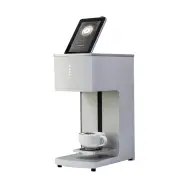
In the world of high-precision printing, the Speaking Flower Printer presents intriguing opportunities and challenges. Industries that demand micron-level precision often encounter hidden operational bottlenecks that can compromise efficiency and output quality. This scenario forms the backdrop of an essential conversation about high-tech printing infrastructure.
Operational bottlenecks manifest in numerous ways, including the synchronization between hardware components and software output. The Speaking Flower Printer's ability to maintain color depth while ensuring precision needs to be assessed against these challenges. Enterprises must evaluate if the intricacies involved in setup and daily operation align with their throughput and labor cost strategies.
Technical Deep-Dive
Component Synchronization
The Speaking Flower Printer requires a seamless interaction between the printhead, substrate handling, and control software. Synchronization issues can lead to delays and misprints. A potential bottleneck occurs when printhead movement (measured in mm per second) doesn't match the substrate feed pace. This mismatch can cause significant waste, impacting both efficiency and cost.
Precision Technology
With color depth requirements, precision (often measured in dpi) becomes pivotal. The Speaking Flower's output capabilities need comparison with traditional printers to understand its advantages and limitations. For instance, achieving a resolution of 1200 dpi against a typical 600 dpi offers distinct benefits but requires careful calibration of hardware to prevent precision loss.
Operational Cost Analysis
The printer's operational costs include ink chemistry and printhead maintenance. Ink consumption rates (pl) and printhead lifespan (hours of operation) can reveal hidden expenses. Understanding these metrics is crucial for businesses to predict long-term cost implications and adjust budget allocations accordingly.
Thermal and Spatial Challenges
Thermal management plays a critical role in maintaining equipment longevity. The Speaking Flower's thermal output (Watts) should be efficiently managed to prevent overheating, which can degrade printer components. Additionally, rack density and placement within an infrastructure environment must accommodate the printer's spatial needs without causing operational hindrance.
Data Management Integration
Integration of the Speaking Flower into existing data management systems can be complex. Enterprises need strategies for ensuring compatible communication between printer software and their data infrastructure to prevent workflow disruptions.
| Feature | Speaking Flower | Traditional Printer |
|---|---|---|
| Resolution | 1200 dpi | 600 dpi |
| Printhead Speed | 50 mm/s | 30 mm/s |
| Thermal Output | 100 Watts | 70 Watts |
| Ink Consumption | 5 pl | 3 pl |
Scenario Analysis
High-End Artisans: For those focusing on micron-level precision, the Speaking Flower offers unparalleled color depth capabilities. However, artisanal setups might struggle with operational bottlenecks unless synchronization is meticulously managed.
IT/Infrastructure Managers: The thermal output and rack density of the Speaking Flower require careful planning to ensure compliance with spatial and thermal regulations, impacting the choice of printer for tight server rooms.
Scalable Business Owners: Enterprises looking for increased throughput must evaluate the Speaking Flower's ability to match production speed with demand, considering the precision levels required by different products.
Expert FAQ
What are the synchronization issues with printheads? The main problem is a mismatch between printhead speed and substrate feed, causing delays and waste.
How does dpi impact color depth? Higher dpi enhances detail and color richness but requires precise calibration to avoid precision loss.
What are the thermal management considerations? Managing the printer's heat output is essential to prevent component degradation, especially in compact setups.
How does ink chemistry affect operational costs? Ink consumption rates dictate long-term expenses, influencing budgeting decisions.
What data management challenges exist? Ensuring compatibility between printer software and data systems is crucial to maintain workflow integrity.
Strategic Verdict
The Speaking Flower Printer represents a sophisticated leap in print technology. Despite its technical prowess, operational bottlenecks pose challenges that must be strategically addressed. Businesses will benefit from a balanced approach, integrating high-tech printing capabilities while optimizing their infrastructure and data management to harness the full potential of this innovation.