Textile Pigment Ink DTG Ink Lifecycle Costs Shape Industrial Viability

The Industrial Reality of Textile Pigment Ink DTG Ink Usage
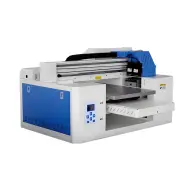
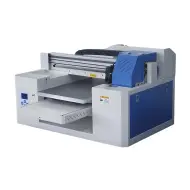
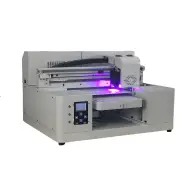
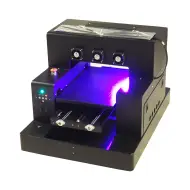
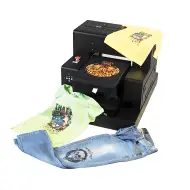
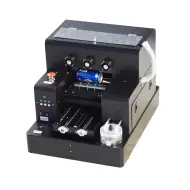
Direct-to-garment (DTG) printing using textile pigment inks introduces a multifaceted challenge in industrial applications where lifecycle maintenance costs critically impact operational budgets. Unlike traditional dye-based inks, pigment inks form a physical film atop fabric fibers, providing improved colorfastness and wash resistance but also introducing complexities in printhead maintenance and curing requirements. Consider a mid-sized production facility running DTG operations for varied garment orders with an average throughput of 200 units per day. Over weeks, pigment ink deposits accumulate within the micro-nozzles of piezoelectric printheads, enhancing the risk of clogging and inconsistent jetting. This requires rigorous maintenance protocols and scheduled downtime for printhead flushing, directly affecting unit output and labor allocation.
Moreover, pigment inks typically demand elevated curing temperatures—often in the 160-180°C range—to achieve optimal fixation and durability. The infrastructure to maintain such thermal conditions, including conveyor dryers or heat presses, contributes significantly to energy consumption and operational costs. Factoring in these energy demands alongside frequent maintenance cycles changes the perceived ROI drastically compared to reactive dye or disperse dye inks.
In facilities where multiple fabric substrates are processed, such as cotton blends or synthetic blends, the physical interaction between pigment ink films and fiber substrates further complicates lifecycle cost calculations. The propensity for surface cracking or pigment detachment under mechanical stress necessitates post-printing quality control and potential rework. These operational realities highlight why pigment ink-based DTG systems, while highly effective in color fastness and environmental stability, impose elevated total cost of ownership considerations.
Technical Deep-Dive into Lifecycle Maintenance Costs of Textile Pigment Ink DTG Ink
Ink Chemistry and Printhead Compatibility
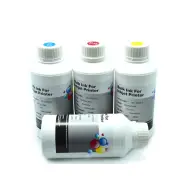
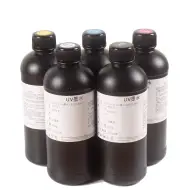
Pigment inks contain finely ground solid colorants suspended in liquid carriers, typically water-based. The average particle size ranges from 100 to 200 nm, which mandates precision-engineered nozzle geometries to prevent clogging. Piezoelectric printheads commonly used operate at drop ejection volumes between 10 to 30 picoliters (pl). Given this scale, even submicron particle agglomerates can occlude nozzles. The relationship between particle size distribution (PSD) and nozzle diameter (typically 20-50 μm) is critical; PSD variance impacts shear forces during firing and nozzle longevity.
Printhead Wear and Cleaning Frequency
Printhead maintenance scheduling hinges on particulate load and ink rheology metrics. Empirically, pigment ink systems require cleaning cycles every 1000 to 1500 prints, depending on environmental contaminants and ambient humidity. A cleansing cycle includes nozzle purging and ultrasonic bath cleaning, which can consume 30 to 45 minutes per printhead. Estimating downtime, a 6-head DTG system may spend upwards of 3 hours weekly on maintenance, translating to an operational loss of approximately 2.5% in weekly throughput.
Energy Consumption in Ink Curing
Achieving pigment ink fixation involves a curing process combining heat and sometimes UV or IR radiation. Using a typical conveyor dryer consuming 4 kW over 2 minutes per garment, the energy per unit equals approximately 133 Wh. Multiplied by a 200-unit daily throughput, daily energy demands reach 26.6 kWh. At industrial electricity rates near $0.12/kWh, curing operations alone account for over $3 per day, scaling with output. Additionally, temperature uniformity must be tightly controlled (±3°C) to prevent pigment film degradation or incomplete fixation.
Comparative Asset Depreciation Between Pigment and Dye Inks
| Parameter | Pigment Ink DTG | Dye Ink DTG |
|---|---|---|
| Printhead Lifespan | 12,000 Hours | 15,000 Hours |
| Maintenance Frequency | Every 1,200 Prints | Every 2,000 Prints |
| Curing Energy per Print | 133 Wh | 80 Wh |
| Ink Cost per Liter | $120 | $85 |
| Average Print Speed | 40 Garments/Hr | 55 Garments/Hr |
Raw Data Analysis of Throughput Versus Maintenance Impact
Modeling a 40-garment-per-hour pigment ink DTG system over a 40-hour workweek yields 1600 garments. Accounting for 3 hours of maintenance reduces effective operation to 37 hours, outputting 1480 garments. Dye ink systems, operating at 55 garments per hour with less frequent maintenance, produce 110 more garments weekly under similar conditions. The reduced throughput and elevated maintenance time constrain scalability without proportional staffing increases, amplifying labor costs and eroding profit margins.
Scenario Analysis of Textile Pigment Ink DTG Ink in Business Operations
Scenario 1: Boutique Apparel Producer
A high-end apparel brand prioritizing colorfastness and wash durability selects pigment ink DTG printing. Despite lower throughput, the brand benefits from the superior fabric feel and color longevity. Lifecycle maintenance is managed by a dedicated technician, balancing print quality against operational cost. The increased curing energy cost is offset by reduced customer returns due to fade.
Scenario 2: High-Volume Promotional Merchandise Supplier
Here, throughput and turnaround time dominate. Pigment inks impose higher maintenance and curing energy costs, limiting competitiveness unless additional print units are deployed. The supplier may opt for dye inks to meet volume demands, accepting shorter color lifespan as a tradeoff. The pigment inks' maintenance burden influences the decision to invest heavily in automation and thermal management systems.
Scenario 3: Multi-Substrate Experimental Printer
Working across cotton, polyester blends, and technical fabrics, this business leverages pigment inks for substrate versatility and durability. Lifecycle costs include maintenance adaptation for varied particulate behavior and curing protocols adjusted per substrate thermal tolerance. The flexibility reduces scrap rates but requires advanced operational protocols, increasing training costs and system complexity.
Expert FAQ on Textile Pigment Ink DTG Ink Lifecycle and Maintenance
How does particle size distribution affect printhead clogging probability?
A narrower PSD centered below 150 nm minimizes agglomeration risk, reducing micro-nozzle blockages. Larger particles increase shear stress on nozzles and accelerate wear.
What operational parameters most influence curing energy efficiency?
Temperature uniformity, conveyor speed, and infrared vs convection heating balance directly affect energy consumption. Optimizing dwell times reduces total kWh per unit.
How do environmental conditions impact pigment ink maintenance frequency?
Elevated ambient humidity stabilizes ink rheology, decreasing nozzle drying and clog rates. Conversely, dry or dusty environments exacerbate maintenance needs.
Can printhead materials extend service life under pigment ink stress?
Advanced ceramics and composite nozzle plates resist abrasion better than traditional metals, extending service life by 15-20% under pigment ink particulate load.
What are the key indicators for proactive maintenance scheduling?
Monitoring drop volume consistency, jetting frequency deviations, and ink viscosity in real-time allows predictive servicing before nozzle failure impacts print quality.
Strategic Verdict on Textile Pigment Ink DTG Ink Deployment
Textile pigment ink DTG printing excels where colorfastness and substrate versatility outweigh throughput demands and operational complexity. Lifecycle maintenance costs, driven by printhead chemistry interaction and curing energy consumption, mandate advanced infrastructure and skilled maintenance personnel. Businesses must weigh these factors against market requirements, accepting lower throughput in exchange for durability and print quality. Future advances in printhead materials and chemistry optimization promise incremental reductions in maintenance burden, but current technology positions pigment ink DTG as a specialized solution rather than a mass-volume workhorse.