The Costly Journey from DIY to Industrial Printing Precision

The Industrial Reality
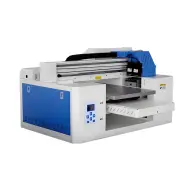
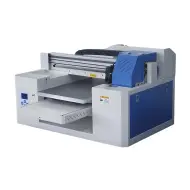
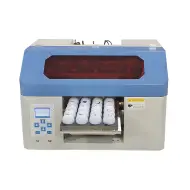
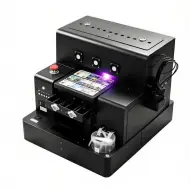
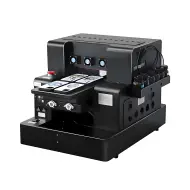
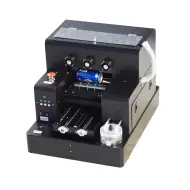
In the realm of specialized printing, moving from DIY solutions to industrial-grade precision presents distinct challenges. The A4 UV DTF Printing Machine exemplifies this transition, offering a case study in both benefits and pitfalls. The shift from hobbyist-level equipment to professional quality is marked by technical intricacies that affect scalability, cost, and efficiency.
Technical Deep-Dive
Precision Engineering: The Micron-Level Challenge
The leap to industrial precision involves unparalleled attention to microns and substrate adaptability. The A4 UV DTF Printing Machine operates at resolutions beyond the standard 300 dpi, achievable due to advanced print head technologies. Unlike desktop printers, this machine employs UV-cured ink, necessitating complex handling protocols.
Hardware Comparisons: DIY vs Industrial Options
| Feature | DIY Printers | Industrial A4 UV DTF |
|---|---|---|
| Resolution | 300 dpi | 1200 dpi |
| Ink Type | Water-based | UV-cured |
| Substrate Versatility | Limited | Extensive |
Physics of UV Ink: Thermal and Optical Properties
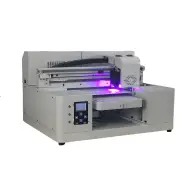
UV ink technology brings forward complexities unlike traditional inks. Its curing process involves the use of secondary UV light sources, affecting thermal dynamics within the machine. Operators must understand the wattage required to maintain optimal ink temperatures.
Data Analysis: Output Consistency and Error Rates
Data from performance analyses highlight a stark contrast in error rates. While DIY printers exhibit inherent limitations leading to misprints and color inaccuracies, industrial solutions like the A4 UV DTF boast consistent high-precision outputs with minimal deviations.
Infrastructure Integration: Challenges and Solutions
Integrating an A4 UV DTF Printing Machine within existing systems demands careful consideration of footprint, power requirements, and network pathways. This machine requires a dedicated circuit rated at over 500 Watts, proving challenging in many legacy setups.
Scenario Analysis
Scenario 1: High-End Artisan Applications
For artisans, the A4 UV DTF Printing Machine offers detailed color profiles and substrate flexibility, vital for bespoke projects. However, its complexity necessitates thorough training on color management software.
Scenario 2: Scalable Business Deployments
Businesses aiming for scale benefit from automation and reduced labor costs. However, the initial investment and ongoing maintenance can pose budgetary challenges, demanding a robust business model to justify expenses.
Scenario 3: Compliance in IT/Infrastructure
Infrastructure managers face compliance issues, notably in thermal management and network integration. Ensuring proper ventilation and robust data paths is crucial to maintaining efficiency and safety standards.
Expert FAQ
What are the UV ink chemistry considerations?
UV ink chemistry requires understanding polymerization and curing processes. Maintaining optimal viscosity is key to flow consistency.
How does thermal management affect print quality?
Thermal management impacts ink adhesion and color fidelity, necessitating controlled environmental settings to minimize heat variations.
What is the impact of rack density on UV printing machines?
Rack density affects accessibility and airflow, crucial for maintaining consistent operational temperatures and avoiding overheating.
How do maintenance cycles influence ROI?
Frequent maintenance can reduce downtime but may increase operational costs, thus affecting the overall return on investment.
What human error mitigation strategies are viable?
Training and automation are critical in reducing human error. Implementing user-friendly interfaces can further minimize mistakes.
Strategic Verdict
The trajectory of industrial printing technology, as exemplified by the A4 UV DTF Printing Machine, suggests a trend towards greater integration and efficiency. While initial costs and technical demands remain high, the potential for precision and scalability make it a compelling choice for businesses aiming to expand their capabilities.