The Gap Between DIY and Industrial-Grade in A4 Size Edible Food Printers Examined Clinically
The Industrial Reality of Edible Food Printing at A4 Scale
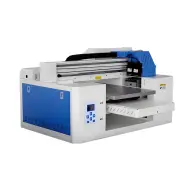
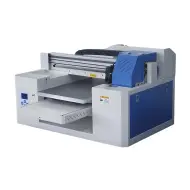
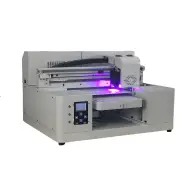
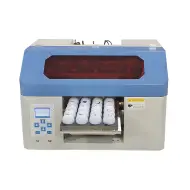
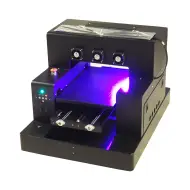
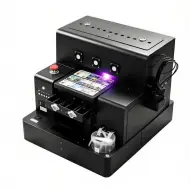
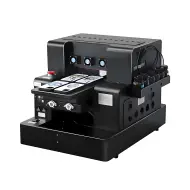
The niche of edible food printing presents a convergence of food science, precision engineering, and advanced materials handling. Within this domain, the transition between hobbyist DIY solutions and industrial-grade printers is fraught with significant technical divergence that influences throughput, reliability, output fidelity, and operational constraints. The A4 size edible food printer, nominally designed for a constrained print area matching standard paper dimensions (210 mm x 297 mm), is a microcosm of challenges inherent to food-safe additive manufacturing—particularly when food-grade inks or pastes require stringent rheological and thermal control. For industrial use, maintaining micron-level precision while accommodating paste viscosities, nozzle clogging risks, and substrate variability requires robust system design and engineering redundancy.
Within modest commercial kitchens or small food production lines, operators face critical bottlenecks: ink stability over extended print runs prone to biological degradation, real-time printhead temperature monitoring to avoid caramelization or denaturation of edible components, and environmental hygiene control to prevent microbial contamination. The gap from DIY arises in the precision of fluid control and the mechanical lifecycle of the printhead assemblies, which in hobbyist devices are often repurposed inkjet heads lacking specialized food-safe coatings or wash cycles. Industrial-grade machines provide closed-system fluid handling with multi-axis actuators calibrated for sub-50-micron layer consistency, combined with inline quality monitoring and advanced cleaning protocols to sustain uptime.
Furthermore, the absence of standardized food inks and substrate compatibility testing exacerbates variability in print fidelity and post-processing stability. DIY solutions often lack automated calibration routines, resulting in inconsistent deposition thickness and color uniformity. Industrial-grade systems integrate multi-sensor feedback loops, including optical and thermal sensors, to maintain process control within tight tolerances. The A4 form factor, while compact, demands delicate trade-offs in mechanical rigidity versus ergonomic usability, forcing engineering decisions that impact both initial capital expenditure and ongoing maintenance overhead.
Technical Deep Dive into Industrial vs DIY Edible Food Printing
Printhead Engineering and Failure Modes
Industrial systems use piezoelectric printheads designed to handle viscous, particulate-laden food-grade inks with droplet volumes typically ranging from 10 to 50 picoliters (pl). Experimental data suggests optimal piezo actuation voltages around 30-50 V with pulse widths in the 5-10 µs range to maintain fluid shear below 1 Pa.s, preventing nozzle clogging and minimizing printhead wear. By contrast, DIY models repurpose thermal inkjet heads designed for aqueous inks with viscosities near 1-2 mPa.s, incompatible with most edible pastes.
Fluidic Systems and Ink Handling
Industrial printers incorporate refrigerated ink reservoirs and sealed fluid paths to reduce contamination and biocontamination risk, maintaining ink lifetimes exceeding 48 hours under continuous operation at 20°C. Backpressure regulation systems maintain ink delivery pressures between 0.1 and 0.3 bar, ensuring stable droplet ejection and reducing satellite droplets that cause print artifacts. DIY solutions typically rely on manual refilling and lack active fluid conditioning, resulting in inconsistent ink rheology and frequent nozzle blockages.
Mechanical Precision and Motion Control
Using closed-loop servo motors with optical encoders offering positional accuracy of ±5 µm, industrial-grade platforms enable repeatable XY positioning across the A4 bed, with Z-axis control for layer thickness setpoints between 50 and 500 µm. Stepper motor systems common in DIY printers offer ±50 µm repeatability, insufficient for detailed edible imaging where fine gradients and layering are critical. The resulting mechanical backlash and vibrations contribute to print quality degradation and temporal inconsistencies.
Environmental and Hygiene Controls
Industrial designs implement HEPA-filtered enclosures maintaining ISO 7 cleanroom class environments, temperature regulated at ±1°C to mitigate condensation and ink drying inconsistencies on sensitive frosting or starch-based substrates. In contrast, DIY units operate in ambient kitchen environments with uncontrolled humidity and particulate presence, increasing risk of defects and microbial growth on printed surfaces. Automated cleaning cycles using food-safe solvents and UV sterilization prevent biofilm formation in industrial machines.
Data and Software Integration for Process Control
Advanced industrial food printers integrate closed-loop control systems with real-time image analysis and adaptive print parameter modulation based on feedback from inline spectrophotometers and viscosity sensors. This allows dynamic color correction compensating for substrate absorption and ink drying rates, ensuring consistent output across batches. DIY models use simpler raster drivers without feedback, resulting in visible color banding and inconsistent nutrient concentration distribution in edible prints.
| Specification | Industrial-Grade A4 Edible Printer | DIY Edible Printer |
|---|---|---|
| Nozzle Droplet Size | 10-50 pl | 50-100 pl |
| Positional Accuracy | ±5 µm | ±50 µm |
| Ink Viscosity Tolerance | 50-500 mPa.s | <10 mPa.s |
| Environmental Control | ISO 7 Cleanroom Class | Ambient Kitchen |
| Ink Reservoir Capacity | Up to 1.5 liters with cooling | <100 ml manual refill |
| Maintenance Cycle | Every 200 print hours automated | Every print or daily manual |
Scenario Analysis of Business Use-Cases
Three principal use-cases illustrate how the A4 edible printer's specifications dictate business impact:
1. Boutique Confectionery with High-Volume Custom Orders
Operational throughput and uptime dominate profitability metrics. Industrial-grade machines with automated maintenance cycles and fluid handling reduce downtime to <5%, allowing the printing of hundreds of edible sheets per day with precise color matching. DIY solutions require frequent manual cleaning and suffer from inconsistent prints, hampering repeat orders and increasing labor costs.
2. High-End Artisan Chocolatier Focused on Color Depth and Texture
Micron-scale precision in print layering and color fidelity is paramount. Industrial printers deliver sub-50 micron layer resolution and multi-spectral ink compatibility, enabling complex color gradations on delicate chocolate substrates. DIY printers cannot reliably produce such detail nor maintain consistent ink behavior on temper-sensitive materials.
3. Experimental Culinary R&D Lab
Flexibility in substrate compatibility and ink chemistry integration matters most. Industrial systems accommodate a wider range of viscous edible inks, including protein- and carbohydrate-based formulations, with sensor feedback enabling precise process tuning. DIY machines lack sensor integration and closed fluid loops, limiting experimental reproducibility.
Expert FAQ Addressing Critical Edge Questions
Q1. What are the key failure mechanisms in industrial edible printheads under continuous operation?
Piezoelectric crystal fatigue, nozzle clogging from ink particulates, and erosion due to abrasive ingredients are primary. Mitigation involves periodic ultrasonic cleaning and use of food-safe additive agents to reduce particulate aggregation.
Q2. How does ink rheology affect droplet formation and print accuracy?
Higher viscosity (>200 mPa.s) increases shear stress on piezo elements, altering droplet volume and velocity, resulting in satellite droplets or incomplete ejection. Optimizing viscosity with rheology modifiers balances flow and print fidelity.
Q3. What thermal management challenges arise with heat-sensitive edible inks?
Ink temperature control within ±1°C prevents protein denaturation and caramelization. Closed-loop feedback with Peltier elements allows stable temperature within the printhead and reservoir.
Q4. How does substrate variability influence print adhesion and drying?
Porosity and moisture content directly affect ink absorption rates, altering color intensity and drying time. Industrial platforms use pre-print conditioning with humidity controls and surface treatments.
Q5. Can industrial edible printers scale beyond A4 while maintaining precision?
Scaling introduces mechanical rigidity challenges and synchronization issues across wider beds. Modular multi-head arrays with coordinated servo controls enable scaling while preserving micron-level accuracy.
Strategic Verdict on Edible Food Printer Technology Trajectory
The current division between DIY and industrial-grade A4 edible food printers highlights fundamental engineering and operational challenges that cannot be bridged by incremental improvements alone. Industrial-grade solutions demonstrate substantial superiority in fluidic control, mechanical precision, and environmental hygiene, enabling consistent, scalable production with minimal downtime. However, these benefits come with increased capital and maintenance investments, requiring robust justification via throughput and quality demands. Ongoing innovations in printhead materials, sensor integration, and ink chemistry will likely narrow performance gaps but the intrinsic complexity of food-safe additive manufacturing predicates a continuing premium on industrial-grade hardware for commercial applications. Therefore, enterprises scaling edible printing beyond prototyping must prioritize holistic system design over cost-centric DIY approaches to sustain operational resilience and output fidelity.