Understanding Lifecycle Maintenance Costs in Oven Technology for DTF Printer Transfer Film Printing
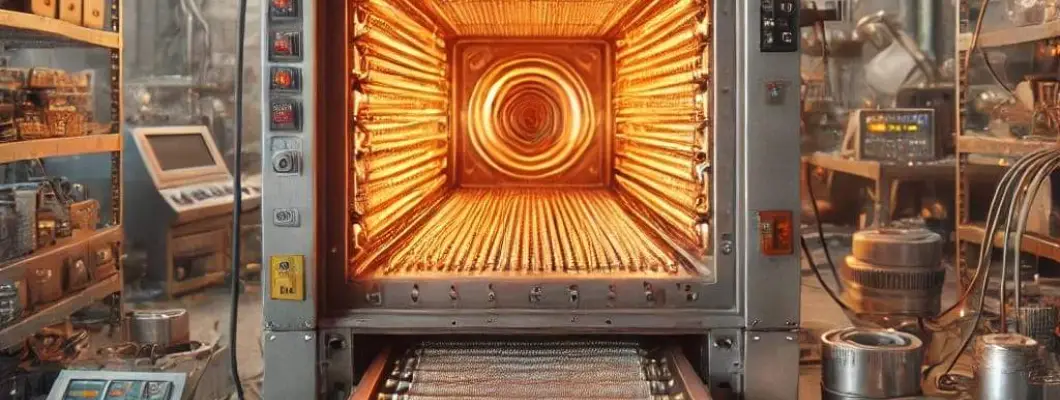
The Industrial Reality of Oven Lifecycle Maintenance in DTF Printing
Direct-to-Film (DTF) printing technology demands precise thermal control to effectively cure transfer films. Industrial ovens designed specifically for DTF printer transfer film printing present a complex maintenance challenge that can severely impact operational continuity and total cost of ownership. The ovens serve to cure transfer films post-printing by applying uniform heat under controlled durations, guaranteeing proper adhesion and durability. A typical scenario in a midsize production facility involves ovens subjected to continuous use cycles exceeding 12 hours per day, operating at temperatures typically ranging from 120°C to 160°C. Under such rigorous conditions, even minor degradation in heating elements, temperature sensors, or airflow systems can cause quality inconsistencies or forced downtime.
Operators often underappreciate hidden maintenance demands embedded in oven designs optimized for DTF applications. The thin substrates of transfer films require stable temperature uniformity within ±5°C tolerance to avoid color distortions or adhesion failures. Over time, residue accumulation from inks and adhesives can impair thermal conductivity inside the oven chamber, necessitating frequent cleaning cycles. Additionally, the interaction between thermal cycling and mechanical components such as conveyor belts or roller systems introduces wear patterns that, if unmonitored, precipitate premature failure events.
Understanding lifecycle maintenance costs begins with acknowledging the multifactorial stressors oven hardware faces during production runs. This necessitates a tightly integrated maintenance schedule aligned with production demands, material handling peculiarities, and environmental variables such as ambient humidity and dust contamination. Without systematized maintenance protocols, the risk escalates for throughput bottlenecks caused by unscheduled service interventions or component replacements. Even when ovens are initially specified with industrial-grade parts, their long-term reliability hinges on routine calibration and periodic hardware refresh cycles.
Technical Deep-Dive into Lifecycle Maintenance Cost Drivers
Heating Element Degradation and Replacement Frequency
Heating elements in DTF ovens typically employ nichrome wire or ceramic infrared emitters. The lifetime of these components is a function of thermal cycling frequency and peak operating temperature. Hypothetically, considering an annealing curve where element resistance R(t) increases exponentially with thermal cycles (n), R(t) = R_0 * e^{kn}, element efficiency can decrease by 15-20% after 1000 heating cycles. Factoring in average daily cycle counts, replacements are often required every 6-12 months. Downtime entailed in heating element replacement averages 4 to 6 hours, directly impacting production uptime.
Temperature Sensor Accuracy and Calibration Demands
Temperature sensors, primarily type-K thermocouples or PT100 RTDs, deteriorate due to oxidation and mechanical stress. Sensor drift beyond ±0.5°C undermines process consistency. Regular calibration against traceable standards is mandatory, typically on a quarterly basis in high-use environments. Calibration procedures involve bench tests requiring 2-3 hours per sensor and technical expertise, contributing to indirect labor expenses.
Airflow System Wear and Efficiency Loss
Uniform heat distribution depends on fan or blower assemblies within the oven chamber. Mechanical bearings wear under continuous operation, causing vibrations and airflow reduction up to 10-15% after 8000 operational hours. Reduced airflow correlates with increased thermal gradients, adversely affecting film curing uniformity. Bearings and blades need inspection every 2000 hours with replacement intervals averaging 5000 hours under industrial loads.
Residue Accumulation and Cleaning Cycle Impact
Ink and adhesive residues accumulate on oven chamber walls and conveyor components, forming insulating layers that reduce effective heat transfer. Cleaning frequencies vary but are commonly required every 100-150 operational hours. Cleaning operations involve chemical solvents and manual labor, often requiring partial oven shutdowns for safety. The abrasive nature of manual cleaning also accelerates wear on interior surfaces, necessitating periodic resurfacing or recoating.
Comparative Table Showing Maintenance Cost Impact by Oven Types
| Parameter | Standard Industrial Oven | DTF-Specific Oven with Enhanced Sealing and Airflow |
|---|---|---|
| Heating Element Life (Hours) | 2500 | 3500 |
| Sensor Calibration Interval (Hours) | 500 | 400 |
| Airflow Efficiency Loss (%) per 1000 hrs | 15% | 10% |
| Cleaning Frequency (Operational Hours) | 150 | 100 |
| Average Repair Downtime (Hours) | 6 | 4 |
| Annual Maintenance Cost per Unit | USD 4500 | USD 5200 |
Scenario Analysis Showing Maintenance Cost Impact Across Business Models
Scenario 1 Large-Scale Production Facility
Operating 3 ovens continuously for 24-hour cycles, a large print provider experiences accelerated wear due to high throughput. The choice between a standard industrial oven and a DTF-specific model affects cumulative maintenance downtime and labor costs. In this scenario, despite higher upfront maintenance expenses, the DTF-specific oven maintains tighter temperature control, reducing reprint rates by approximately 12% and minimizing quality-related losses. This results in a net operational gain despite an annual 15% higher maintenance spend.
Scenario 2 Small Artisan Workshop
With a single oven running 6 hours per day, an artisan benefits from the lower complexity and maintenance intensity of a standard industrial oven. The extended calibration intervals and fewer cleaning cycles align with slower production pace. However, reduced temperature uniformity might marginally affect color precision in high-pixel-density prints, sometimes necessitating manual intervention. Maintenance costs remain below USD 1000 annually, favoring cash flow management over precision.
Scenario 3 Mid-Market Scaling Business
Scaling production from prototype batches to moderate volume, this business balances oven selection between cost and quality. Maintenance predictive analytics are implemented to optimize calibration and part replacement timing. Leveraging IoT-based sensors for real-time status monitoring reduces unexpected failures by 30%. In this case, investing in DTF-specific ovens with improved airflow and sensor redundancy provides a meaningful throughput increase, offsetting elevated maintenance costs by a 20% rise in output quality consistency.
Expert FAQ on Oven Lifecycle Maintenance for DTF Film Printing
How does thermal cycling frequency mathematically correlate with heating element lifespan?
Element lifespan decay follows an exponential model where increased cycles accelerate resistance growth, impacting energy efficiency and heat output. Quantitatively, resistance R after n cycles can be modeled as R = R_0 * e^{kn}, with k derived empirically from manufacturer data.
What role does airflow uniformity play in substrate adhesion quality?
Uneven airflow causes temperature gradients exceeding ±5°C, leading to differential curing across the film surface. This compromises adhesive polymerization kinetics and results in inconsistent transfer durability.
How frequently should sensor calibration occur to maintain ±0.5°C accuracy?
In high-throughput environments, quarterly calibration is recommended due to sensor drift from oxidation. Less intensive use might extend intervals to biannual schedules.
Can residue cleaning intervals be optimized to reduce maintenance downtime?
Yes, predictive cleaning based on residue sensor feedback and production batch monitoring can minimize unnecessary cleaning, balancing operational efficiency with process integrity.
What are the trade-offs between repair downtime and scheduled preventive maintenance?
Scheduled preventive maintenance reduces unexpected failures and extended downtimes but increases short-term operational pauses. Optimal scheduling must consider production cycles and critical delivery deadlines.
Strategic Verdict on Oven Maintenance Costs Shaping the Future of DTF Printing
Lifecycle maintenance costs constitute a significant portion of the operational expenses for ovens used in DTF printer transfer film printing. Advances in sensor technology, real-time monitoring, and materials science will gradually shift cost structures towards predictive and condition-based maintenance. However, current industrial realities remain constrained by the physical wear of heating elements and mechanical components under high thermal loads. Businesses requiring high throughput and consistent quality should anticipate a maintenance-driven cost differential in favor of specialized ovens engineered for DTF processes despite higher expenditures. The evolution of ovens will likely emphasize modular component replacement and enhanced automation in maintenance tasks, reducing labor intensity and unplanned downtime, thereby improving total cost of ownership and asset longevity over five-year horizons.