
Insights - GNFEI.COM RSS Feed
17 März


0
437
The Industrial Reality of Implementing Edible Food InkEdible food ink represents a niche yet rapidly evolving segment within specialized printing technologies used primarily in the food industry. While consumer-level or DIY edible ink solutions are readily available and attract hobbyist and small-scale applications, scaling such technology to indus..
17 März

0
485
The Industrial Reality of Cost Management in LED UV PrintingIn a mid-sized print shop transitioning from conventional solvent-based printers to LED UV technology, the Economical A4 Multifunction LED UV Printer promises operational savings and enhanced capabilities. However, beneath surface-level savings lies a complex financial matrix where invisib..
17 März
0
525
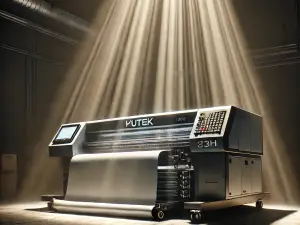
Redefining Industrial Printing at John E WrightJohn E Wright's recent integration of the EFI VUTEk M3h UV LED hybrid printer represents a significant transformation in its printing operations. The VUTEk M3h, a successor to the venerable EFI VUTEk GS 3250 LX Pro, enhances the firm's production quality, substrate versatility, and operational capacity..
17 März

0
611
Industrial Impact on Shop-Floor Production and Workflow
The introduction of Epson's T3200-U3-2 printhead in April 2026 marks a notable advancement in the industrial digital printing sector, particularly for UV-curing inkjet applications. Its enhanced ink heating capacity, reaching up to 50°C, enables it to handle higher-viscosity UV inks than previ..
17 März
0
473
The Industrial Impact of Shifting to RGB WorkflowsThe traditional printing industry has long been dominated by the CMYK (Cyan, Magenta, Yellow, Black) colour model. This model was easy to adopt for offset printing and remains deeply embedded in legacy workflows and hardware. However, evolving hardware capabilities, especially in digital and wide-fo..
17 März

0
338
The Industrial Reality of Lifecycle Maintenance in Heat Press OperationsIn the operational ecosystem of precision heat press machines, the 40x60CM model embodies a critical balance between size, thermal efficiency, and mechanical endurance. Imagine a mid-sized print shop servicing textile and hard surface substrates with a daily throughput of 50-70..
17 März

0
274
The Industrial Reality of PrintPods Handheld Printers on Absorbent SurfacesWithin industrial and field print environments, handheld printing devices such as the PrintPods series operate under highly variable conditions that challenge reliability, throughput, and output consistency. Operators tasked with marking absorbent substrates—ranging from rou..
17 März
0
566
The Industrial Reality of Textile Pigment Ink in Direct-to-Garment PrintingDirect-to-garment (DTG) printing using textile pigment inks represents a pivotal technology for customized fabric decoration. However, the practical divergence between DIY-level applications and industrial-grade deployments is stark. Industrial environments face multifactori..
17 März

0
594
The Industrial Reality of Maintaining a Portable PrintPen in Food and Beverage EnvironmentsConsider a mid-sized gourmet café implementing the Portable PrintPen Edible Food & Drinks Printer to customize customer orders with intricate edible graphics on pastries and beverages. Despite its appeal, operators face recurring maintenance demands driven by..
17 März

0
410
The Industrial Reality of Hidden Operational Bottlenecks in A3 Roll DTF PrintingConsider a mid-sized textile printing business that has recently integrated an A3 Roll Direct to Film (DTF) printer intending to scale throughput while maintaining quality standards. Initial enthusiasm quickly gives way to operational challenges. While the raw print spe..
17 März

0
471
The Industrial Reality of Edible Food Printing at A4 ScaleThe niche of edible food printing presents a convergence of food science, precision engineering, and advanced materials handling. Within this domain, the transition between hobbyist DIY solutions and industrial-grade printers is fraught with significant technical divergence that influences t..
17 März
0
604
The Industrial Impact of G7+ Certification on Print OperationsIn the print production industry, the precision of color management translates directly into brand consistency, customer satisfaction, and cost-efficiency. The rigorous standards established by G7+ certification create an environmental shift that disrupts traditional print shop workflows..