Hidden Operational Bottlenecks in TX800 Head A3 UV Flatbed Printer Affecting High-Precision Print Workflows
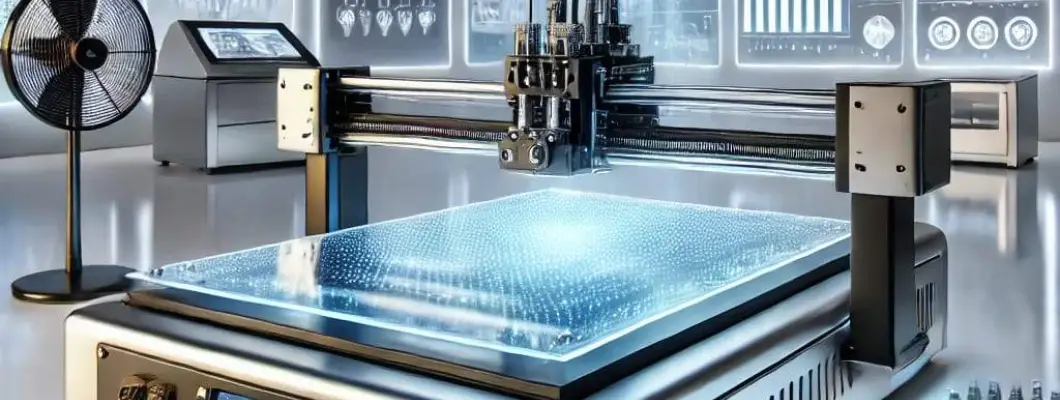
The Industrial Reality of Operating the TX800 Head A3 UV Flatbed Printer Under Production Stress
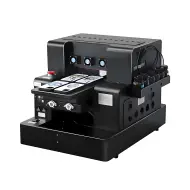
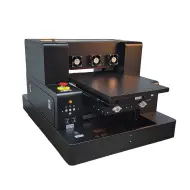
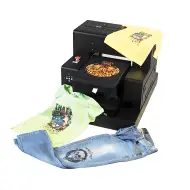
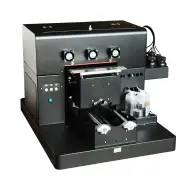
The TX800 Head A3 UV Flatbed Printer positions itself in the industrial printing sector with an emphasis on flatbed UV printing for medium-format applications. However, its deployment in high-demand environments reveals operational challenges that are not always apparent during specification review. Consider a print facility handling tight turnaround jobs requiring micron-level print accuracy on diverse substrates ranging from acrylic sheets to coated metals. In this setting, bottlenecks typically emerge around the printhead performance under continuous operation, UV curing cycle synchronization, and heat dissipation management on both hardware and substrate levels.
In practice, while the A3 size allows for fitting several print tiles per batch, the acceleration and deceleration phases of the carriage introduce micro-timing inconsistencies that can accumulate over longer print runs. These inconsistencies manifest as slight banding or color misregistration, primarily when using lower viscosity UV inks that demand precise droplet placement. Furthermore, the UV LED lamps integrated within the TX800 setup depend heavily on consistent power delivery and thermal regulation. Variations result in uneven curing, impacting print adhesion durability and color integrity post-curing.
From an operator’s perspective, downtime caused by these hidden factors can be substantial. Routine checks that go beyond scheduled maintenance—such as monitoring printhead nozzle health in response to ink viscosity shifts and environmental humidity—are often underprioritized. When combined with substrate warping induced by thermal gradients during UV exposure, the print quality degradation compounds, necessitating manual intervention and reprints.
Technical Deep-Dive on Bottlenecks and Performance Limits of the TX800 Head A3 UV Flatbed Printer
Printhead Mechanics Under Thermal and Operational Stress
The TX800 utilizes piezoelectric printheads capable of ejecting UV-curable ink droplets at approximately 4 picoliters each at a nominal 600 dpi resolution. Sustained print speed of approximately 1.2 m2/hour is achievable; however, the printhead's thermal limit is tightly constrained by the heat generated both from continuous piezoelectric actuation and ambient conditions. The piezo elements heat up from internal electrical resistance accumulating roughly 2.5W per nozzle array during peak operation. If left unchecked, this leads to micro-cracking of the piezoelectric material, reducing nozzle lifespan from a typical 500 million firings to potentially under 300 million in stressed environments.
UV Curing Cycle Synchronization with Printhead Output
The curing system uses LED UV emitters calibrated around 395 nm wavelength, delivering 120 mW/cm2 irradiance over the A3 platen area. The challenge lies in synchronizing the ink droplet deposition rate with the curing exposure to prevent diffusion or overcuring, which can alter ink morphology. The system operates with a curing time delay optimized at 300 ms per layer, but substrate thickness and reflectivity affect effective cure depth. A thicker acrylic substrate (>5 mm) reflects UV, causing secondary exposure and post-cure shrinkage, which compromises dimensional stability.
Substrate Versatility and Warping Under Thermal Load
The flatbed accommodates substrates up to 12 mm thick, but materials with higher thermal expansion coefficients (e.g., polycarbonate, PVC) present risks of warping during rapid curing cycles. Warping measured at ±0.15 mm deviation across the platen after 3 sequential passes leads to printhead-to-substrate distance variation that exceeds optimal droplet placement tolerance, causing local print defects. Mathematical modeling predicts that a 5 °C temperature gradient across a 400 x 300 mm substrate results in up to 0.2 mm warp, exceeding the maximum allowable 0.1 mm tolerance for pixel-perfect registration.
Ink Rheology and Nozzle Clogging Dynamics
UV inks used in the TX800 demonstrate complex rheological behavior, with viscosity ranging between 45-60 mPa.s at 25 °C. Viscosity fluctuations with temperature changes of ±5 °C lead to inconsistent jetting performance, increasing the risk of nozzle clogging. The printhead’s automatic nozzle cleaning cycle takes approximately 25 seconds per event, which, if triggered more than once per print cycle, significantly reduces throughput. Over 1000 printing hours, unscheduled cleaning events can account for 6%-12% downtime.
Power Consumption and Heat Dissipation Constraints
The TX800 operates on a 220 V single-phase supply delivering up to 2.8 kW peak. Around 55% of this power dissipates as heat largely from UV LEDs and printhead electronics, necessitating active cooling. The printer incorporates a closed-loop fan and heat exchanger system, maintaining internal electronics below 45 °C. However, insufficient airflow due to dust accumulation or environmental temperature spikes beyond 28 °C elevates internal temperatures, triggering thermal throttling and print speed reduction.
| Parameter | Optimal Conditions | Stressed Conditions |
|---|---|---|
| Printhead Temperature (°C) | 35-40 | 45-50 |
| Print Speed (m²/hr) | 1.2 | 0.85 |
| Nozzle Cleaning Frequency (per 8 hr) | 3 | 7 |
| UV LED Output (mW/cm²) | 120 | 100 (degraded) |
| Substrate Warp (mm) | ±0.05 | ±0.15 |
Scenario Analysis of Print Workflow Impacts Across Three Business Use-Cases
High-Volume Packaging Prototype Production
In a scenario producing 1000 units/day of food packaging prototypes requiring rapid turnaround, the TX800’s bottlenecks manifest in frequent nozzle cleanings and print/cure synchronization errors, causing up to 15% throughput loss. The substrate variability, combined with tight color consistency requirements, necessitates frequent operator intervention, raising labor costs and risking delay penalties.
Architectural Model Panel Printing
For architectural firms printing large-area, multi-layer graphic panels on acrylic, substrate warping during UV curing leads to deviation in dimensional tolerances, impacting assembly fit. Precision demands force operators to reduce print speeds by 30% and increase post-processing inspection, slowing the project cycle and increasing indirect costs.
Artisan Signage with Micron-Level Detail
In high-detail artisan signage with color gradients and micron-level droplet control, the TX800’s piezo printhead thermal limits restrict the number of continuous prints before maintenance. This creates workflow interruptions that reduce predictable uptime. Additionally, color shifts from insufficient UV cure uniformity require batch reprints, reducing effective yield and increasing operational costs.
Expert FAQ on Technical Challenges of the TX800 Head A3 UV Flatbed Printer
How does thermal expansion of substrates affect print quality over extended runs?
Thermal expansion alters the distance between printhead and substrate surface, impacting droplet placement accuracy. Warping beyond ±0.1 mm can cause misregistration and banding, especially critical at 600 dpi where each pixel corresponds to approximately 42.3 µm. Over long runs, cumulative effects degrade overall print consistency.
What maintenance strategies minimize nozzle clogging related downtime?
Implementing temperature-controlled ink reservoirs and environmental humidity regulation reduces ink viscosity fluctuations. Scheduling proactive micro-cleaning cycles based on print volume metrics, rather than fixed intervals, optimizes uptime. Additionally, using UV ink formulations with added flow agents mitigates particle aggregation inside nozzles.
Can substrate thickness variations be compensated during printing?
Advanced height-mapping sensors integrated with dynamic printhead Z-adjustment mechanisms can partially compensate for thickness variations up to ±0.5 mm. However, rapid warping from thermal stress remains challenging, as dynamic feedback loops have latency that can cause spatial errors in high-speed printing.
What is the impact of UV LED lamp aging on print adhesion?
UV LED irradiance degrades approximately 10% after 2000 hours of operation, reducing cure efficacy. This leads to suboptimal polymerization of UV inks, compromising adhesion strength and scratch resistance. Regular irradiance calibration and LED module replacement ensure consistent print durability.
How do environmental factors influence power consumption and thermal throttling?
Ambient temperature above 28 °C and dust contamination in cooling channels increase internal temperatures, causing the printer to reduce operating speed to prevent overheating. This reduces throughput by up to 30%, highlighting the need for controlled environmental conditions and routine HVAC maintenance.
Strategic Verdict on the TX800 Head A3 UV Flatbed Printer’s Operational Viability
The TX800 Head A3 UV Flatbed Printer demonstrates solid mechanical and optical design principles suited for medium-run applications demanding moderate substrate versatility. However, hidden operational bottlenecks—primarily thermal management, substrate warping, and printhead maintenance frequency—limit its efficiency ceiling in high-precision industrial workflows. Forward-looking adoption will depend on integrating enhanced environmental controls, real-time adaptive printhead calibration, and improved curing synchronization technologies to stabilize performance at scale. Without addressing these constraints, throughput delays and quality inconsistencies will remain significant operational liabilities in high-demand production contexts.