Scaling Precision The Untold Power of UV Printing Technology
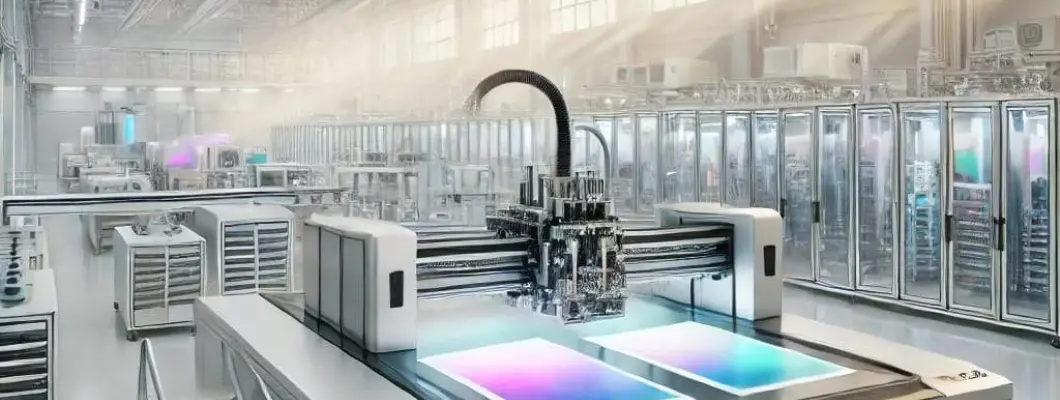
In manufacturing environments where precision and scalability are non-negotiable, the uv printer has emerged as a cornerstone technology. As markets demand faster turnaround and higher quality, the ability to scale production without sacrificing detail or efficiency is paramount. The uv printer sits uniquely at this intersection, enabling companies to push boundaries in production volume and product diversity simultaneously.
Despite its growing footprint, many operational leaders remain skeptical about the practical scalability of uv printers. Questions swirl around throughput, cost scalability, and integration into complex production lines. This article tackles those head-on, uncovering the technical intricacies that make this technology a game-changer for scaling manufacturing output while maintaining exacting standards.
Understanding the Core Technology of UV Printers
UV printing technology revolves around curing ultraviolet-sensitive inks with high-intensity UV light. Unlike traditional printing processes, UV printers are capable of rapidly solidifying ink on a wide array of substrates without drying time, which dramatically accelerates production speed.
"The ability of UV curing to instantly set the ink reduces bottlenecks in the production line, making it an ideal choice for scaling operations." – Dr. Anne Michaels, Print Technology Expert
At the heart of the uv printer is a precision-engineered print head system capable of laying down ultra-thin layers of ink with micron-level accuracy. This precision ensures that even as production volume increases, product quality remains consistent, a crucial factor in high-volume manufacturing.
Print Head Technology and Scalability
Modern uv printers employ piezoelectric or thermal inkjet technology designed for durability under continuous operation. These print heads support variable droplet sizes, allowing for adaptability across different product types without hardware changes.
"Scaling isn’t just about speed; it’s about maintaining fidelity and repeatability across millions of units." – Carlos Estrada, Senior Process Engineer
The modular design of many uv printers allows for multiple print heads to operate in parallel, increasing throughput exponentially. This capability enables factories to scale horizontally by adding print head arrays, adjusting production as demand fluctuates.
Ink Chemistry Tailored for Mass Production
UV curable inks are specially formulated to enable rapid polymerization without generating heat that could deform sensitive substrates. These inks maintain vibrant color profiles and strong adhesion characteristics, essential for industrial applications requiring durability.
For scaling, consistent ink flow and stability under continuous use are critical. Innovations in ink formulation and delivery systems reduce clogging and downtime, improving uptime and throughput.
Substrate Versatility and Production Line Integration
One of the distinguishing features of uv printers is their ability to print on a vast range of substrates—from plastics and glass to metals and wood—without additional conditioning. This flexibility simplifies scaling across product lines, minimizing setup times for different items.
"Integration with conveyor systems and robotic handlers is seamless given the instantaneous curing and durability of UV inks." – Emily Chen, Automation Specialist
Automated uv printing stations can be integrated into existing assembly lines, allowing for continuous, hands-off printing processes synchronized with other manufacturing stages.
Speed Versus Resolution Trade-offs
Scaling production with uv printers involves balancing speed and print resolution. Higher resolution demands slower print speeds due to finer droplet placement, while lower resolution enables faster throughput.
Adaptive software algorithms adjust printing parameters dynamically depending on production requirements, prioritizing either speed or detail to meet delivery and quality targets.
Maintenance Strategies for Scaled Operation
Operating multiple uv printers at scale demands rigorous maintenance schedules. Key maintenance activities include print head cleaning, UV lamp replacement, and ink system checks.
"Predictive maintenance based on usage data can reduce unexpected downtime, critical when scaling production." – Mark Donovan, Plant Manager
Employing automated cleaning cycles and monitoring print head health remotely enables technicians to intervene before failures occur, maintaining continuous output.
Operational Math and Case Studies
To grasp the impact of uv printers on profitability during scaling, consider the following scenarios from industrial manufacturing:
Case 1: Small Batch Rapid Turnaround
- Production volume: 5,000 units/month
- Traditional screen printing cost per unit: $2.50
- UV printer cost per unit: $1.80
- Setup time reduction: 75%
- Profit margin increase: 40%
By adopting uv printing, the batch turnaround time reduced drastically, allowing for more frequent product refreshes and reduced inventory carry costs.
Case 2: High-Volume Mixed Media Production
- Production volume: 250,000 units/year
- Product mix includes metal, plastic, and glass substrates
- Average print cycle time reduced from 8 to 3 minutes per unit
- Downtime reduced by 25% due to advanced maintenance protocols
- Operational cost savings: $320,000 annually
This scenario highlights the uv printer’s versatility and efficiency in complex, multi-material manufacturing environments.
Case 3: Large Factory Line Automation
- Production line: Fully automated with robotic handlers
- Annual throughput: Over 1 million units
- Print defects reduced by 60% due to precise UV curing
- Labor costs reduced by 30% post automation
- Return on investment achieved within 18 months
The integrated uv printing stations enabled seamless workflow, pushing mass production capabilities without sacrificing print quality.
Advanced FAQ on UV Printers for Scaling
- How do UV printers handle different substrate thicknesses in a high-volume setting?
Most uv printers include adjustable print head heights and substrate feeders that accommodate varied thickness without compromising print accuracy. - What are the environmental considerations for large-scale UV printing?
UV inks emit minimal volatile organic compounds, and the curing process produces negligible heat, making it eco-friendlier than solvent-based alternatives. - How does ink consumption scale with production volume in UV printing?
Ink usage scales linearly with print area, but optimized droplet size and layering reduce overall consumption compared to conventional printing. - What are common failure points in UV printer hardware during extended operation?
Print heads, UV lamps, and ink delivery systems require routine maintenance; print head nozzle clogging is the most frequent concern. - Can UV printers integrate with Industry 4.0 systems for data analytics?
Yes, many uv printers support IoT connectivity and real-time monitoring, enabling predictive maintenance and workflow optimization. - What software capabilities enhance scalability in UV printing workflows?
Advanced RIP software supports variable data printing, automated job scheduling, and print parameter adjustments tailored to production needs.
The Final Verdict
For manufacturing leaders focused on scaling output without sacrificing product integrity, the uv printer stands out as a transformative investment. Its combination of instantaneous ink curing, substrate versatility, and modular print head technology directly addresses the core challenges posed by scaling industrial production lines.
With proven case studies demonstrating cost reductions, increased throughput, and ROI periods well within fiscal planning horizons, uv printers enable factories to pivot faster and expand capabilities with confidence. Maintaining these systems requires precise maintenance routines and software integration, but the operational gains substantially outweigh these efforts.
In sum, for those managing high-volume factories, embracing uv printing technology is not merely an option but a pivotal strategy to remain competitive and agile in demanding industrial environments.