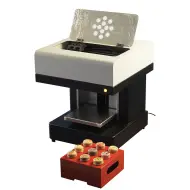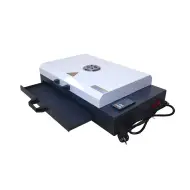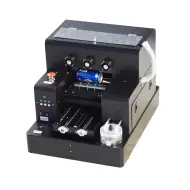
Hidden Operational Bottlenecks in the Industrial Dual Head 4060 UV Printer Exposed
The Industrial Reality of Dual-Head UV Printing Constraints
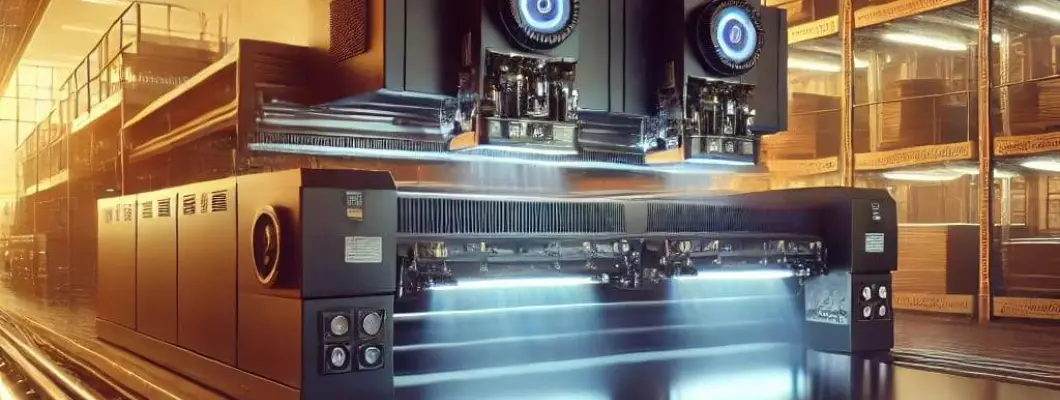
Industrial printing environments demand consistent, high-throughput operations with minimal downtime and precision accuracy. The Industrial Dual Head 4060 UV Printer, engineered for mid-to-large scale UV-curing workflows, exemplifies this need yet introduces complex operational bottlenecks often overlooked in initial deployment phases. Consider a production facility tasked with 24/7 printing on rigid substrates measuring up to 400 mm by 600 mm. While the dual-head arrangement theoretically doubles print throughput, real-world constraints such as printhead alignment drift, UV lamp intensity variance, and ink curing uniformity present critical challenges that slow effective throughput.
Printhead nozzle clogging is a prime example. The 4060's inkjet technology operates at a nominal 10 pL drop size, delivering high resolution around 1200 dpi. However, industrial dust contamination and ink viscosity fluctuations under variable temperature conditions lead to inconsistent jetting performance. This inconsistency requires frequent printhead cleaning cycles lasting 3 to 5 minutes each, dramatically impacting uptime in high-demand schedules. Moreover, the dual-head architecture mandates precise synchronization; even minute misalignment on the micron scale, exacerbated by thermal expansion of metal chassis components during extended runs, causes doubled image artifacts that require operator intervention.
Energy consumption patterns also reveal hidden bottlenecks. The 4060 UV printer’s dual UV curing lamps consume approximately 600 Watts each, with peak thermal output raising ambient machine temperatures by 15°C during continuous operation. This thermal load necessitates enhanced cooling systems, increasing facility HVAC burdens and occasionally triggering thermal throttling of sensitive electronics. Beyond mechanical and thermal stresses, ink chemistry compatibility with diverse substrates further complicates process stability. Certain high-density polymer sheets require modified ink formulations with slower curing kinetics, reducing line speeds from rated 20 m2/h to about 12 m2/h to prevent substrate deformation or incomplete curing.
Technical Deep-Dive Into Dual-Head Challenges
Printhead Synchronization and Alignment
The dual 4060 layout uses two identical piezoelectric printheads mounted with a nominal 4060 mm carriage distance. The printheads operate in interlaced mode, alternating droplet placement to achieve 1200 dpi effective resolution. Thermal expansion coefficients of the aluminum chassis (approximately 23 × 10^-6 /°C) cause measurable linear displacement during warm-up. For example, a 40 cm carriage could extend by roughly 0.092 mm for a 10°C rise, nearing printhead misalignment thresholds of ±30 microns. Such shifts lead to pixel doubling artifacts or white banding requiring real-time compensation algorithms or manual recalibration every 4-6 hours.
Ink Jetting Physics and Clogging Probability
Ink viscosity fluctuates between 12 to 18 cP relative to ambient temperature, influencing droplet velocity and breakup dynamics. Utilizing Rayleigh-Plateau instability theory, droplet generation is optimal between 12-15 cP. Outside this range, satellite droplet production and clogging probability spikes. Clogging rates statistically correlate to particulate contamination above 5 microns, exacerbated by factory particulate counts of 200,000 to 500,000 particles/m3 in non-cleanroom environments. Printhead nozzle sanitation protocols every 2000 print cycles are mandatory to maintain nozzle functionality, equating to 2-3 cleaning cycles daily.
UV Lamp Thermal and Photometric Output
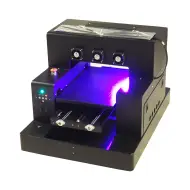
The dual UV lamps operate at 395 nm wavelength with nominal output power of 600 Watts each, generating up to 1500 mW/cm2 irradiance at substrate distance. Lamp aging causes power decline by approximately 15% after 1000 operating hours, necessitating calibration or replacement to avoid undercured prints. Thermal dissipation occurs mainly through forced air cooling; however, resultant heat raises internal chamber temperature to around 50°C in typical ambient conditions of 25°C. The elevated temperature accelerates ink solvent evaporation rates by 20%, potentially causing premature curing within nozzles and increasing clogging incidence.
Substrate Compatibility and Ink Chemistry Interactions
The 4060 supports printing on substrates ranging from glass and metal to polymer composites. Each substrate material exhibits unique surface energy and thermal expansion characteristics, mandating substrate-specific ink formulations. For example, PET sheets require UV inks with slower photoinitiator reactivity to reduce thermal stress. The operational print speed is inversely proportional to ink curing time; empirical testing shows reducing print speed from 20 m2/h to 12 m2/h on PET to ensure adhesion quality and dimensional stability.
Maintenance Scheduling and Downtime Analysis
| Parameter | Single-Head UV Printer | Dual Head 4060 UV Printer |
|---|---|---|
| Daily Cleaning Cycles | 1 (5 min) | 3 (15 min total) |
| Average Thermal Throttling Events/Day | 0.5 | 1.5 |
| Printhead Recalibrations/Week | 1 | 3 |
| Average Power Consumption (W) | 650 | 1300 |
| Average Throughput (m2/h) | 12 | 20 |
Table data reveals that doubling hardware components nearly doubles maintenance complexity and energy draw, while throughput gains are less than linear due to bottlenecks.
Scenario Analysis Across Production Environments
High-Volume Signage Manufacturing
A signage company running 24-hour shifts requires maximum throughput on rigid acrylic sheets sized 400 mm × 600 mm. The dual-head 4060 enables a theoretical 20 m2/h production but incurs extended downtime from printhead recalibrations and thermal throttling. Operational bottlenecks reduce effective throughput by 15%, impacting delivery promises. The maintenance team must schedule frequent cleaning and monitor UV lamp aging closely, emphasizing the importance of preventive maintenance automation.
Luxury Packaging Prototype Production
For a premium packaging artisan, print quality and micron-level accuracy on polymer substrates are paramount. The 4060's dual heads improve color density via advanced droplet placement, but the thermal load requires throttling print speed to 12 m2/h to guard substrate integrity and prevent ink bleeding. The printhead alignment demands hourly checks during prototypes, increasing labor overhead. Here, bottlenecks manifest as precision constraints and workflow complexity rather than raw speed limitations.
Enterprise-Level IT Infrastructure Labeling
Within a data center label printing environment, space constraints and compliance with ISO environmental standards drive equipment selection. The 4060's elevated thermal footprint necessitates enhanced cooling infrastructure, increasing operational costs and complicating facility HVAC balance. Printhead cleaning cycles cause momentary production halts that must be synchronized with logistics schedules. Hence, bottlenecks emerge in infrastructure integration rather than machine mechanics alone.
Expert FAQ About Dual-Head 4060 Printer Operational Limits
Q1: How does thermal expansion affect print registration accuracy?
A: A 10°C temperature increase causes chassis expansion around 92 microns over 400 mm, exceeding ideal printhead alignment tolerance of ±30 microns, leading to image doubling artifacts if uncorrected.
Q2: What maintenance practices reduce nozzle clogging?
A: Implementing automated nozzle purging cycles every 2000 print passes, maintaining ambient particulate below 100,000 particles/m3, and regulating ink viscosity within 12-15 cP minimizes clog risk.
Q3: How does UV lamp aging impact curing efficacy?
A: Lamp output declines roughly 15% after 1000 hours, reducing curing intensity and necessitating speed adjustments or lamp replacement to maintain print integrity.
Q4: Can different substrates affect print speed?
A: Yes, substrates like PET require slower curing times and reduced print speeds (e.g., 12 m2/h vs 20 m2/h) to prevent deformation and ensure adhesion quality.
Q5: What are the energy implications of dual-head operation?
A: Dual lamps double thermal output causing increased cooling demands and energy consumption, with average power draw approximately doubling from 650 W (single-head) to 1300 W.
Strategic Verdict on Dual-Head 4060 Printer Bottlenecks
The Industrial Dual Head 4060 UV Printer reflects an engineering trade-off between throughput gains and operational complexity. While its dual-head configuration promises increased print speeds, the compounded maintenance demands, thermal management challenges, and substrate-specific limitations introduce bottlenecks that restrict linear productivity scaling. Advanced preventive maintenance systems and environmental controls are essential to approach rated performance levels. Future iterations should focus on chassis materials with lower thermal expansion coefficients, integrated real-time printhead alignment sensors, and optimized ink chemistries tailored for stable viscosity across operating ranges. Absent these, the 4060 will primarily fit scenarios prioritizing moderate speed improvements balanced against increased upkeep rather than fully automated, endlessly scalable industrial printing.