Lifecycle Maintenance Costs Define CD and PVC ID Card Printing Viability
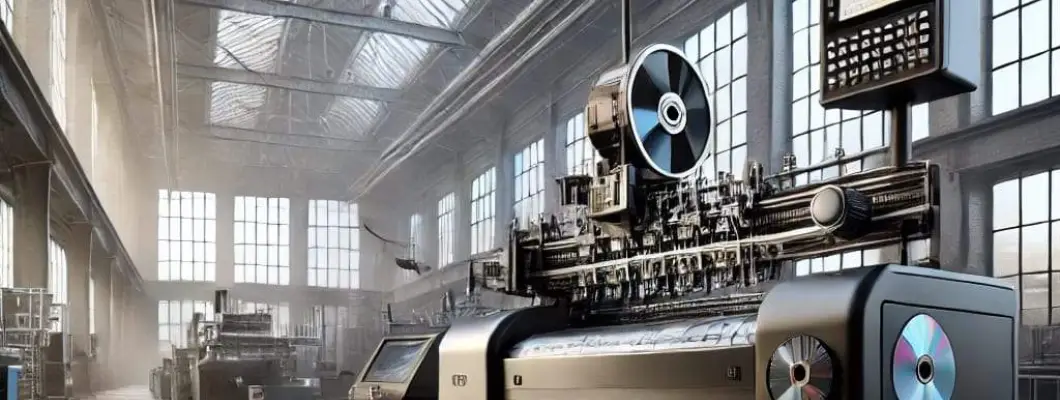
The Industrial Reality of Lifecycle Costs in Printing Technology
Operational management of automatic CD printers and PVC ID card printers extends beyond upfront capital investments. Consider a medium-scale printing facility tasked with daily production runs of up to 5,000 units. Here, the lifecycle maintenance cost plays a critical role in determining the total cost of ownership (TCO). Frequent printhead replacements, ink system recalibrations, and periodic mechanical servicing can generate hidden operational expenses, significantly impacting profitability.
For instance, printheads in these devices typically have a finite lifespan influenced by factors such as operating temperature, substrate type, and print mode. Without precise maintenance schedules and environmental controls, accelerated wear may occur, leading to unplanned downtime. A typical printhead may last between 5 million to 10 million linear inches of printed media under ideal conditions, but real-world variances reduce this substantially. The replacement cost for such a printhead often ranges from USD 1,000 to USD 3,500, depending on vendor and technology.
Environmental variables such as humidity and dust ingress also influence the printer's mechanical components. PVC card printers, designed for high-precision color layering, require stable humidity between 40% and 60% and room temperatures maintained at 20°C to 25°C to minimize thermal expansion and contraction of print components. Deviations beyond these specifications increase the risk of misalignment and print defects, necessitating additional maintenance cycles.
Operational bottlenecks arising from maintenance downtime must be factored explicitly into workflow planning. For example, a 2-hour printhead replacement once every 2,000 print cycles can accumulate to a significant loss of productive time over a year. Consequently, the lifecycle maintenance cost becomes a key variable in assessing printer suitability for industrial-scale printing.
Technical Deep-Dive Into Lifecycle Maintenance Cost Components
Printhead Wear and Replacement Dynamics
Printheads are the pivotal element in printing technology, where fluid dynamics, thermal management, and precision piezoelectric actuation converge. Piezoelectric printheads emit droplets typically in picoliters (pL), with droplet sizes in the range of 1.5 to 10 pL for fine detail work. The jetting frequency and ink chemistry influence the degradation rate.
Hypothetical calculation: Assuming a 5 pL droplet size at 10 kHz frequency, the volume expelled per second is 5 x 10^-12 L x 10,000 = 5 x 10^-8 L/s. Over a typical 8-hour shift, this translates to 1.44 mL of ink per printhead. If the printhead tolerates 5 million linear inches of printing, the total ink volume throughput can be tens of liters before replacement becomes necessary.
Ink System Maintenance and Chemistry Stability
Ink formulation affects maintenance frequency. Pigment-based inks used in PVC card printing offer superior UV resistance and color longevity but tend to clog nozzles more readily than dye-based inks. Regular cleaning cycles—often automated—are essential but increase downtime and ink consumption. A standard cleaning cycle consumes approximately 0.3 mL of ink per head and may be required every 500 prints under heavy usage conditions.
Mechanical Component Longevity under Environmental Stress
Stepper motors, belt drives, and linear guides within the printer experience wear that scales with operational hours and environmental contamination. Lubrication intervals vary but are generally recommended every 1,000 operating hours. Harsh environmental factors can halve these intervals. This mechanical wear contributes indirect costs through both parts replacement and the labor required for servicing.
Firmware and Calibration Maintenance
Firmware updates often introduce improved calibration algorithms enhancing print precision and reducing material waste. However, updates require planned downtime and validation phases. Calibration maintenance, involving alignment of print heads and substrate feeders, usually occurs weekly in high-volume settings.
Comparative Table of Maintenance Cost Impact for Different Print Technologies
| Component/Metric | Automatic CD Printer | PVC ID Card Printer |
|---|---|---|
| Printhead Lifespan (linear inches) | 5-7 Million | 7-10 Million |
| Printhead Replacement Cost (USD) | 1,200 - 2,000 | 1,500 - 3,500 |
| Average Cleaning Cycle Interval (prints) | 1000 | 500 |
| Cleaning Ink Consumption (mL per cycle) | 0.2 | 0.3 |
| Mechanical Component Lubrication Interval (hours) | 1500 | 1000 |
| Firmware Update Frequency (per year) | 2 | 3 |
Scenario Analysis of Lifecycle Costs Influencing Business Outcomes
Use-Case One A Medium-Sized Production Facility
A printing facility producing 3000 PVC ID cards daily faces bi-weekly printhead replacements. Total downtime for replacement plus calibration averages 3 hours, causing throughput losses. Optimizing maintenance schedules and environmental controls lowers unexpected failures, reducing downtime by 25% and increasing annual throughput by approximately 20,000 units.
Use-Case Two High-Precision Government ID Printing
Government ID printing requires meticulous color fidelity and durability. Here, pigment-based inks are essential, but frequent cleaning cycles increase ink consumption and maintenance intervals, elevating total cost per card by 15%. Investments in advanced printhead cooling systems marginally increase CAPEX but extend service intervals and reduce lifecycle costs.
Use-Case Three Event-Based CD Printing for Corporate Clients
For short-run, high-volume CD printing events, lifecycle maintenance focuses on minimizing downtime between print jobs. Automatic CD printers with replaceable printhead modules enable rapid swaps, minimizing unproductive intervals. Here, maintenance planning includes pre-event calibration runs and post-event preventive servicing to ensure readiness for subsequent projects.
Expert FAQ on Lifecycle Maintenance Costs in Printing Equipment
How does substrate type affect printhead lifespan?
Substrate abrasiveness influences mechanical stress on printheads. PVC cards with textured finishes cause more strain than smooth CDs, typically reducing printhead lifespan by 10-15% in similar usage conditions.
What role does humidity play in maintenance frequency?
Humidity outside the ideal 40-60% range accelerates ink drying inconsistencies, causing clogging and increasing cleaning cycle frequency, thus raising maintenance costs.
Can firmware updates reduce maintenance expenses?
Yes, updates often optimize printhead firing sequences and color management, which can reduce ink waste and mechanical strain, extending component lifespans.
Is automated cleaning always beneficial?
Automated cleaning reduces manual intervention and downtime but increases ink usage. The frequency should balance print quality requirements with operational costs.
How does operational temperature influence mechanical wear?
Operating above 30°C can accelerate lubricant degradation in moving parts, shortening lubrication intervals and increasing maintenance labor and parts cost.
Strategic Verdict on Maintenance Costs Shaping Printing Technology Trajectory
Lifecycle maintenance costs remain a decisive factor in selecting and operating automatic CD printers and PVC ID card printers. The balance between print quality, operational uptime, and maintenance overhead governs total cost efficiency. Future developments in printhead materials, ink chemistry, and embedded diagnostics aim to extend service intervals and reduce unplanned downtime. However, environmental control precision and rigorous maintenance protocols will continue to be indispensable. Thus, lifecycle cost management emerges as the critical lever for sustainable printing operations at scale.