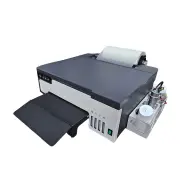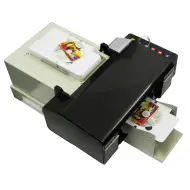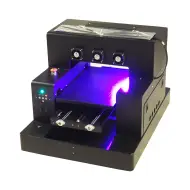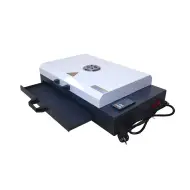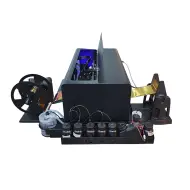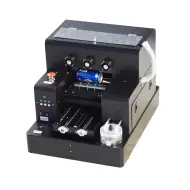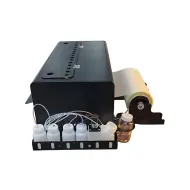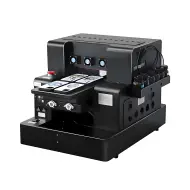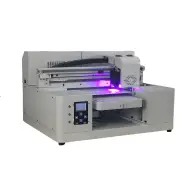
Lifecycle Maintenance Costs Expose Real Demands of A4 Flatbed T-shirt Printers for High-End Artisans
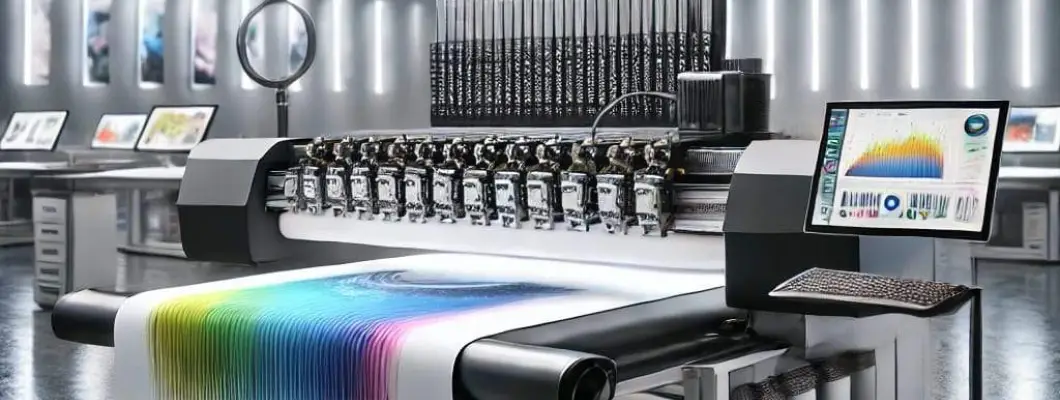
The Industrial Reality of Maintaining Precision in A4 Flatbed T-shirt Printers
High-end artisans pursuing micron-level precision and expanded substrate versatility commonly face a persistent challenge rarely surfaced in vendor literature: lifecycle maintenance costs of A4 flatbed T-shirt printers. In a specialized workshop tightly controlled for color fidelity and surface texture, even marginal deviations caused by mechanical wear or ink chemistry aging can cascade into visible defects. Consider the scenario of an artisan focused on limited edition apparel requiring precise halftone gradients and consistent color matching at 1200 dpi resolution. Over repeated print cycles, the flatbed’s servo mechanisms and inkjet nozzles endure micro-abrasion and clogging, elevating maintenance overhead substantially.
Unlike large-format industrial units with redundant printheads and built-in self-cleaning mechanisms, A4 flatbed units designed for artistic rigor balance compactness with hardware fragility. The flatbed mechanics are often constrained by tighter integration of printhead arrays and substrate transport, increasing susceptibility to alignment drift. Furthermore, artisan workflows necessitate frequent substrate changes from cotton to polyester blends or even coated synthetics, each requiring recalibrations of ink viscosity and drop size to maintain micron-level precision. These operational realities translate into a recurring maintenance cadence including printhead servicing, UV lamp replacements, and firmware recalibrations, all impacting uptime and cost.
Environmental factors within artisanal studios, such as dust levels, relative humidity fluctuations, and temperature variations, differentially affect pigment stability and print robustness on varied substrates. This necessitates rigorous preventive maintenance protocols often underestimated during acquisition budgeting. Such costs compound, stretching beyond initial capital expenditure into a complex continuum of consumables, parts replacement, and technician intervention.
The artisan’s pursuit of substrate versatility further drives the requirement for specialized inks with specific adhesion and flexibility properties. This introduces additional chemical compatibility challenges with flatbed platen coatings and printhead materials, increasing the likelihood of premature hardware degradation. In consequence, lifecycle maintenance costs rise not linearly but exponentially as substrate and color depth demands expand.
Mechanical Wear and Printhead Degradation under Artisan-Level Demand
Printhead longevity directly correlates with maintenance intervals and output consistency. Piezoelectric nozzles, common in fine-detail flatbed T-shirt printers, exhibit wear mechanisms including crystal fatigue and nozzle plate erosion. Assuming a printhead rated for 5 billion actuations with 8 pl drop volume at 1200 dpi, an artisan operating at 200 prints per day with an average 150,000 nozzles firing per print would reach critical wear thresholds in approximately 60 months. However, micron-level precision demands tighter tolerances, reducing effective lifespan to below 48 months due to increased cleaning cycles accelerating erosion.
Advanced filtration and recirculation ink systems may mitigate particulate buildup but introduce complexity and potential failure points, increasing maintenance complexity. Comparative analysis to thermal inkjet alternatives shows piezoelectric systems provide superior substrate versatility but at the cost of more fragile maintenance profiles.
Ink Chemistry and Its Role in Lifecycle Cost Accumulation
Ink chemistry designed for textile compatibility must balance colorfastness and printhead friendliness. High pigment loading supporting deep color depth increases viscosity, requiring frequent pump calibration and nozzle cleaning to sustain droplet uniformity at high dpi. Reactive and discharge inks add curing complexity, often demanding thermal or UV post-processing equipment requiring scheduled maintenance themselves, including lamp brightness decay and quartz tube wear.
Table 1 contrasts operational impacts between pigment-based aqueous inks and UV-curable inks in A4 flatbed printers:
| Parameter | Pigment-Based Aqueous Inks | UV-Curable Inks |
|---|---|---|
| Color Depth | High but limited by substrate absorption | Very high with precise layering |
| Printhead Maintenance | Frequent nozzle cleaning due to clogging | Lower frequency but sensitive to UV exposure damage |
| Substrate Compatibility | Wide for natural fibers, limited for synthetics | Broad, including coated synthetics |
| Post-Processing | Heat drying, occasional steaming | UV curing lamps requiring periodic replacement |
| Consumable Cost | Moderate | Higher due to specialized chemistry |
Firmware and Calibration Complexity Influencing Downtime
Advanced firmware managing micrometer-accurate head positioning and ink droplet timing undergoes frequent updates to optimize performance for varied textiles. Calibration routines for substrate thickness, platen height, and nozzle jetting dynamics require specialized knowledge. Misalignment of just 10 μm can degrade effective resolution by 15%, compromising tonal transitions critical for artisans. Such calibration events usually lead to operational pauses ranging from 30 minutes to 2 hours per intervention, accumulating non-productive time over a typical 5-year usage horizon.
Environmental Controls and Workshop Infrastructure Impacting Maintenance Costs
Maintaining a dust-free, temperature-stabilized environment adds indirect lifecycle costs. Humidity variance affects drying times and ink adhesion, forcing adjustments in printhead firing frequencies and ink drop volume. This creates subtle wear accelerations on the mechanical components and ink chemical stability. Artisans frequently underbudget this aspect, which cumulatively contributes to accelerated depreciation and maintenance expense.
Scenario Analysis Demonstrates Divergent Outcomes Based on Usage Profiles
Scenario 1: Freelance Digital Artist Producing Limited Runs
Low daily throughput with emphasis on color accuracy. Maintenance focused on scheduled printhead cleaning and quarterly calibration. Ink cost optimized for pigment-based aqueous inks limiting substrate diversity. Lifecycle maintenance cost minimal but printhead replacement scheduled at 36 months due to infrequent use degradation from dry cycles.
Scenario 2: Boutique Apparel Studio with Diverse Substrate Range
Moderate throughput (50 prints/day) using both natural and synthetic fabrics. Incorporates UV-curable inks to ensure color vibrancy on synthetics. Maintenance includes frequent UV lamp substitution and semiannual firmware updates. Overall lifecycle cost increased by 20% compared to Scenario 1 due to consumable and calibration complexity.
Scenario 3: High-End Artisan Workshop Operating Near Capacity
High throughput (100+ prints/day) with micron-level color precision demands. Complex ink chemistries require advanced filtration and recirculation systems. Maintenance cycles aggressive with monthly printhead servicing and frequent recalibrations. Environmental controls rigorously maintained. Lifecycle maintenance cost tops total cost of ownership by 35% beyond initial CAPEX, but quality output is sustained.
Expert FAQ on Lifecycle Maintenance for A4 Flatbed T-shirt Printers
Q1: How does printhead maintenance frequency impact overall print quality retention over time?
Printhead maintenance frequency is directly proportional to the retention of print quality. More frequent cleaning reduces nozzle clogging, preserving droplet uniformity, essential at micron-level precision standards. Neglecting maintenance accelerates degradation, increasing banding and color shift.Q2: Can firmware updates introduce unexpected maintenance demands?
Yes. Firmware updates optimizing printhead timing or adding new substrate profiles can alter mechanical stress patterns or ink flow, inadvertently increasing maintenance needs. Validation protocols are critical.Q3: What are the critical environmental parameters to monitor for extending flatbed printer longevity?
Temperature stability (22±2°C), relative humidity (45-55%), and particulate levels below 0.5 mg/m3 are optimal. Deviations increase mechanical wear and ink drying inconsistencies.Q4: How do ink chemistries affect wear on platen surfaces?
UV-curable inks may cause resin buildup and abrasion on platen coatings, requiring periodic resurfacing. Pigment-based aqueous inks have lower mechanical impact but may cause staining requiring cleaning.Q5: What preventative measures minimize printhead failure from substrate switching?
Implementing dedicated cleaning cycles with solvent flushing and using substrate-specific ink settings reduce residue buildup and nozzle clogging, prolonging printhead life.
Strategic Verdict on Lifecycle Maintenance Realities for Artisan A4 Flatbed T-shirt Printers
For high-end artisans pursuing micron-level precision and broad substrate versatility, lifecycle maintenance costs of A4 flatbed T-shirt printers emerge as a critical factor shaping long-term operational feasibility. While initial acquisition budgets may focus on compactness and color depth, the hidden complexity of printhead wear, ink chemistry demands, calibration frequency, and environmental control costs must be fully integrated into total cost assessments. These printers occupy a nuanced space between industrial robustness and artisanal delicacy, requiring a maintenance discipline akin to precision instrumentation rather than mass production machinery. Strategic investment in preventive protocols, environmental infrastructure, and tailored consumables will remain decisive for sustaining the demanding output standards and preserving asset value over typical 3 to 5-year ownership horizons.