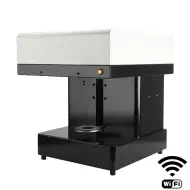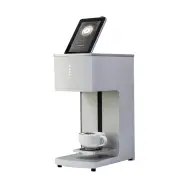
Lifecycle Maintenance Costs Expose Realities of Portable PrintPen Edible Food and Drinks Printer
The Industrial Reality of Maintaining a Portable PrintPen in Food and Beverage Environments
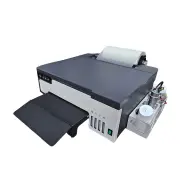
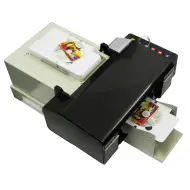
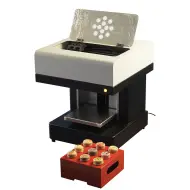
Consider a mid-sized gourmet café implementing the Portable PrintPen Edible Food & Drinks Printer to customize customer orders with intricate edible graphics on pastries and beverages. Despite its appeal, operators face recurring maintenance demands driven by the device's specialized printhead and ink delivery system. The food-safe ink cartridges, composed of water-based colorants and edible binders, exhibit accelerated depletion and variable viscosity changes under fluctuating ambient humidity and temperature conditions, necessitating frequent recalibrations. The printhead's micro-nozzle arrays—typically operating at 8 picoliters per dot—are prone to clogging due to residue crystallization from sugar-laden inks, especially when the device is idle over extended periods. Furthermore, the portable form factor imposes constraints on internal component cooling; inadequate thermal dissipation leads to printhead temperature drift, directly impacting jetting accuracy and lifespan. These operational factors collectively compound lifecycle maintenance costs beyond initial acquisition budget forecasts, raising questions about the device's viability in continuous, high-throughput foodservice settings.
Technical Deep-Dive into Lifecycle Maintenance Costs and Printhead Engineering
Printhead Micro-Nozzle Reliability and Failure Modes
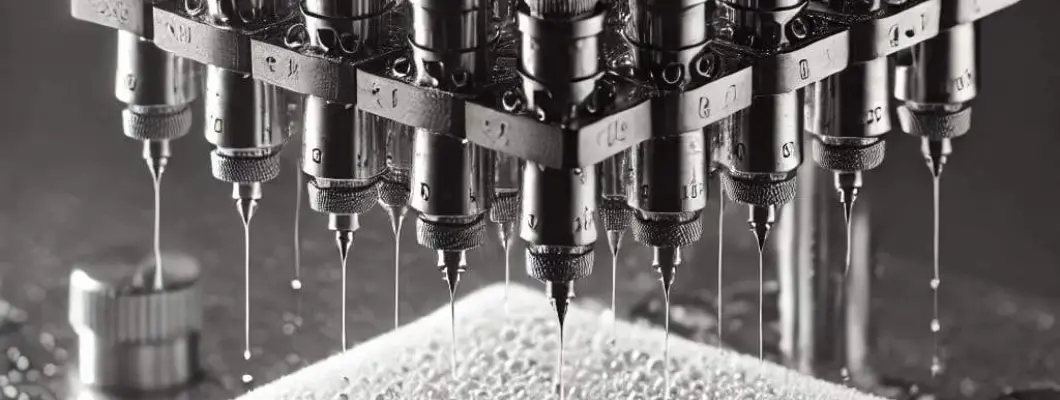
The Portable PrintPen employs a piezoelectric drop-on-demand (DOD) printhead assembly, typically containing 128 nozzles per color channel. Each nozzle ejects ink droplets at volumes averaging 8 pl with precision targeting resolution up to 300 dpi. Under ideal conditions, nozzle failure rates range under 0.5% per 1,000 operational cycles. However, when exposed to edible inks containing sugar and glycerin additives, nozzle clogging frequency elevates sharply. Crystallization of residuals inside channels causes partial or complete blockage, escalating maintenance interventions such as ultrasonic cleaning or nozzle replacement.
Ink Viscosity Variations and Impact on Jetting Performance
Edible inks for food applications have viscosities ranging from 5 to 15 mPa·s at 25°C, significantly higher than standard industrial solvent-based inks (2-5 mPa·s). Viscosity fluctuations caused by ambient temperature shifts (±5°C) can alter droplet formation dynamics. Using a simplified Hagen-Poiseuille equation for flow Q in a microchannel, Q = (π · ΔP · r^4) / (8 · η · L), where η is dynamic viscosity, an increase in η by 50% reduces flow rate proportionally, causing inconsistent droplet sizes and print density reduction. To compensate, the printer firmware modulates driving pulse voltage and frequency, but this introduces increased thermal load and accelerated printhead wear.
Thermal Management Constraints in a Portable Form Factor
The compact chassis limits integration of active cooling modules. Passive heat sinks dissipate approximately 3 Watts generated during continuous print cycles, but thermal simulations show printhead temperatures may rise by up to 12°C above ambient after 30 minutes of operation. Thermal expansion mismatch between silicon MEMS printhead substrates and metallic nozzle plates induces mechanical stress, promoting microfractures that degrade nozzle integrity. Detailed finite element method (FEM) thermal-stress models predict a 7% decrease in nozzle lifespan after 1,000 thermal cycles at this gradient.
Maintenance Schedule and Consumable Replacement Impact on Total Cost of Ownership
Based on operational feedback, scheduled maintenance includes bi-weekly nozzle cleaning cycles requiring 20 minutes each, monthly printhead flushes consuming 50 ml of cleaning solution, and quarterly printhead cartridge replacements at $350 USD per unit. Considering the printhead's rated service life of approximately 3,000 operational hours, these consumable and labor costs contribute an estimated $1,200 USD annually in maintenance. When scaled to a commercial foodservice environment running 8 hours daily across 300 days, the maintenance overhead approximates 50% of the device's initial purchase price—an often-underestimated variable in ROI analyses.
Comparative Table of Maintenance Costs Versus Alternative Edible Printing Technologies
| Parameter | Portable PrintPen Edible Printer | Industrial Flatbed Edible Printer |
|---|---|---|
| Printhead Type | Piezoelectric DOD with 128 nozzles | Thermal Inkjet with 256 nozzles |
| Printhead Replacement Cost | $350 per 3,000 hours | $800 per 5,000 hours |
| Maintenance Frequency | Bi-weekly cleaning cycles | Monthly cleaning cycles |
| Consumable Cost (Ink and Cleaning) | $1,000/year | $1,800/year |
| Thermal Management | Passive cooling, 3W heat dissipation | Active cooling, 15W heat dissipation |
| Operational Uptime | ~85% | ~95% |
Scenario Analysis Explores Practical Outcomes in Diverse Business Settings
Scenario 1: Boutique Coffee Shop Prioritizing Precision Graphics on Latte Art
Here, the PrintPen’s 300 dpi resolution and micron-scale droplet placement enable vivid, detailed imagery directly on foam surfaces. However, maintenance demands disrupt peak morning hours due to required printhead flushes, impacting throughput. The thermal drift issue necessitates frequent recalibration, imposing operational complexity on baristas. Despite this, the low footprint and portability fit constrained counter spaces.
Scenario 2: Small Catering Services Offering On-Demand Edible Branding
Mobility and rapid setup make the PrintPen attractive for event use. The primary limitation is ink chemistry variability due to environmental conditions at venues, leading to inconsistent printing quality. High maintenance downtime and consumable spending reduce profit margins on tight event schedules.
Scenario 3: Mid-Scale Bakery Employing Continuous Production for Custom Cakes
While integration into existing workflows is possible, cumulative maintenance costs and printhead replacement cycles drive operational expenses above acceptable thresholds. Thermal accumulation leads to early component wear, prompting more frequent service interruptions. Larger industrial printers with active cooling present preferable alternatives despite increased CAPEX.
Expert FAQ Addresses Complex Technical Queries on Edible Printing Hardware
Q1: What causes sugar crystallization inside printhead nozzles and how can it be mitigated?
Residual sugar concentration in inks can precipitate as crystallized deposits during evaporation in nozzles. Mitigation involves formulating inks with anti-crystallization additives and implementing automated nozzle cleaning protocols after defined idle periods.
Q2: How does ambient humidity affect edible ink viscosity and print fidelity?
Higher humidity lowers evaporation rates, increasing ink fluidity and potentially causing droplet spread beyond intended pixel areas, reducing sharpness. Conversely, low humidity accelerates drying, risking nozzle blockage. Maintaining controlled humidity between 40%-60% RH optimizes consistency.
Q3: Why is thermal management critical in handheld edible printers compared to stationary units?
Portable devices lack space for active cooling and rely on passive dissipation, leading to thermal hotspots that alter piezoelectric element performance and material stresses, thus reducing printhead lifespan.
Q4: Can printhead drive voltage compensation fully offset ink viscosity changes?
Voltage adjustments partially compensate for flow rate changes by altering droplet velocity and volume but cannot fully resolve mechanical nozzle blockage or ink formulation instability.
Q5: What are the trade-offs between piezoelectric DOD and thermal inkjet in edible printing applications?
Piezoelectric DOD offers finer droplet control and broader ink compatibility but has more complex maintenance demands. Thermal inkjet has simpler mechanics but limited ink viscosity tolerance and higher thermal loads.
Strategic Verdict on the Printed Edible Desktop's Maintenance Challenges
The Portable PrintPen Edible Food & Drinks Printer embodies a niche convergence of portability and high-resolution edible printing capability, suited for low-to-moderate throughput artisanal applications. However, lifecycle maintenance costs driven by printhead fragility under food-safe ink chemistries, constrained thermal management, and environmental sensitivity materially affect total cost of ownership. For scaling operations requiring continuous uptime and predictable operational expenditure, industrial-grade stationary edible printers with advanced thermal regulation and more robust ink delivery systems present a superior alternative. Future innovation must prioritize printhead materials engineered for edible ink chemistries, integrated real-time environmental compensation, and modular design easing maintenance to sustain competitive viability in foodservice printing sectors.