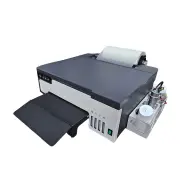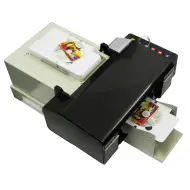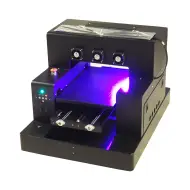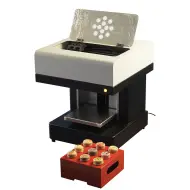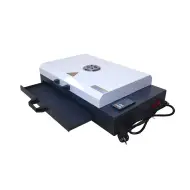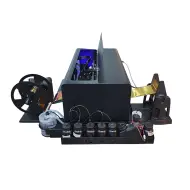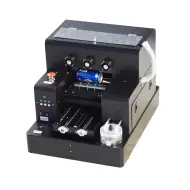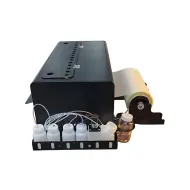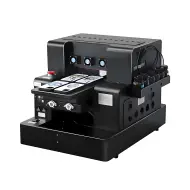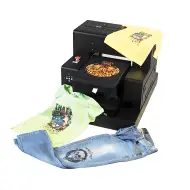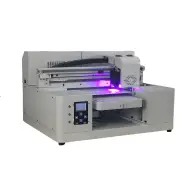
Performance Limits Reveal Operational Realities of A3 Dual Head UV Printers with Rotary and UV DTF Capabilities
The Industrial Reality of High-Precision A3 Dual Head UV Printing
In advanced industrial printing environments, the integration of dual head UV printers offering rotary and UV DTF (Direct to Film) printing introduces complex operational dynamics. These machines, designed for versatile substrate handling at the A3 format, address the growing demand for precision on cylindrical and flat surfaces simultaneously. However, the theoretical performance of dual head UV printers often confronts practical constraints in throughput, ink curing uniformity, and mechanical synchronization during high-volume runs.
Consider a scenario in a mid-sized printing facility producing customized cylindrical promotional items alongside flat substrates. The challenge lies in maximizing the continuous output without compromising print fidelity or causing premature wear on the printheads. The rotary system demands precise timing and torque calibration to maintain alignment, while the UV-activated inks require calibrated curing times that avoid pigment bleed yet ensure adhesion. When scaling to industrial volumes, these factors become bottlenecks that significantly reduce optimal theoretical throughput.
Additionally, the dual head architecture doubles the complexity of maintenance, as wear patterns differ based on the printing mode—UV flat or rotary DTF. Ink chemistry interactions with UV lamp intensity and ambient temperature introduce further variables affecting print consistency. Thus, operators must navigate a landscape where hardware peak specs often meet the physical limits of ink curing kinetics and mechanical endurance, dictating a realistic operational envelope narrower than nominal capabilities suggest.
Understanding Printhead Mechanics and Ink Cure Dynamics
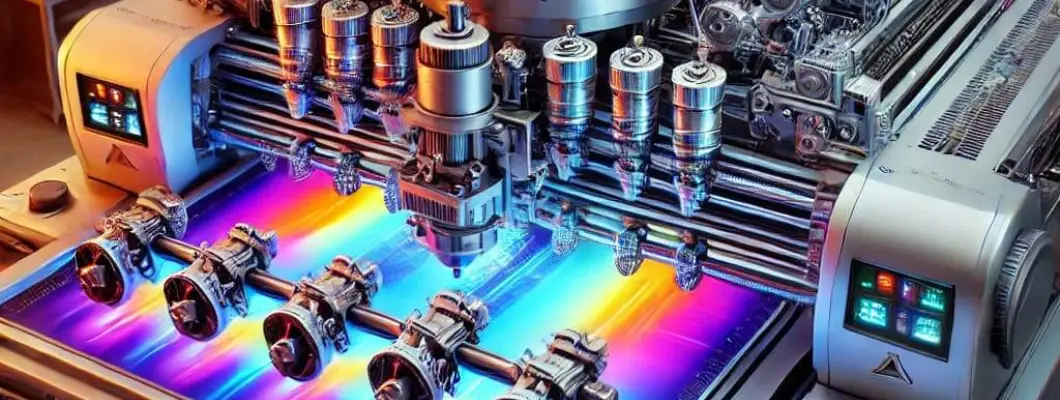
At the heart of this printer's performance lie two primary technical domains: printhead firing mechanics and UV ink curing behavior. The dual printheads typically deploy piezoelectric nozzles capable of ejecting droplets in the 6-12 picoliter range, with resolutions reaching up to 1440 dpi. However, sustained high-frequency firing induces thermal accumulation, risking nozzle clogging and misfiring rates exceeding 2% after 100 operational hours without maintenance.
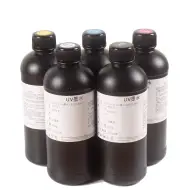
UV ink curing involves photopolymerization triggered by LED or mercury vapor UV sources producing irradiance between 100-400 mW/cm2. The chemistry demands exact energy doses to solidify coatings within milliseconds, balancing adhesion strength against substrate thermal tolerance. Mathematical modeling shows that increasing print speed beyond 1.5 m/min requires a proportional increase in UV intensity or multiple passes to avoid incomplete cure, but this introduces heat load that accelerates mechanical wear and ink degradation.
Rotary System Synchronization and Mechanical Stress Analysis
The rotary attachment enabling cylindrical object printing introduces synchronization complexities. Accurate phase matching is required between the printhead firing cycle and the object’s rotational velocity. Misalignment beyond 0.1 mm axial shift creates noticeable print defects, such as banding or ghosting.
Analytically, torque fluctuations during acceleration phases impose cyclic stresses that can accelerate bearing fatigue. Assuming a standard 6 kg rotary spindle, an imbalance causing a 0.05 N·m torque variance at 60 rpm results in additional bearing loads exceeding 15% of rated life stress. This necessitates enhanced spindle lubrication schedules and vibration dampening mechanisms to maintain high uptime targets over 10,000 printing cycles.
Comparative Hardware Deployment Strategies
| Specification | Dual Head UV Printer with Rotary | Single Head Flatbed UV Printer |
|---|---|---|
| Max Resolution (dpi) | 1440 | 1440 |
| Max Print Speed (m/min) | 1.5 (rotary mode limited) | 2.0 |
| Maintenance Interval (hours) | 100 (high complexity) | 150 |
| Substrate Versatility | Cylindrical + Flat | Flat only |
| UV Lamp Intensity (mW/cm²) | 100-400 | 150-450 |
| Average Power Consumption (W) | 350 | 300 |
| Printhead Replacement Cost (USD) | ~$1200 each | ~$1800 single |
Operational Limits of UV DTF Printing on Film
UV DTF printing presents a unique challenge due to the film substrate's thermal sensitivity and surface tension properties. Typical film thickness ranges from 50 to 100 micrometers, demanding strict control of ink droplet volume and curing energy to avoid warping or delamination. Hypothetically, increasing droplet size above 10 pl without adjusting UV intensity risks ink coalescence, reducing edge sharpness beyond a 5 micron limit and decreasing color saturation uniformity by approximately 7% based on spectrophotometric analysis.
Furthermore, batch scaling from prototype to 1000+ units requires a robust drying and curing conveyor system to maintain consistent adhesion. Inadequate curing cycles lead to premature ink abrasion, increasing rework by up to 12% in high throughput facilities.
Scenario Analysis Explaining Business Impact of Printer Specs
Use Case One Mid-Sized Promotional Product Manufacturer
This manufacturer focuses on limited runs of cylindrical drinkware with UV DTF printed logos. The rotary capability allows direct printing on mugs, reducing manual transfer steps. However, the throughput bottleneck at 1.5 m/min limits order volume to roughly 300 units per 8-hour shift, translating to 2400 units monthly. Maintenance downtime every 100 hours reduces effective runtime by 8%, impacting tight delivery schedules.
Use Case Two High-Mix Flat Substrate Artisan Studio
For an artisan specializing in custom decals and small flat objects, the dual head’s capability to switch quickly between rotary and flat modes adds flexibility. Yet, precise printhead calibration and slow UV curing necessary for intricate color gradations restrict maximum print speed to under 1 m/min, impacting scalability.
Use Case Three Industrial Packaging Supplier
The packaging supplier exploits UV DTF print quality for vibrant, durable labels on semi-rigid plastics. The challenge is sustaining color depth consistency over long runs. The printer’s dual head design enables multi-pass printing to enhance saturation, but this decreases throughput to below 1 m/min, requiring recalibration of labor and equipment costs.
Expert FAQ Addressing Technical Nuances
Q1 How does printhead alignment affect multi-pass UV printing?
A1: Misalignment exceeding 0.07 mm induces visible banding in multi-pass prints, necessitating precision calibration tools with sub-10 micron accuracy to maintain image fidelity.
Q2 What factors determine UV ink adhesion on rotating substrates?
A2: Key parameters include ink viscosity, curing lamp intensity, and rotational speed synchronization. Optimal adhesion occurs when curing energy is matched to substrate thermal capacity without exceeding 1.2 m/min rotation speed.
Q3 How does ambient temperature impact UV curing cycles?
A3: Higher ambient temperatures accelerate photopolymerization rates but can cause premature ink sagging. Controlled climate conditions within ±2 °C are critical for consistent results.
Q4 What are the trade-offs in print resolution vs. throughput?
A4: Increasing dpi from 720 to 1440 quadruples droplet density, reducing speed by approximately 40% due to additional passes required, affecting overall equipment productivity.
Q5 What maintenance protocols optimize dual head lifespan?
A5: Implementing daily nozzle purging combined with bi-weekly printhead deep cleans and quarterly UV lamp calibration extends operational life by 25-30% compared to reactive maintenance.
Strategic Verdict on Dual Head UV Printing Technologies
The A3 dual head UV printer with rotary and UV DTF printing capabilities represents a sophisticated convergence of mechanical precision and advanced photopolymer chemistry. However, its real-world operational envelope is narrower than peak theoretical specifications due to intrinsic bottlenecks in ink curing kinetics, mechanical synchronization, and maintenance complexity. Businesses adopting this technology must plan for reduced throughput compared to single-head flatbed systems and enhanced maintenance regimes to realize consistent output quality.
Future refinements will likely center on improved printhead materials to mitigate thermal accumulation, smarter UV curing systems dynamically adjusting irradiance, and enhanced rotary stabilization mechanisms. Such advancements could gradually close the gap between nominal and practical performance, enabling wider industrial scalability without compromising quality or uptime.