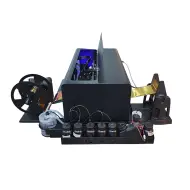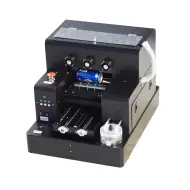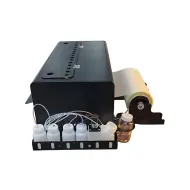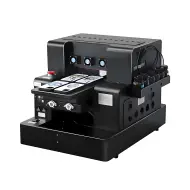
The Financial Audit Behind an Economical A4 Multifunction LED UV Printer Reveals Hidden Costs and ROI Challenges
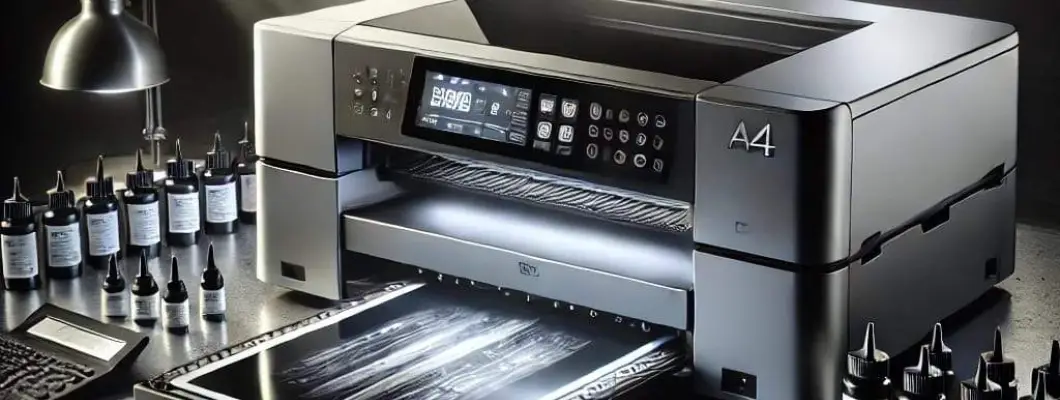
The Industrial Reality of Integrating Economical A4 LED UV Printers into Enterprise Workflows
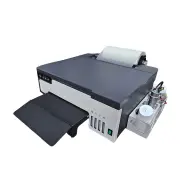
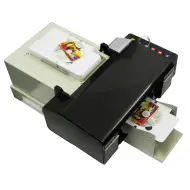
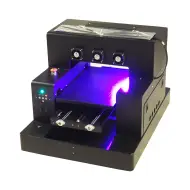
In a mid-sized graphic design firm transitioning from traditional solvent printers to LED UV technology, decision-makers face a multilayered challenge: assessing true total cost of ownership when deploying an economical A4 multifunction LED UV printer. While initial capital expenditure (CAPEX) appears modest relative to industrial-grade units, operational complexities obscure a straightforward financial picture. Consider a scenario where a firm aims to maintain throughput of 150 prints per day across varied substrates with mandatory quality thresholds exceeding 1200 dpi. The limited print speed and consumable lifetime of economical models impose hidden bottlenecks, further impacted by maintenance downtime and ink chemistry constraints. Asset depreciation follows non-linear trajectories influenced by ink compatibility, LED lifespan, and mechanical wear—key variables often overlooked at purchase. This scenario underscores the necessity for a granular financial audit integrating lifecycle cost modeling rather than relying solely on sticker price or bench test specifications.
Furthermore, the multifunction capability—encompassing standard printing, possible white ink layering, and varnishing—introduces incremental consumable use and maintenance demands. Each function, while adding value, layers additional cost vectors: increased cleaning cycles, potential printhead replacement frequency, and power consumption. For infrastructure architects, the absence of detailed operational cost data leads to suboptimal budgeting, jeopardizing sustained throughput and undercutting expected ROI. The environmental conditions, such as controlled humidity and temperature for stable ink curing, also translate to indirect costs through HVAC demand and facility adaptation. In sum, the industrial reality demands a financial audit that rigorously quantifies these less visible expense drivers to inform deployment strategy.
Technical Deep-Dive into Cost Drivers and Asset Depreciation
Printhead Longevity and Maintenance Expenditure
The printhead in economical A4 LED UV printers operates under constrained tolerances due to compact design and budget component selection. Assuming a piezoelectric printhead with a base endurance of approximately 1 billion actuations, under constant multifunction operation the effective lifespan can shrink to 700 million cycles due to increased chemical abrasion from UV-curable inks. At an average print density of 600 dpi over a 210 mm width and print speed of 0.5 m/s, total jet firing frequency approaches 2.5 million actuations per hour. This implies a printhead lifetime of approximately 280 operational hours before replacement becomes necessary.
Ink Chemistry and Consumable Burn Rates Evaluated
Economical printers typically utilize LED UV inks with higher reactive pigment loads and solvent fractions optimized for cost, not longevity. Ink consumption is 25 ml per 100 A4 prints with 4-color CMYK plus white and varnish layers, escalating consumable costs. Daily production of 150 prints equals consumable volume of 37.5 ml, extrapolating to roughly 11.25 liters annually. At an average cost of $300 per liter, annual ink expenditure reaches $3,375, dwarfing capital depreciation in early years. Additionally, ink chemistry imposes constraints on nozzle cleaning frequency, forcing daily purging and partial ink waste estimated at 5% of total volume. This waste further inflates operational costs.
Power Consumption and Thermal Management Impact
LED UV curing modules consume between 60 to 120 Watts continuously per printhead. For multifunction printers with dual printheads or additional curing stations, sustained operational power consumption ranges from 150 to 250 Watts. Over a 10-hour production day, thermal management systems must dissipate up to 2.5 kWh of heat output. This translates to incremental facility HVAC power draw estimated at 0.8 kWh per hour, increasing indirect operating expenses by approximately $150 monthly for electricity under regional commercial tariffs.
Asset Depreciation Over Typical 5-Year Lifecycle
Assuming an initial purchase price of $8,000, depreciation using the double declining balance method with accelerated maintenance costs results in book value dropping to 40% within three years, reflecting rapid obsolescence due to advancing industrial-grade alternatives and maintenance burden. Incorporating maintenance costs averaging $1,200 annually and consumable expenses, the total cost of ownership (TCO) exceeds $15,000 over five years, placing effective per-print cost near $0.20, a critical figure for profitability modeling.
Comparison of Economical vs Industrial-Grade Multifunction LED UV Printers
| Specification | Economical A4 Printer | Industrial-Grade Equivalent |
|---|---|---|
| Initial Cost (USD) | 8000 | 35000 |
| Print Speed (m/s) | 0.5 | 1.2 |
| Printhead Lifespan (hours) | 280 | 1500 |
| Annual Ink Consumption (liters) | 11.25 | 15 |
| Power Consumption (Watts) | 200 | 500 |
| Annual Maintenance Cost (USD) | 1200 | 2200 |
| Effective Cost per Print (USD) | 0.20 | 0.11 |
Scenario Analysis Reveals Operational Impact of Key Specifications
Case 1 Small Design Studio with Limited Volume: A boutique studio producing 50 prints daily may find the economical printer’s lower CAPEX attractive. However, elevated consumable costs and frequent maintenance downtime reduce net financial advantage. Print speed constraints rarely bottleneck the workflow but operational overhead inflates per-print cost to $0.25, limiting margin on premium short-run jobs.
Case 2 Mid-Sized Production Facility Scaling Volume: Throughput requirements of 150-200 prints per day begin to stress the economical model’s printhead endurance and increase maintenance interventions. Multipurpose modes (white ink, varnish) increase consumable burn rate, forcing unplanned outages. Resultant operational inefficiencies translate to revenue losses exceeding $5,000 annually due to capacity constraints and downtime. ROI extends beyond five years, a critical financial risk.
Case 3 Corporate Print Department with Automation Focus: Integrating the economical printer into a larger automated line requires synchronization with upstream and downstream processes. Print speed and curing times limit throughput ramp-up, while higher failure rates demand increased labor for maintenance. Despite lower initial CAPEX, indirect labor and downtime costs push effective cost per print above $0.22, challenging cost justification relative to industrial alternatives.
Expert FAQ Clarifies Complex Cost Variables
Q1: How does LED wavelength stability impact ink curing and operational expenses?
Wavelength shifts reduce curing efficiency, increasing cure time or forcing higher energy consumption, thereby elevating power costs and potential ink adhesion failures that cause waste.Q2: What role does printhead nozzle density play in maintenance cycles?
Higher nozzle density can increase resolution but also elevates risk of clogging under high pigment loads, necessitating more frequent cleaning cycles and accelerating wear.Q3: Can power surge protectors mitigate LED UV module lifespan reduction?
Yes, stable power prevents voltage spikes that degrade LED diodes prematurely, extending module life and reducing unexpected replacement costs.Q4: How do ambient conditions accelerate asset depreciation?
High humidity and temperature fluctuations promote ink chemistry instability and mechanical stress, increasing maintenance frequency and shortening overall printer lifespan.Q5: What statistical methods best forecast consumable cost variability?
Monte Carlo simulations incorporating ink price volatility, print volume fluctuations, and maintenance event frequency provide probabilistic cost projections enhancing budget accuracy.
Strategic Verdict on Financial Viability and Future Trajectory
Economical A4 multifunction LED UV printers represent a cost-sensitive entry point into multifunction UV printing but carry hidden financial burdens from consumables, maintenance, and accelerated depreciation. Their total cost of ownership, when carefully audited, often approaches parity with industrial-grade solutions over extended use, especially in medium to high-volume environments. Strategic deployment requires rigorous upfront financial modeling including maintenance schedules, ink chemistry constraints, and throughput limitations to avoid eroding anticipated ROI. While technological advances may incrementally improve component durability and ink efficiency, the fundamental trade-offs between initial acquisition cost and operational expense persist. Organizations must align technology adoption precisely with production demands and financial risk tolerance to maximize asset utility without incurring costly operational bottlenecks or premature write-offs.