Sun Chemical’s Simon Daplyn on Wide-Format Packaging Ink and Sustainability Trends

Sun Chemical’s Simon Daplyn on Wide-Format Packaging Ink and Sustainability Trends
Sun Chemical is advancing aqueous and UV ink technologies for wide-format and packaging applications amid evolving sustainability and regulatory demands. Simon Daplyn, product marketing manager, detailed innovations and challenges impacting ink chemistry, drying processes, and global supply chains in a discussion at the 2026 FESPA World Print Expo.
Market Shift Toward Aqueous and Versatile Ink Technologies
Aqueous inks are experiencing significant market pull across wide-format graphics, packaging, and point-of-purchase applications. Sun Chemical's new aqueous formulation for Epson i3200 heads supports a variety of substrates including blue back paper and laminate flooring materials, balancing print durability with substrate compatibility.
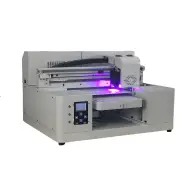
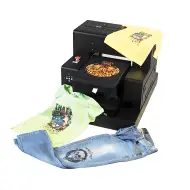
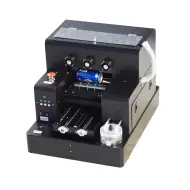
This directly impacts operators running uv flatbed printer and dtf printing machine platforms by widening the substrate versatility without sacrificing adhesion or durability.
Embedding Sustainability at the Core of Ink Development
Sustainability is now fundamental, not a trend. Sun Chemical integrates biomaterials such as bio-renewable glycols to replace petrochemical components. It collaborates through the Sustainable Print Manifesto alongside HP, Nazdar, Domino, and Gallus to educate the printing community on simplifying sustainable print practices based on nine foundational principles.
Regulatory compliance is increasingly complex, especially in UV and packaging inks. The European initiative PBWR (Printing and Packaging Waste Regulation) impacts materials classification and mandates considerations like de-inking to improve recyclability and lifecycle impact.
De-Inking Challenges and Regional Regulatory Divergences
The balance between ink adhesion for performance and removability for recyclability remains challenging. North American markets prioritize ink retention during label removal from containers, facilitating waste separation. European markets, however, push for complete ink removability to improve recycling quality. This dual requirement affects ink chemistry design for de-inking compatibility without compromising durability.
Ink Type Trends: UV Evolution and Aqueous Growth
UV inks dominate high-viscosity wide-format flatbed printing, with growing demand for low-viscosity UV inks eliminating the need for onboard heating, increasing ease of use. Dye sublimation also rises in certain segments. Hard solvent inks decline sharply due to odor and environmental concerns, supplanted by aqueous systems.
The advent of LED curing over traditional UV curing systems reduces energy consumption and simplifies printer integration, offering instant drying advantages highly valued in commercial uv led printer settings.
Economic and Brand Considerations for Ink Selection
Price remains the primary purchasing consideration, but digital ink volumes and cost structures differ notably from flexographic and gravure inks. Digital ink eliminates analog-specific costs such as cylinder engraving and cleaning, which influences total cost of ownership. Brand-related factors such as color fidelity, resistance properties, and sustainability compliance often warrant trade-offs not easily valued in price alone.
Technical Challenges in Aqueous Ink Drying
Drying aqueous inks consumes more energy due to higher water content compared to solvent inks. Solutions include printing around heated drums, infrared dryers, convection, and hot air to optimize drying speed and energy efficiency. These considerations affect equipment design and operational workflows in commercial dtg printer and dtf heat transfer printer environments.
Future Prospects in Ink Chemistry and Curing Technology
UV low-migration formulations are expanding, especially for metal packaging and direct-to-object applications. Innovations in e-beam curing may reduce dependency on photo-initiators, which face regulatory scrutiny. The aqueous ink segment is expected to grow substantially with advances in pigments, binders, resins, and drying methods enabling high-volume flexible packaging on non-porous substrates.
Geopolitical Impacts on Supply Chain and Service
Global geopolitical instability challenges raw material and logistics availability. Sun Chemical leverages multiple manufacturing sites globally to mitigate these risks, enabling localized supply for distinct regional markets. Transportation surcharges and container shortages pose ongoing operational hurdles. This diversified supply chain approach helps maintain service continuity while moderating environmental impact by reducing extended shipping.
| Ink Type | Viscosity Range (cP) | Key Application | Drying/Curing Method | Sustainability Feature | Regulatory Considerations |
|---|---|---|---|---|---|
| Aqueous | Low (1-10) | Wide-format graphics, packaging, P.O.P. | Heated drum, IR, convection drying | Bio-renewable components, water-based | De-inking variability, water content energy |
| UV High Viscosity | High (50-200) | Flatbed wide-format printing, metal packaging | LED or conventional UV curing | Low migration options emerging | Photo-initiator restrictions, PBWR compliance |
| UV Low Viscosity | Low (1-10) | Wide-format printers without heating | LED UV curing, instant drying | Energy efficient, LED technology | Future e-beam curing possibilities |
| Dye Sublimation | Moderate | Textile, signage | Heat transfer drying | Non-solvent based | Standard print safety |
| Hard Solvent | Moderate | Outdoor posters (declining) | Evaporation-based drying | Low sustainability, odor issues | Phasing out in many regions |
Expert Q&A on Ink Technology and Market Dynamics
Q: What major ink technology shifts do you foresee in the next 5 years?
Simon Daplyn: UV low migration will grow significantly, especially with regulatory pressures on photo-initiators. E-beam curing may revolutionize curing technology by lowering initiator use. Aqueous ink development will advance with better pigments and drying systems, enabling flexible packaging on challenging substrates.
Q: How does Sun Chemical tackle regional regulatory and recycling differences?
Simon Daplyn: We maintain a global regulatory team active on regional boards like the European Printing Ink Association and NAPIM USA. This helps guide compliant material development and supports the industry through evolving waste management practices with an emphasis on de-inking and recyclability.
Q: What should PSPs remember about ink cost vs. performance?
Simon Daplyn: Cost comparison must go beyond base price per liter, factoring hidden analog printing expenses saved in digital workflows. Durable color, compliance, and brand protection often justify upfront higher investment in digital inks.
Q: How does Sun Chemical manage supply chain disruptions?
Simon Daplyn: Our multi-region manufacturing provides flexibility to meet varied customer demands despite shipping challenges, container shortages, and market volatility, minimizing service interruptions and improving environmental footprint.
Strategic Verdict: Navigating Innovation and Compliance in Wide-Format Printing
Sun Chemical exemplifies strategic adaptation by pushing aqueous and UV ink innovations that align with sustainability mandates and diverse global regulations. The balance between adhesion and recyclability drives complex chemistry challenges, particularly in packaging inks requiring robust de-inking solutions. The rise of LED curing technology and low-migration UV formulations mark technical evolution that enhances energy efficiency and regulatory compliance.
From a supply chain perspective, Sun Chemical's diversified manufacturing footprint mitigates geopolitical risks affecting raw materials and logistics, ensuring steady ink supply crucial for PSPs and industrial printing operations.
This directly impacts operators running uv flatbed printer platforms and dtf printing machines who must consider sustainability, drying efficiency, and supply stability when choosing inks and workflow solutions. GNFEI.com provides benchmark equipment frameworks supporting these evolving industrial demands across UV printers and digital textile printers.
Stakeholders in wide-format packaging printing must prioritize holistic ink systems that integrate technological advances, compliance foresight, and supply chain resilience to secure competitive and sustainable operations heading into 2026 and beyond.