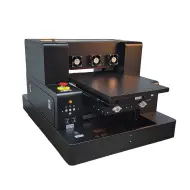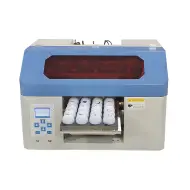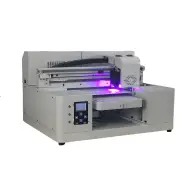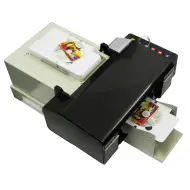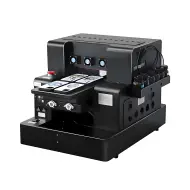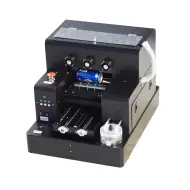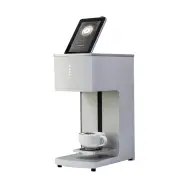
Analyzing A3 UV Varnish DTF Printer Machine Label Printer From The Financial Controller Perspective

The Industrial Reality of Managing CAPEX and OPEX for A3 UV Varnish DTF Printers
The decision to deploy an A3 UV Varnish Direct-To-Film (DTF) printer within a mid-tier print production environment requires a nuanced understanding of capital expenditure (CAPEX) versus operational expenditure (OPEX) impacts. The upfront investment in hardware ranges typically between $25,000 and $40,000 depending on vendor and configuration complexity. However, this initial outlay constitutes only a fraction of the total cost of ownership over a printer’s useful life, which commonly spans 5 to 7 years under standard industrial use cases.
Financial controllers must contend with depreciation schedules, balancing asset value reduction against production outputs, and aligning this with revenue recognition cycles. The varnishing capability introduces additional consumable costs, including UV-curable varnish inks and specific maintenance kits designed to prevent nozzle clogging—a known failure mode when operating with UV varnish mediums. The fungibility of DTF label printing, combined with the additional varnishing step, extends print cycle times by an estimated 12-15%, directly impacting throughput-based financial models.
Furthermore, printing is often a bottleneck in supply chains that rely on rapid label turnaround times. Delays induced by varnish curing, hardware recalibration, or ink replacement introduce direct labor costs, which escalate when 24/7 operations are attempted. Identifying the hidden finance drains—such as unexpected downtime due to printhead failure or varnish curing inconsistencies—is critical to maintaining favorable OPEX ratios.
Financial planning must incorporate consumable lifecycle costs, including varnish degradation over time, UV lamp bulb replacement frequency (typically every 1,500-2,000 run hours), and printhead maintenance, which can entail a complete module replacement at costs upward of $1,200 per unit. These recurring costs weigh heavily against throughput gains and must be precisely modeled to avoid budget overruns.
Thus, the industrial reality for financial controllers is an ecosystem of interdependent cost centers, where capital budgeting decisions must be informed by comprehensive operational expense forecasting that factors in varnish chemistry, UV curing reliability, and printhead wear mechanisms.
Technical Deep-Dive Into Depreciation, Maintenance, and Cost Variables
1. Asset Depreciation and Return on Investment Calculations
The A3 UV Varnish DTF printer’s typical depreciation using a straight-line method over 5 years results in annual depreciation figures of approximately $5,000 to $8,000. These values are accompanied by salvage value approximations of 10-15% of the initial cost at end-of-life. Depreciation impacts financial statements and tax obligation calculations.
2. Consumables and Ink Chemistry Economics
UV varnish inks are significantly more costly than standard solvent or water-based inks, averaging $300 per liter with coverage rates of approximately 10-12 square meters per liter at 15-micron thickness. Given an active production capacity of 50 square meters per day, daily ink cost estimates reach $25-$30 purely for varnish application.
3. Printhead Maintenance and Replacement Cycles
Printheads in UV DTF systems are subject to clogging due to varnish viscosity and curing residues. Average maintenance intervals are quarterly, with a full replacement cycle extending approximately every 18 months under continuous use. Replacement costs stand at $1,200 per printhead module, with downtime during replacements averaging 2-3 hours. This leads to quantifiable productivity loss valued at $150-$200 per service event in labor costs.
4. Energy Consumption and Thermal Management Costs
The UV curing system adds 600-800 Watts of peak power draw per printing cycle, increasing electrical costs by an estimated 12-15% compared to conventional solvent DTF printers. Effective thermal management systems required to dissipate heat from UV lamps add complexity and incremental maintenance fees.
5. Throughput Impact and Opportunity Cost Analysis
With print speeds averaging 8 square meters per hour, the addition of varnish and curing phases slows effective throughput by 15% versus non-varnish DTF systems. This delay generates opportunity costs, especially for businesses working under tight just-in-time production schedules. The following table summarizes key financial variables impacting ROI.
| Variable | A3 UV Varnish DTF Printer | Standard Solvent DTF Printer |
|---|---|---|
| Initial CAPEX ($) | 30,000 | 20,000 |
| Annual Depreciation ($) | 6,000 | 4,000 |
| Consumables Cost / Day ($) | 30 (varnish-focused) | 15 (ink-only) |
| Printhead Replacement Cycle (months) | 18 | 24 |
| Print Speed (m²/hr) | 8 | 9.5 |
| Power Draw (Watts) | 800 (UV Lamp Included) | 500 |
| Maintenance Downtime (hrs/year) | 20 | 12 |
Scenario Analysis For Financial Controllers Across Business Models
Scenario 1 Industrial Label Manufacturer with High Volume Demand
In a facility printing 100,000 labels per month, the slower throughput and increased maintenance costs may reduce net profit margins by 5-7%, assuming fixed labor and materials pricing. High initial CAPEX is offset by product differentiation that UV varnish provides, but requires careful cash flow management to absorb increased OPEX.
Scenario 2 Boutique Packaging Provider With High-Quality Focus
Smaller scale operations printing under 10,000 labels per month might tolerate higher unit costs due to premium print effects. Here, the financial controller must prioritize maintenance scheduling to minimize downtime cost and engage in precise consumables inventory controls to avoid excess varnish degradation losses.
Scenario 3 Third-Party Print Service Bureau With Variable Order Profiles
Print bureaus face challenges balancing throughput flexibility with amortizing costly printheads and varnish consumables. Financial planning involves predictive maintenance budgeting and balancing ink purchase volumes with variable job demands to optimize working capital.
Expert FAQ From The Financial Controller Perspective
Q1: How can asset life extension strategies reduce depreciation impact?
Extending asset life beyond 5 years through proactive maintenance delays capital replacement, flattening annual depreciation and improving ROI but may increase maintenance OPEX.Q2: What hidden costs should be anticipated with UV varnish inks?
Costs include storage handling, shelf-life expiry losses, and potential surface contamination requiring additional waste management processes.Q3: How do printhead failure rates differ between varnish and non-varnish systems?
Varnish systems have 1.3x higher failure frequency due to ink residue curing and higher viscosity, affecting replacement budget forecasts.Q4: What are the financial implications of increased power consumption?
Incremental electricity use can add 10-15% to monthly utility expenses, which must be integrated into production cost models.Q5: How does reduced throughput affect cost allocation per label?
Reduced printing speed elevates per-unit fixed cost allocations, squeezing margins especially in high-volume, low-margin environments.
Strategic Verdict On Financial Viability of A3 UV Varnish DTF Printers
The A3 UV Varnish DTF printer represents a financial trade-off between enhanced product finishes and increased lifecycle costs. Financial controllers must rigorously model CAPEX, consumable cycles, and maintenance downtime when forecasting budget impacts. While premium label effects offer potential market advantages, the incremental OPEX pressures require strategic fiscal discipline and contingency planning. The technology’s trajectory suggests improving varnish chemistries and printhead designs will gradually mitigate maintenance burdens, but near-term deployments demand precise cost-control frameworks and scenario planning aligned with specific business throughput and quality priorities.