
DTF vs. Sublimation vs. DTG: Which is Best for Your Business? | GNFEI
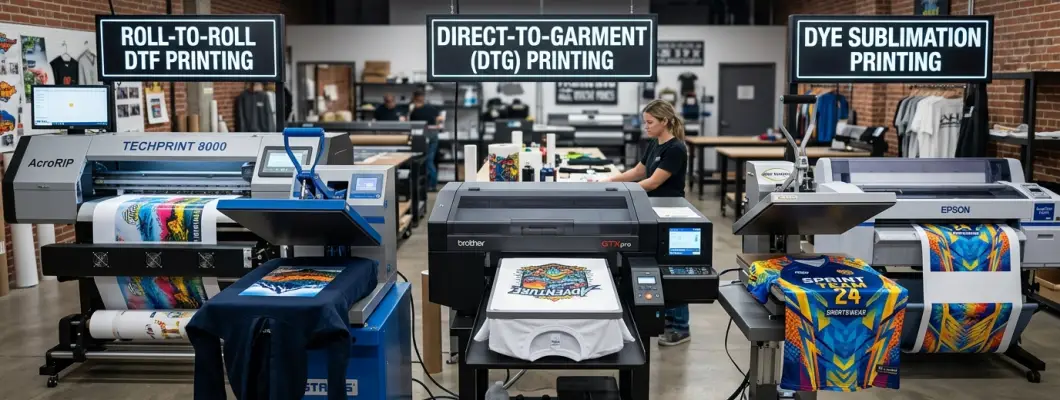
Starting or expanding a custom apparel business requires making a pivotal capital investment: which digital textile printing technology should you build your production line around? In today's competitive embellishment market, three dominant digital inkjet processes power over 90% of on-demand garment decorating: Direct-to-Film (DTF), Dye Sublimation, and Direct-to-Garment (DTG). While all three create photorealistic full-color prints, they operate on completely distinct chemical and mechanical principles, resulting in stark differences in fabric versatility, hand-feel softness, wash cycle durability, and profit margins. In this technical comparison, we dissect each process to help you choose the most lucrative machine for your shop.
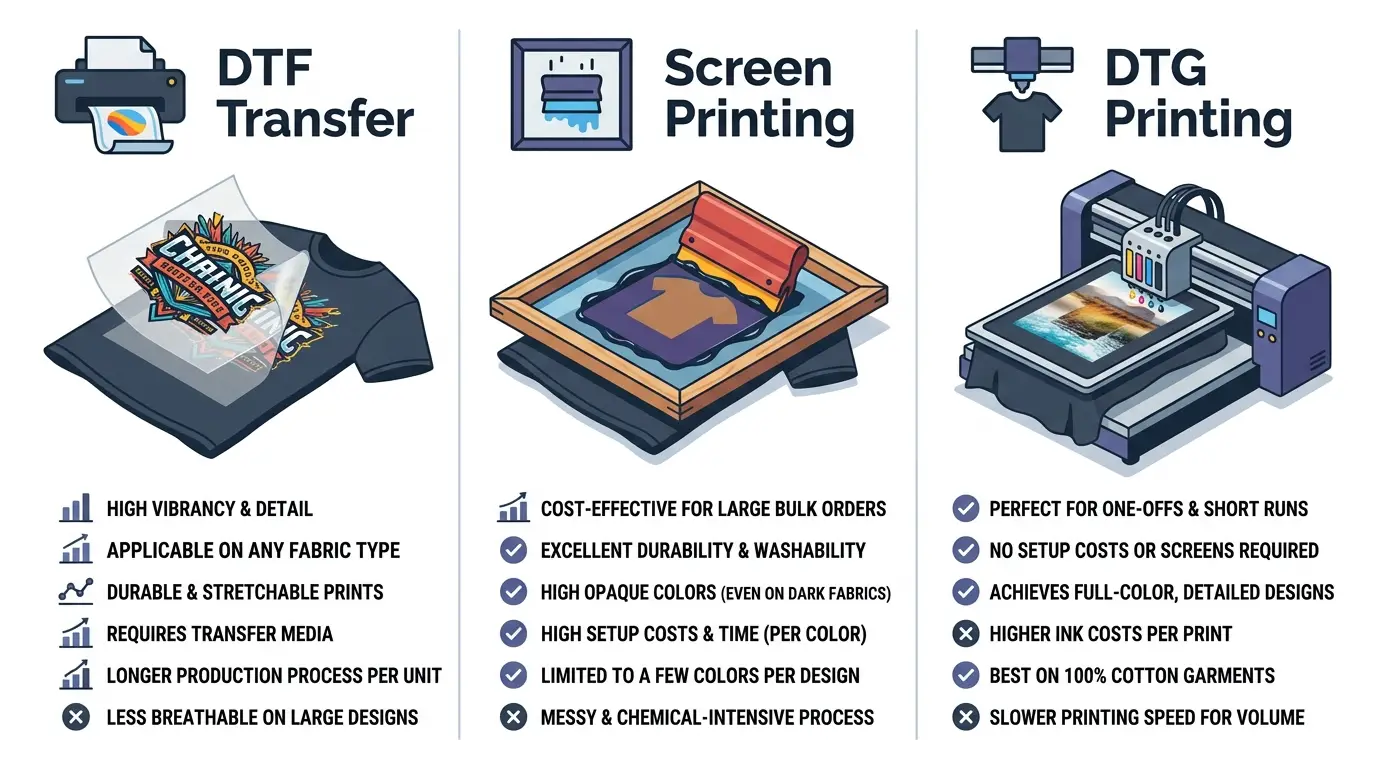
1. Direct-to-Film (DTF) Printing: The Universal Production Workhorse
Direct-to-Film (DTF) printing has rapidly transformed the custom apparel industry since its inception, emerging as the fastest-growing decorating method worldwide. Instead of spraying ink directly onto fabric or paper, a DTF printer jets specialized water-based pigment inks (CMYK + White) directly onto a coated PET (polyethylene terephthalate) release film. While the ink is still wet, a fine, thermoplastic polyurethane (TPU) hot-melt adhesive powder is applied across the graphic. The powdered film passes through an automated infrared curing oven or shaker tunnel to melt the powder into a flexible adhesive matrix. Finally, the finished transfer is heat-pressed onto garments at 150°C to 160°C for 12 to 15 seconds.
The Decisive Advantages of DTF Printing
✔ Universal Fabric Versatility
Unlike sublimation (limited strictly to polyester) and DTG (limited primarily to cotton), DTF bonds flawlessly to virtually any fabric: 100% cotton, ring-spun combed cotton, polyester sports fleece, poly-spandex blends, nylon rainwear, denim, canvas tote bags, and genuine leather jackets.
✔ Zero Pre-Treatment Required
DTF completely eliminates the messy liquid pre-treatment spraying and heat drying cycle mandatory in DTG printing on dark fabrics. This removes pre-treatment staining rings, saves substantial labor time, and cuts equipment costs.
✔ High-Volume Gang-Sheet Efficiency
Print shops can gang dozens of different logos, neck labels, and client graphics onto a single continuous roll. Transfers can be cut and stored indefinitely in inventory, ready to be heat-pressed on demand in just 15 seconds when customer orders arrive.
✔ Superior Stretch & Wash Durability
High-grade TPU hot-melt adhesive powder creates a rubberized, flexible backing that stretches with the garment without cracking. Under ISO wash test standards, premium DTF prints withstand 50+ wash cycles without fading or edge delamination.
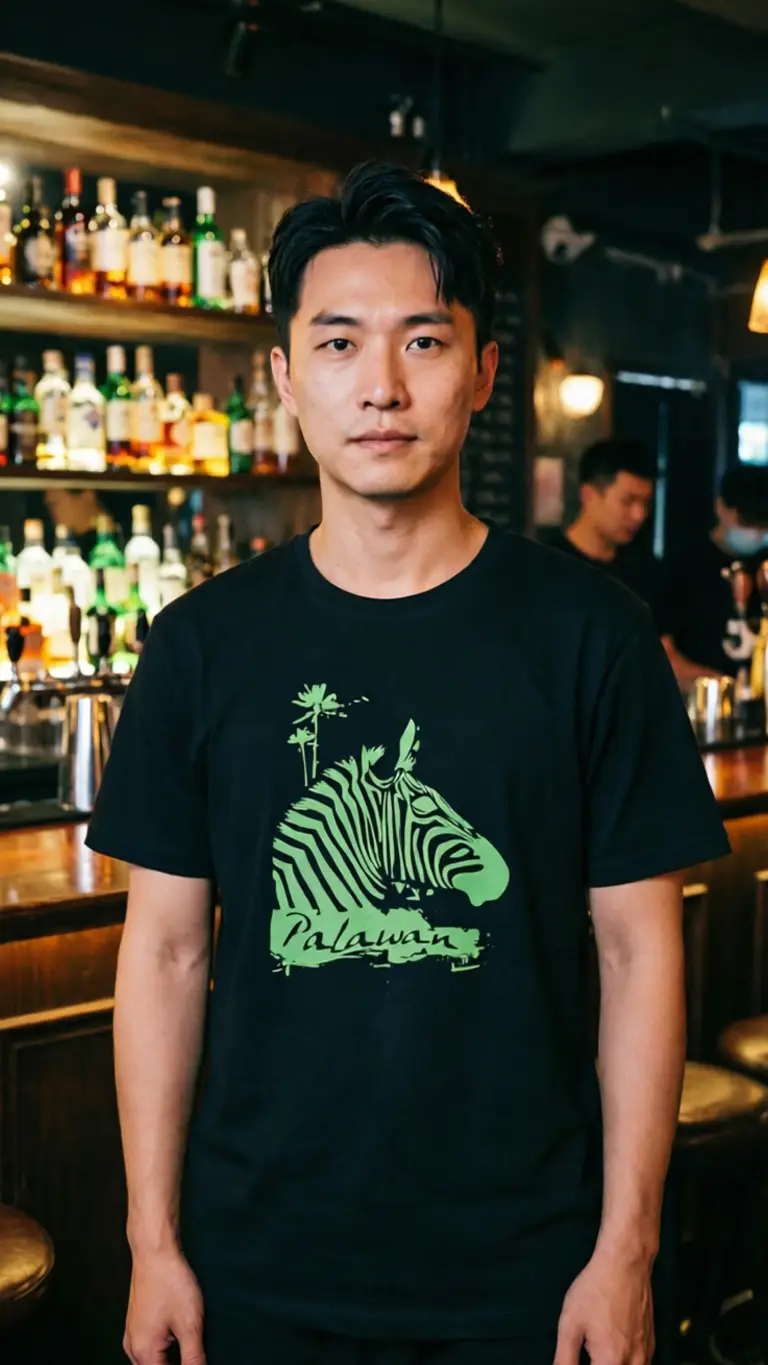
GNFEI DTF Production Print Sample
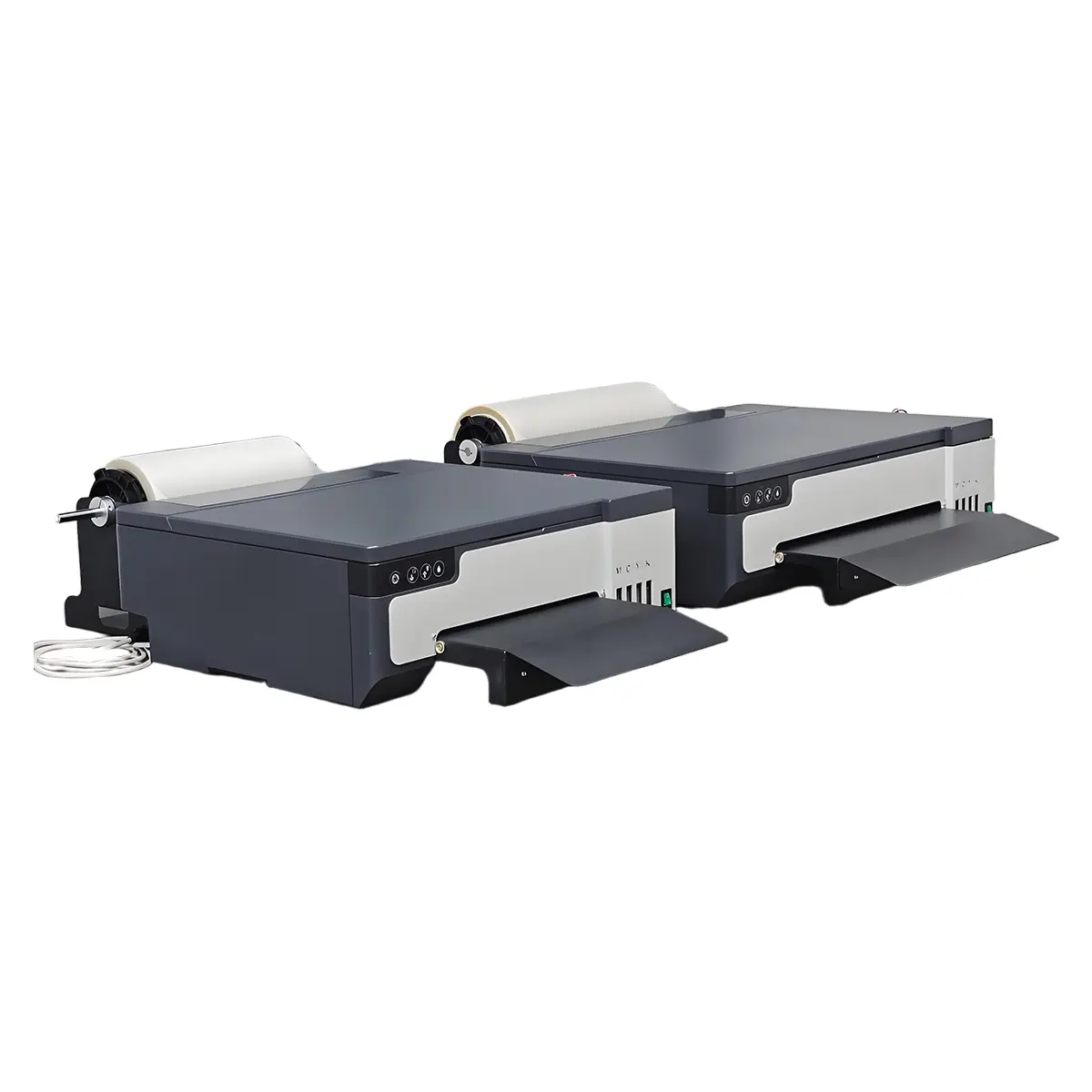
GNFEI A3 Roll DTF Printer with Auto Powder Shaker
Engineered for commercial apparel decorators, small businesses, and print-on-demand studios. Equipped with dual Epson printheads, automated white ink circulation and stirring systems, roll-to-roll continuous feed, integrated powder dusting, and infrared curing tunnel.
- Dual high-precision printheads (CMYK + White simultaneous output)
- Continuous roll-to-roll feeding eliminates manual sheet alignment
- Timed white ink circulation system prevents titanium dioxide clogging
- High-speed production capacity: up to 3–5 linear meters per hour
2. Direct-to-Garment (DTG) Printing: The Luxury Boutique Soft-Hand Standard
Direct-to-Garment (DTG) printing operates similarly to an industrial inkjet flatbed printer engineered specifically for textiles. The apparel item (such as a cotton T-shirt or hoodie) is loaded onto a motorized platen. High-resolution piezoelectric printheads pass over the fabric, jetting water-based aqueous textile pigment inks directly into the microscopic weave of the cotton fibers. The printed garment is then thermal-cured using a heat press or conveyor dryer to polymerize the binders within the ink.
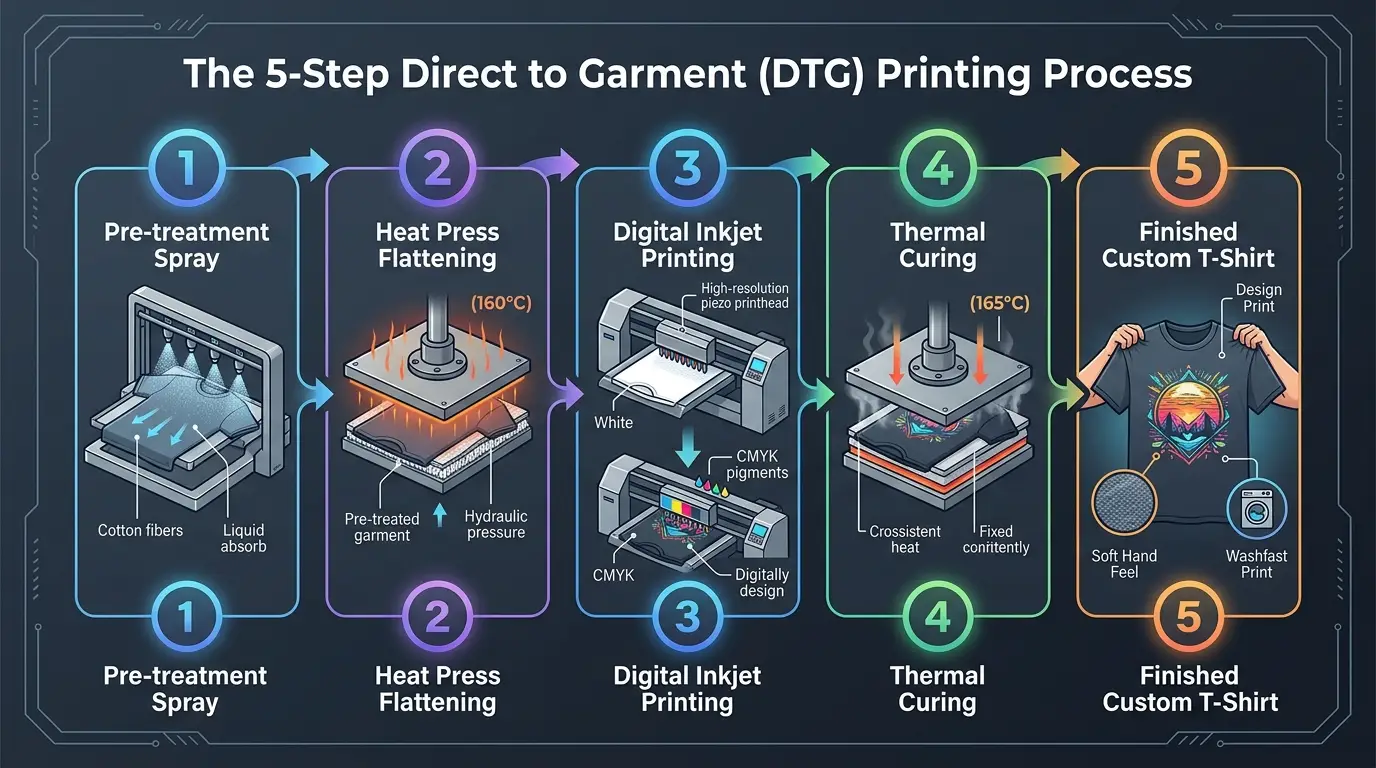
The Hallmark Strengths and Technical Limitations of DTG
✔ The Softest, Zero-Hand Breathability
Because DTG ink penetrates directly into the natural cellulose fibers rather than resting on top as a film, the graphic retains the natural breathability and drape of the fabric. It delivers the ultra-soft, premium touch demanded by luxury fashion houses and streetwear brands.
✔ Photorealistic Tonal Gradients
DTG printheads utilize variable droplet technology down to 3.5 picoliters, producing smooth skin tones, subtle shadows, and intricate watercolor effects that blend seamlessly into white and light cotton shirts.
✘ Strict Fabric Composition Thresholds
DTG inks rely on chemical hydrogen bonding with cellulose. Therefore, garments must contain at least 80% cotton (ideally 100% combed ringspun cotton). Pure synthetic polyester, nylon, or waterproof athletic fabrics will not absorb the ink, resulting in severe washouts.
✘ Mandatory Liquid Pre-Treatment on Dark Shirts
To prevent white pigment ink from sinking into dark fabrics, operators must apply a liquid pre-treatment solution (calcium salt catalyst) and thoroughly heat-press dry it before printing, adding labor steps and machine complexity.
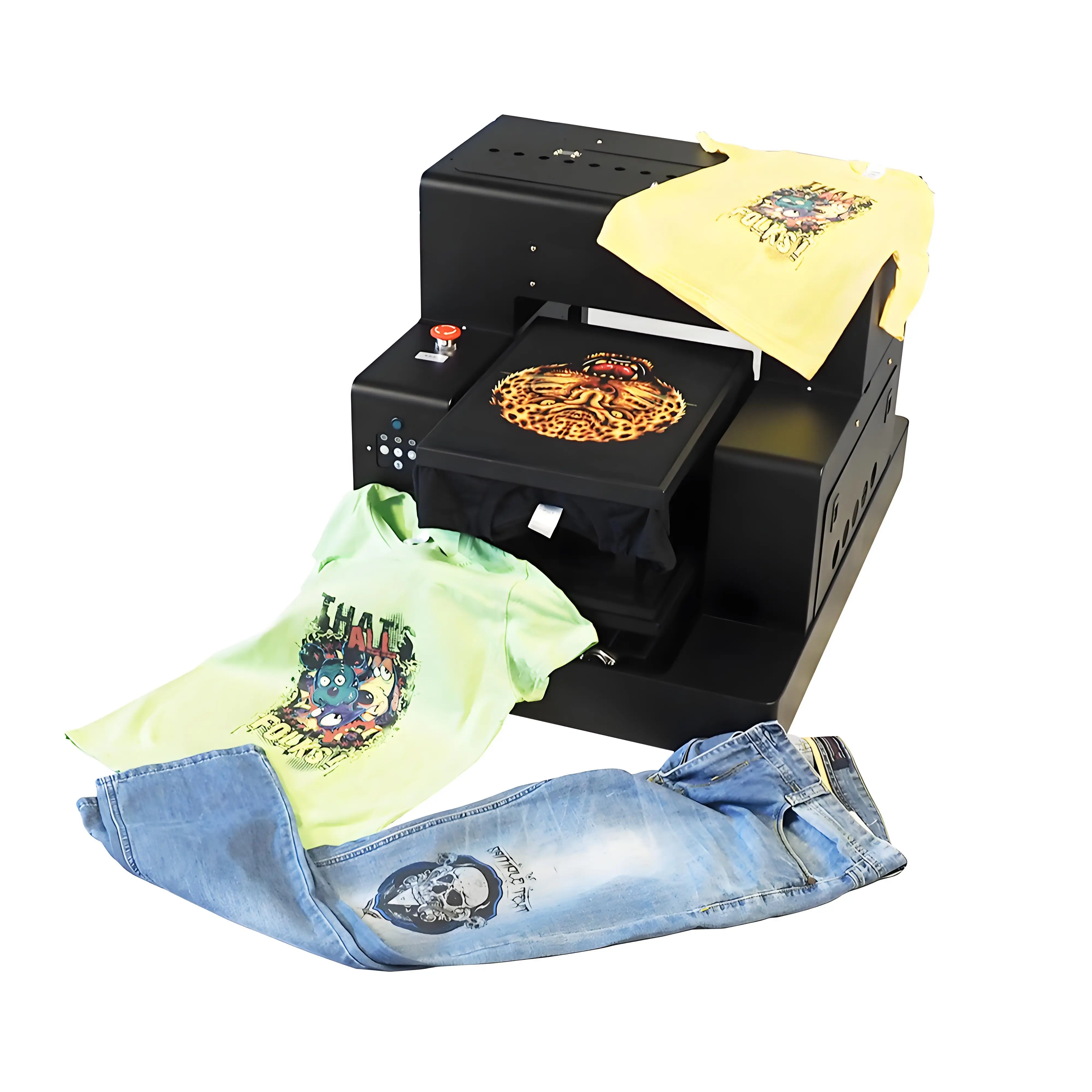
GNFEI A3 DTG T-Shirt Printing Machine
Designed specifically for custom streetwear startups, luxury apparel brands, and on-demand cotton printing studios. Incorporates an industrial linear guide rail, automated platen height sensing, and dedicated white ink circulation.
- Zero-feel photographic output on 100% combed cotton garments
- Motorized platter with intelligent infrared collision-avoidance sensors
- Industrial RIP software with custom white ink underbase profiling
- Print area up to 330 × 480 mm (standard A3+ format)
3. Dye Sublimation Printing: The Activewear & Hard Goods Sovereign
Dye-sublimation printing relies on a unique thermodynamic phase change. Disperse dye inks are first printed in reverse onto high-release sublimation transfer paper. The paper is aligned against a polymer-coated substrate and subjected to high heat (190°C to 205°C) and heavy mechanical pressure. Under these conditions, the solid dye particles convert directly into a gas without passing through a liquid phase. Simultaneously, the molecular chains of the synthetic polyester substrate expand, allowing the gaseous dye molecules to infuse deeply into the polymer. Upon cooling, the polyester polymers lock the color permanently inside.
Strengths and Boundaries of Dye Sublimation
✔ Indestructible Wash Permanence
Because the dye is chemically integrated into the polyester polymer chains rather than sitting on the surface, sublimation prints will never crack, peel, wrinkle, or wash out. The graphic endures through hundreds of industrial high-temperature wash cycles.
✔ Absolute Zero Hand-Feel
Sublimation creates zero barrier on the garment. The breathability, sweat-wicking moisture management, and stretch of performance athletic fabrics remain 100% unaltered, making it the undisputed champion for cycling jerseys, running gear, and esports uniforms.
✘ Strictly Limited to Synthetic Polyester
Sublimation dyes will not bond to natural fibers like cotton, silk, or wool. Cotton fibers contain no open polymer pores to accept the dye, resulting in 100% ink runoff during washing unless synthetic composite coatings are applied.
✘ Zero White Ink Capability
Sublimation ink sets utilize CMYK dyes only. There is no white sublimation ink. Consequently, white design elements rely entirely on the white background of the garment. You cannot sublimate graphics onto black, navy, or dark garments.
4. Head-to-Head Technical Benchmark: DTF vs. Sublimation vs. DTG
To help custom apparel decorators evaluate capital investments with technical precision, the following comparative engineering matrix details substrate chemistry, operational parameters, and production economics:
| Evaluation Parameter | Direct-to-Film (DTF) | Direct-to-Garment (DTG) | Dye Sublimation |
|---|---|---|---|
| Supported Fabrics | Universal (Cotton, Poly, Nylon, Denim, Leather) | Limited (Min. 80% Cotton or natural fibers) | Strict (100% Polyester or polymer coated) |
| Fabric Color Capability | Any Color (Vibrant White Underbase) | Any Color (Requires White Ink Underbase) | White & Light Colors Only (No White Ink) |
| Tactile Hand-Feel | Soft, flexible, thin elastic polymer layer | Ultra-Soft (Inks penetrate fiber weave) | Zero Hand-Feel (Molecular dye fusion) |
| Pre-Treatment Spraying | None Required (Eliminated completely) | Mandatory on all dark/black garments | None Required on polyester fabrics |
| Wash Durability Benchmark | Very High (50+ cycles with premium TPU powder) | High (40+ cycles, gradual vintage patina) | Permanent (Will never crack or peel) |
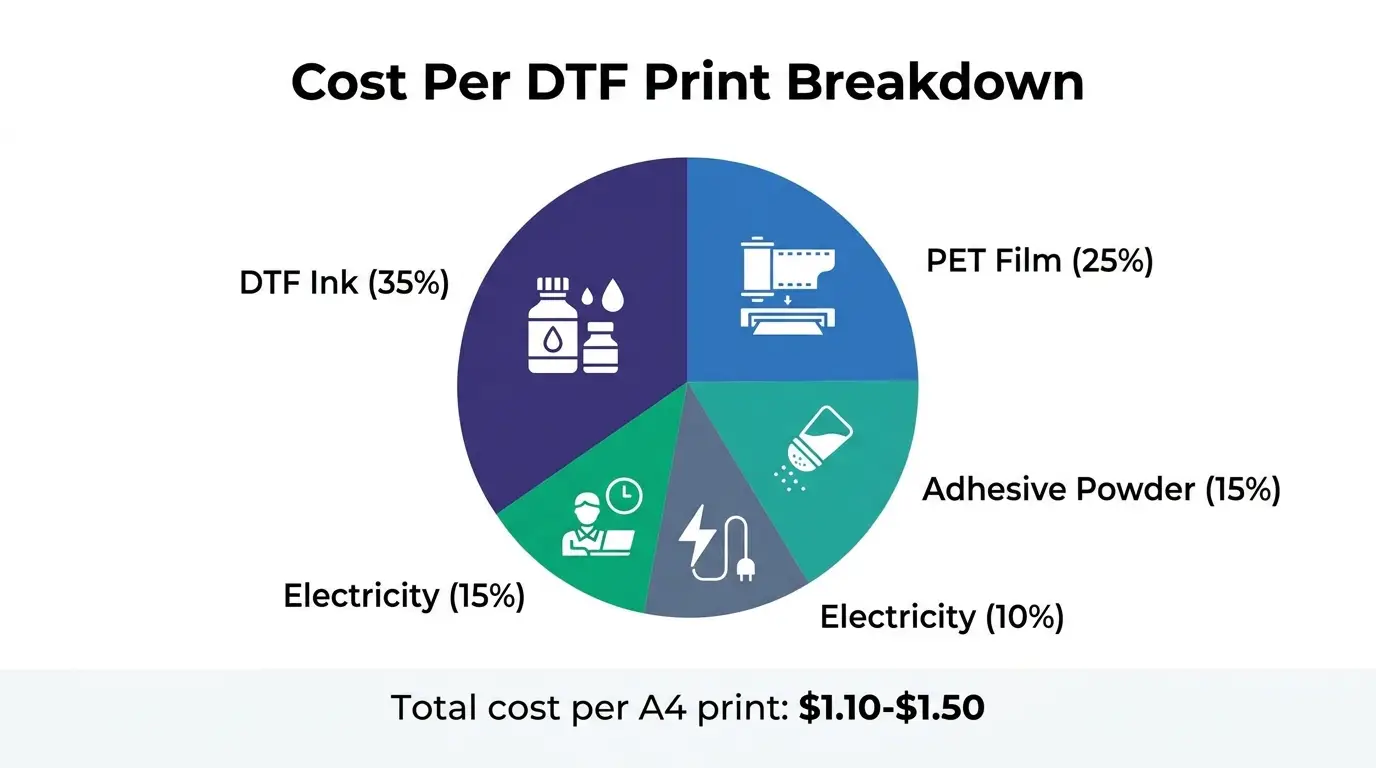
| Consumable Cost (A3 Print) | $0.45 – $0.85 (Ink + PET Film + Powder) | $1.20 – $2.50 (Ink + Liquid Pretreatment) | $0.20 – $0.40 (Sublimation Ink + Paper) |
| Equipment Capital Investment | $2,800 – $4,500 (A3 Roll System + Shaker) | $3,500 – $7,000+ (Commercial Flatbed) | $400 – $1,500 (Desktop/Roll + Heat Press) |
| Transfer Inventory Storage | Yes (Store cured transfers up to 12 months) | No (Must print directly on blank shirt) | Yes (Sublimation paper must stay dry) |
| Primary Target Market | Custom print shops, streetwear, dark garments | High-end luxury fashion, organic cotton shirts | Sports jerseys, activewear, mugs, mousepads |
5. The Shop Owner's Verdict: Which Technology Should You Buy?
Investing in digital textile machinery is not about picking the single 'best' technology in the abstract—it is about matching machine capabilities with your exact customer demand, fabric assortment, and production scale:
Invest in a Roll-to-Roll DTF Printer if:
You operate a custom print shop, startup studio, or high-mix apparel decorating business that handles a diverse variety of customer orders. If your clients ask for hoodies, cotton shirts, polyester gym shorts, nylon windbreakers, workwear vests, and canvas bags in black and dark colors, a commercial system like the GNFEI A3 Roll DTF Printer or the compact GNFEI A4 Roll DTF Printer will yield the highest gross profit margin and operational flexibility. You avoid messy liquid pretreatments and can print gang-sheets in bulk during downtime.
Invest in a Flatbed DTG Printer if:
You are building a luxury boutique clothing label, designer streetwear collection, or specialized 100% cotton apparel brand where customer expectations demand an ultra-soft, breathable, luxury hand-feel with zero plastic layer on the garment surface. For studios prioritizing luxury hand-feel on premium cotton, the GNFEI A3 DTG Printer or the industrial-scale GNFEI A2 Size DTG Printer represents the industry gold standard.
Invest in a Dye Sublimation Setup if:
Your primary revenue stream is focused squarely on athletic sportswear, moisture-wicking team jerseys, cycling apparel, mousepads, flags, and hard surface giftware (ceramic mugs, photo slates, aluminum panels). Sublimation remains unmatched in wash permanence and lowest ink cost per square meter, provided you never need to print on dark cotton garments.
6. Expert Answers on DTF, Sublimation, and DTG Machinery
Q1. What is the main technical difference between DTF and DTG printing?
DTF (Direct-to-Film) prints pigment inks onto a specialized PET release film, which is then coated with hot-melt thermoplastic polyurethane (TPU) adhesive powder and heat-pressed onto garments, providing universal fabric compatibility on cotton, polyester, nylon, and leather. In contrast, DTG (Direct-to-Garment) sprays water-based pigment inks directly into the garment fibers, requiring cotton or natural cellulose fibers and pre-treatment on dark fabrics to deliver an ultra-soft, breathable luxury hand-feel.
Q2. Can you print on dark garments with dye sublimation?
No. Dye sublimation uses disperse dyes that chemically bond with synthetic polyester molecules and does not include white ink. Because the dye is translucent, it cannot conceal dark or black fabrics. Sublimation is strictly limited to white or light pastel polyester substrates.
Q3. Which printing method provides the highest wash durability?
Dye sublimation provides the longest theoretical durability because the dye becomes a permanent molecular part of the polyester polymer chain with zero risk of cracking or peeling. Roll-to-roll DTF using premium polyurethane powder achieves exceptional wash durability (50+ wash cycles) with high elasticity. DTG offers high washability (40+ cycles) but exhibits gradual vintage softening over time.
Q4. Does DTF printing require liquid pre-treatment?
No. DTF printing completely eliminates liquid pre-treatment spraying and drying steps. The hot-melt adhesive powder applied to the printed PET film creates a uniform bonding layer during heat pressing, saving significant labor time, messy workspace cleanup, and fabric staining risks.
Q5. What fabrics can you print on with a commercial DTF printer?
DTF is a truly universal textile printing technology. It can be applied to 100% cotton, polyester, poly-cotton blends, nylon, spandex, denim, canvas, fleece, corduroy, and even leather jackets and promotional bags of any color.
Q6. What are the startup equipment costs for DTF vs DTG vs Sublimation?
Sublimation has the lowest startup investment, typically under $400 to $1,500 for a desktop setup. A commercial A3 roll-to-roll DTF system with integrated powder shaker and curing oven costs approximately $2,800 to $4,500. Commercial DTG printers have the highest entry barrier, ranging from $3,500 to $7,000+ due to precision flatbed motorized mechanics and pre-treatment machinery.
Q7. Which method produces the softest, most breathable hand-feel?
Dye sublimation and DTG offer the softest hand-feel. Sublimation features absolute zero hand-feel because the dye is infused into the polymer fiber. DTG produces an ultra-soft, breathable luxury hand-feel because ink sinks directly into the weave. DTF creates a thin, highly flexible, elastic layer on top of the fabric surface.
Q8. Can DTF transfers be stored in advance for on-demand pressing?
Yes. One of the greatest operational advantages of DTF is transfer inventory shelf-life. Once printed, powdered, and cured, DTF film sheets or rolls can be stored in a climate-controlled room for up to 12 months without quality degradation, allowing print shops to print transfers in bulk and press garments only when orders arrive.
Q9. How does the consumable cost per print compare between DTF, DTG, and Sublimation?
Sublimation is the cheapest at approximately $0.15 to $0.35 per A3 design. Commercial DTF costs around $0.40 to $0.80 per full-color A3 transfer including ink, PET film, and adhesive powder. DTG costs approximately $1.20 to $2.50 per dark A3 garment due to heavy white ink laydown and pre-treatment chemical consumption.
Q10. Why should a custom apparel startup choose DTF over DTG or Sublimation in 2026?
DTF delivers the highest profit flexibility for startups because it eliminates fabric limitations, does not require dark fabric pre-treatment, supports dark garments with vibrant white underbase, enables gang-sheet batching, and has low consumable costs. It allows a new print shop to accept orders for cotton hoodies, polyester sports jerseys, nylon jackets, and tote bags simultaneously on a single machine.
Equip Your Apparel Print Shop with GNFEI Digital Machinery
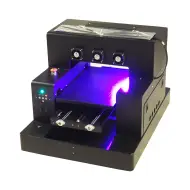
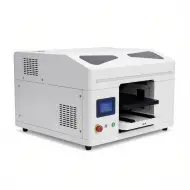
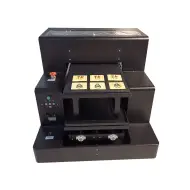
From automated A3 roll-to-roll DTF systems to high-precision direct-to-garment flatbed printers, GNFEI manufactures commercial digital apparel machinery built for maximum throughput and reliability. Every machine includes industrial RIP software, starter ink sets, and lifetime technical support.
Leave a Comment