What Is DTG Printing? Complete Guide for Crafters
Complete Guide for Crafters
Are you tired of weeding vinyl, dealing with cracked screen prints, or facing sublimation limits? Discover how Direct-to-Garment (DTG) printing can transform your craft passion into a scalable, high-margin apparel brand.
The Crafter's Leap: From Hobby to Professional Label
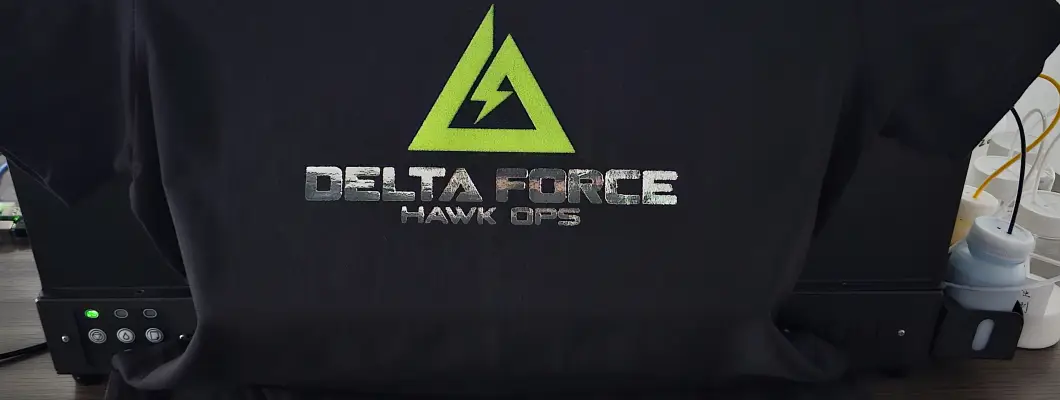
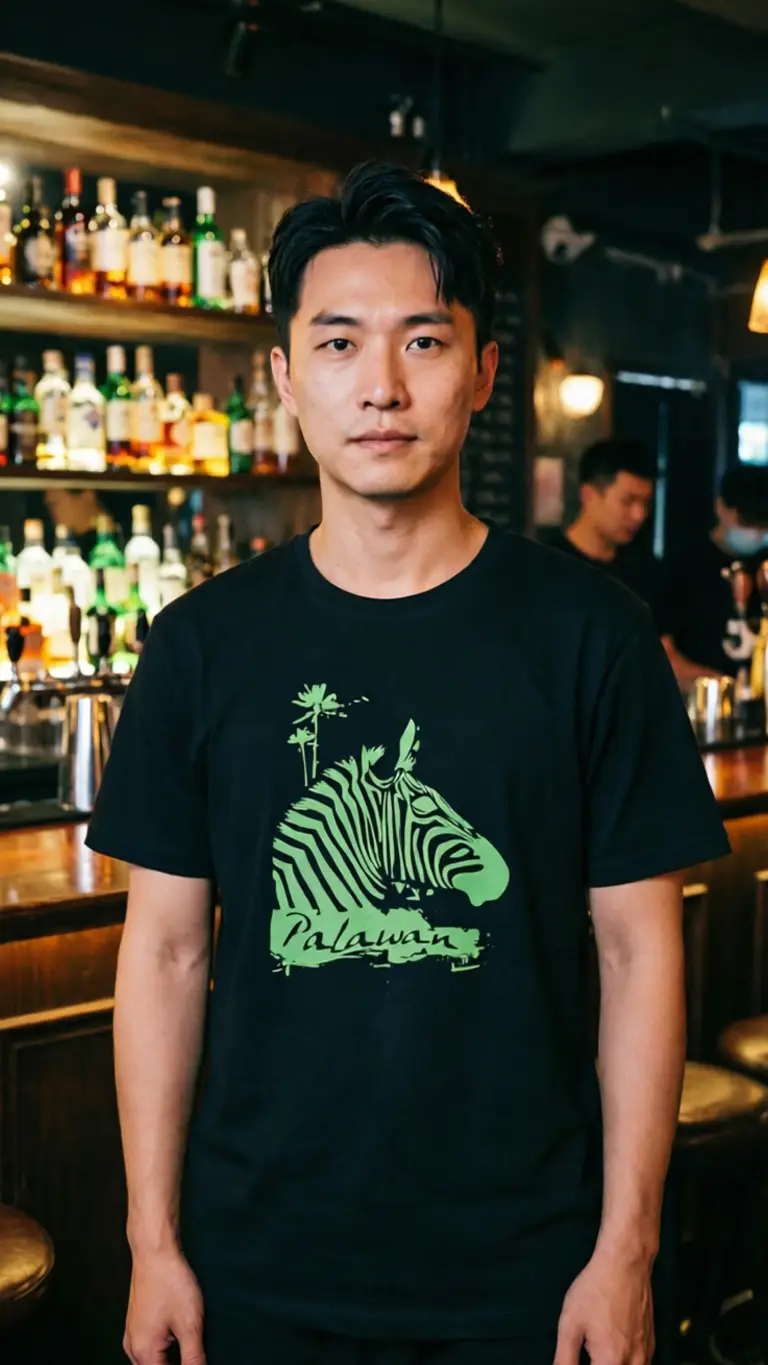
For crafters relying on heat transfer vinyl (HTV) or sublimation, scaling a boutique apparel brand can feel like an uphill battle. HTV requires tedious peeling and weeding, while sublimation restricts you to white polyester fabrics. Entering the world of Direct-to-Garment (DTG) printing changes everything. With an in-house A3 DTG printer like the GNFEI F85G3, you can print photo-realistic, multi-color designs directly onto dark cotton garments in under 2 minutes. No screens, no weeding, and a cost-per-print of under $1.20.
Why DTG is the Ultimate Craft Superpower
Unlimited Color Spectrum
Forget layering multiple colors of vinyl or preparing separate screens. DTG functions like an inkjet printer, printing millions of vibrant colors, complex gradients, and photo details in a single pass.
Zero Setup & No MOQ
Have a customer asking for just one custom t-shirt? With DTG, the setup time is exactly zero. Simply load the PNG image file into the software, lay the shirt on the flatbed, and press print.
Ultra-Soft Hand Feel
No more heavy, plastic-like slabs of vinyl stuck to your chest. DTG uses eco-friendly, water-based textile inks that bind deep within the garment fibers, providing a light, breathable, and premium wash-proof finish.
Cotton Fabric Compatibility
Unlike sublimation which only works on synthetics, DTG is designed specifically for cotton, canvas, and canvas blends—the fabrics your customers actually want to wear.
How Does DTG Compare to Other Methods?
| Printing Method | Setup & Prep Time | Color Capabilities | Feel on Fabric | Best Suited Fabrics | Ideal Order Run |
|---|---|---|---|---|---|
| Direct-to-Garment (DTG) | Zero (Plug & Play) | Unlimited (Gradients & Photos) | Super Soft (In-fabric dye) | Cotton, Canvas, Cotton Blends | 1 to 50 pcs (On-Demand) |
| Heat Transfer Vinyl (HTV) | High (Cutting & Weeding) | Limited (Solid colors only) | Thick / Rubber feel | All Fabrics (Cotton/Poly) | 1 to 5 pcs (Slow process) |
| Sublimation | Low (Heat transfer) | Unlimited (Bright colors) | Smooth (No feel at all) | 100% Polyester (White only) | 1 to 100 pcs |
| Direct-to-Film (DTF) | Medium (Printing & Powder) | Unlimited (Vibrant white base) | Thin Film (Flexible feel) | Polyester, Nylon, Cotton | 10 to 200 pcs |
The 4-Step DTG Printing Workflow
A straightforward, clean process designed to integrate seamlessly into any craft space.
Design & Load
Save your artwork as a high-resolution transparent PNG (300 DPI). Open the file in the included RIP software to set the layout size and automatically generate the white ink base layer.
Pre-treatment (If Dark)
If printing on black or dark-colored garments, spray a thin, even coat of pre-treatment liquid onto the print zone, then press it dry with a heat press to flatten the fabric fibers.
Direct Printing
Load the garment onto the flatbed drawer platen. Press the print button—the printer automatically adjusts to the perfect height and lays down the white underbase and CMYK top coat.
Heat Curing
Carefully remove the wet garment from the platen. Place it under a heat press machine (or run it through a tunnel dryer) at 165°C (330°F) for 90 seconds to fully cure the water-based ink.
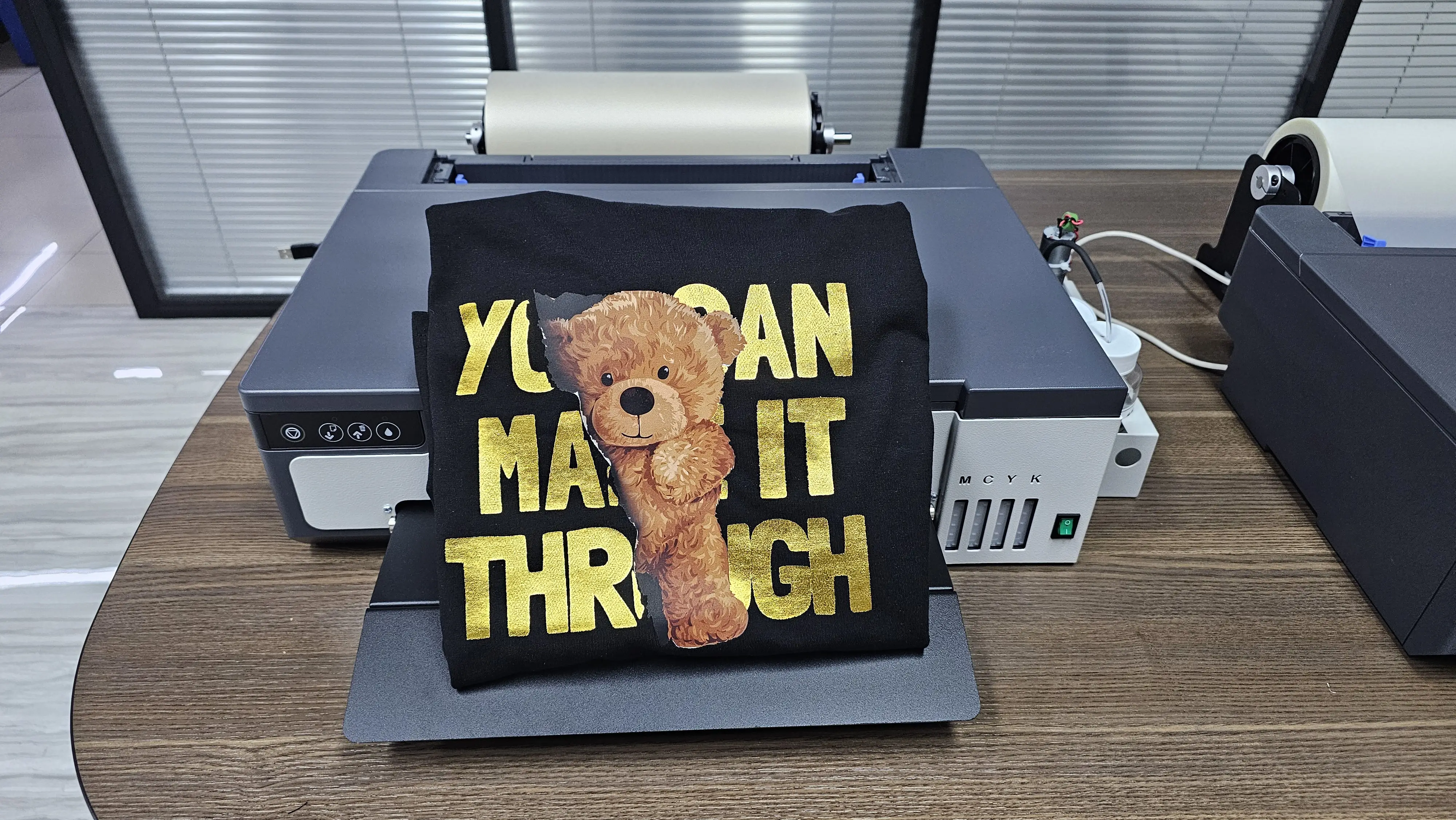
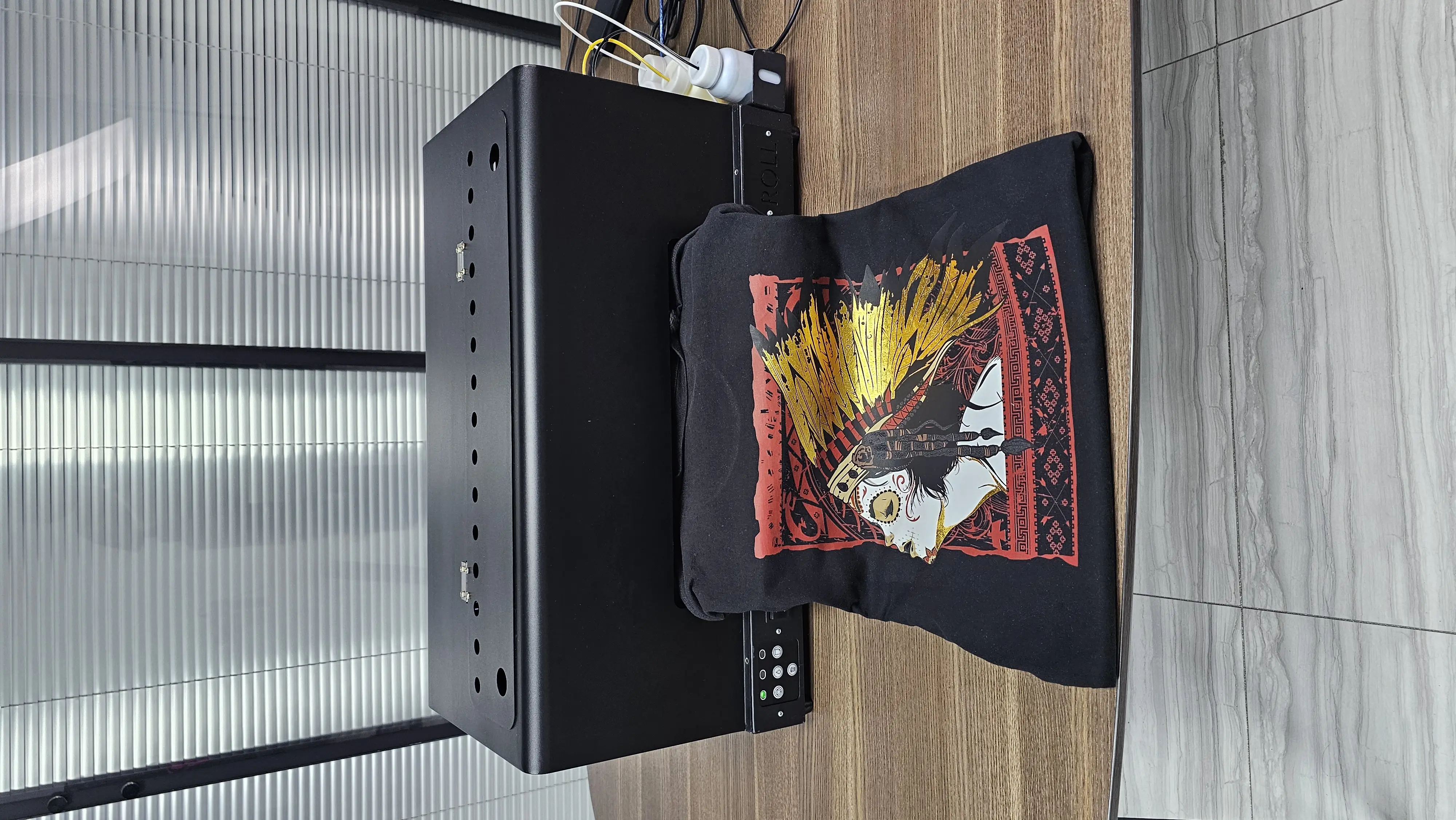
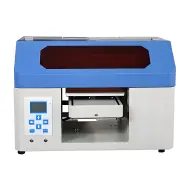
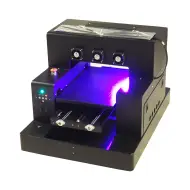
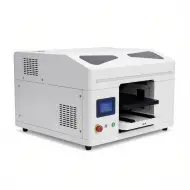
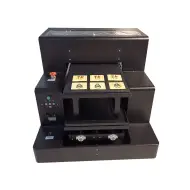
GNFEI A3 DTG Flatbed Printer
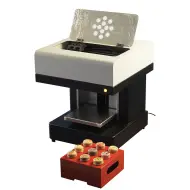
Designed specifically for home studios and custom print shops, this compact A3-sized printer fits easily onto a standard workbench. It features a reliable dual-channel printhead with automatic white ink circulation to prevent clogging, alongside intelligent infrared sensors that automatically detect the thickness of the fabric to avoid printhead scrapes.
Watch the GNFEI A3 Printer in Action
Witness the speed, automatic height adjustment, and brilliant color reproduction of our printer.
Stunning Print Outputs & Fine Details
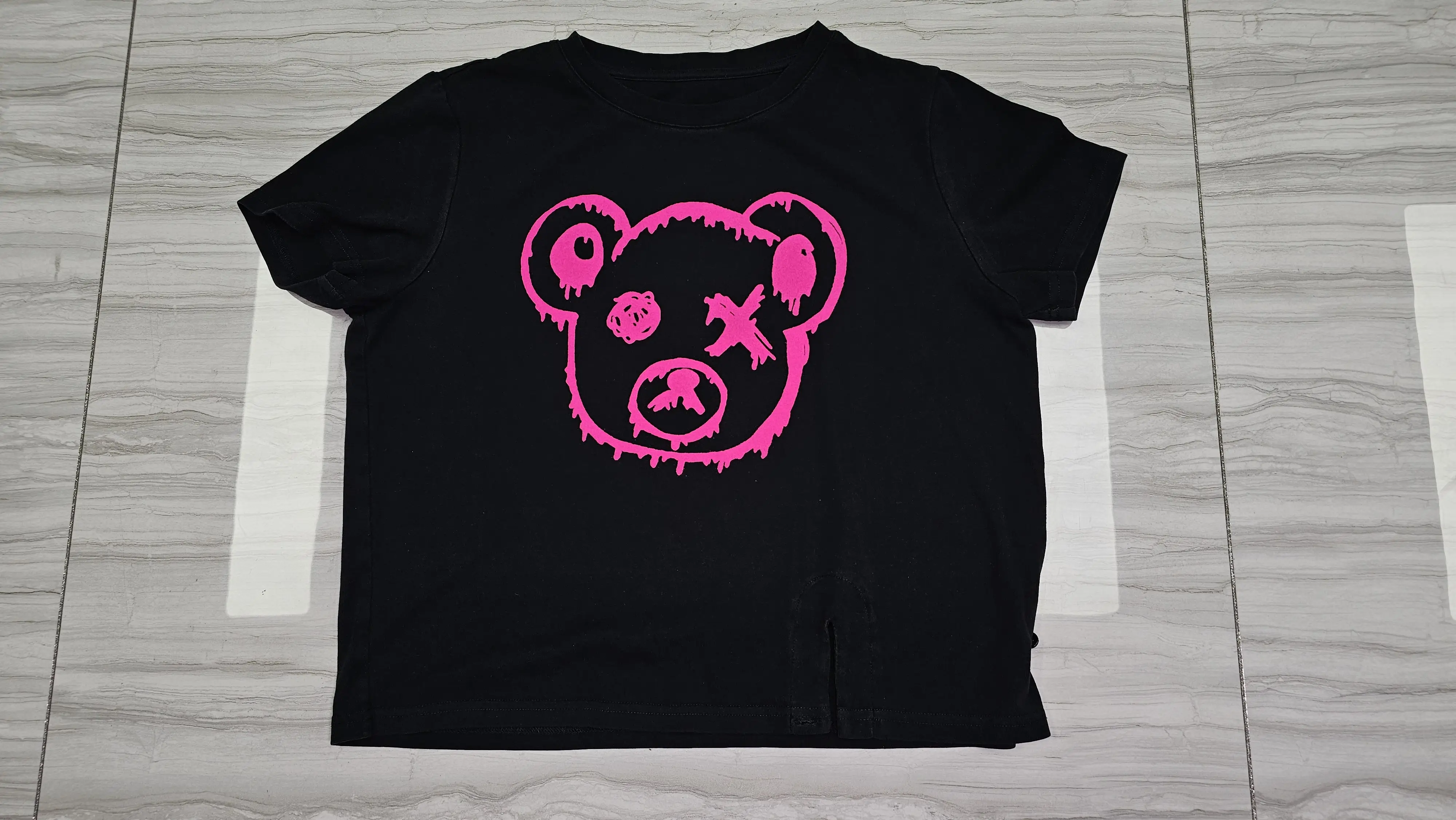
Custom Bear Apparel
Super-saturated pink print on black cotton
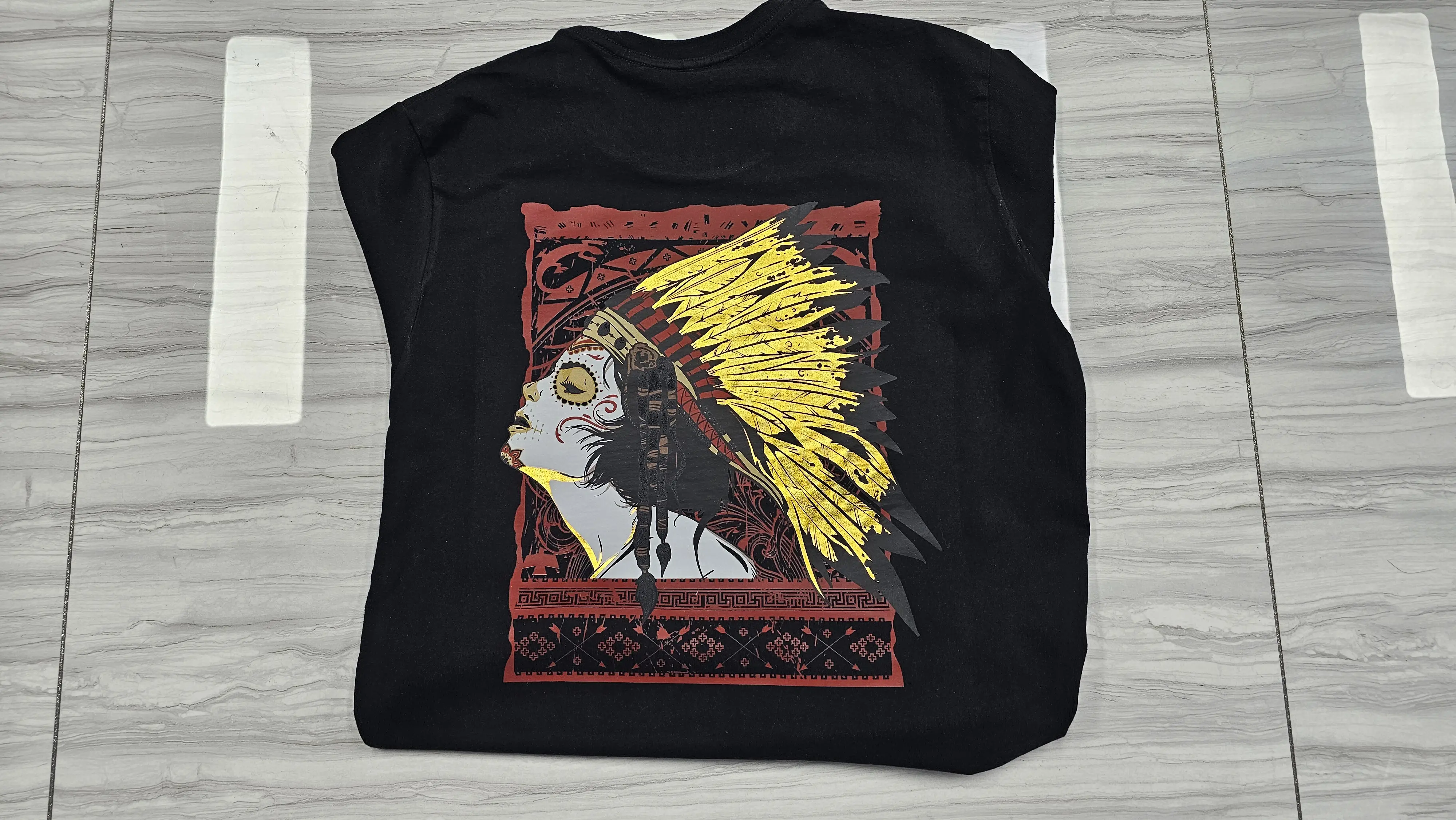
Retro Graphic T-shirt
Complex halftone dots with a soft texture
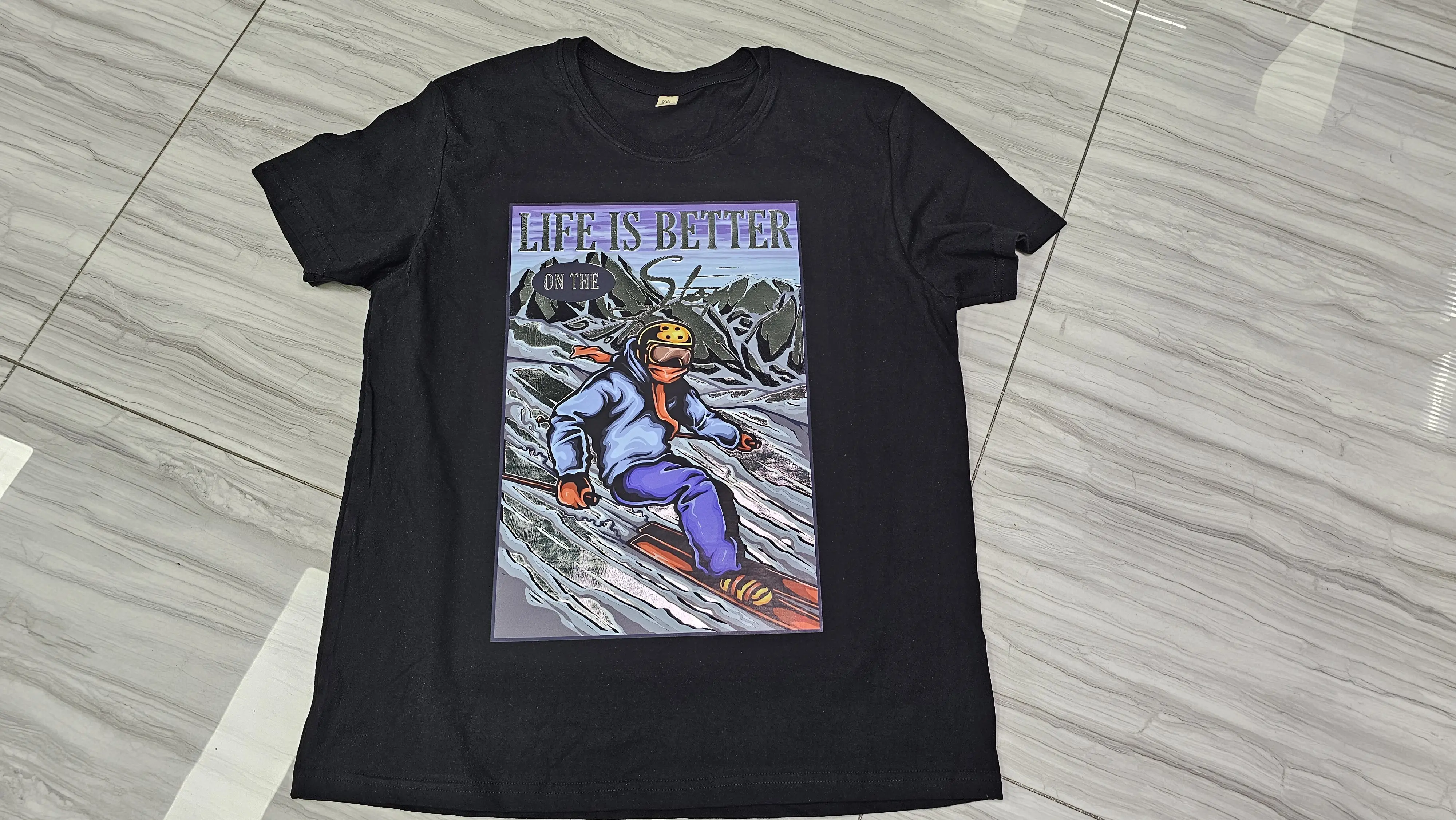
Artistic Lion Print
High-resolution detail on standard blanks
Custom Canvas Totebag
Durable pigment ink bound to rough canvas
Frequently Asked Questions for Crafters
1. What fabric composition is best suited for DTG printing?
Direct-to-Garment (DTG) printing performs best on 100% natural fibers, with cotton being the ideal choice. Ring-spun cotton provides the smoothest surface for high-resolution details. Blends (such as 80% cotton and 20% polyester) also print beautifully, but higher cotton percentages yield brighter colors and better wash longevity.
2. How durable is a DTG print after washing?
When cured correctly, a DTG print is highly durable and will last for dozens of washes. To ensure longevity, the ink must be properly cured under a heat press at 160°C-165°C for 90 seconds. For washing, we recommend turning the garment inside out, washing in cold water, and avoiding harsh bleaches or high-heat tumble dryers.
3. Do I need pre-treatment liquid for all garments?
Pre-treatment liquid is required only when printing on dark or colored garments that require white ink. It acts as a barrier that prevents the wet white ink from sinking into the fabric fibers. For printing CMYK ink directly onto white or very light pastel cotton shirts, pre-treatment is optional and usually not required.
4. What is the average printing cost per T-shirt?
The cost varies based on the design size and color saturation. For a standard A4-sized full-color design printed on a dark t-shirt (which requires both pre-treatment and a white ink underbase), the combined ink and pre-treatment cost is usually under $1.20. Light garments without a white underbase cost less than $0.40 per print.
5. Can the GNFEI A3 printer handle hoodies, bags, and thick fabrics?
Yes, the platen height is adjustable up to 8cm (or 15cm depending on the custom platen height setting). This height clearance allows you to easily feed thick hoodies, canvas tote bags, denim jackets, and baby onesies onto the printing surface without printhead interference.
6. How often does the printer require maintenance?
The GNFEI A3 DTG printer has an integrated automatic white ink circulation system that runs periodically to prevent the pigments from settling. For manual maintenance, we recommend performing a printhead nozzle check and running a quick software clean cycle if the printer has been idle for several days. A simple wipe of the capping station takes less than 5 minutes once a week.
7. Does the printer support printing white ink?
Yes. The printing system features dual channels dedicated specifically to white ink, alongside the standard CMYK channels. This setup allows the machine to print a solid white base coat first, immediately followed by the color pass, enabling vibrant designs on dark fabrics.
8. What design file formats are supported?
The most recommended file format is a high-resolution PNG with a transparent background at 300 DPI. You can also import JPEG, PSD, AI, or PDF files into the RIP software. However, using transparent PNGs ensures that white ink is only printed where your design elements are, saving ink and improving the feel of the garment.
9. Is specialized RIP software required for printing?
Yes, RIP (Raster Image Processor) software is essential for DTG printing. The GNFEI A3 printer comes bundled with dedicated RIP software. This software translates your digital design into exact coordinates for the printhead, adjusts the ink volume limits, and automatically builds the white ink underbase layer from transparent pixels.
10. How long does it take to print a full-size A3 design?
For a standard resolution print, a full A3-sized print on a white shirt takes approximately 90 seconds. Printing on a dark garment, which requires printing the white base layer first and then the color layer, takes roughly 150 to 180 seconds. You can adjust the print resolution in the RIP software to trade speed for finer details.
11. What is the physical footprint of the GNFEI A3 DTG printer?
The printer has a compact footprint of 80 x 70 x 60 cm and a net weight of approximately 81 kg. It fits comfortably on a standard, sturdy craft table or workbench. Because of its weight, it is highly stable during high-speed printing, minimizing vibrations that could cause print alignment errors.
12. Can it print on 100% polyester athletic garments?
Traditional DTG pigment inks are designed for natural cotton fibers and will not adhere permanently to synthetic polyester. However, the GNFEI A3 printer can easily double as a **DTF (Direct-to-Film)** printer. You can print your design onto a PET film, apply hot-melt adhesive powder, cure it, and heat-press it onto 100% polyester garments with incredible durability.
13. Are the inks safe, non-toxic, and skin-friendly?
Yes, the water-based pigment inks used in the GNFEI DTG printer are eco-friendly and non-toxic. Once cured, they are completely odorless, safe for children's wear, and meet international standard safety guidelines for textile contact. They are also soft against the skin, unlike heavy plastisol screen prints.
14. What auxiliary equipment do I need to start?
Apart from the computer used to run the RIP software and the printer itself, you will need: 1. A standard heat press machine (at least 38x38 cm) to press dry the pre-treatment and cure the printed shirts. 2. A simple hand-held liquid sprayer (such as an airbrush or pump spray bottle) to apply the pre-treatment liquid evenly.
15. Is there a minimum order quantity (MOQ) required to run the machine?
No, there is absolutely no minimum order requirement. Because there are no physical screens or costly print plates to set up, you can print a single, custom one-off T-shirt with the same ease and cost-efficiency as printing a batch of 50. This makes it perfect for on-demand print shops, customized gifts, and boutique brands testing new designs.
Leave a Comment