Cylindrical Printing Mastery: A Deep Dive into 360° Decoration on Bottles and Tumblers (Maximize Your UV Rotary Attachment ROI)
Struggling to Master 360° Decoration on Bottles and Tumblers? Let"s Dive into Cylindrical Printing
If you're in the custom printing business, chances are you've hit a wall trying to achieve perfect, continuous decoration on bottles and tumblers. Maybe you"ve invested in UV rotary attachments expecting flawless 360° wraps, but results aren"t quite there yet. Sound familiar?
Understanding the nuances of cylindrical printing — especially on curved surfaces — can boost your productivity and product quality significantly. It"s time to unlock the secrets of mastering this technique and maximizing your ROI with UV rotary attachments. Let"s explore how.
Why is 360° Decoration on Bottles and Tumblers So Challenging?
Curved Surfaces Are Not Flat
Unlike flat prints, cylindrical surfaces require precise adjustments to keep the design aligned and avoid distortions. It"s harder than it looks to maintain consistent image quality around the entire surface.
Ink and Coating Adhesion
Getting uniform ink coverage and adhesion around a curved surface can be tricky—any misalignment or uneven UV curing can lead to smudges or peeling later on.
Equipment Limitations
Many standard printers aren"t equipped to handle 360° decorating without specialized attachments. Without the right tools, achieving full-wrap designs is an uphill battle.
Mastering Cylindrical Printing: Key Strategies for Success
Optimizing Your UV Rotary Attachment
The core of perfect 360° decoration is a high-quality UV rotary attachment. Here"s what makes a difference:
- Precision Rotation Control: Ensure the rotary spins smoothly and at consistent speeds for even coverage.
- Adjustable Height and Alignment: Fine-tune the distance between the print head and the surface to avoid distortion.
- Secure Mounting System: A stable, vibration-free fixture helps maintain alignment during the print cycle.
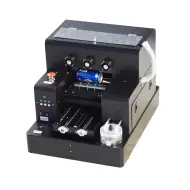
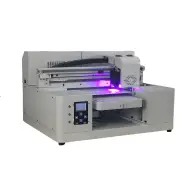
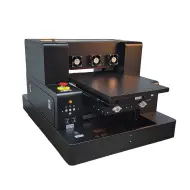
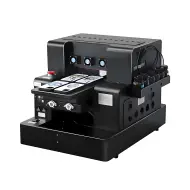
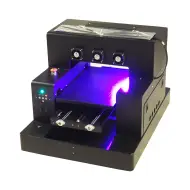
If your current attachment isn"t delivering predictable results, it might be time to consider an upgraded model like this UV rotary attachment designed specifically for cylindrical surfaces.
Pre-Design and Layout Considerations
Preparing your designs smartly saves time and ensures quality. Here"s how:
- Template Calibration: Use precise templates that match the dimensions of your bottles or tumblers.
- Overlapped Designs: When designing, assume a slight overlap on the edges for seamless wrapping, especially where edges meet.
- Correct Scaling: Make sure your artwork is scaled correctly — small miscalculations lead to stretched or compressed prints.
Always test print on sample items first. It might seem tedious but can save you from costly reprints.
Automation and Process Control
Automation reduces human error and improves consistency. Consider:
- Employing automated alignment systems that synchronize rotation and print head movements.
- Utilizing software that can simulate the wrap before printing, saving material and time.
This is where investing in good machinery and training pays off big time, ultimately reducing waste and speeding up turnaround.
Maximizing ROI with Your UV Rotary Attachment
Understanding Cost Justification
A quality UV rotary attachment isn"t just a tool; it"s an investment. With it, you can print on a wider variety of products and achieve higher quality finishes, which can command a premium price. > If you"re hesitant about the initial investment, consider:
- Increased Production Speed: Faster setup and fewer errors mean more products per day.
- Broader Product Range: Capable of decorating different cylindrical items without additional fixtures.
- Enhanced Quality and Consistency: Better finishing that attracts repeat customers.
These advantages translate directly into higher profits and expanded customer base. Don"t overlook the importance of proper training for your team to fully leverage these features.
Case Example: Turning a Hobby into a Profitable Business
I spoke with a small shop owner who switched to a high-end UV rotary attachment. Within a few months, they saw a 40% increase in orders—especially on promotional tumblers and water bottles. Their process improved, waste reduced, and their clients loved the professional look. They pointed out that the investment paid for itself in just a handful of extra orders.
Getting Started: Essential Tips for Cylindrical Printing
- Invest in the Right Equipment: Quality matters. Choose a UV rotary attachment optimized for your printer model.
- Practice on Sample Items: Fine-tune your setup and design layout before committing to production.
- Train Your Staff: Fully understand how to operate, align, and maintain your attachment and printer.
- Maintain Your Equipment: Regular cleaning and calibration prevent costly downtime.
- Use High-Quality Materials: Good inks and coatings enhance adhesion and durability on cylindrical surfaces.
The key to mastering cylindrical printing is understanding that precision, patience, and the right tools lead to outstanding results. If you"re serious about expanding your decorating capabilities, investing in a dedicated UV rotary attachment is the way to go.
FAQs: Your Questions About 360° Bottle and Tumbler Printing
- Q: How do I ensure my design aligns perfectly on the curved surface?
- A: Use calibration templates and test runs. Fine-tune your machine"s height and rotation speed until the design wraps seamlessly.
- Q: What materials work best with UV rotary printing?
- A: Most plastics, glass, and coated metals respond well. Always test with your specific substrates for adhesion and curing quality.
- Q: Can I use my existing printer with a UV rotary attachment?
- A: It depends on your printer model. Many UV printers can be upgraded with compatible rotary attachments—check with your manufacturer or supplier.
- Q: What maintenance does a UV rotary attachment require?
- A: Regular cleaning of rotary parts and calibration checks ensure consistent quality. Follow manufacturer guidelines for longevity.
- Q: How can I improve image quality when doing full wrap designs?
- A: Use high-resolution artwork, ensure proper alignment, and perform test runs to refine placement and avoid distortions.