How to Start a UV DTF Printing Business in 2026 — Equipment, Costs & ROI
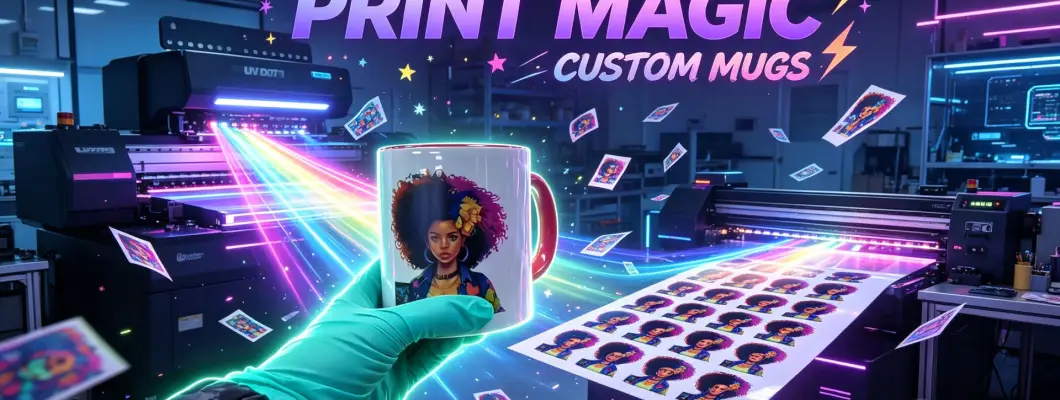
How to Start a UV DTF Printing Business — Equipment, Costs & ROI
UV DTF (Direct-to-Film) printing has quickly emerged as one of the most exciting and profitable sectors in the custom printing industry in 2026. By printing designs onto a special carrier film and laminating it, you create self-adhesive "crystal stickers" that can be transferred onto virtually any hard surface—without needing a heat press or direct flatbed height adjustment. This guide outlines everything you need to start a successful UV DTF printing business, from equipment selection and costs to marketing strategies and ROI models.
Section 1: What is UV DTF Printing and How Does It Work?
Unlike traditional UV flatbed printing, which prints directly onto objects placed on a flatbed, UV DTF utilizes a two-step transfer process. It uses UV-curable ink, white base layers, and high-gloss varnish to print designs onto Film A (which has a pre-applied layer of special adhesive). After printing, Film A is laminated with a transfer Film B using a roll laminator. The resulting crystal label can be cut, stored, and hand-applied to any object like a regular sticker.
UV DTF Crystal Stickers
Prints designs onto a carrier film, laminates it, and transfers it to the final product by hand. Ideal for curved, large, or irregular items.
- Best for: Glass tumblers, ceramic mugs, helmets, plastic bottles, leather cases, and irregular-shaped promotional items.
- Pros: No object shape limits, stickers can be printed and sold as standalone products, no height limit.
- Cons: Requires a two-step laminating process, slightly higher cost of consumables (film).
Traditional UV Flatbed
Prints directly onto flat, rigid objects placed on the printer platen. Cures the ink instantly with integrated UV LED lamps.
- Best for: Phone cases, flat acrylic sheets, wooden signs, metal plaques, and cardboard boxes.
- Pros: Lower cost per print, superior scratch resistance, zero transfer steps.
- Cons: Restricted to flat objects that fit under the printhead carriage clearance (up to 15cm).
The Integrated Workflow: Printing and Laminating
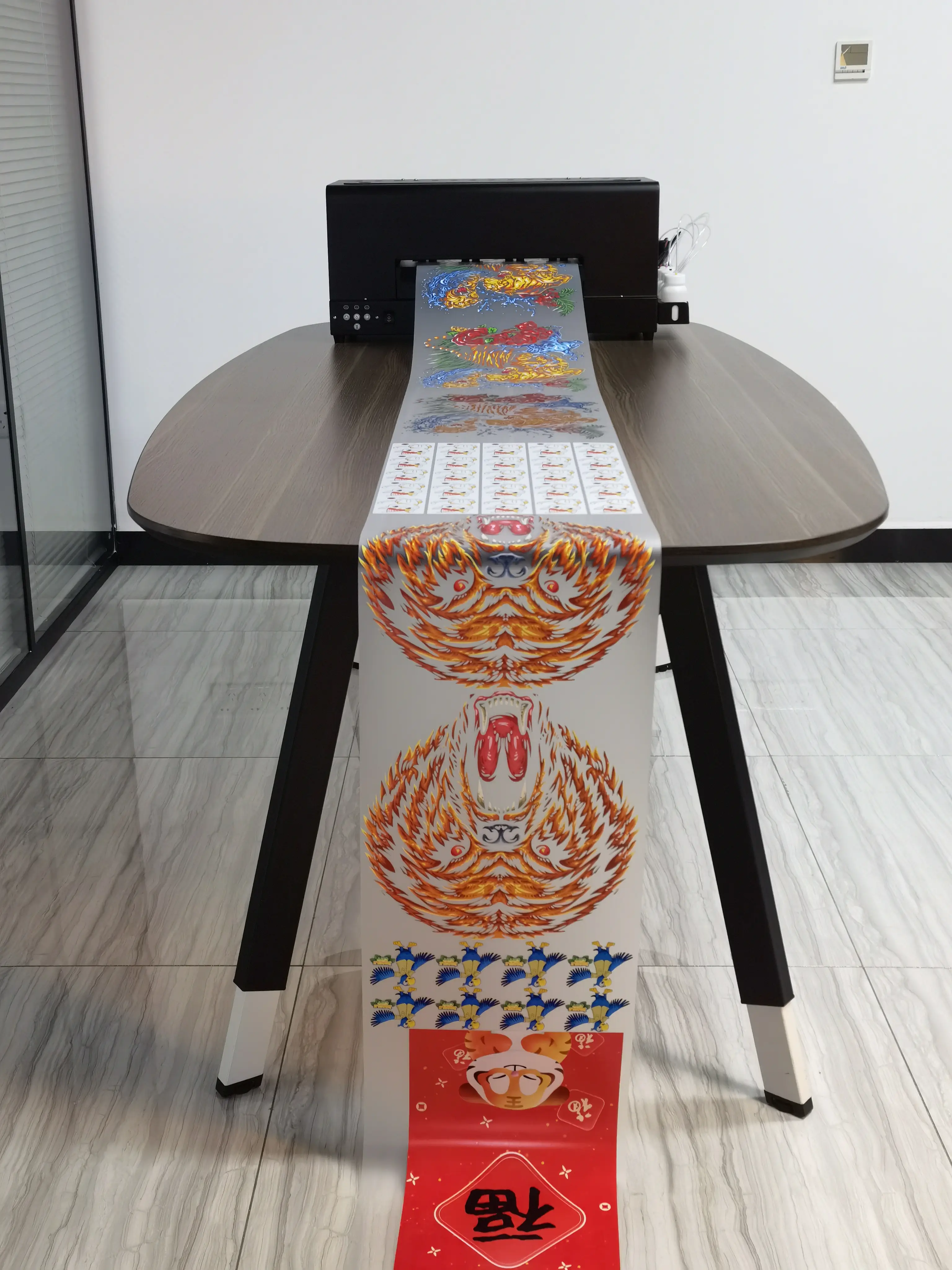
For optimal results, modern B2B setups use an integrated UV DTF printer that combines printing and hot lamination in a single continuous roll-to-roll flow. This eliminates manual sheet alignment and reduces the risk of air bubbles or dust contamination between the adhesive and transfer film layers.
Essential Startup Checklist for UV DTF Printing
To establish a fully functional UV DTF sticker shop, you need to acquire the primary printing machine along with a core kit of accessories and media consumables:
UV DTF Hardware & Software:
- UV Printer: Roll-to-roll or flatbed system supporting white and varnish channels.
- Roll/Sheet Laminator: Cold or hot lamination machine for bonding Film A and B.
- RIP Software: Perpetual license (included with GNFEI printers) to manage color passes and layers.
Media & Consumables:
- UV DTF Film A & B: Release PET base film and transfer application film.
- Ink Set: High-density UV-curable CMYK, White, and Varnish inks.
- Application Accessories: Trimming scissors, utility knives, and squeegees for transfer installation.
Section 1.6: Pros & Cons of UV DTF Printing
Before launching your shop, it is important to weigh the operational advantages of UV DTF printing against the technical limits of the transfer sticker workflow:
UV DTF Printing Pros
- Apply to Any Substrate – Transfer decals to wood, glass, metal, acrylic, plastic, ceramic, leather, and even cardboard.
- Overcome Shape Boundaries – Easily label curved mugs, flasks, helmets, and large items that cannot fit inside a standard printer.
- Store and Sell Decals – Print sheets of crystal labels, trim them, and sell them as standalone transfer stickers to clients worldwide.
UV DTF Printing Cons
- Lamination Required – The printed PET film must be run through a laminator before it is ready for application.
- Edge Wear & Heat Limits – Fine lines or tiny dots can lift at the edges under extreme abrasion or when run through hot dishwashers.
- Not for Soft Apparel – Transfers are designed for rigid surfaces and do not stretch or bend on soft T-shirts and fabrics.
Section 2: UV DTF Printers — Production Process & Application
Watching the UV DTF workflow reveals why this method is highly sought after. Below, see how the GNFEI printers output crystal stickers onto Film A and how those transfers are hand-applied to various hard goods.
Section 3: UV DTF Crystal Sticker Applications & Samples
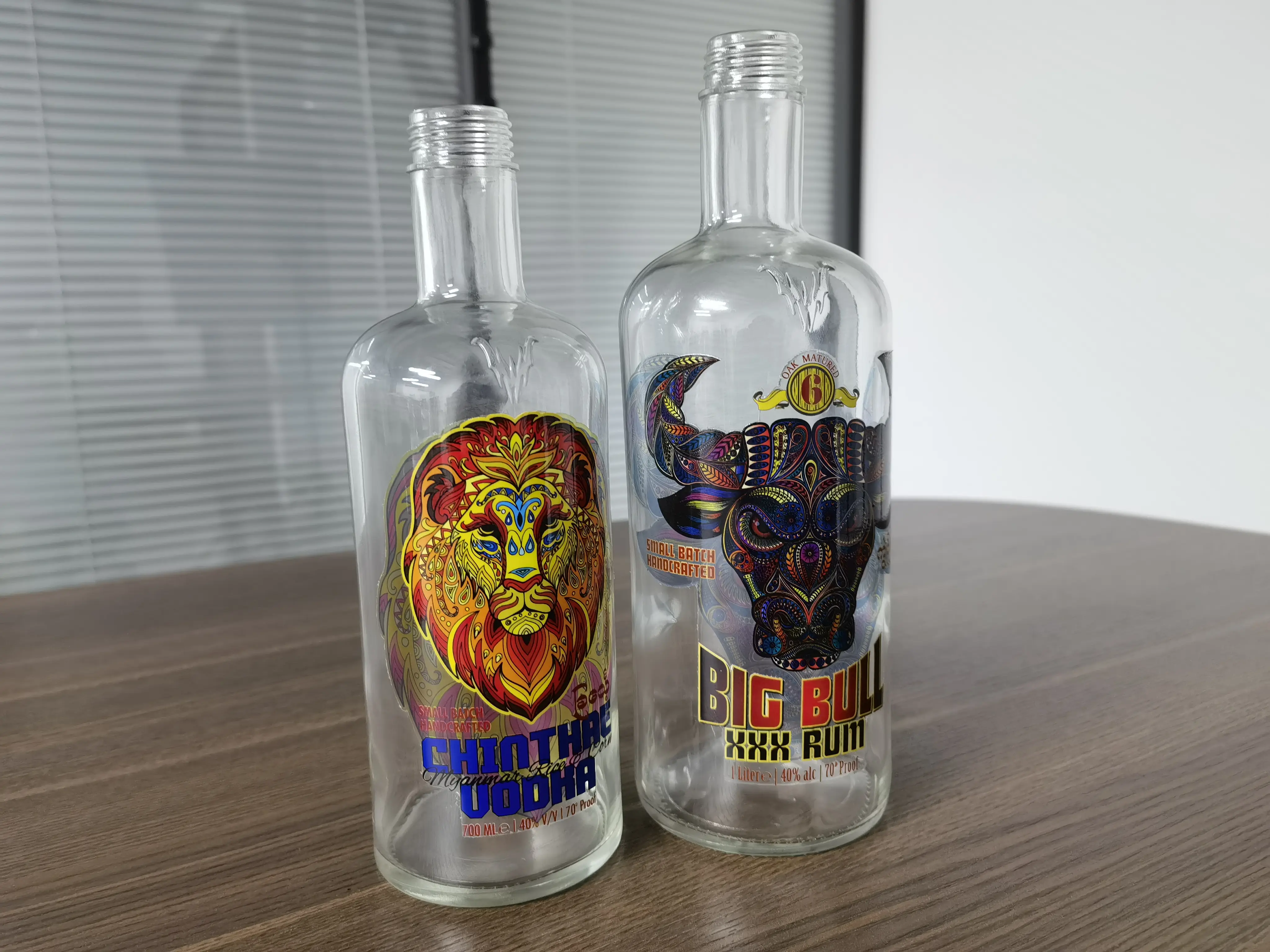
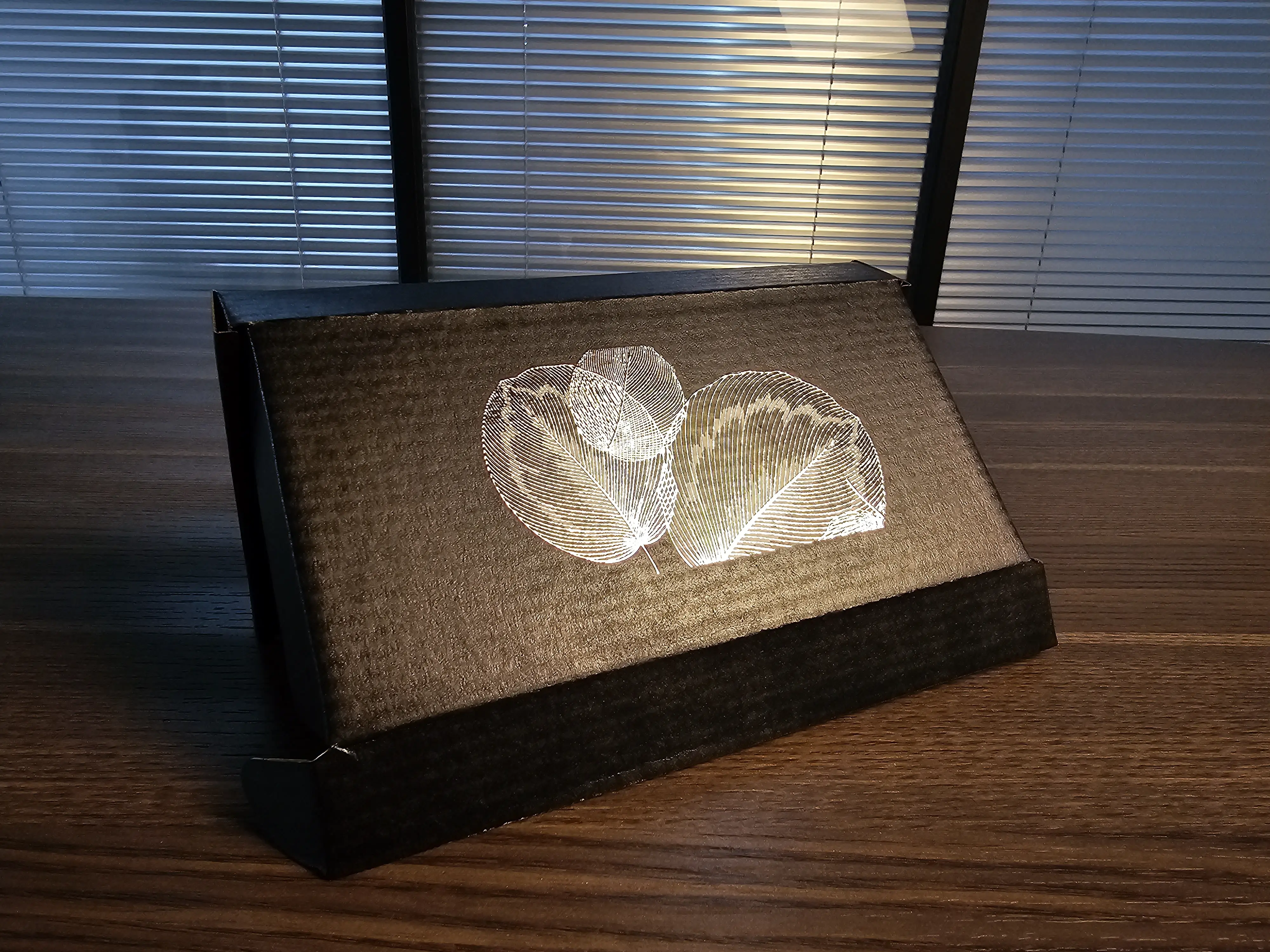
The tactile 3D embossed feel and gloss varnish make crystal stickers look like high-end direct prints. Below are examples of UV DTF stickers applied to common consumer products:
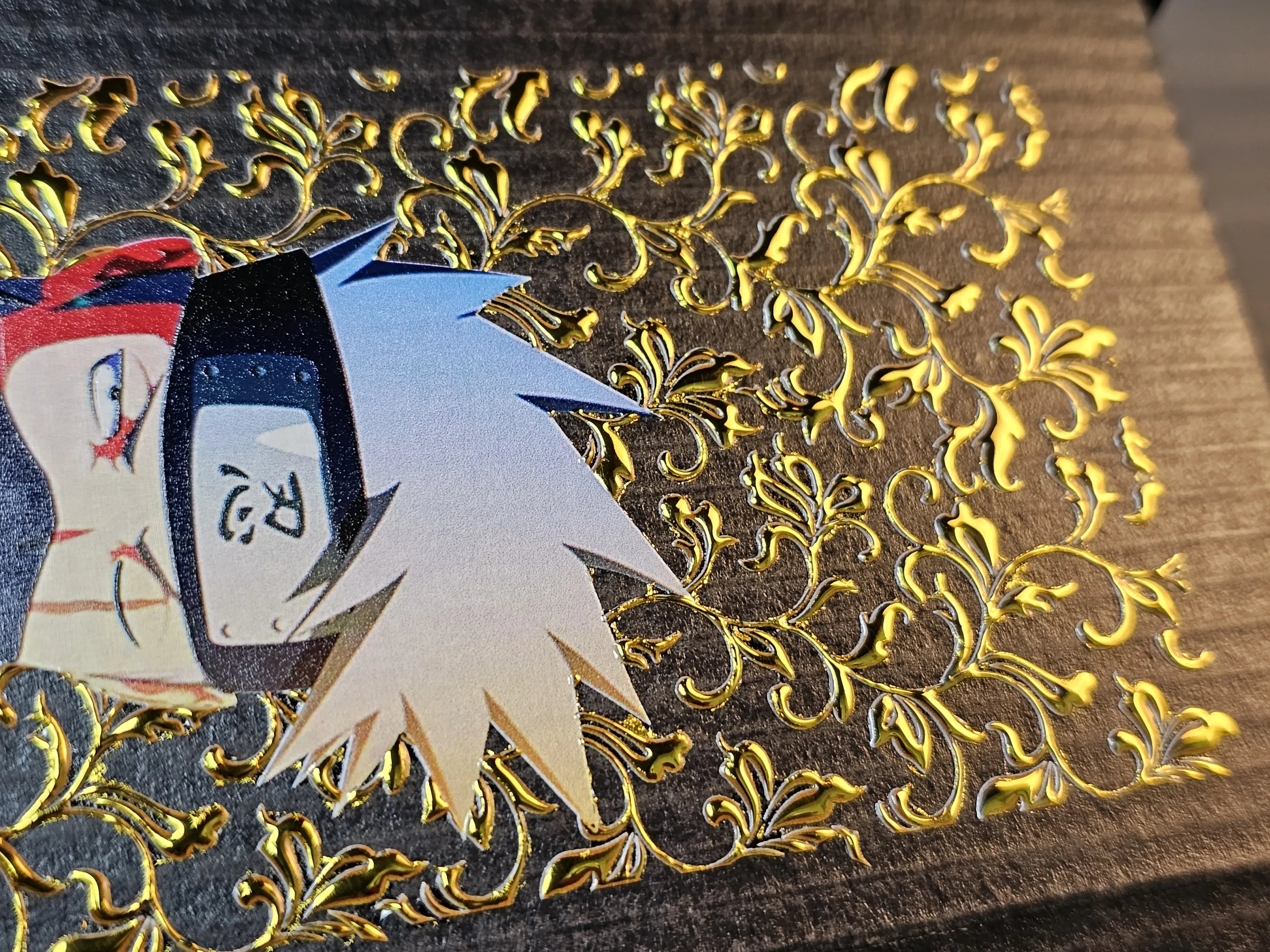
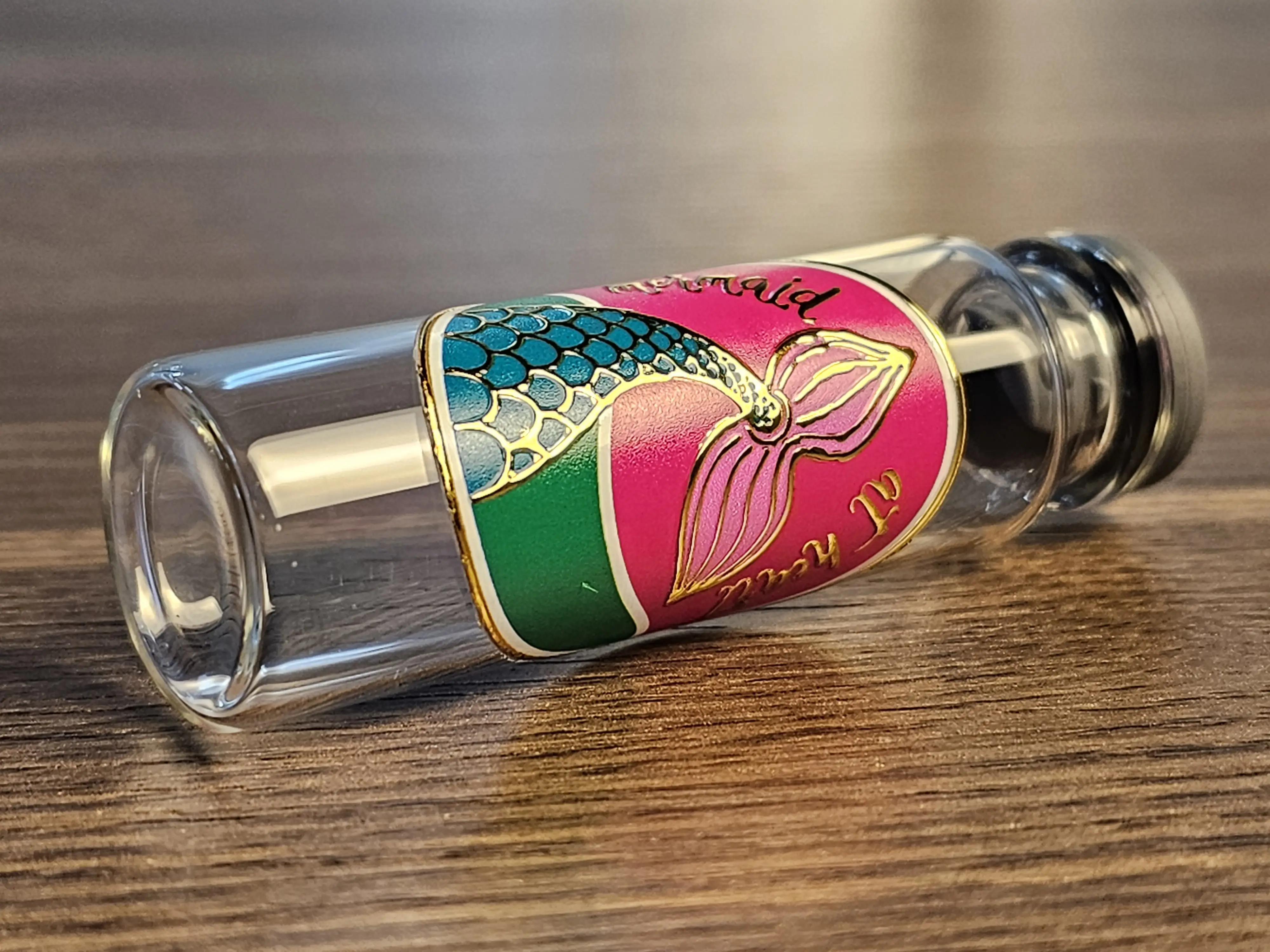
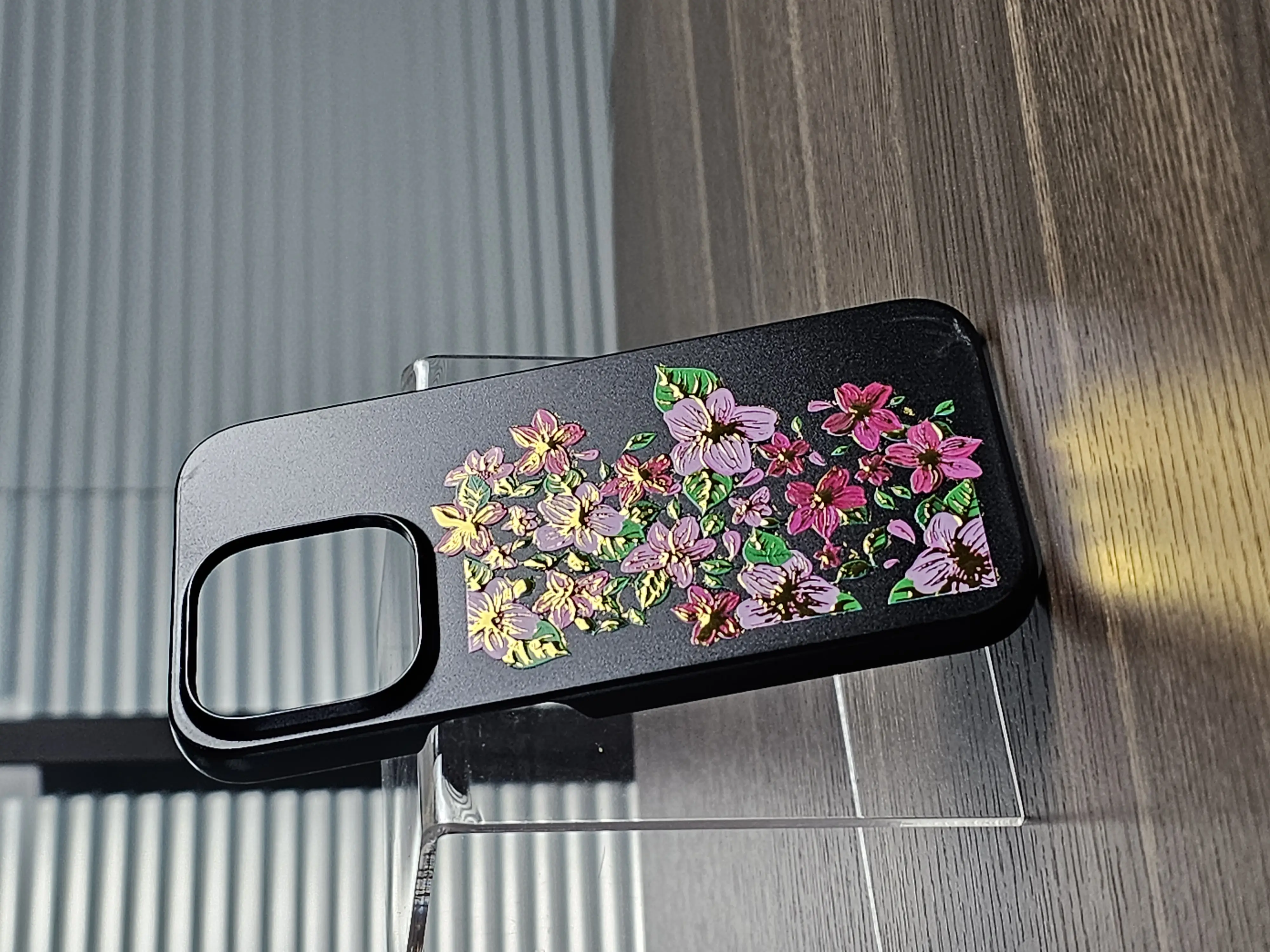
Section 4: Sourcing the Right Equipment — Recommended Models
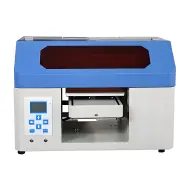
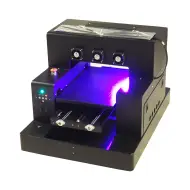
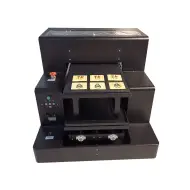
Selecting the right UV printer is critical to your startup's success. Below are GNFEI's top recommendations for starting a UV DTF printing business in 2026:
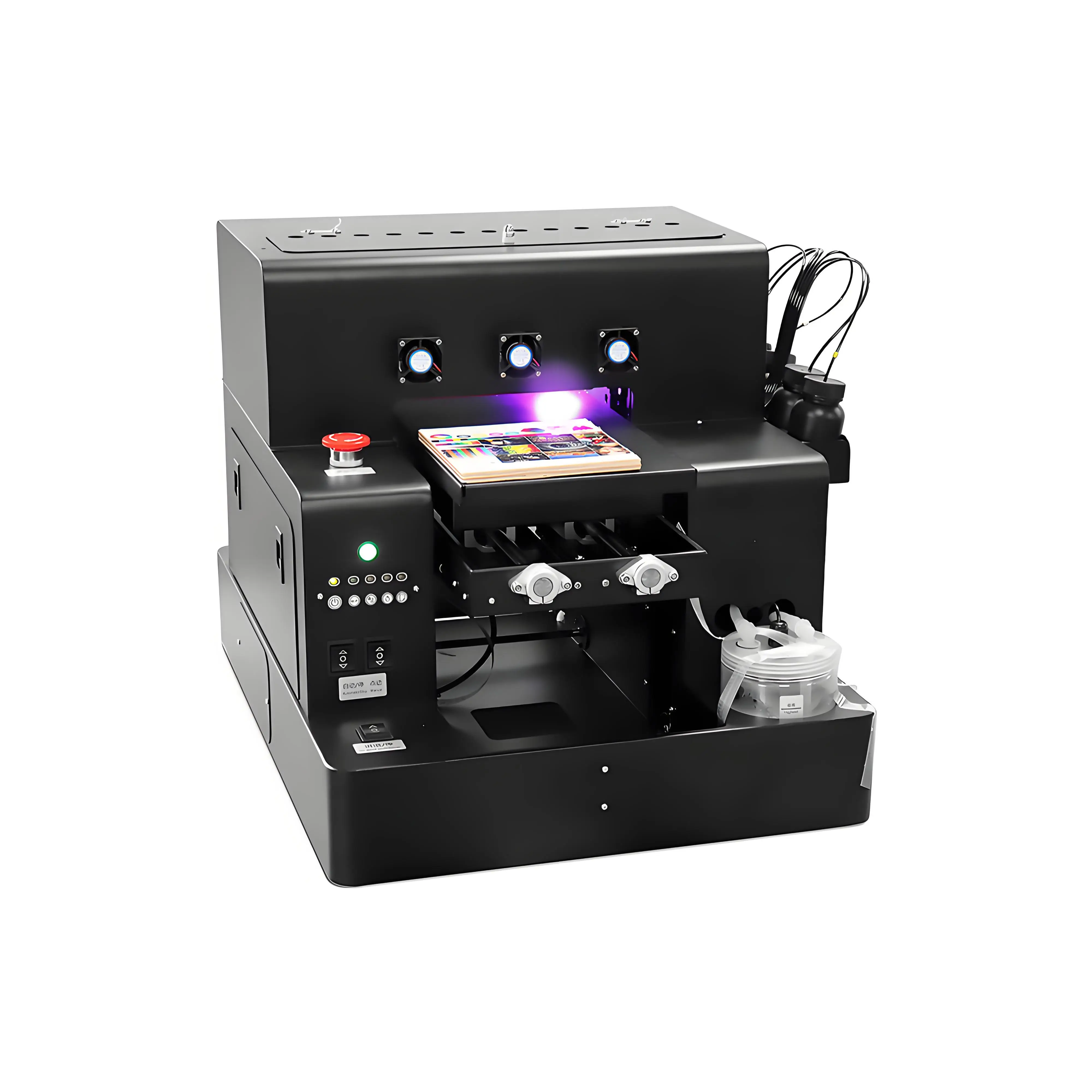
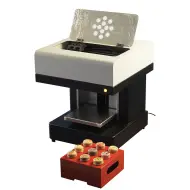
GNFEI F85V4 — A4 LED UV Printer (Flatbed + Rotary + DTF Support)
The ultimate entry-level system. Compact, user-friendly, and capable of printing both flat objects, drinkware, and UV DTF transfer sheets. Includes a synchronized rotary jig.
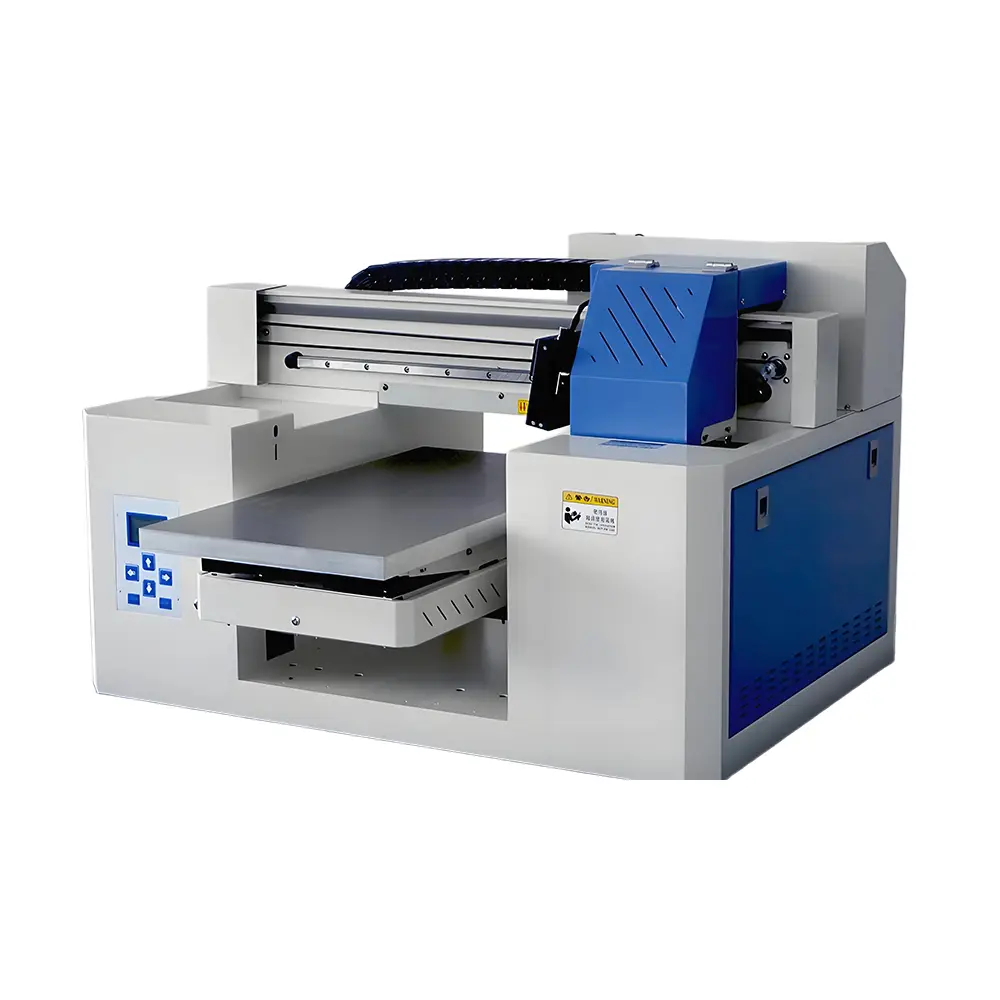
GNFEI F35V3 — A3 Dual Head UV Printer (Rotary & UV DTF Integrated)
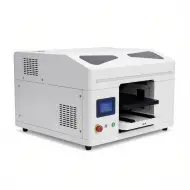
Designed for professional production. Features dual Epson printheads for ultra-fast white and color passes, a built-in vacuum bed to prevent film warping, and an LCD control panel.
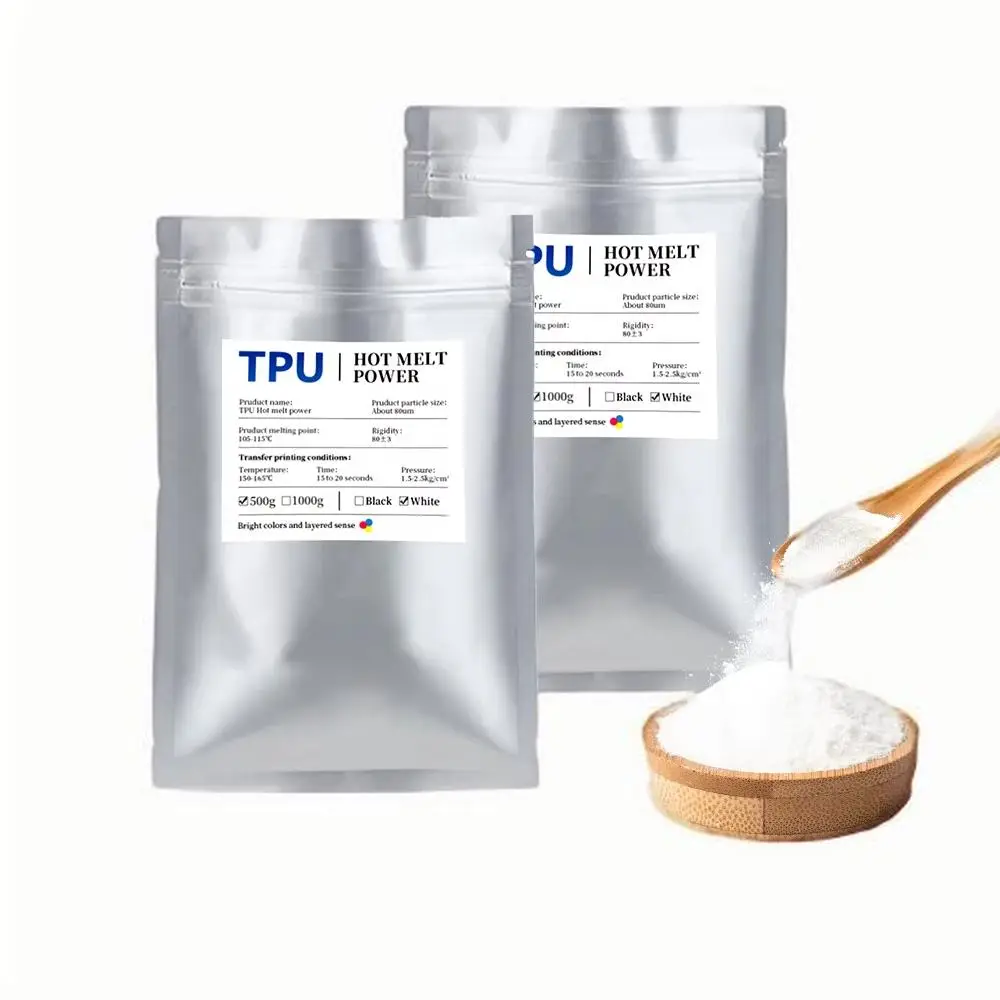
GNFEI Hot Melt Adhesive Pretreat DTF Powder
Premium hot melt adhesive pretreat DTF powder. Essential for creating robust, stretchable, and wash-resistant transfers on garments, polyester, swimsuits, and cotton fabrics.
Section 5: Startup Cost Analysis (2026)
Launching a UV DTF business is highly accessible compared to other industrial printing technologies. Below is an estimated cost comparison for starting a budget-conscious A4 setup versus a commercial A3 production shop:
| Startup Cost Item | A4 Starter Setup (Budget) | A3 Pro Setup (Commercial) |
|---|---|---|
| UV Printer Hardware | $1,400 – $1,600 | $2,400 – $2,800 |
| Integrated/Sheet Laminator | $120 | $350 |
| UV Ink Starter Set (CMYK+W+V) | $120 | $180 |
| UV DTF A/B Film Roll Pack | $80 | $150 |
| PC/Laptop (Windows system) | $300 | $300 |
| Application Accessories (Squeegees, cutters) | $30 | $40 |
| Total Estimated Investment | $2,050 – $2,270 | $3,420 – $3,820 |
Section 6: ROI & Profit Model — UV DTF Business 2026
The high profitability of UV DTF comes from the massive pricing difference between the raw material costs of film and ink and the premium retail value of a completed crystal label sheet:
| Production Item | Cost / Revenue Details |
|---|---|
| PET Film A + Transfer Film B (per A3 sheet) | ~$0.80 |
| UV Ink (CMYK+White+Varnish per sheet) | ~$0.40 |
| Lamination power & labor cost | ~$0.30 |
| Total Material Cost (per A3 Gang Sheet) | ~$1.50 |
| Selling Price (per A3 Gang Sheet) | $12.00 |
| Net Profit / Gang Sheet | $10.50 |
Depending on your daily production output, the timeline to recover your initial capital investment (payback period) is extremely short. The three scenarios below illustrate typical startup progress:
| Scenario | Daily Sheets Sold | Daily Net Profit | Monthly Net Profit | A4 Payback Period |
|---|---|---|---|---|
| Starter Shop | 10 A3 Sheets | $105.00 | $2,520 | ~14.2 Days |
| Growing Business | 25 A3 Sheets | $262.50 | $6,300 | ~5.7 Days |
| Pro Print Shop | 50 A3 Sheets | $525.00 | $12,600 | ~2.8 Days |
* Payback calculations are based on an initial equipment setup cost of $1,500 (A4 model). Actual results vary by order mix and shipping fees.
Section 7: B2B Marketing Strategy for UV DTF Startups
Building a customer base for a UV DTF sticker shop involves targeting specific high-margin customer segments. Below are four effective strategies for marketing your crystal sticker services:
Wholesale Gang Sheet Supply
Position your business as a supplier for local custom shops, Etsy sellers, and decorators. Offer custom UV DTF "gang sheets" in wholesale volumes, allowing other print shops to decorate hard goods themselves without investing in a UV printer.
B2B Corporate Merchandising
Reach out to local cafes, breweries, fitness studios, and corporate offices. Showcase how UV DTF decals can easily brand mugs, glasses, laptops, and thermos bottles in seconds. Sell them high-end branded stickers with low minimum order limits.
Promotional Merchandise Supplier
Partner with local event planners, wedding decorators, and promotional agencies. UV DTF allows quick branding on metal pens, acrylic signs, and packaging boxes with quick turnaround times.
Online Direct-to-Consumer Decals
List custom transfer sheets on Etsy, Shopify, or eBay. Sell popular pre-made designs for glass cups, vehicle graphics, and water bottles. Direct-to-consumer sales yield the highest margins per sheet.
Section 8: Frequently Asked Questions — UV DTF Business
1. What surfaces can UV DTF stickers be applied to?
UV DTF stickers can be applied to almost any hard, rigid, or semi-rigid surface. This includes glass, ceramics, metals, plastics (acrylic, PVC, ABS, polycarbonate), finished wood, leather, and cardboard. They do not adhere well to fabrics, silicone, or rough, highly texturized surfaces.
2. Do UV DTF stickers require a heat press to transfer?
No. Unlike DTF garment transfers, UV DTF crystal stickers do not require a heat press or oven curing. They transfer using pressure alone. You simply peel the backing paper, press the decal onto the surface, rub it with a squeegee or your fingers, and peel off the clear transfer film.
3. Are UV DTF stickers waterproof and dishwasher safe?
Yes. UV DTF prints are waterproof and highly resistant to moisture. Once applied, they hold up well to everyday handling and hand washing. However, they are not recommended for intensive dishwasher cycles or long exposure to extreme heat, as the high water temperature can weaken the adhesive over time.
4. What is the difference between Film A and Film B in UV DTF?
Film A is the carrier film that is printed on. It has a special self-adhesive layer on one side. Film B is the transfer positioning film (or lamination film) that is pressed onto Film A after printing. When the sticker is ready, peeling Film B lifts the cured ink and adhesive from the backing of Film A, allowing you to position it on your product.
5. Do I need RIP software to run a UV DTF printer?
Yes. RIP (Raster Image Processor) software is essential for setting the CMYK print passes, white ink underbase layers, and spot varnish paths. GNFEI includes a lifetime RIP software license with every printer package without any recurring subscription fees.
6. Can a standard UV flatbed printer print UV DTF stickers?
Yes, if it has a vacuum platen. You place Film A onto the vacuum bed (which holds the film completely flat during printing), print your white base, colors, and varnish, and then run the printed film through a separate sheet laminator to apply Film B.
7. How long do printed UV DTF decals last before application?
Once printed and laminated, UV DTF sheets can be stored for up to 6 to 12 months in a cool, dry place away from direct sunlight. This makes it easy to print inventory in advance and ship them to customers to apply when needed.
8. What is the average payback period for a UV DTF business?
If you sell 10 sheets per day, a starter A4 UV DTF setup (costing around $2,050 to $2,270) has a payback period of approximately 14 to 20 days. Many home-based printers recover their initial investment in less than a month.