Start a Custom Coffee & Food Printing Business: Equipment, ROI & Marketing Secrets
How to Start a Custom Coffee & Food Printing Business — Equipment, Costs & ROI
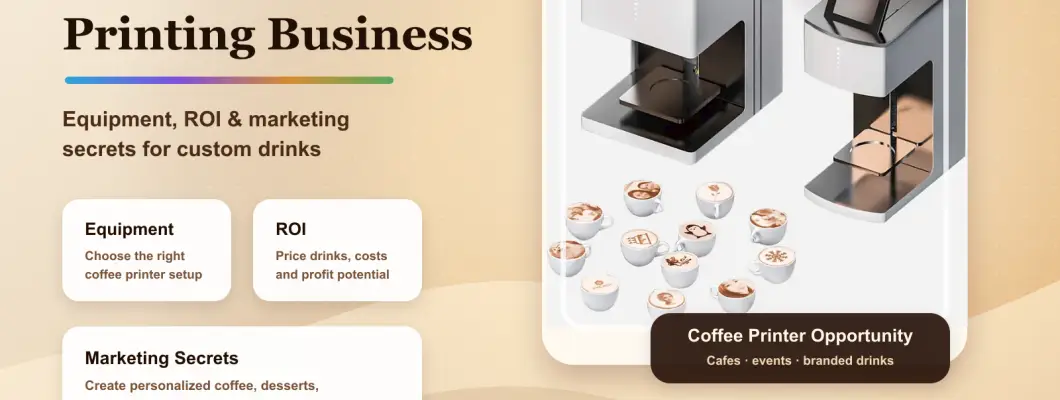
In the highly competitive food and beverage sector, personalization is no longer just a luxury—it is a powerful tool for social media engagement, brand visibility, and premium pricing. Custom coffee and food printing allows cafes, bakeries, bars, and event planners to print high-resolution photos, selfies, and company logos directly onto lattes, beer foam, macarons, and cookies. This comprehensive B2B guide covers everything you need to start a food printing business.
Section 1: Direct-to-Beverage vs. Handheld Food Printers: Which Technology Fits Your Business?
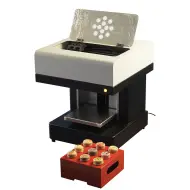
Edible inkjet printing technology relies on food-safe printheads to spray FDA-compliant edible inks onto edible surfaces without physical contact. Choosing the right machinery depends on your operational model: stationary cup printers are built for stationary bar setups, while handheld food printers provide mobile versatility.
| Feature | GNFEI F410C (Flagship Color) | GNFEI F111E (Economical) | GNFEI ST-1 (Smart Handheld) |
|---|---|---|---|
| Best For | High-volume cafes, corporate events, wedding bars | Small cafes, bakeries, entry-level startups | Dessert decoration, custom catering, mobile pop-ups |
| Print Dimensions | 10 x 10 cm maximum | 11 x 11 cm maximum | Continuous rolling (handheld) |
| Ink Channels | Full Color CMYK (Edible Ink) | Full Color CMYK (Edible Ink) | Single Color / CMYK Cartridge Options |
| Printing Speed | 5 – 15 seconds per cup | 10 – 20 seconds per cup | Instant (depends on hand sweep) |
| Max Cup/Food Height | 5 – 23 cm (Automatic cup lift) | 8 – 18 cm (Manual lift adjustment) | No height limit (direct on object) |
| Connectivity | Wi-Fi, QR-Code upload (Self-contained) | USB connection to Windows PC/Tablet | Wi-Fi, Bluetooth, Touchscreen UI |
| Typical Margin | 70% – 85% on premium drinks | 70% – 80% on printed foods | 80% – 90% custom dessert fees |
| Investment Level | Professional ($980 - $1,200 range) | Budget ($500 - $650 range) | Portable ($500 - $600 range) |
Section 1.5: Complete Coffee & Food Printing Startup Accessory Checklist
To launch a successful edible printing business, you need more than just the printer itself. Below is the complete startup checklist:
GNFEI Edible Printer
Select F410C for cafes, F111E for budget entry, or ST-1 for portable handheld use.
FDA Edible Inks
CMYK food-grade edible ink cartridges, completely tasteless and certified safe.
Printing Substrates
Macarons, white-topped cookies, donuts, coffee lattes, beers, and cupcakes.
PC / Windows Tablet
Required specifically for F111E to run the printer driver and upload designs.
Sanitation Kit
Food-grade sanitizing wipes, lint-free printhead wipes, and gloves for clean handling.
POS Marketing Signs
Table tents with QR codes to instruct cafe patrons on how to upload selfies.
High-Speed Wi-Fi
Necessary for F410C and ST-1 touchscreen systems to download user-submitted photos.
Portable Carry Case
Highly recommended for ST-1 handheld printers used in mobile catering events.
Printhead Keep-Wet Solution
Moisturizing cap fluid to prevent nozzles from drying out during idle periods.
Section 1.6: Pros & Cons of Direct-to-Beverage vs. Handheld Food Printers
Direct-to-Cup Printers (F410C / F111E)
- Pro: Perfect Height Calibration — Automatic height adjustment ensures the foam is perfectly leveled to avoid printhead contact.
- Pro: Hands-Free Process — Simply place the cup on the tray and let the motor automate the lift-and-print sequence.
- Pro: Photorealistic Portraits — High-definition CMYK nozzles create stunning details of human faces and text.
- Con: Hard-limit dimensions — Restricted to printing on cups or flat food items that fit onto the lifting platform.
- Con: Stationary Footprint — Heavy structure is best suited for permanent café counter installation.
Smart Handheld Food Printers (ST-1)
- Pro: Zero Substrate Limits — Print on bread rolls, large cakes, chocolates, and latte cups alike with one hand.
- Pro: Extreme Portability — Light, battery-operated design allows for live printing at food trucks, weddings, and events.
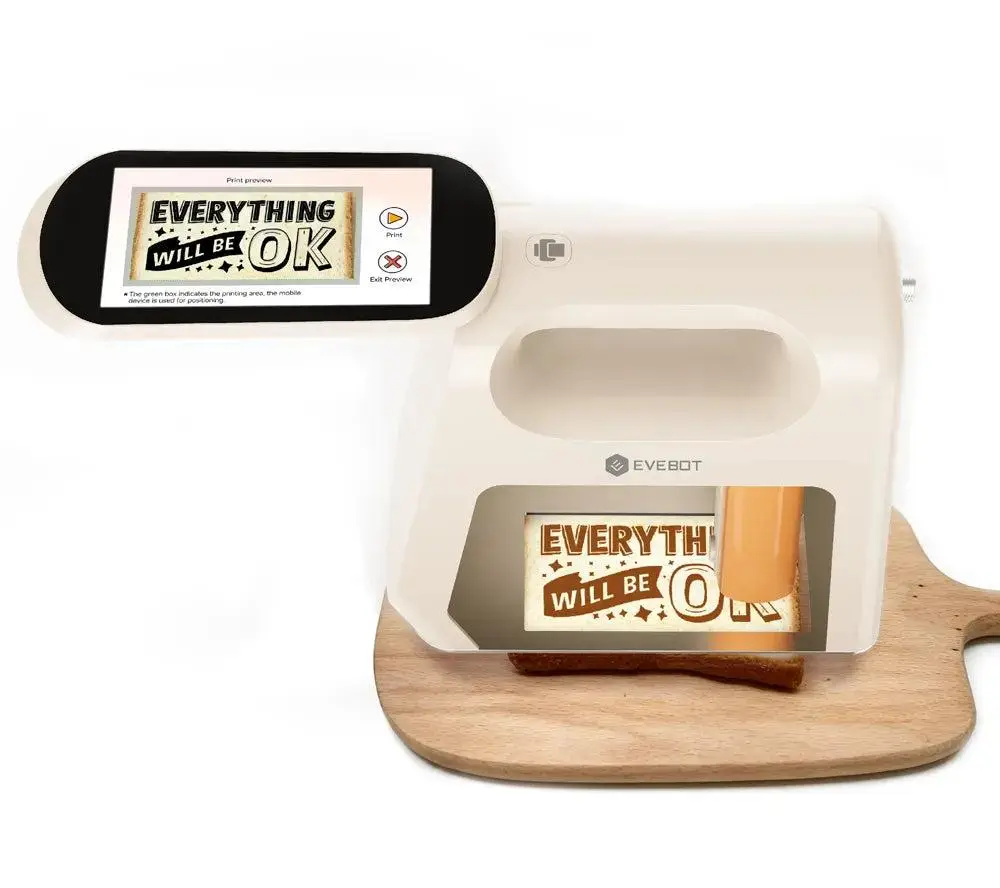
- Pro: Integrated Camera preview — Built-in camera allows real-time visual positioning before sweeping the trigger.
- Con: Requires manual sweep speed — Hand speed needs to be steady to avoid stretching the printed image.
- Con: Single Color Cartridges — Best optimized for single-color monochrome printing compared to dual-head CMYK flatbeds.
Section 2: Direct Cup Printing: F410C & F111E Production Videos & Samples
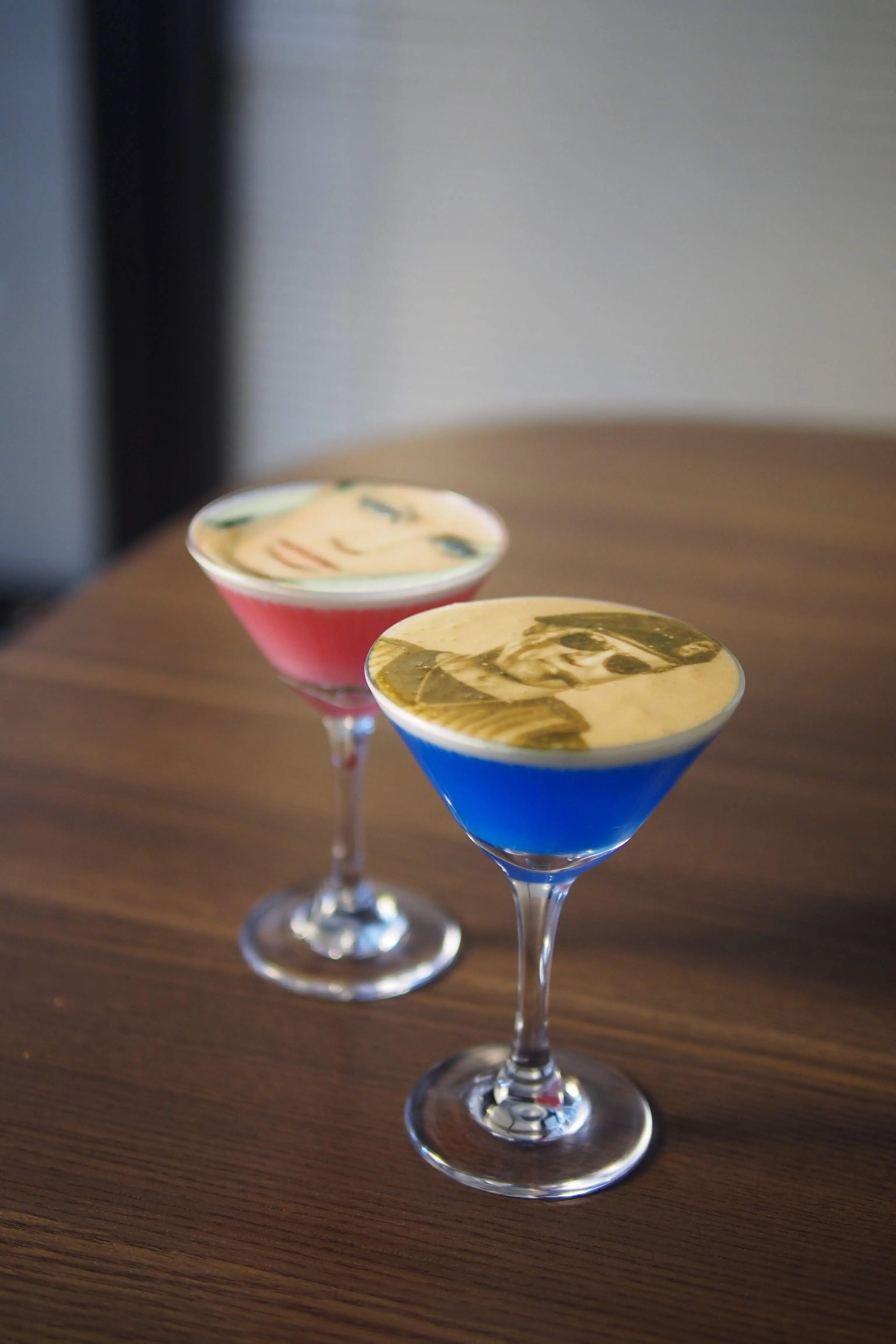
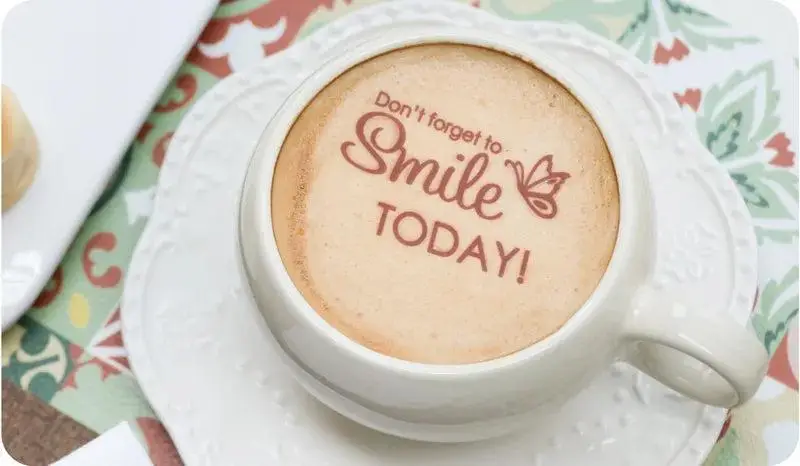
Direct cup coffee printers are perfect for stationary installations. Watch our professional models in action as they print full-color photos and logo art onto milk latte foam and macaron trays.
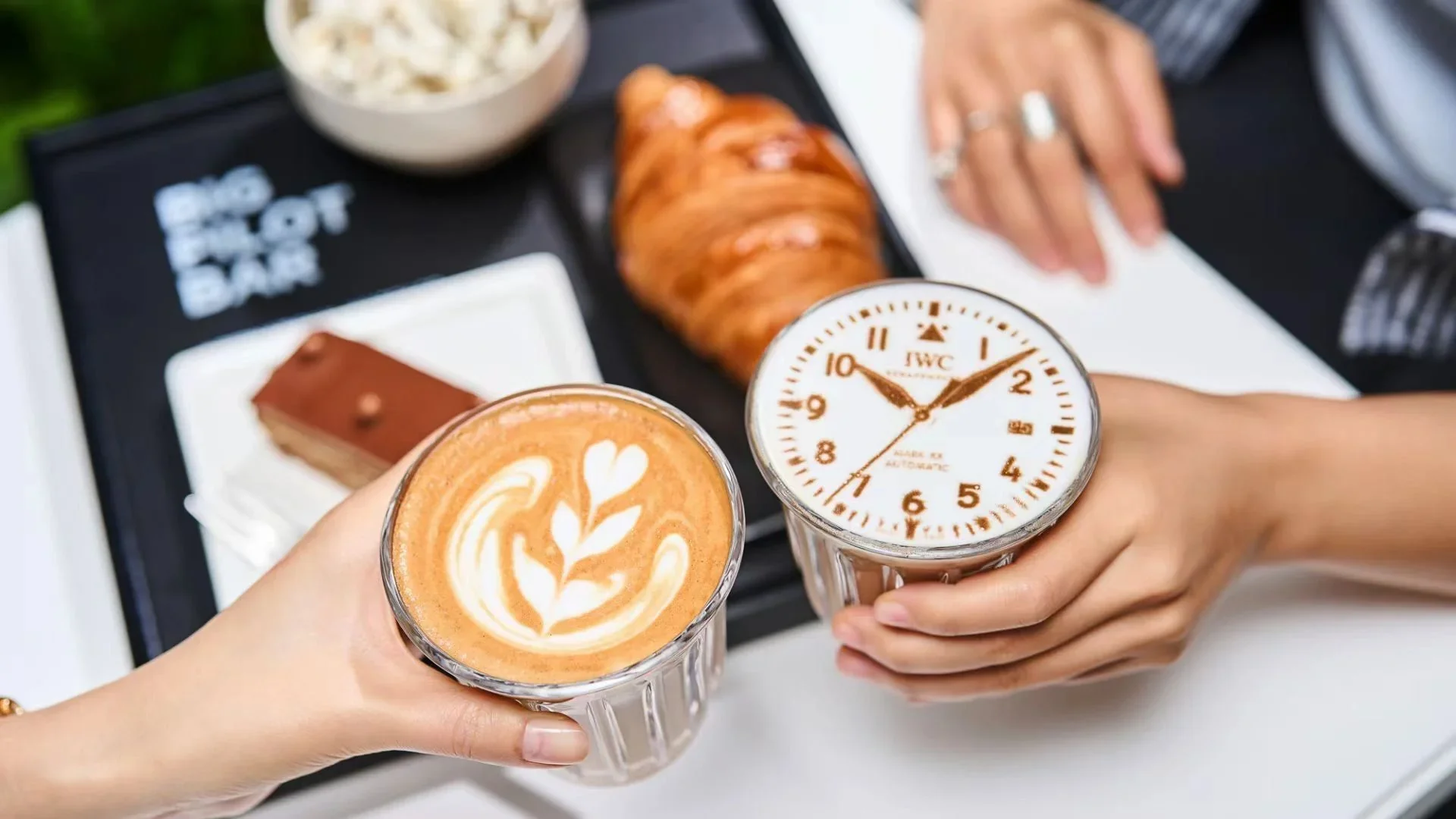
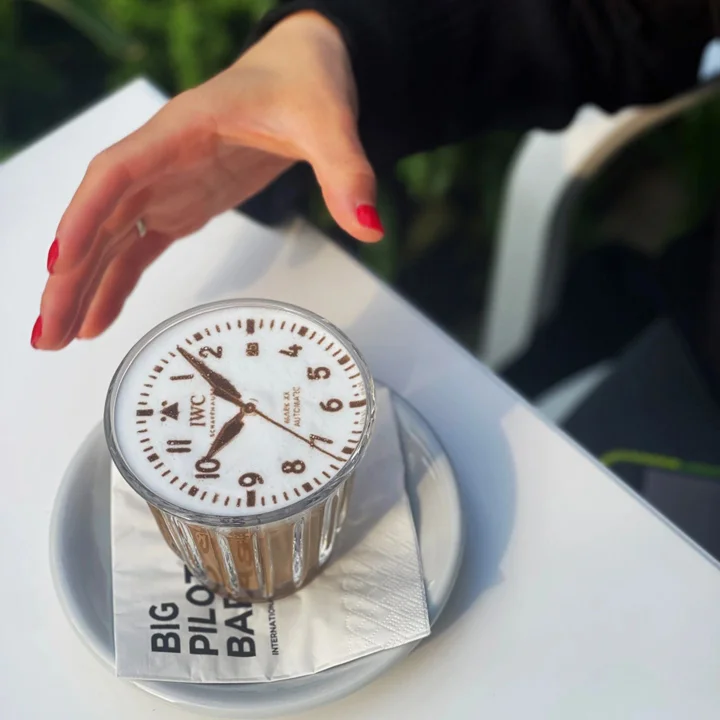
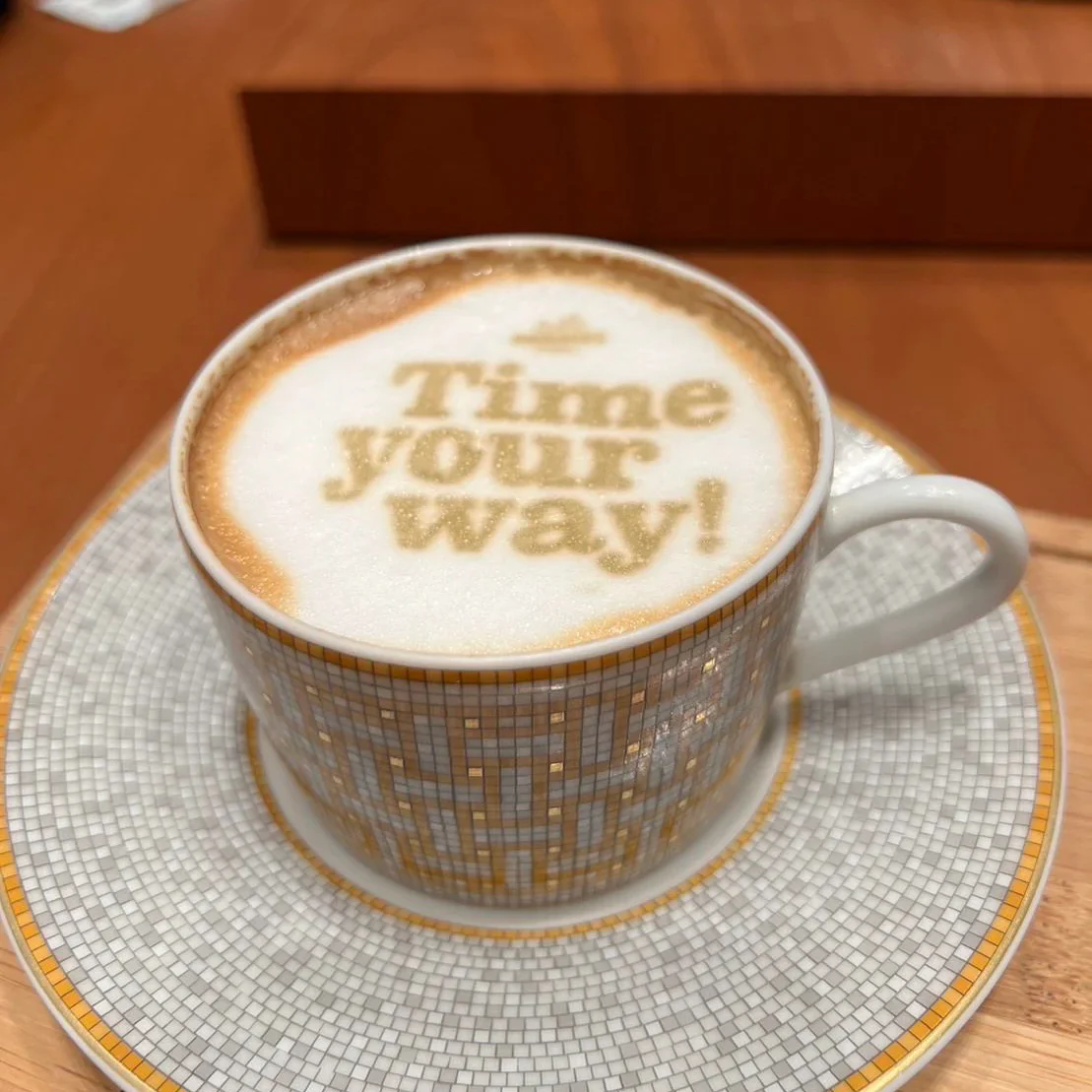
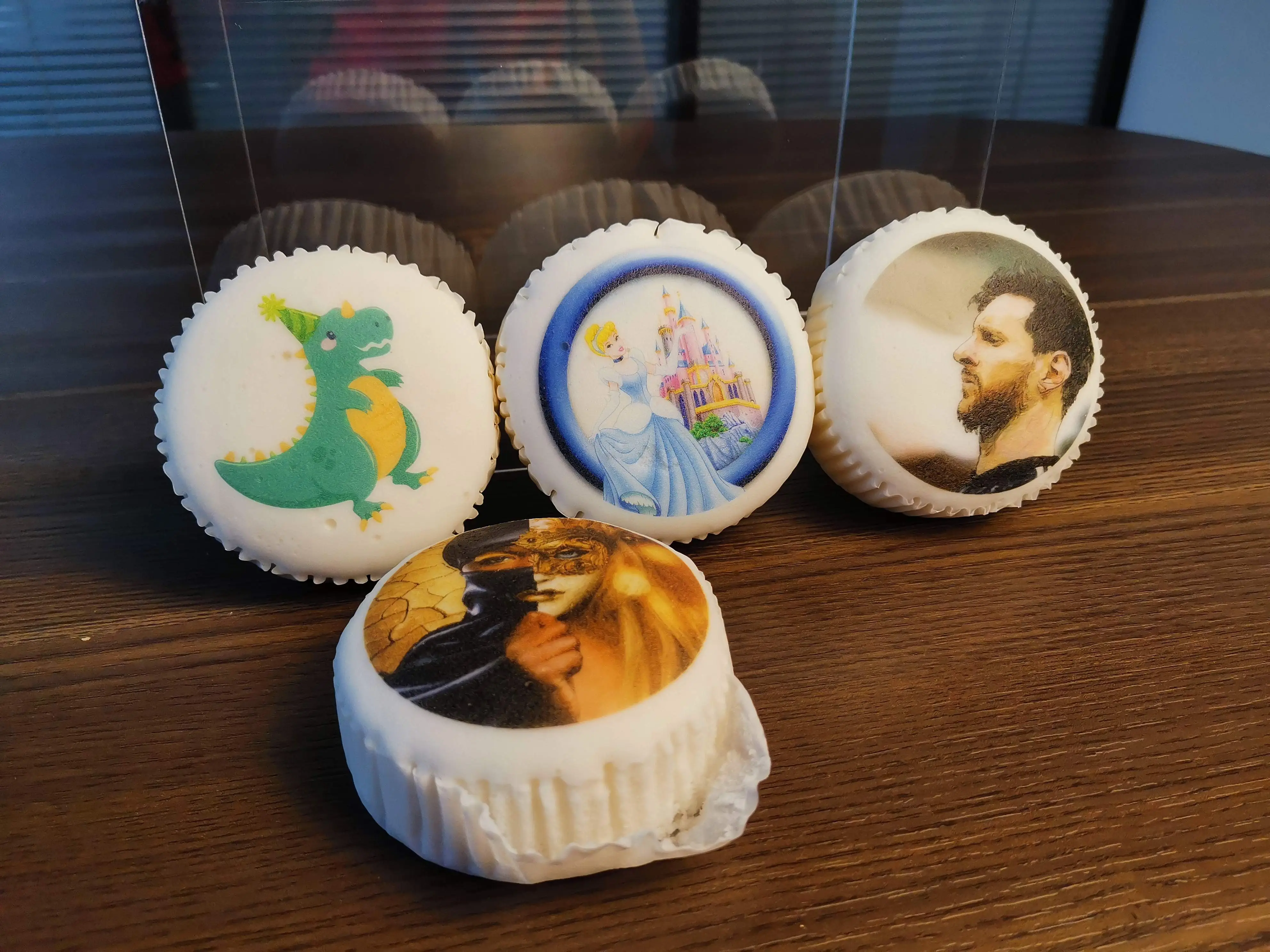
The results are striking. Edible ink prints match the resolution of paper prints, turning standard coffee cups and sweet cookies into visual stories. Click any image below to zoom:
Section 3: Smart Handheld Printing: ST-1 Portable Food Decoration
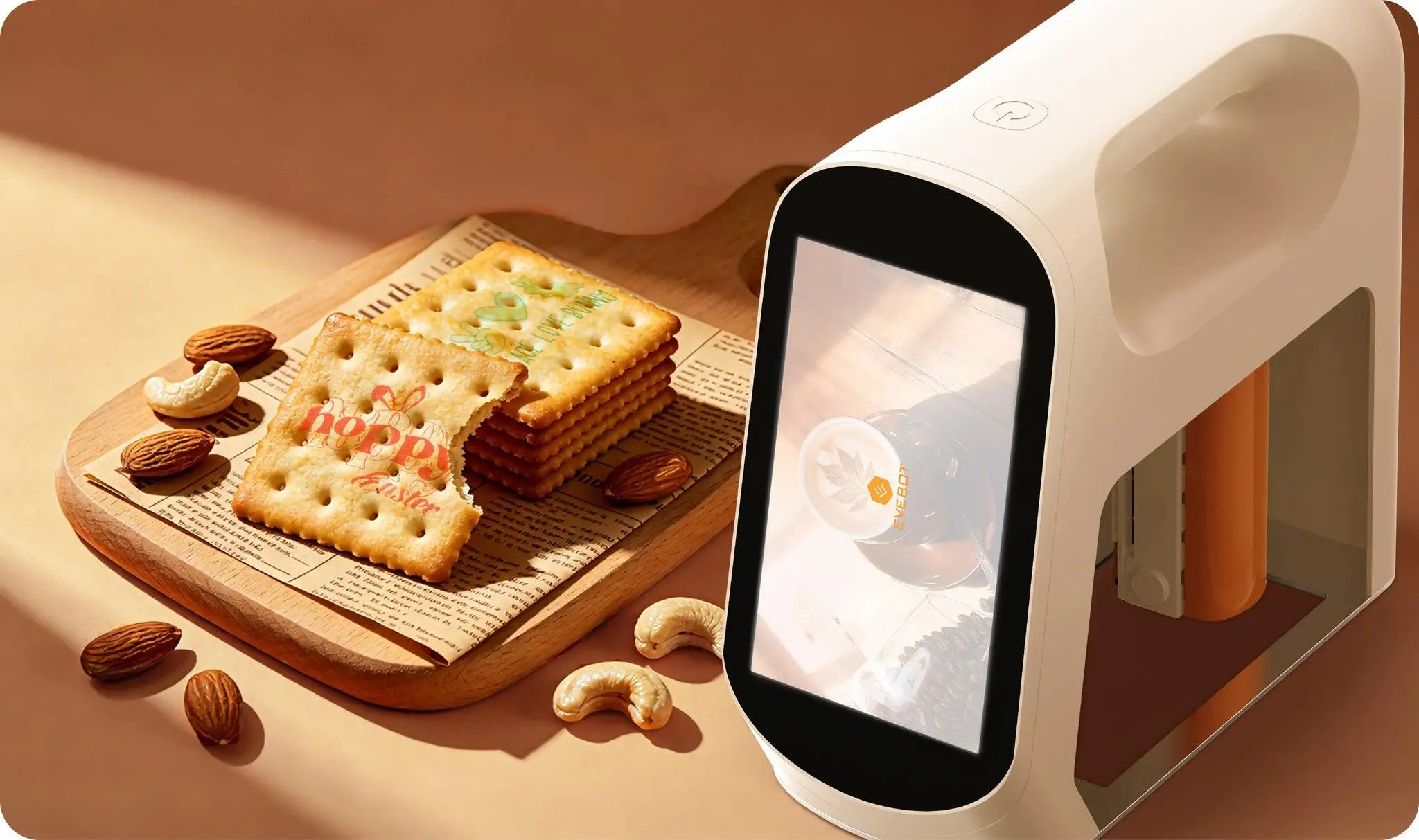
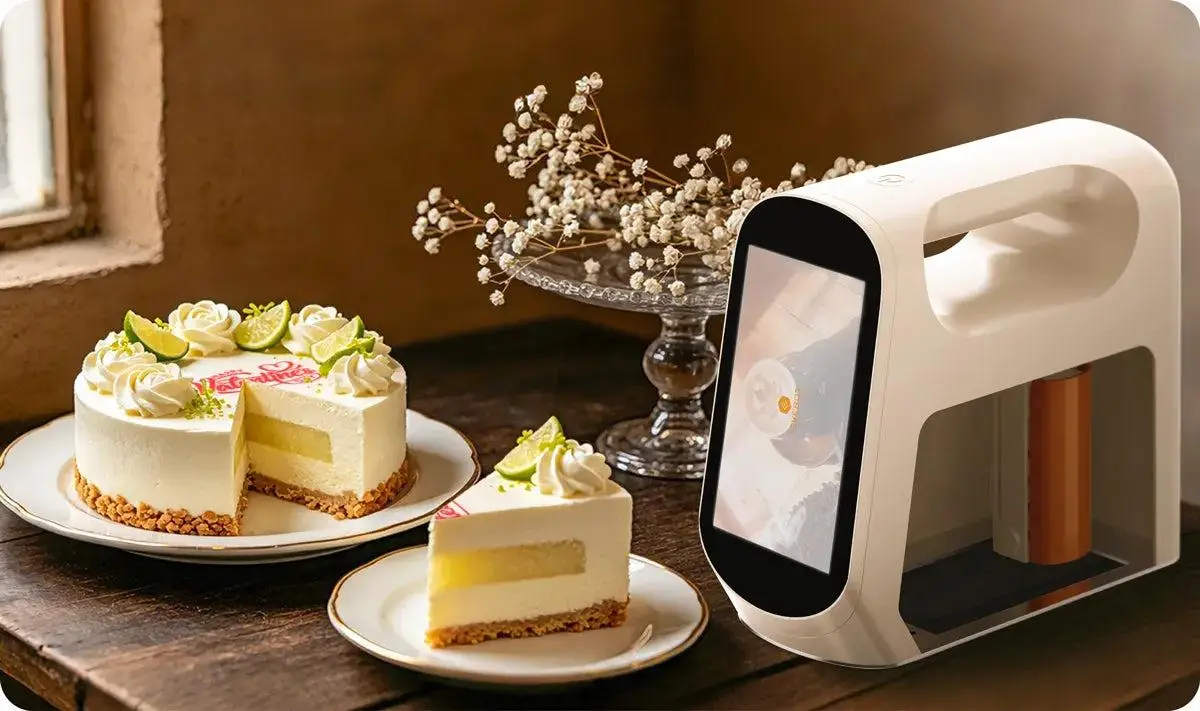
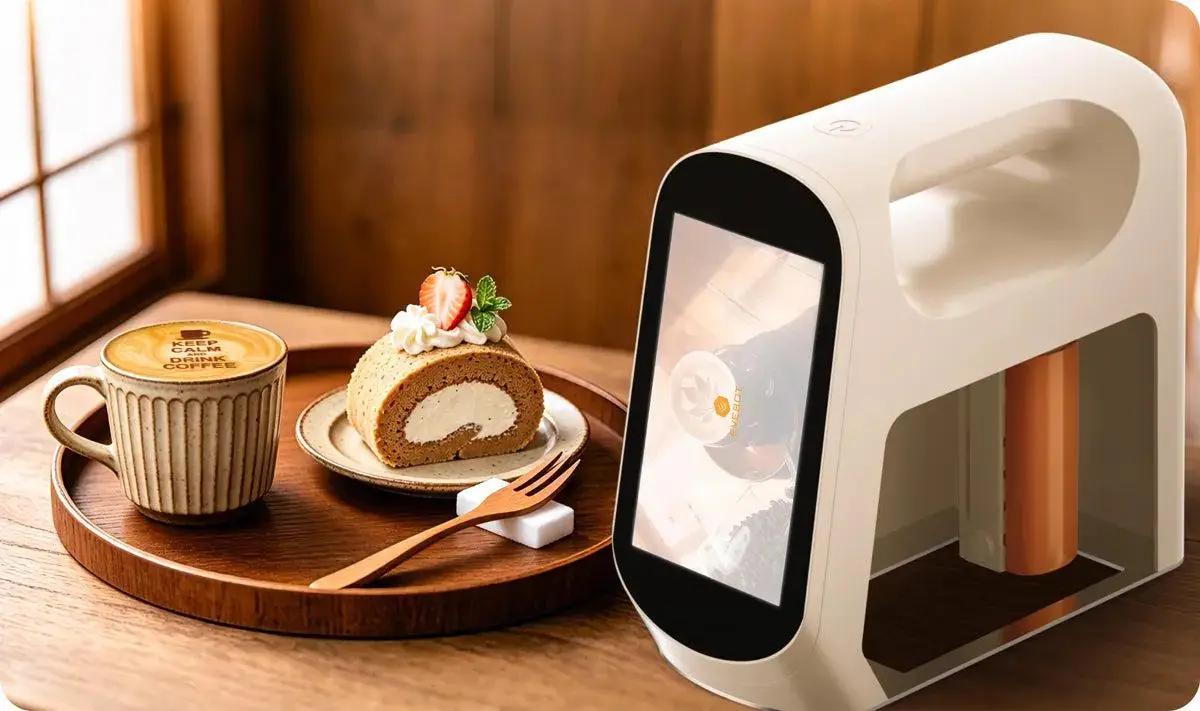
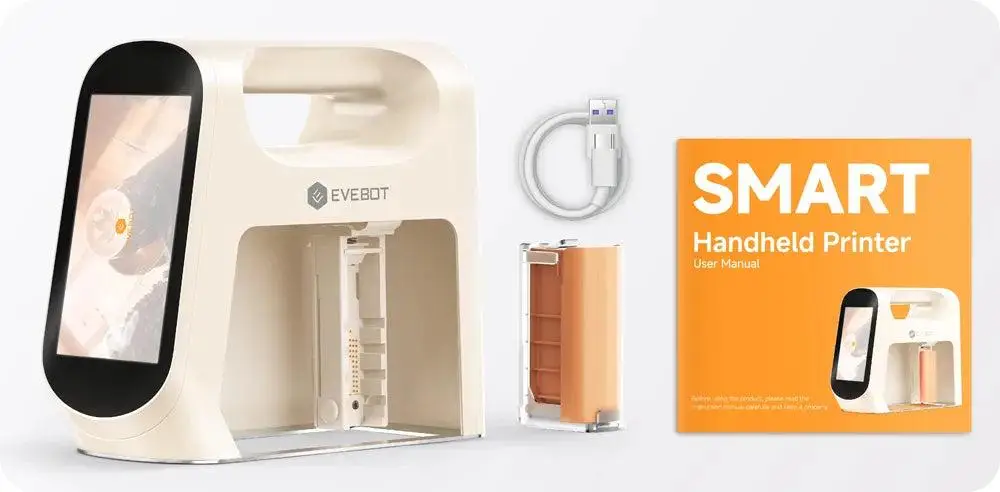
The GNFEI ST-1 provides ultimate flexibility, allowing operators to roll the printhead over large food surfaces that cannot fit into standard lift trays. Watch how it handles mobile operations at events:
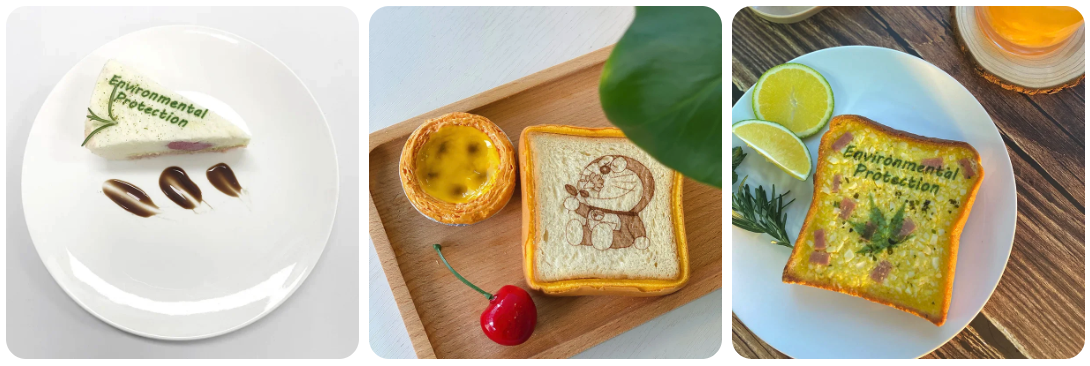
From individual customized rolls in bakeries to wedding cake details, the ST-1 creates instant B2B branding on the fly. Review these handheld print sample images:
Section 4: Sourcing the Right Coffee & Food Printer — GNFEI Recommended Models
Choosing the right system depends on your target customer base, foot traffic, and budget. Below are GNFEI's recommended models for 2026:
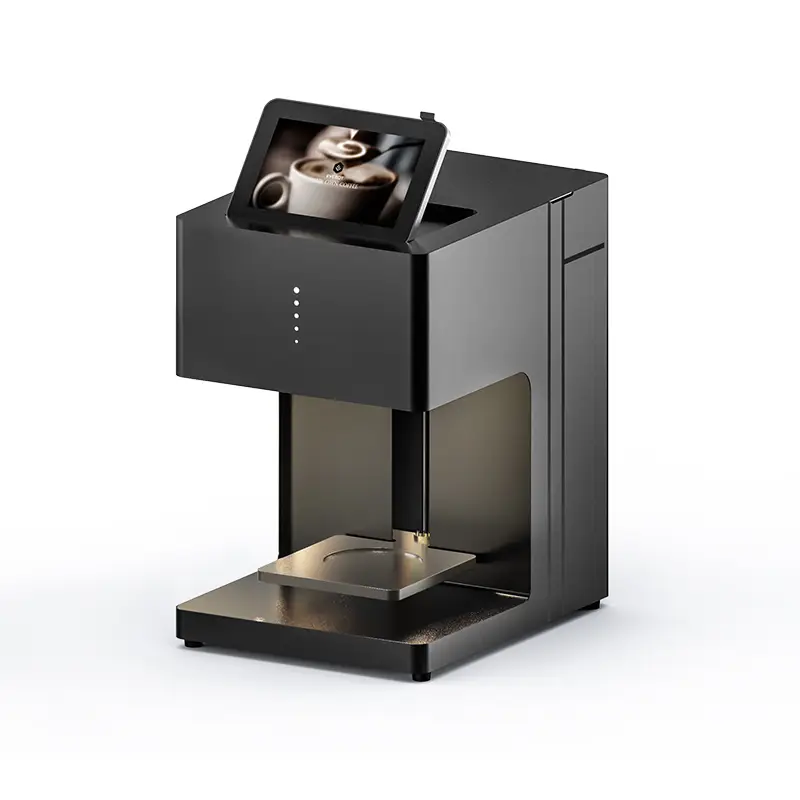
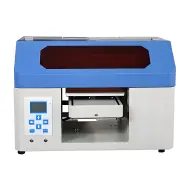
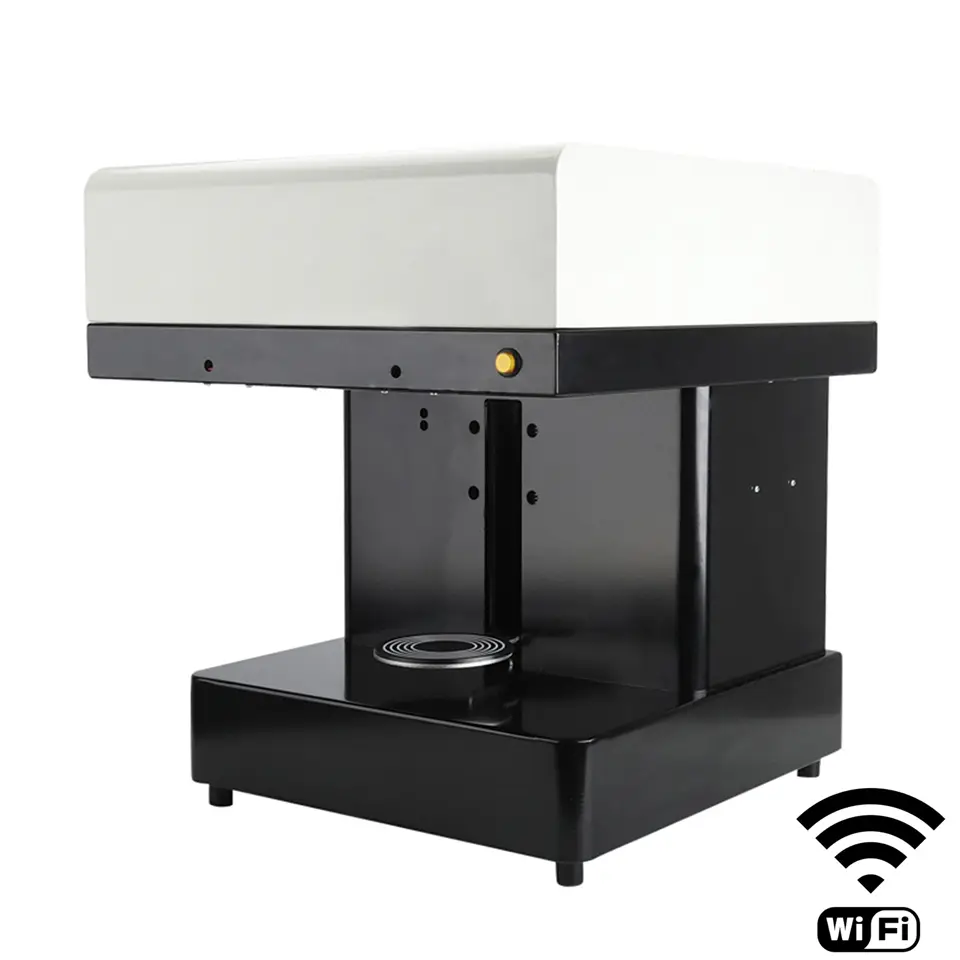
GNFEI F410C — CMYK Color Latte Coffee & Food Printer
The professional standard for modern cafes and corporate events. Features a self-contained operating system, built-in Wi-Fi, and a touchscreen. Customers scan a QR code to upload photos and print in full CMYK color in under 15 seconds.
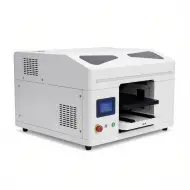
GNFEI F111E — Economical Smart Coffee & Food Printer
Perfect for smaller bakeries and cafes looking to test the food printing market with minimal investment. It offers full CMYK color printing and connects to a Windows PC or tablet. Efficient, compact, and extremely affordable.
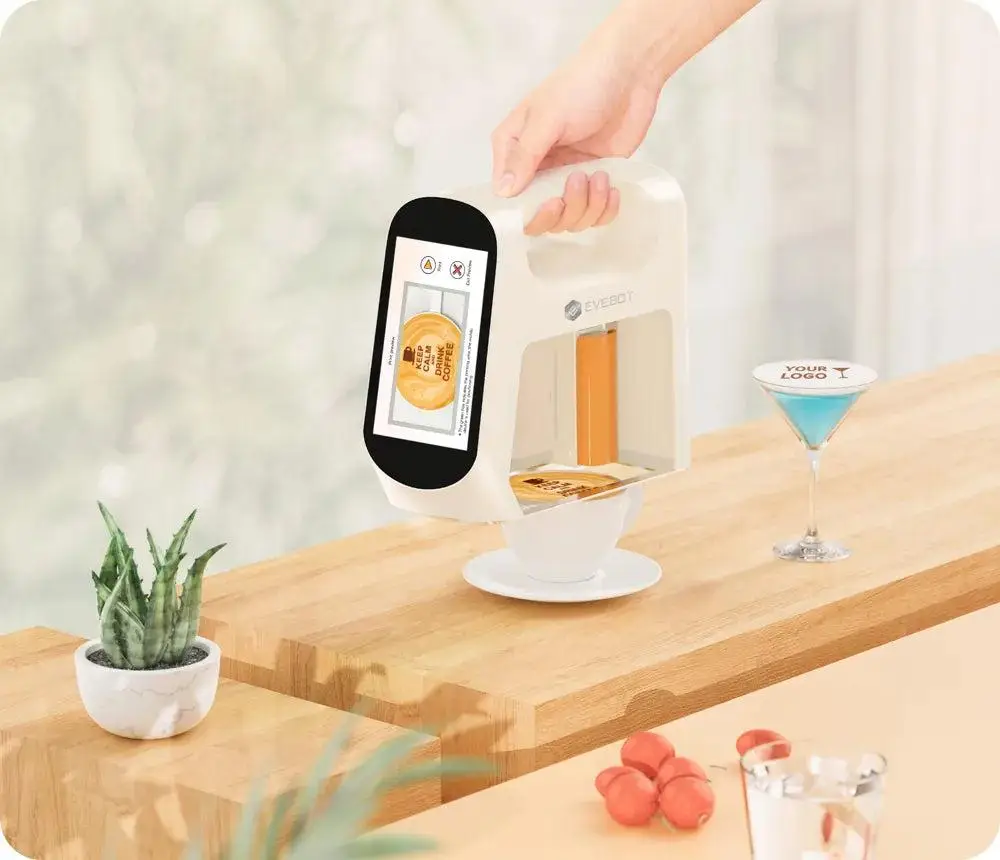
GNFEI ST-1 — Smart Handheld Edible Food Printer
Designed for mobile catering, custom dessert studios, and wedding events. Features a built-in camera for real-time visual positioning, a touchscreen, and a rechargeable battery. Roll it over cupcakes, big cakes, and pastries anywhere.
Section 5: Custom Coffee & Food Printing Business Setup Cost Analysis (2026)
The initial startup investment for food printing is much lower compared to large industrial DTF or UV printing lines. Below is an estimated cost breakdown for three typical setups:
| Equipment / Setup Cost | F111E Setup (Budget Cafe) | F410C Setup (Flagship Cafe) | ST-1 Setup (Mobile Events) |
|---|---|---|---|
| Edible Food Printer | $500 – $650 | $980 – $1,200 | $500 – $600 |
| Edible Ink Set (Initial) | ~$60 (CMYK Cartridges) | ~$80 (CMYK Cartridges) | ~$60 (Monochrome / CMYK) |
| Windows PC / Tablet | ~$250 (If not already owned) | $0 (Built-in Touchscreen) | $0 (Built-in Touchscreen) |
| Marketing Signs & QR Prompts | ~$30 | ~$30 | ~$50 |
| Maintenance Cap & Sanitizer | ~$20 | ~$20 | ~$20 |
| Total Estimated Setup | ~$610 – $1,010 | ~$1,110 – $1,330 | ~$630 – $730 |
Section 6: ROI & Profit Model — How Custom Printing Generates Revenue
Coffee and food printing is a high-margin business. By offering customization, you can command a premium price on standard food and beverage products:
If you run a bakery selling custom printed macarons, the profit margin increases significantly:
- Standard Macaron Box (6 pcs): $18.00 retail price
- Printed Macaron Box (6 pcs): $24.00 retail price (Premium customized print upcharge of $6.00)
- Ink Cost: ~$0.15 for 6 macarons
- Additional Net Profit per box: $5.85
| Scenario | Daily Printed Cups | Additional Daily Profit | Monthly Net Premium Profit | Payback Period (F410C) |
|---|---|---|---|---|
| Starter Cafe | 25 cups | $36.25 | ~$1,087.50 | ~30 Days |
| Medium Volume Cafe | 60 cups | $87.00 | ~$2,610.00 | ~13 Days |
| Busy Event Booth / Wedding | 150 cups | $217.50 | ~$6,525.00 | ~5 Days |
Section 7: B2B Marketing Secrets for Coffee & Food Printing
To maximize your print revenues, implement these marketing workflows:
Selfie QR Code Integration
Place table tents with QR codes at your cafe tables. When customers scan it, they are taken directly to your upload portal where they take a selfie, crop it, and send it to the printer queue. This seamless mobile workflow keeps customers engaged.
Corporate Brand Events & Weddings
Promote your services to event coordinators and wedding planners. Offer flat-rate packages for corporate events, printing the client's logo directly onto coffee and beer foam. This premium service commands $500–$1,000+ booking fees per day.
Seasonal & Birthday Specials
Promote holiday prints (Christmas latte designs, Halloween themes) and personalized birthday pastries. Social media exposure is massive—when customers receive their personalized drinks, they upload pictures to Instagram and TikTok, driving organic traffic.
Local Bakery & Cafe Partnerships
If you own a dessert studio, partner with local cafes to supply custom-printed brand cookies or chocolates. Handheld ST-1 users can decorate batch orders quickly, establishing profitable wholesale business accounts.
Section 8: Frequently Asked Questions
1. What drinks and foods can I print on?
GNFEI food and coffee printers can print directly onto any flat surface or thick liquid foam, including latte milk foam, cappuccino, hot chocolate, beer foam, milkshakes, macarons, cookies, cupcakes, bread, pastries, and chocolates.
2. Is the edible ink safe and certified?
Yes, GNFEI edible ink cartridges are strictly formulated from food-grade ingredients and certified by relevant food safety agencies. The ink is odorless, tasteless, and entirely safe for human consumption without altering the flavor of the food or beverage.
3. Do I need a computer to operate these printers?
It depends on the model. The flagship GNFEI F410C and the ST-1 Handheld printer have integrated touchscreens, built-in operating systems, and Wi-Fi capability, so they do not require a separate PC. The economical GNFEI F111E connects to a Windows PC or tablet to run the printing software.
4. How do customers upload their photos?
Customers simply scan a QR code displayed on the printer screen or table menu using their smartphone, upload their photo or selfie, crop it, and send it to the printer instantly. There is no app installation required.
5. What is the print speed per cup?
The printing speed depends on the image size and print mode, typically ranging between 5 to 15 seconds per cup. The high-speed F410 series is optimized to prevent bottlenecks in busy coffee shops and event spaces.
6. How long does one ink cartridge last?
A standard CMYK edible ink cartridge set can yield approximately 600 to 800 full-color prints (depending on the image coverage and size). Cartridges are easily refillable or replaceable.
7. How long does the printed design stay on the foam?
The printed design remains sharp and clear on latte or beer foam for 15 to 30 minutes, or until the foam naturally begins to dissolve. On solid surfaces like cookies and macarons, the print dries instantly and remains permanent until consumed.
8. Do these printers require daily maintenance?
Yes, like all inkjet devices, simple daily maintenance is required to prevent nozzle clogs. The printers feature automatic printhead cleaning functions. Before shutting down, a quick 1-minute nozzle check and basic wipe keeps the printhead in perfect working order.
9. Can these edible printers print on chocolate and macarons with dark surfaces?
Yes, but printing on dark surfaces (like dark chocolates or dark cookies) requires a white underbase. The GNFEI F410C flagship model supports multi-pass printing to lay down a white food-grade layer before printing the CMYK colors. For standard quick-service cafe setups, printing on white or light-colored surfaces (milk foam, white chocolate, vanilla macarons) is recommended for the most vibrant results.
10. Are there any monthly software subscription or licensing fees?
No. Unlike some competitive food printing systems that lock you into monthly app subscription fees or proprietary cloud upload portals, all GNFEI printers ship with a perpetual lifetime software license. The QR-code photo upload portal is self-hosted on the machine's local webserver, meaning no ongoing fees or dependency on third-party cloud platforms.
11. Do GNFEI coffee and edible food printers have CE or other certifications?
Yes, all GNFEI coffee and food printers are CE certified, ensuring they meet rigorous international safety, health, and environmental protection standards. The mechanical and electrical components are built using food-safe structural materials where contact occurs.
12. How do you handle shipping and customs clearance for international buyers?
GNFEI offers global factory-direct shipping to over 150 countries. We provide express door-to-door shipping (via DHL, FedEx, or specialized air cargo networks) and handle all standard export customs documentation. For B2B clients, we assist with importation paperwork to ensure a smooth clearance process.