What is the Difference Between Single-Pass and Dual-Pass DTG Printing?
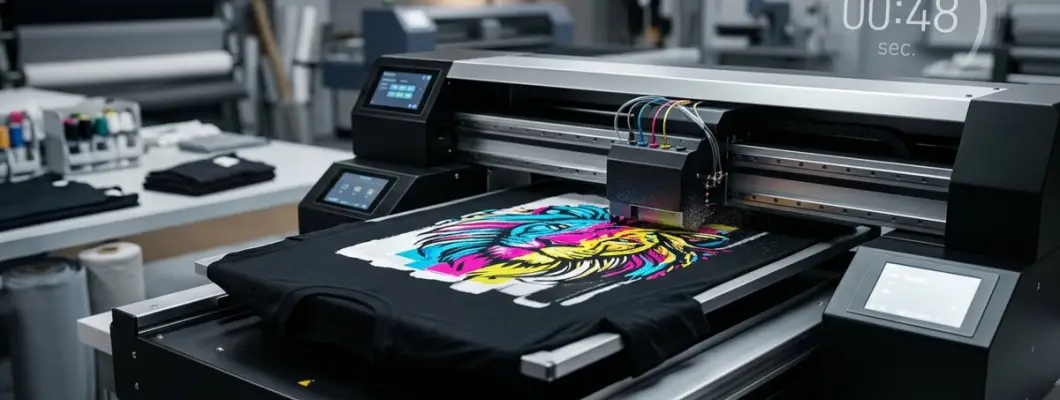
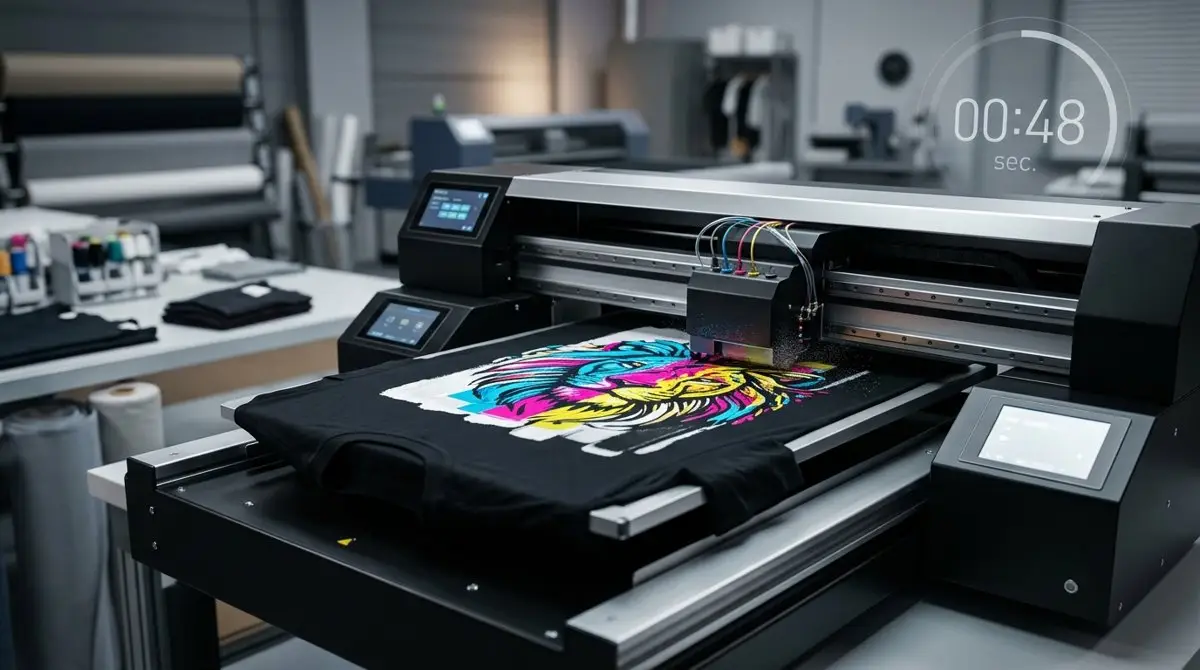
Single-pass DTG prints white underbase and CMYK colors simultaneously in one single platen movement; dual-pass prints white first, resets the table, and prints color on a second separate pass.
Choosing between single-pass and dual-pass printing dictates your daily shop throughput, hourly labor costs, registration alignment accuracy, and printhead hardware requirements.
1. What is Single-Pass (One-Pass) DTG Printing?
In Single-Pass DTG printing, the printer's mechanical carriage fires both the white underbase ink and the CMYK color ink in the exact same print stroke or synchronized staggered carriage pass.
• Industrial machines (like GNFEI F85G3) use two independent Epson i3200 printheads mounted in a staggered inline configuration.
• Head #1 deposits the dense titanium dioxide white underbase.
• Head #2 (trailing immediately behind) lays down CMYK microdroplets directly on top of the wet white ink.
• Cycle Time: Standard A3 full chest print finishes in 45 to 90 seconds in a single smooth motion.
2. What is Dual-Pass (Two-Pass) DTG Printing?
Dual-pass printing is the legacy method commonly found on budget, entry-level, or single-head converted desktop printers:
1. First Pass (White Layer Only)
The printer feeds the platen forward and deposits the 100% white underbase mask across the design area.
2. Table Retraction & Origin Reset
Once the white print finishes, the motor retracts the entire mechanical platen all the way back to the starting optical sensor limit.
3. Second Pass (CMYK Color Layer)
The printer feeds forward a second time, laying down the CMYK color artwork on top of the now partially settled white ink layer.
4. Production Cycle Time
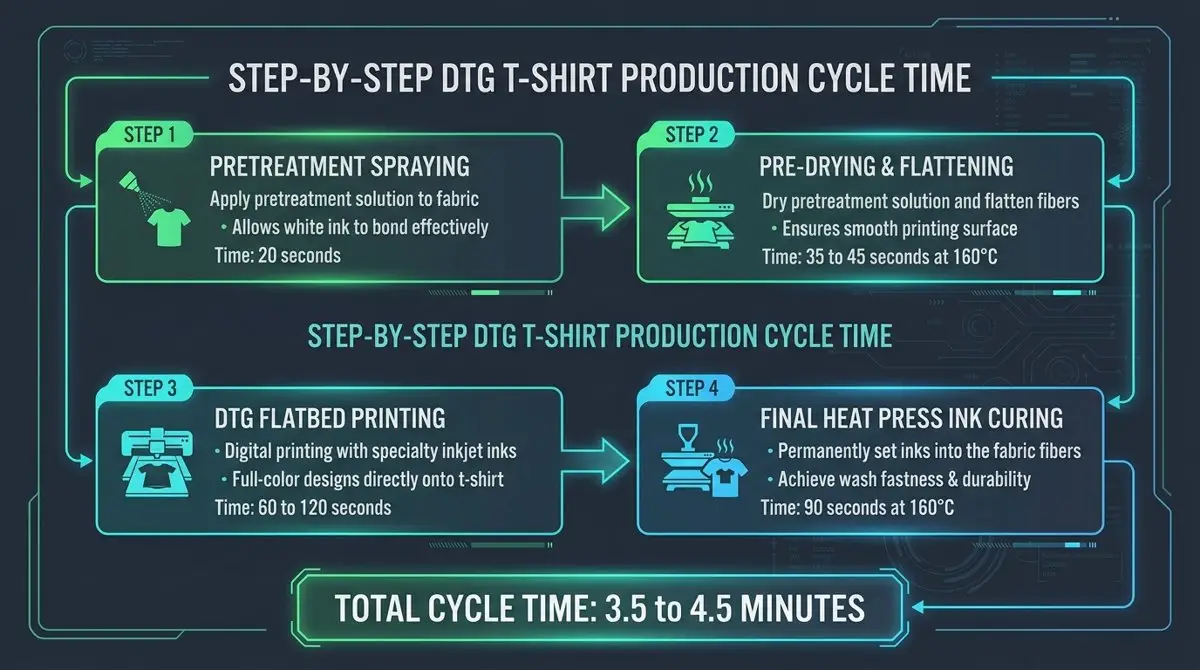
Because the platen moves twice and resets, total printing time takes 3.5 to 6 minutes per dark shirt.
3. Carriage Cycle Comparison: Single-Pass vs. Dual-Pass Flowchart
4. Technical Comparison: Single-Pass vs. Dual-Pass DTG
| Feature / Metric | Single-Pass DTG Mode | Dual-Pass DTG Mode |
|---|---|---|
| Printhead Requirement | Dual Staggered Heads (e.g., 2× Epson i3200) | Single Multi-Channel Head (e.g., 1× XP600/i3200) |
| Dark Shirt Print Speed (A3) | 45 – 90 seconds per shirt | 3.5 – 6.0 minutes per shirt |
| Hourly Production Capacity | 30 – 45 shirts per hour | 8 – 14 shirts per hour |
| Platen Movements per Shirt | 1 single forward feed | 2 full feeds + 1 full carriage return |
| Color Registration Accuracy | 100% Perfect (No platen shift possible) | Prone to micro-misalignment on heavy garments |
| Ink Technology Required | Advanced 'Wet-on-Wet' fast-gelling inks | Standard wet-on-dry / semi-dry inks |
| White Ink Layer Opacity | Extremely solid with high-speed gelling | Slightly higher raw density (longer dry time) |
5. Pros and Cons of Each Mode: Which Should You Choose?
When to Choose Single-Pass:
Single-pass is the undisputed industry standard for commercial fulfillment shops, print-on-demand brands, and high-volume apparel businesses where speed, labor efficiency, and zero registration errors are critical.
When Dual-Pass is Still Used:
Dual-pass is suitable for low-budget startups, hobbyist crafters, or specialty fine-art studios printing under 10 shirts per day where equipment purchase budget takes precedence over hourly production speed.
Registration Drift Risk:
Dual-pass machines rely on stepper motors and belts to return the platen to zero. If a heavy hoodie shifts by even 0.3mm during table retraction, the CMYK layer will miss the white base, ruining the garment.
Wet-on-Wet Ink Chemistry:
Single-pass requires high-performance textile inks and pre-calibrated RIP software so the trailing CMYK ink sits crisply on the white base without bleeding or turning muddy.
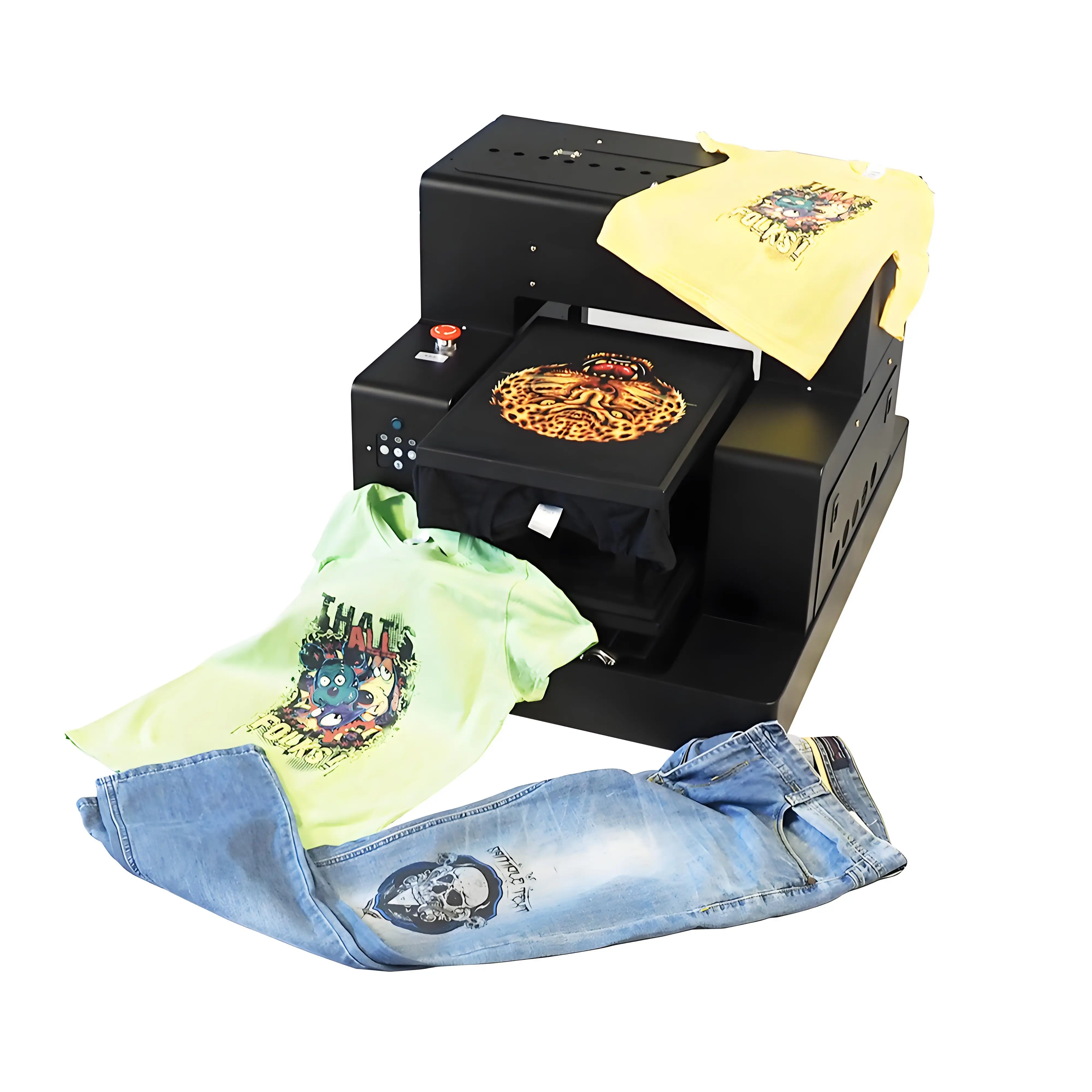
GNFEI F85G3 — Industrial Dual Epson i3200 Single-Pass Powerhouse
Dual Staggered Printheads | True Single-Pass High-Speed Production | 45-Second Dark Shirts
- Dual Epson i3200 Printheads — Dedicated White & CMYK heads deliver true synchronized single-pass output
- High-Yield Production Speed — Complete full-color A3 dark shirts in just 45 to 70 seconds
- Zero Registration Drift — Single continuous servo motion eliminates platen return errors completely
- Advanced Wet-on-Wet RIP Profiles — Factory-tuned ICC curves prevent color bleed on wet white underbases
- 40×60 cm Oversized Platen — Print expansive single-pass designs on hoodies, jackets, and oversized tees
Frequently Asked Questions: Single-Pass vs Dual-Pass DTG
Q1. Can a single-head DTG printer perform single-pass printing?
Generally no. Single-pass requires separate dedicated heads or dedicated head channels firing simultaneously. Staggered dual heads are required for high-speed single-pass.
Q2. Does single-pass printing sacrifice color vibrancy on dark shirts?
No. With industrial Epson i3200 heads and fast-gelling pretreatment, single-pass produces vibrant, high-opacity colors identical to dual-pass.
Q3. Why are dual-pass printers so much slower?
Dual-pass printers print the white layer, stop, retract the platen table all the way back, and print CMYK on a second pass, doubling or tripling production time.
Q4. What is 'wet-on-wet' printing in single-pass DTG?
Wet-on-wet means the CMYK color droplets land on top of the white underbase ink while the white ink is still wet, relying on rapid gelling chemistry to hold sharp edges.
Q5. Can the GNFEI F85G3 printer switch between single-pass and dual-pass?
Yes. The included RIP software allows you to choose high-speed single-pass or high-density dual-pass with a single click.
Q6. Why does dual-pass sometimes cause blurry or misaligned prints?
During the platen table return movement between passes, heavy garments or belt backlash can shift the shirt by fractions of a millimeter.
Q7. How many shirts per hour can a single-pass DTG printer produce?
An industrial single-pass printer like the GNFEI F85G3 easily produces 30 to 45 dark shirts per hour, compared to 8–12 on dual-pass.
Q8. Does single-pass use more or less ink than dual-pass?
Ink consumption is almost identical. The RIP software deposits the exact same target volume of white and CMYK ink in both modes.
Q9. Which mode is better for 100% white T-shirts?
White T-shirts do not need white ink at all, so both machines print them in a single CMYK pass in 20–35 seconds.
Q10. Is dual-pass printing cheaper to buy?
Dual-pass printers have lower initial equipment costs because they use only one printhead, but have significantly higher labor costs per shirt due to slow speed.