UV DTF vs Direct UV Flatbed Printer: Which is Better for a Small Business in 2026?
16 Oct
0 Comments27 Views
UV DTF vs direct UV flatbed printer: which is better for a small business in 2026? Deciding between UV DTF (Direct-to-Film) transfer stickers and direct UV flatbed printing is the single most critical equipment investment for modern commercial custom merchandise studios and promotional gift decorators. While direct flatbed UV printing deposits ink straight onto phone cases, acrylic plaques, wood, and rotary tumblers with superior molecular adhesion and chemical scratch resistance, UV DTF decouples printing from substrate dimensions, allowing vibrant 3D raised varnish decals to be applied seamlessly onto irregular, deeply curved, or oversized surfaces. In this comprehensive 2026 small business comparison, we evaluate startup equipment pricing, workshop space and ventilation needs, consumable costs per square meter, labor efficiency, gang-sheet sticker reselling opportunities, and realistic return-on-investment timelines to help your print shop pick the ultimate high-profit production setup.
Equipment GuideSmall Business 2026ROI & Production
UV DTF vs Direct UV Flatbed Printer: Which is Better for a Small Business in 2026?
Reading Time: 9 Mins
Written by: GNFEI Industrial Lab
Updated: October 2026
The quick verdict for 2026: If your catalog consists primarily of flat blanks, batches of phone cases, acrylic signs, and drinkware, a direct UV flatbed printer offers the lowest per-unit cost and unmatched scratch durability. If you want to customize curved mugs, helmets, irregular metal tools, or sell transfer decals directly online, UV DTF eliminates physical shape boundaries entirely.
For small business owners, custom merchandise decorators, and Etsy sellers stepping into digital UV customization in 2026, choosing the wrong machinery can tie up operating capital in unnecessary equipment or leave you unable to fulfill profitable orders. Here is your definitive side-by-side engineering and financial breakdown.
1. How the Technologies Differ in Daily Production
While both systems utilize piezoelectric drop-on-demand printheads (such as Epson XP600 or i3200-U1) and instant UV LED curing lamps, their physical workflow creates entirely different shop constraints:
Direct UV Flatbed Printer
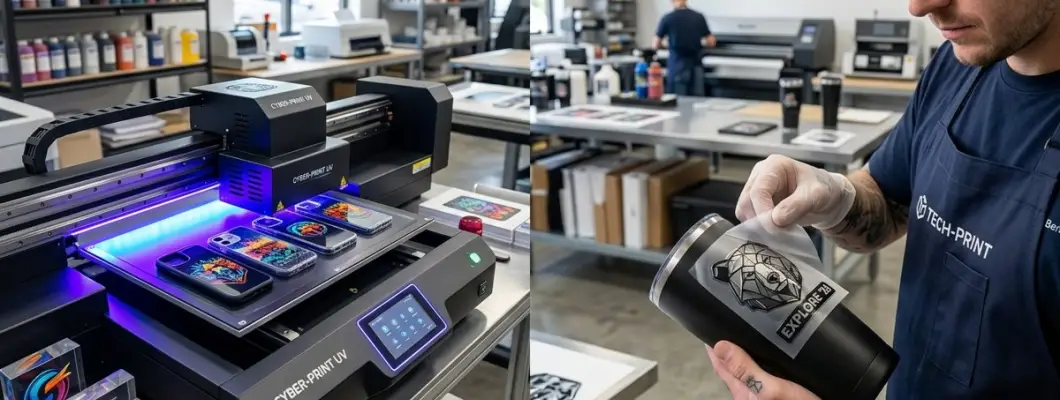
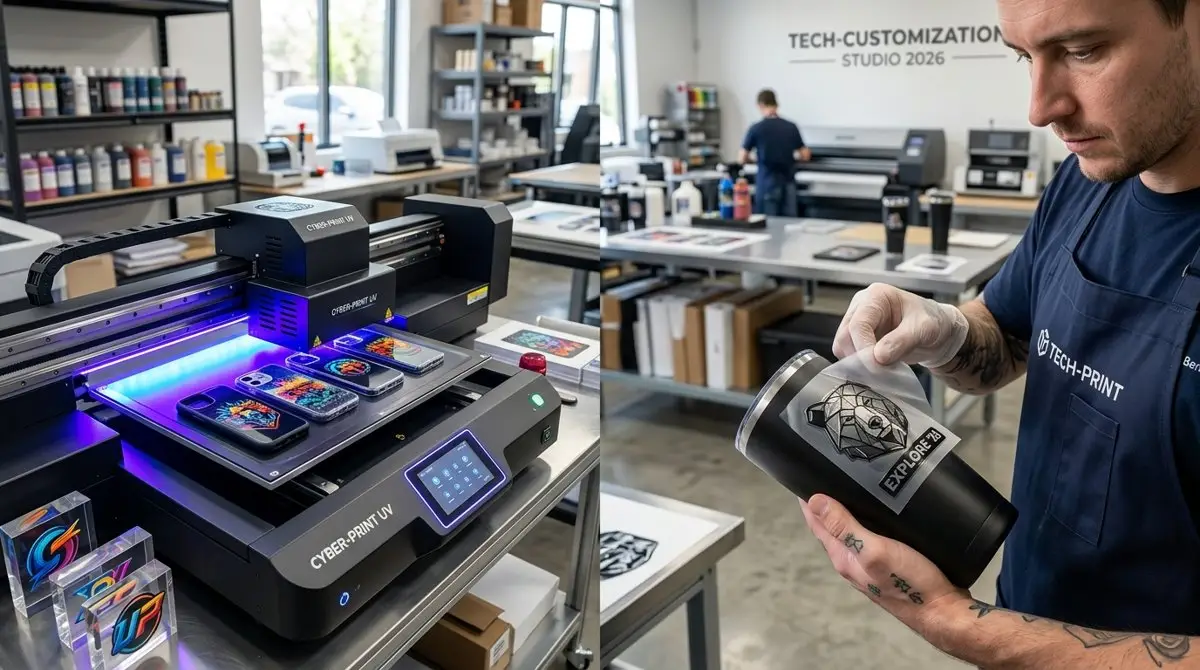
Items are clamped or suctioned directly on a flat vacuum table. The printhead carriage travels across the substrate, jetting primer, white ink, CMYK color, and gloss varnish directly onto the surface. Curing is instantaneous via dual UV LED lights. Requires precision alignment jigs for multi-piece batches.
UV DTF (Direct-to-Film) Printer
Artwork is printed onto a release-coated adhesive PET film (Film A). After printing white, CMYK, and high-gloss varnish, the sheet passes through an integrated or standalone roll laminator where a transfer carrier (Film B) is applied. The resulting 'crystal sticker' is trimmed and hand-transferred to any rigid substrate.
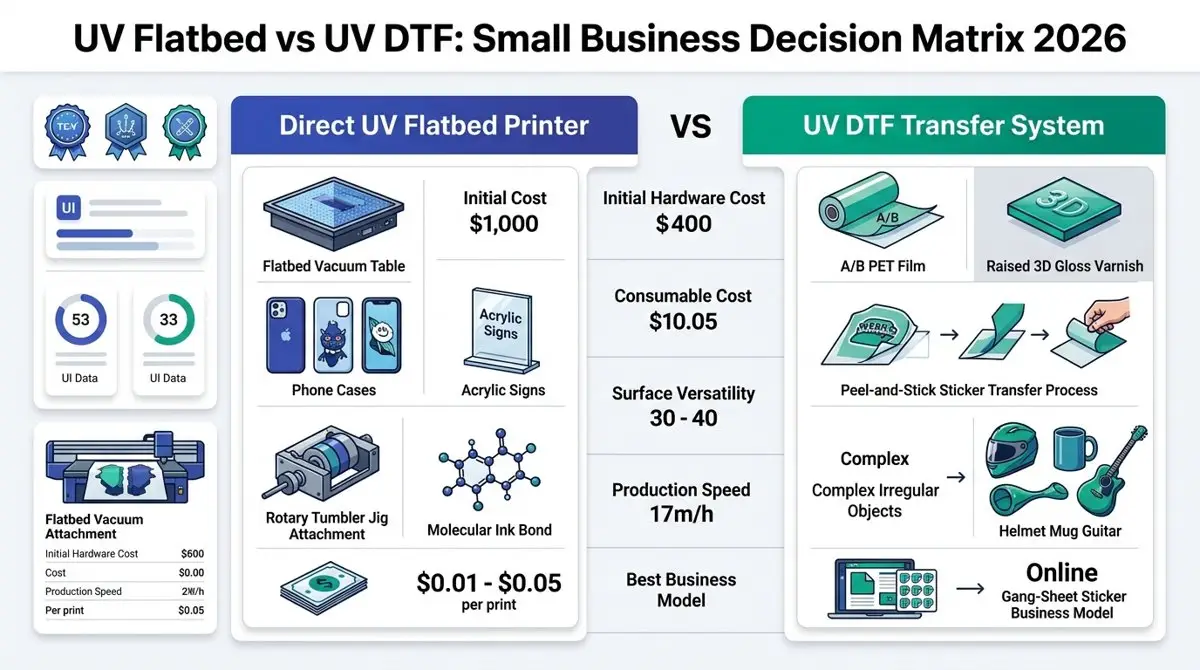
2. Small Business Decision Matrix & Workflow Comparison
3. Feature & Operational Cost Comparison Table
Feature / Metric
Direct UV Flatbed Printer
UV DTF Sticker Transfer
Entry Hardware Investment
$2,800 – $4,500 (A4/A3 Table)
$4,200 – $6,500 (Roll + Laminator)
Object Shape Flexibility
Flat sheets & perfect cylinders only
100% Unlimited (Curved, handles, deep dips)
Substrate Chemical Adhesion
Molecular bond (Primer + UV, Dishwasher-safe)
Strong adhesive (Hand wash safe, edges can lift)
Consumable Cost per Print
Lowest ($0.01 – $0.05 ink only)
Moderate ($0.06 – $0.15 ink + Film A/B)
High-Volume Batch Speed
Extremely fast (50 phone cases in 1 tray)
Slower (Requires manual peeling per item)
Online Decal-Only Sales Model
No (Requires shipping physical blanks)
Yes (Ship lightweight sticker gang sheets)
4. Real-World Application: The 3D Raised Varnish Advantage
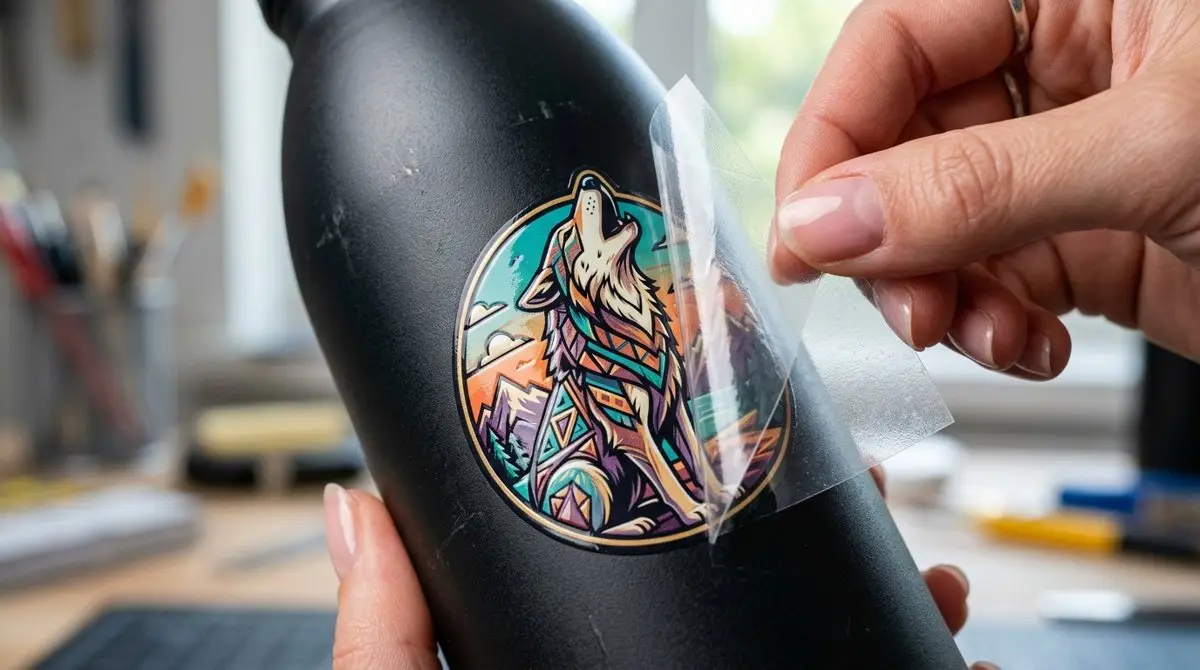
The defining aesthetic feature of UV DTF transfers is their premium, tangible 3D tactile texture. By laying down multi-layer spot varnish over cured white and CMYK inks, the transfer creates an embossed metallic or crystal effect that mimics expensive mold stamping or resin doming at a fraction of the cost.
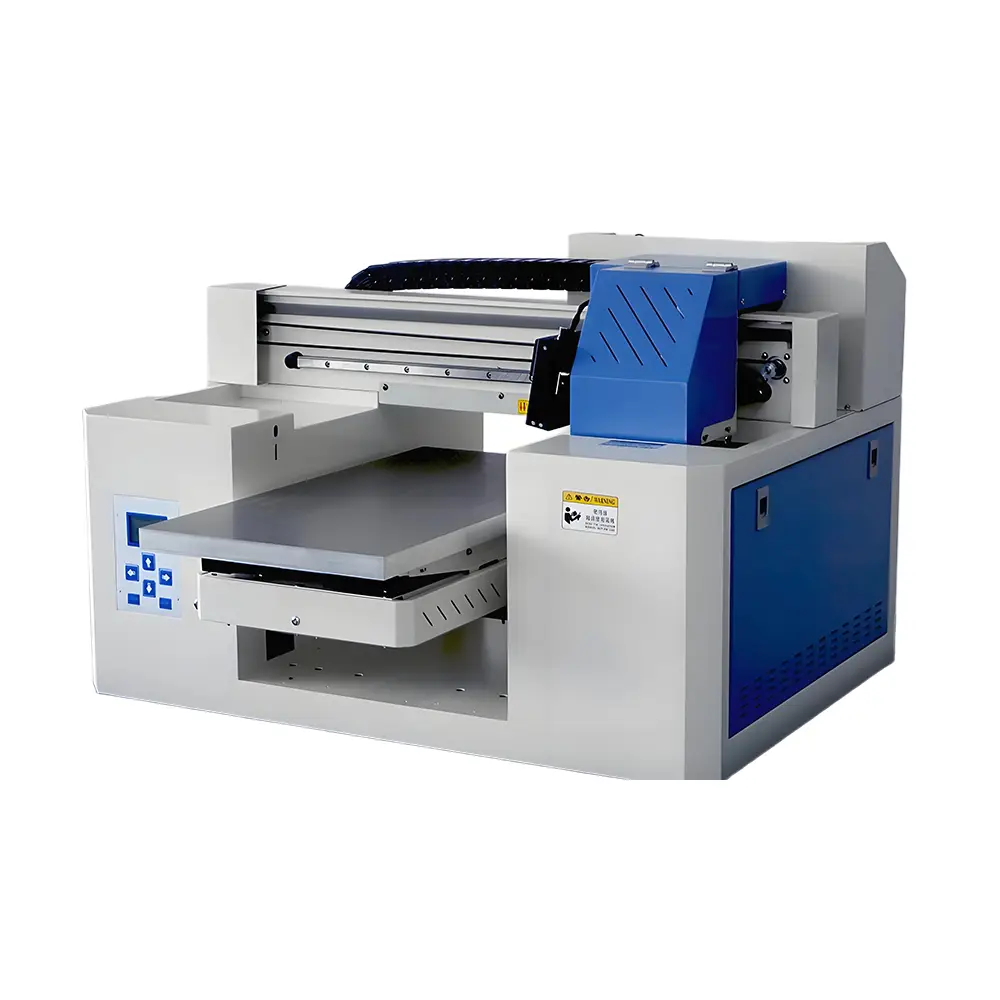
Cannot decide between flatbed and UV DTF? The GNFEI A3 Dual Head system handles both: direct vacuum printing on phone cases, acrylic, and rotary bottles, plus sheet-fed UV DTF film printing on a single compact chassis.
CMYK + White + Varnish simultaneous single-pass micro-droplet curing
Built-In Vacuum Table keeps PET film sheets perfectly flat without tape
Optional Rotary Jig for vacuum tumblers and glass drinkware
Ultra-Low Running Cost: Under $0.08 per custom full-color logo transfer
Q1. Which has a lower startup cost for a small business: UV DTF or a UV flatbed printer?▼
For small business startups in 2026, an entry-level direct UV flatbed printer costs between $2,800 and $4,500. A dedicated roll-to-roll UV DTF printer with an integrated laminator typically ranges from $4,200 to $6,500. However, many desktop UV flatbed printers can also print UV DTF film sheets, offering a versatile 2-in-1 hybrid approach on a single machine.
Q2. Can a direct UV flatbed printer also print UV DTF transfer stickers?▼
Yes. Most commercial flatbed UV printers with vacuum beds can print directly onto sheet-fed Film A (adhesive PET sheet). After printing with CMYK, White, and Varnish, the sheet is manually fed through a cold/warm laminator with Film B, giving small workshops both direct printing and transfer capabilities without buying two separate printers.
Q3. Which method produces more durable prints on glass and metal?▼
Direct flatbed UV printing delivers superior mechanical scratch resistance and commercial dishwasher durability on glass and metals because the ink bonds directly to the substrate via chemical primers. UV DTF transfers use pressure-sensitive adhesives that are waterproof but can peel under abrasive scrubbing or high-temperature dishwashing.
Q4. Why is UV DTF considered a game-changer for irregular products?▼
Direct flatbed printers require flat or cylindrical items that fit physically under the print carriage (clearance under 15–20 cm). UV DTF decouples printing from the final object: you print high-resolution 3D embossed stickers and peel-and-stick them onto helmet visors, thermos handles, luggage, wooden crates, and curved instruments that cannot fit on any printer bed.
Q5. How much does a UV DTF transfer sticker cost to produce?▼
A standard 2 x 2 inch (5 x 5 cm) full-color UV DTF sticker with white underbase and gloss varnish costs approximately $0.06 to $0.12 in consumable materials (Film A, Film B, ink, and varnish), allowing small businesses to sell custom transfers or labeled gifts with profit margins exceeding 400%.
Q6. Is varnish (clear gloss) mandatory for UV DTF printing?▼
Yes. Varnish is mandatory in UV DTF printing. It acts as an abrasion-resistant protective shield over the colored inks and provides the signature 3D raised tactile embossing that prevents the ink film from fracturing during peeling and transfer.
Q7. Which technology requires less daily maintenance?▼
Both technologies use piezoelectric printheads and UV LED inks, requiring 5 to 10 minutes of daily capping station cleaning, wiper blade inspection, and nozzle checks. However, roll-to-roll UV DTF printers require additional tracking of film tension and laminator heat roller cleanliness.
Q8. Can I sell UV DTF stickers online without selling physical hard goods?▼
Absolutely. One of the most profitable small business models in 2026 is selling gang-sheet UV DTF transfer decals (like 16x24 inch sheets) on Etsy, Shopify, or local markets. Customers and crafters purchase the stickers and apply them to their own cups, tumblers, and packaging.
Q9. What is the speed difference between flatbed UV printing and UV DTF?▼
For batches of identical flat objects (e.g., 50 phone cases placed in a custom jig), direct flatbed UV printing is much faster because it prints all 50 items simultaneously with no peeling. UV DTF prints quickly on film, but applying stickers manually to 500 items takes significant labor.
Q10. What is the best choice for a home-based studio or garage shop in 2026?▼
For home studios with limited space, a compact A3 Direct UV Flatbed with rotary attachment and sheet-fed UV DTF capability offers the highest versatility, allowing you to print phone cases, acrylic signs, tumblers, and transfer stickers on a single 1-meter workbench.
Equip Your Workshop with Factory-Calibrated UV Technology
Whether you choose direct flatbed UV printing or versatile UV DTF sticker production, GNFEI provides turn-key printer packages, factory-direct pricing, and lifetime engineering support.
Find the best dtg printer for small business startups. Compare our competitive dtg printer price and total t shirt printing machine cost. The F85G4 di..
Find the best dtg printer for small business startups. Compare our competitive dtg printer price and total t shirt printing machine cost. The F85G4 di..