Can DTG Printers Print Neon, Metallic, or Fluorescent Colors?
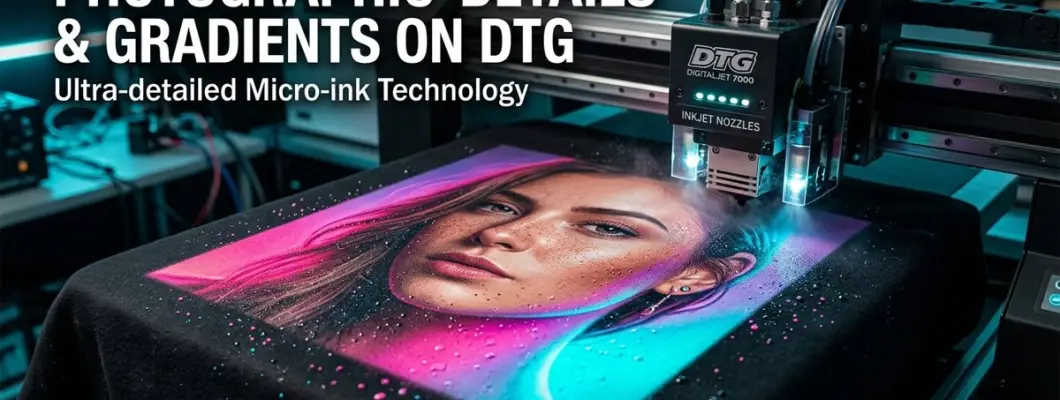
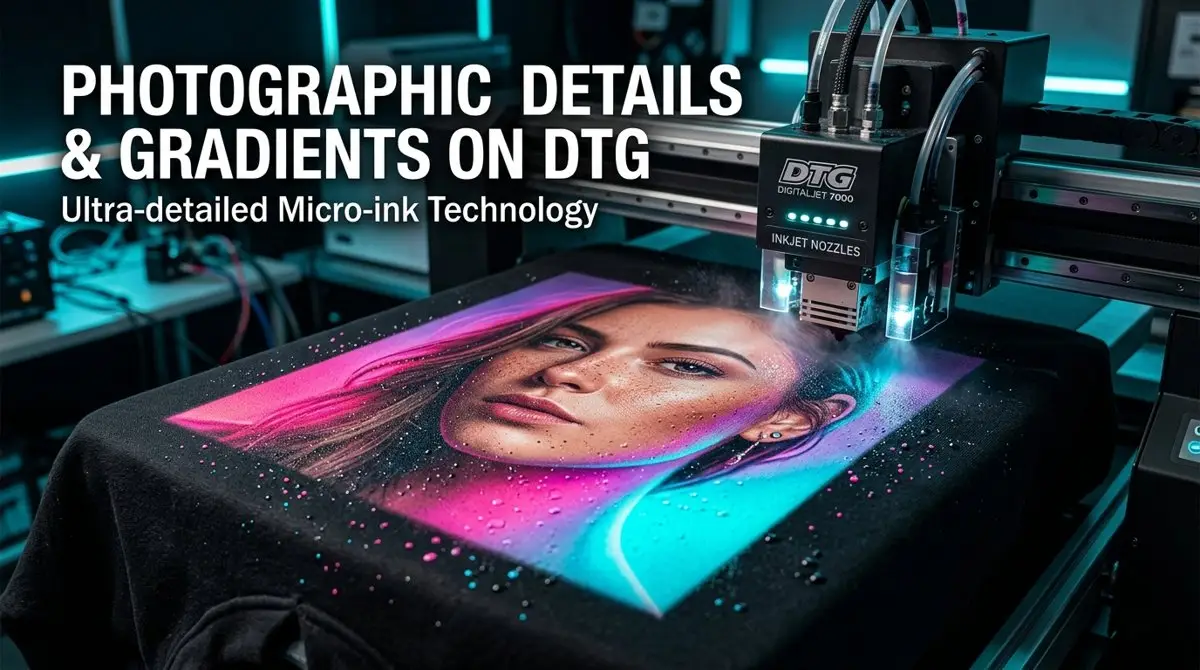
Standard CMYK DTG printers cannot print genuine reflective metallics or glow-in-the-dark neons directly out of the box, but industrial machines achieve these stunning effects through dedicated spot channels and hybrid finishing methods.
In this comprehensive guide, we explore the optical physics behind textile color gamuts, how spot fluorescent inks work in piezo printheads, and how to create true metallic gold and chrome prints on commercial apparel.
1. The Physics of CMYK vs. Fluorescent and Metallic Colors
To understand why standard digital printers struggle with neons and metallics, we must look at how light interacts with textile pigment inks.
• Standard CMYK Pigments: Work by subtractive absorption—they absorb specific wavelengths of white light and reflect the rest. They can simulate bright hues, but cannot emit light.
• Fluorescent / Neon Inks: Contain daylight-fluorescent dyes that absorb invisible UV radiation and re-emit it as visible light, producing a hyper-vivid optical glow.
• Metallic Inks (Gold/Silver): Require large microscopic aluminum or mica flakes to reflect specular light like a mirror. These flakes are too large (15–30µm) to pass through standard 3.8 picoliter inkjet nozzles without causing catastrophic printhead clogs.
2. The 3 Methods to Print Neon & Metallic Apparel with DTG
How do commercial apparel brands produce authentic neon streetwear and metallic gold graphics? Here are the 3 industry-proven workflows:
1. Dedicated Spot Fluorescent Channels (FM / FY)
Industrial 8-channel DTG printers can be configured with CMYK + White + Fluorescent Yellow (FY) + Fluorescent Magenta (FM). The RIP automatically blends fluorescent inks into highlights to create eye-popping electric greens and hot pinks under UV blacklight.
2. DTG Foil Stamping (Hot Stamping Foil Post-Process)
Print a specialized adhesive or high-density white underbase on the DTG printer, then heat-press a metallic foil sheet (Gold, Silver, Holographic, Copper) at 165°C. The foil bonds exclusively to the printed image, creating mirror-like metallic graphics.
3. Hybrid DTG / DTF Specialty Transfer
Print the graphic onto DTF transfer film with specialty metallic or glitter hot-melt adhesive powders, transferring crisp gold and silver flake textures onto any dark garment.
4. Optical Simulation via Vector Gradients
For standard 5-color DTG machines, graphic designers use high-contrast metallic gradient swatches (specular highlights with yellow-ochre shades) to create realistic visual 3D chrome and gold illusions.
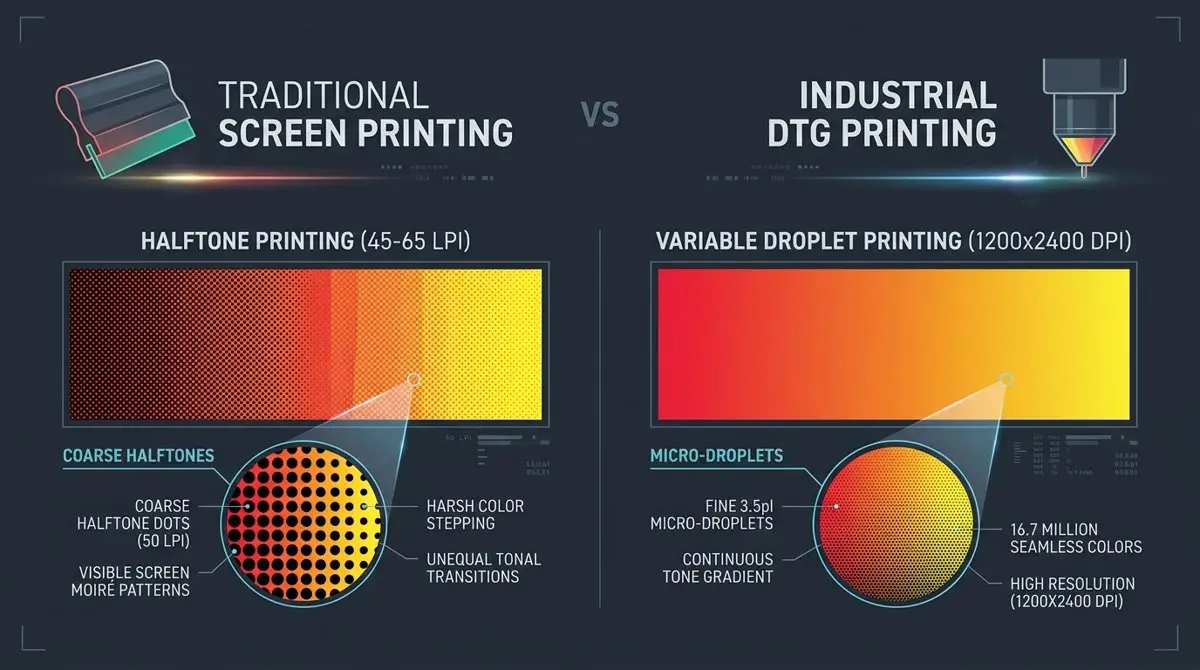
3. Color Gamut Comparison: CMYK vs. Fluorescent Extended Space
4. Methods Comparison: Cost, Workflow, and Visual Impact
| Method / Technology | Primary Effect | Hardware Requirement | Wash Durability | Production Complexity |
|---|---|---|---|---|
| Standard CMYK Simulation | Visual 3D Gold/Bronze | Standard DTG Printer | High (50+ Washes) | Low (Direct Print) |
| Spot Fluorescent Inks (FM/FY) | True Neon Glow (UV Blacklight) | 8-Channel Dedicated DTG | High (40-50 Washes) | Medium (Channel Setup) |
| DTG Foil Transfer | Mirror Metallic Gold / Silver | Standard DTG + Heat Press Foil | Moderate (30-40 Washes) | Medium (2-Step Process) |
| Hybrid DTF Metallic / Glitter | Sparkle Glitter / Metallic Sheen | DTF Film + Glitter Powder | Very High (50+ Washes) | Medium (Film Transfer) |
| Screen Printing Metallic | Flake Gold / Shimmer | Manual Screen Mesh Setup | High (40+ Washes) | High (Plates & Screens) |
5. Production Recommendations for Apparel Decorators
1. Design with High Specular Contrast for Metallics:
When using standard CMYK, place crisp 100% white highlights next to deep umber and bronze tones to fool the human eye into perceiving reflective metallic shine.
2. Master the Foil Heat Press Peel Technique:
For DTG foil transfers, always allow the garment to cool completely (cold peel) before gently peeling away the foil carrier sheet to ensure crisp, razor-sharp edges.
3. Calibrate Spot Channels in RIP Software:
When running fluorescent inks, assign dedicated spot channels in CADlink or AcroRIP so the software accurately calculates when to trigger neon droplets on highlights.
4. Wash Care Labeling for Metallic Apparel:
Advise end customers to wash metallic foil and specialty neon garments inside out in cold water and hang dry to preserve luster.
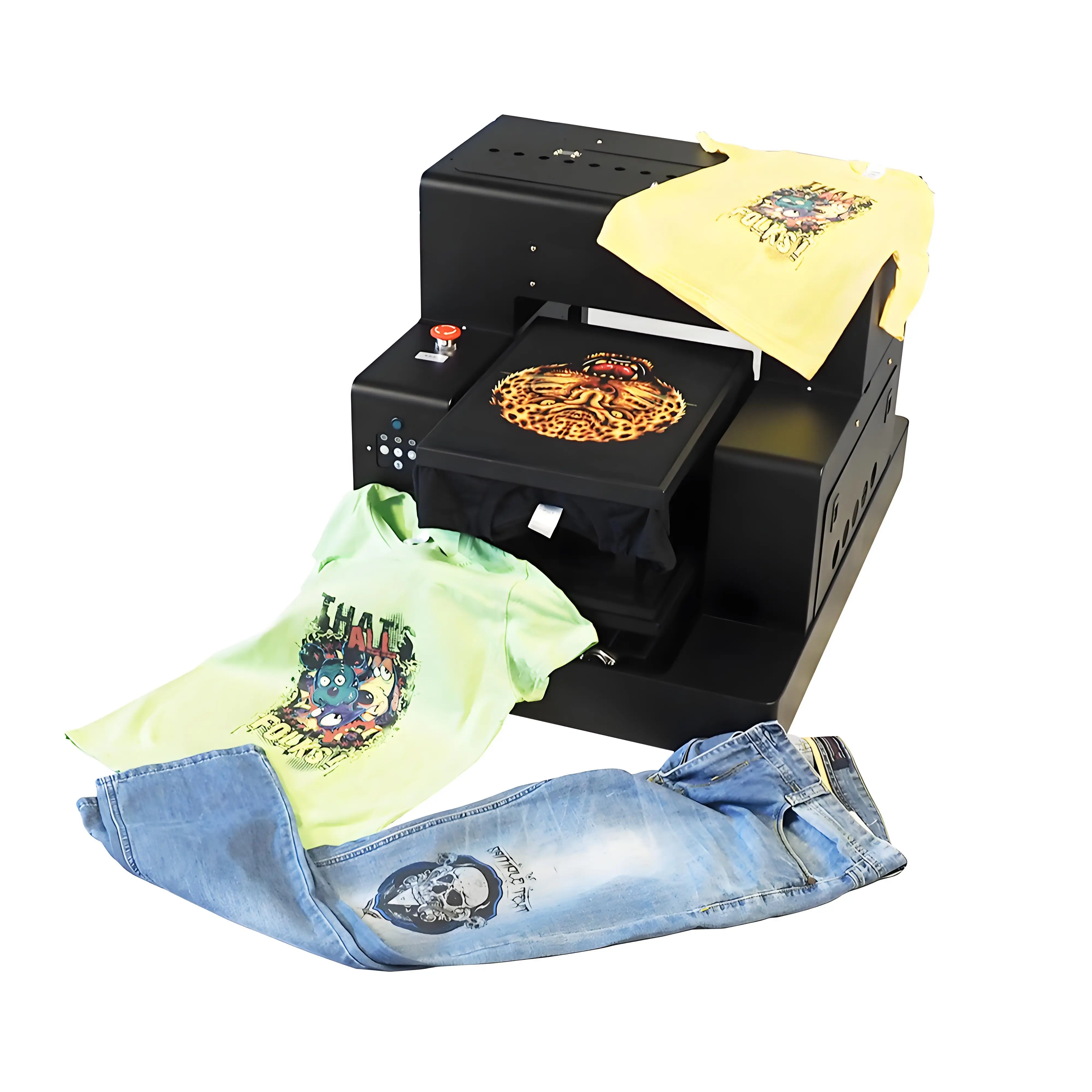
GNFEI F85G3 — Expanded Color Gamut & Industrial Specialty Ready
Dual Epson i3200 Heads | 8 Independent Ink Channels | High-Density Underbase for Foil Bonding
- Dual Epson i3200 Industrial Heads — 8 independent ink channels configurable for spot fluorescent or high-density white
- Ultra-Dense White Underbase Engine — Delivers the perfect tacky polymer foundation for flawless DTG foil stamping
- True 1200×2400 DPI Resolution — Razor-sharp rendering of intricate metallic gradient textures and chrome reflections
- Hybrid DTG & DTF Compatibility — Seamlessly switch between direct garment printing and specialty glitter DTF film
- 40×60 cm Oversized Platen — Print expansive streetwear back prints with brilliant specialty finishes
Frequently Asked Questions: Neon & Metallic DTG Printing
Q1. Can standard DTG printers print gold and silver ink?
Not directly. True metallic pigments contain metal flakes that clog micro-nozzles. Metallics are achieved via DTG foil stamping, hybrid DTF, or gradient simulation.
Q2. Do neon DTG inks glow under UV blacklight?
Yes. True spot fluorescent inks (Fluorescent Magenta and Fluorescent Yellow) contain dyes that react to UV radiation and intensely glow under blacklight.
Q3. How does DTG foil stamping work?
The DTG printer prints a high-density white underbase or adhesive mask. A sheet of metallic foil is heat-pressed on top; the foil sticks only to the printed area.
Q4. How durable is foil stamping on DTG printed shirts?
Properly cured foil prints withstand 30 to 40 gentle wash cycles when washed inside out in cold water.
Q5. Can the GNFEI F85G3 printer be loaded with fluorescent inks?
Yes. The GNFEI F85G3 features dual Epson i3200 heads with 8 independent channels, allowing custom spot ink channel assignments in RIP.
Q6. What is the difference between neon simulation and spot neon inks?
Neon simulation uses CMYK to create bright colors on a computer monitor that print slightly duller on fabric. Spot neon inks contain genuine glowing fluorescent dyes.
Q7. Can you print glitter effects on DTG?
Direct glitter ink clogs printheads. However, using the hybrid DTF method with glitter hot-melt adhesive powder creates stunning, wash-durable glitter graphics.
Q8. Does foil stamping require special pretreatment?
Standard dark garment pretreatment works perfectly, provided the white ink underbase is deposited with high density to grip the foil.
Q9. Why can't inkjet printheads fire liquid gold ink?
Inkjet nozzles are only 20 microns wide. Real metallic flakes are large and heavy, settling rapidly in lines and destroying piezoelectric crystals.
Q10. Is hybrid DTF better than foil for metallic designs?
Hybrid DTF is better for fine, intricate multi-color designs with metallic accents, whereas foil stamping delivers a more reflective mirror-chrome finish.