What is the Maximum Print Area on a Standard DTG Platen?
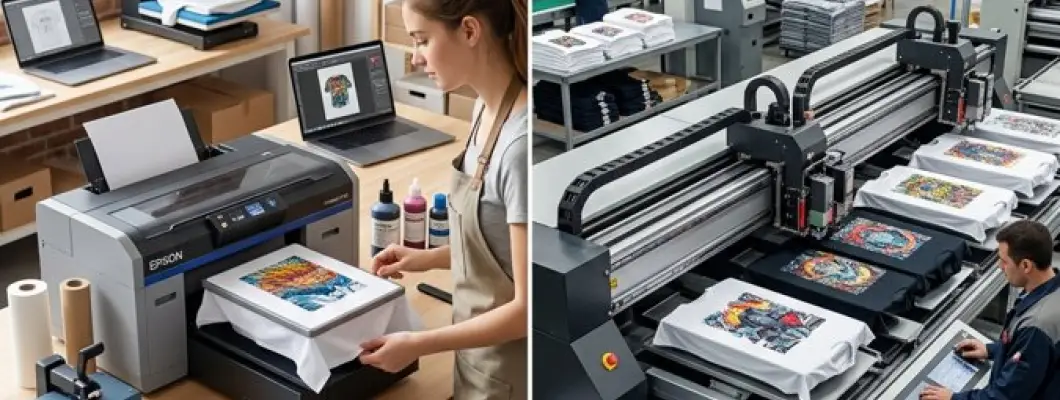
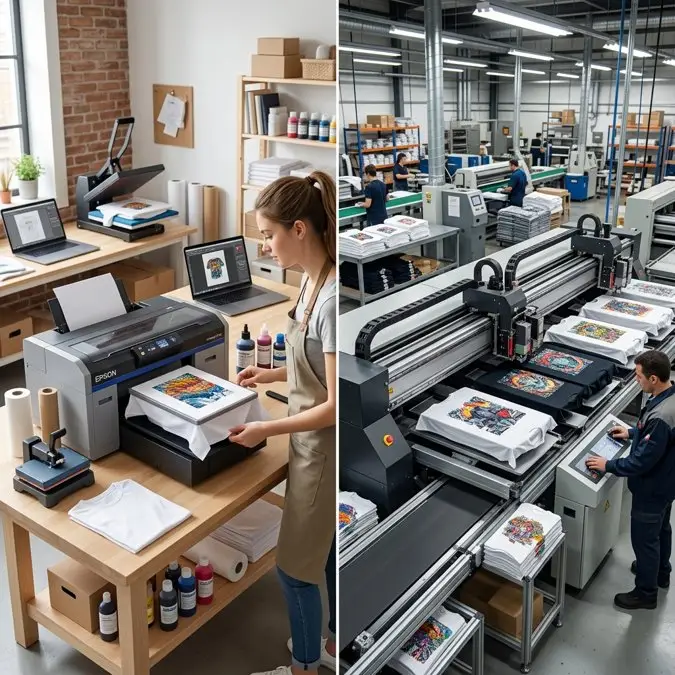
The standard adult DTG platen provides a 14 × 16 inch (35 × 40 cm) print area, while industrial machines like the GNFEI F85G3 offer an oversized 40 × 60 cm (16 × 24 inch) bed for XXL garments and streetwear.
Understanding platen dimensions, collar clearance, and interchangeable pallets is essential for sizing your graphic files accurately and avoiding seam collisions during high-speed production.
1. Standard vs. Oversized DTG Platen Dimensions
In digital garment printing, the 'platen' (also known as the pallet or print bed) holds the textile garment flat and stable under the printhead carriage.
• Standard Adult Platen (14 × 16 in / 35.5 × 40.6 cm): The universal industry workhorse. Fits 80% of standard unisex adult T-shirts (Sizes Small to XL).
• Large / Heavyweight Platen (16 × 18 in / 40.6 × 45.7 cm): Ideal for front and back prints on 2XL–3XL tees and medium hoodies.
• Industrial Oversized Platen (40 × 60 cm / ~16 × 24 in): The flagship commercial size (standard on GNFEI F85G3), enabling massive vintage prints, heavyweight hoodie backs, tote bags, and oversized boxy streetwear silhouettes.
2. Specialty Interchangeable Platen Sizes for Garment Types
Professional DTG decorators swap platens in under 10 seconds using magnetic or quick-release clamp systems:
1. Youth & Toddler Platen (10 × 12 in / 25 × 30 cm)
Designed specifically for children's T-shirts (sizes 6–14) and youth sports jerseys, preventing fabric stretching across wide adult platens.
2. Baby Onesie & Infant Platen (7 × 8 in / 18 × 20 cm)
Sized for newborn bodysuits, toddler bibs, and pet bandanas, keeping snaps and thick ribbing off the active print surface.
3. Sleeve & Leg Platen (4 × 16 in to 4 × 20 in / 10 × 50 cm)
Narrow elongated platen for printing brand typography, racing stripes, and sleeve graphics on hoodies, sweatpants, and long-sleeve tees.
4. Left Chest Pocket Platen (4 × 4 in / 10 × 10 cm)
Elevated micro-platen for small company crests, pocket logos, and polo shirt branding without unbuttoning the collar.
5. Dual-Platen Production Tables (Twin Platens)
Industrial machines often mount two 14 × 16 platens side-by-side, allowing the machine to print two full shirts in a single high-speed carriage cycle.
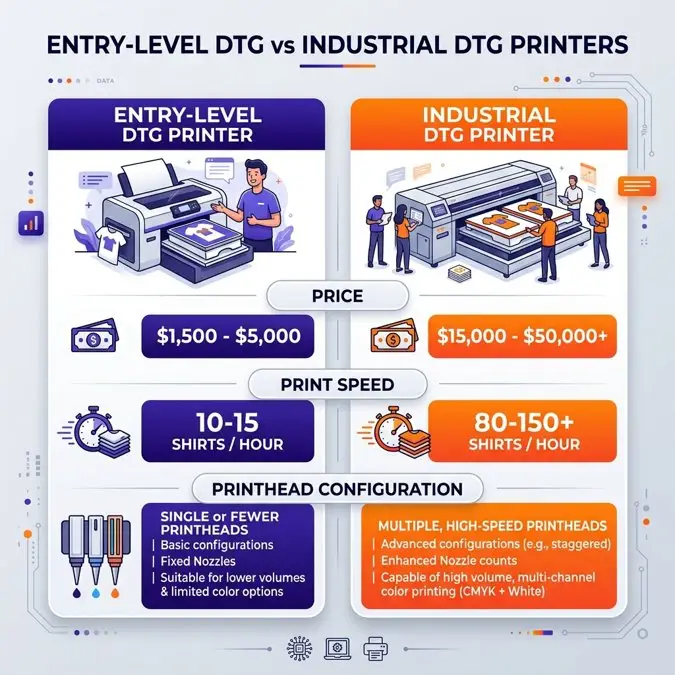
3. Visual Anatomy: DTG Platen Sizes and Placement Guide
4. Platen Dimensions & Garment Size Matching Matrix
| Platen Category | Physical Dimensions (Inches / CM) | Max Pixel Size (300 DPI) | Recommended Garment Types | Standard Usage % |
|---|---|---|---|---|
| Infant / Baby | 7" × 8" (18 × 20 cm) | 2100 × 2400 px | Baby onesies, toddler bibs, pet apparel | 5% |
| Youth / Small | 10" × 12" (25 × 30 cm) | 3000 × 3600 px | Youth tees (Sizes 6-14), women's fitted XS | 10% |
| Standard Adult | 14" × 16" (35.5 × 40.6 cm) | 4200 × 4800 px | Men's / Unisex S, M, L, XL T-shirts | 60% |
| Oversized / Hoodie | 16" × 20" (40.6 × 50.8 cm) | 4800 × 6000 px | 2XL–3XL tees, pullover hoodies, jackets | 15% |
| Industrial XL | 40 × 60 cm (15.7" × 23.6") | 4724 × 7086 px | Vintage oversized tees, 4XL-5XL, tote bags | 10% |
5. Critical Production Rules for Sizing Artwork on Platens
1. Always Maintain a 0.5-Inch (1.2 cm) Safety Margin:
Never position artwork right on the mechanical edge of the platen. A 0.5-inch inner border prevents overspray onto the platen frame and avoids seam distortion.
2. Keep Thick Collars and Seams Off the Print Surface:
Thick ribbed collars, pocket zippers, and shoulder seams elevate the fabric height. If a collar sits on the active platen area, it can cause catastrophic printhead strikes.
3. Use Tucking Rims or Sticky Mats for Tension:
Ensure the shirt is tucked neatly into the platen groove or secured with a platen hoop frame so the fabric stays drum-tight without wrinkles.
4. Standardize Prepress Templates in RIP:
Create master RIP templates matching each physical platen size (e.g., A3, 40×60 cm, Sleeve) with built-in collar guide marks for instant operator loading.
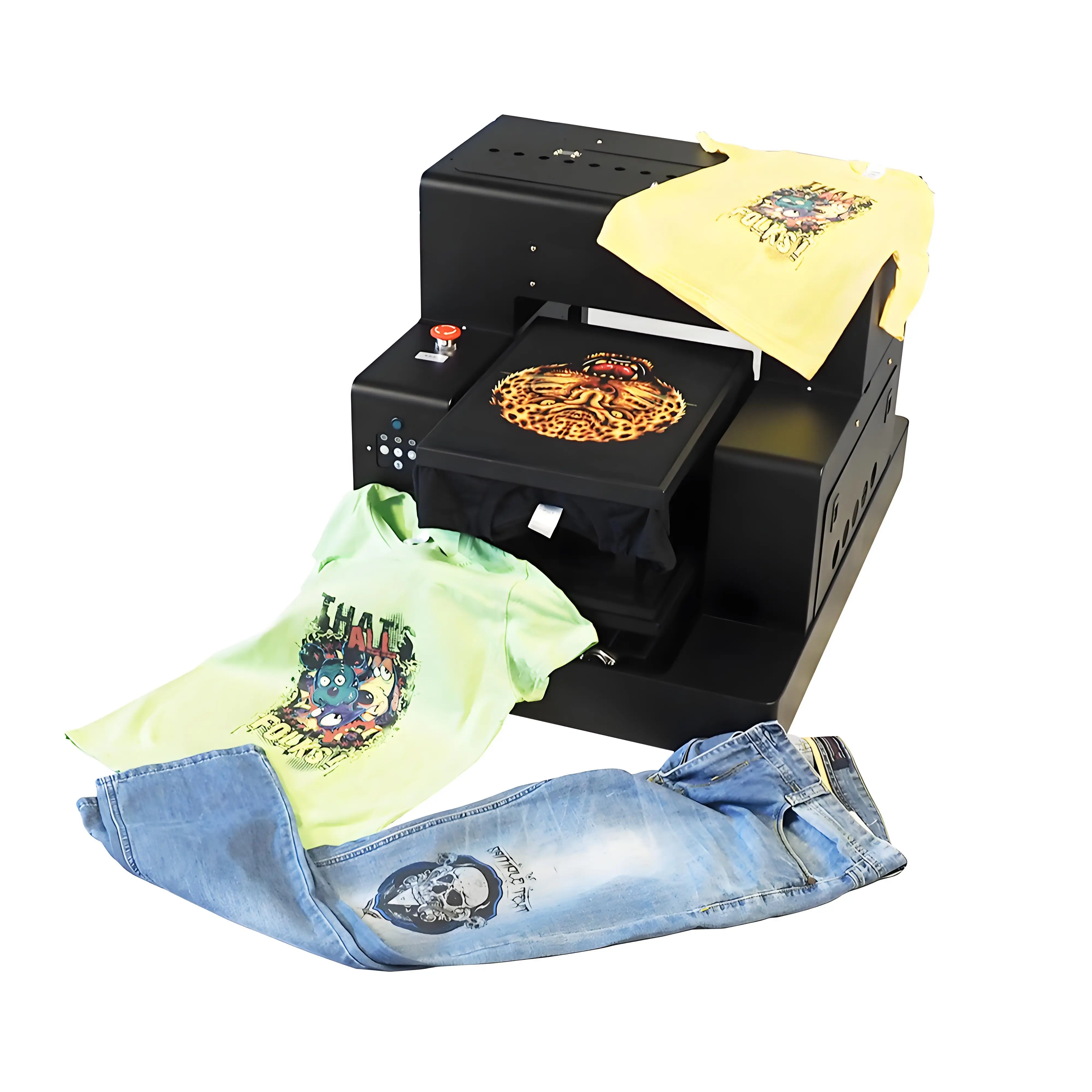
GNFEI F85G3 — Expansive 40×60 cm Industrial Printing Area
Dual Epson i3200 Heads | Massive 40×60 cm Bed | Multi-Platen Quick-Release System
- Massive 40×60 cm (16×24 inch) Printing Bed — Easily handles oversized boxy tees, hoodie backs, and canvas tote bags
- Automated Optical Height Sensor — Prevents head strikes on thick collar ribs, seams, and fleece pockets
- Modular Quick-Swap Platens — Effortlessly switch between 40×60 cm master bed, adult standard, youth, and sleeve platens
- High-Precision Linear Servo Drive — Micro-step accuracy ensures razor-sharp detail across the entire 60 cm bed length
- True 1200×2400 DPI High-Density Output — Flawless edge-to-edge coverage with zero stepping lines or banding
Frequently Asked Questions: DTG Platen Sizes & Print Areas
Q1. What is the standard platen size on most DTG printers?
The standard platen size included with most commercial DTG printers is 14 × 16 inches (35.5 × 40.6 cm), suitable for adult S to XL shirts.
Q2. Can a DTG printer print over seams, zippers, and collars?
Printing directly over thick raised seams or zippers can cause printhead strikes and ink misting. Elevated pocket platens or seam channels must be used.
Q3. How do I size my graphic file for an oversized 40x60 cm platen?
At 300 DPI, an image for a 40 × 60 cm platen should be designed at exactly 4,724 × 7,086 pixels.
Q4. Can you print two small shirts at the same time on a large platen?
Yes. With a dual-platen setup or by positioning two youth garments on a 40×60 cm bed in the RIP software, you can print two shirts simultaneously.
Q5. What platen is used for hoodie sleeve printing?
A specialized narrow sleeve platen measuring approximately 4 × 16 inches (10 × 40 cm) or 4 × 20 inches is used for long sleeves and pant legs.
Q6. Why does fabric tension on the platen matter?
Loose or wrinkly fabric causes uneven printhead gap distances, resulting in blurry details, fuzzy text, and possible head crashes.
Q7. What is the maximum T-shirt size that fits on a 40x60 cm platen?
A 40 × 60 cm platen can easily accommodate up to 4XL and 5XL oversized streetwear garments, jackets, and long robes.
Q8. How long does it take to change platens on GNFEI printers?
GNFEI DTG printers utilize a quick-release magnetic/clamp mount allowing operators to swap platens in under 10 seconds without tools.
Q9. Does printing larger areas consume significantly more ink?
Ink consumption depends on graphic coverage, not platen size. A large 16x20" full-bleed back print uses more ink than a small 4x4" chest logo.
Q10. Can I print canvas tote bags and pillowcases on standard platens?
Yes. Flat textile goods like tote bags, tea towels, and pillowcases lay perfectly flat on standard 14x16" and 40x60cm platens.