Can a DTG Printer Print Photographic Details and Color Gradients?
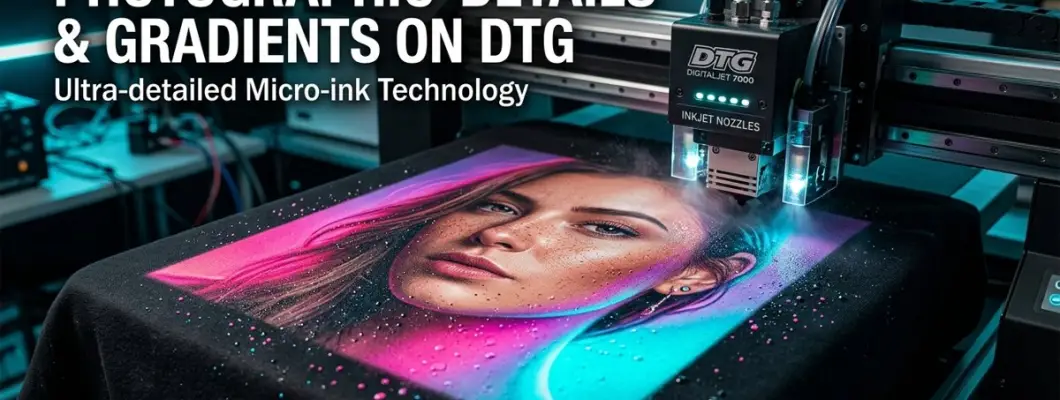
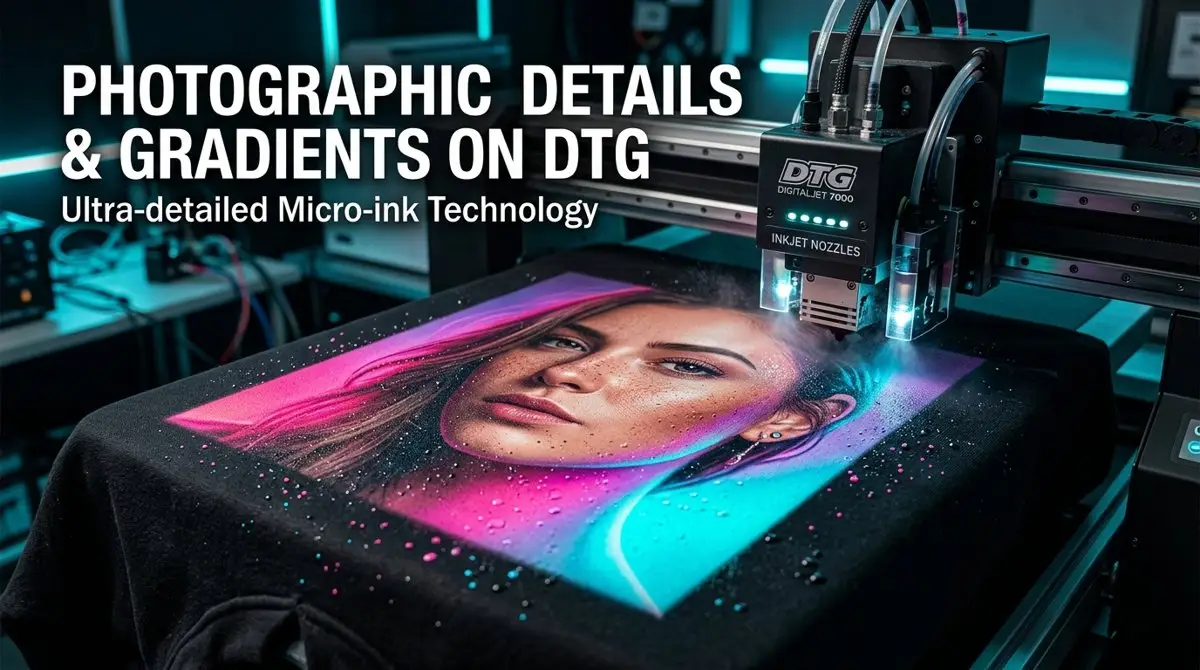
Yes — in fact, photographic detail and smooth color gradients are where DTG printing completely dominates all other textile decorating methods. If you need to print a high-resolution portrait with delicate skin highlights, a vibrant neon synthwave sunset with 20 seamless color blends, or a complex oil painting reproduction, DTG is the undisputed industry standard.
In this guide, we explore the micro-inkjet technology, variable droplet architecture, and RIP screening algorithms that allow industrial DTG printers to deliver true photographic fidelity onto cotton apparel.
Why DTG Handles Gradients Better than Screen Printing
To understand why DTG is superior for gradients and photography, look at how color transitions are formed physically:
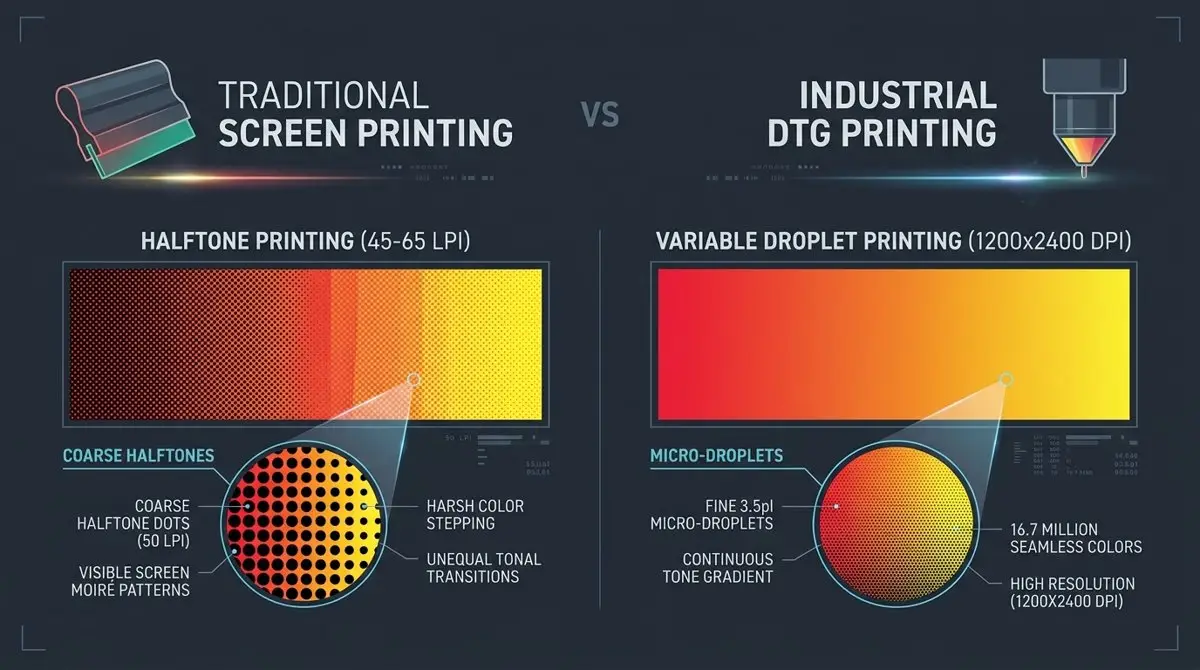
Screen printing cannot mix ink droplets on fabric. To simulate a gradient or photo, it must break the art into rows of dots called halftones (45–65 LPI). Up close, you see obvious dotted patterns, moiré interference, and harsh stair-stepping where color values drop below 10%.
DTG does not use coarse grid dots. Instead, it uses advanced stochastic (frequency-modulated) error-diffusion dithering, dispersing millions of micro-droplets randomly so the human eye perceives a totally smooth, continuous photographic tone.
Screen printing is constrained to 4–8 spot color screens. DTG digitally blends Cyan, Magenta, Yellow, Black, and White at the microscopic droplet level, generating over 16.7 million distinct hues in a single pass.
Variable Droplet Technology: The Secret of 3.5 Picolitre Micro-Dots
Modern piezoelectric printheads like the Epson i3200 feature Variable Sized Droplet Technology (VSDT), firing three distinct droplet sizes in a single stroke:
Small Droplets (3.5 – 5.0 pl)
Used for razor-sharp facial details, eyelashes, fine line text down to 2-point font, and delicate color feathering.
Medium Droplets (7.0 – 9.0 pl)
Used for mid-tone transitions, smooth cheek gradients, and soft background fades.
Large Droplets (11.0 – 14.0 pl)
Used for dense, opaque white underbase fills and deep saturated background solid blocks.
Screen Halftones vs. DTG Variable Droplets Diagram
4 Rules for Preparing Photographic Artwork for DTG Printing
While DTG printers can reproduce photographic fidelity, the output is only as good as the input artwork. Follow these four professional prepress rules:
1. Design at 300 DPI at 100% Final Print Dimensions
Never upscale a 72 DPI web thumbnail to print size. Export your Photoshop raster artwork at 300 DPI at the exact dimensions (e.g., 35×45 cm) to preserve micro-contrast.
2. Use True 24-Bit RGB or High-Bit CMYK
Work in Adobe RGB (1998) or sRGB color spaces. Modern DTG RIPs feature wider color gamut mapping than standard CMYK swatches, producing brighter neons and deeper jewel tones.
3. Feather Shadow Edges into Black Shirts
For dark garments, use soft feathered eraser brushes or opacity layer masks to let deep shadow tones fade organically into the black shirt fabric rather than ending on a hard rectangular border.
4. Avoid Low-Quality JPEG Compression Artifacts
Always save master print files as lossless PNG-24 with transparent background or uncompressed TIFF to prevent macro-blocking noise around delicate gradients.
Photographic Capability Comparison across Print Methods
| Printing Technology | Effective Resolution | Gradient Smoothness | Max Color Count | Small Text & Line Clarity |
|---|---|---|---|---|
| Industrial DTG (Epson i3200) | 1200 × 2400 DPI | Flawless continuous tone (3.5 pl) | 16.7+ Million digital hues | Sharp down to 2 pt text |
| Traditional Screen Printing | 45 – 65 LPI (Halftone) | Visible dot stepping & moiré | Limited to 4–8 spot colors | Difficult below 8 pt text |
| DTF (Direct To Film) | 1440 × 2880 DPI | Very smooth with film transfer | 16.7+ Million digital hues | Sharp down to 3 pt text |
| Dye Sublimation | 1440 × 1440 DPI | Ultra-smooth gas dye fusion | Continuous photo spectrum | Sharp on polyester only |
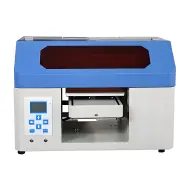
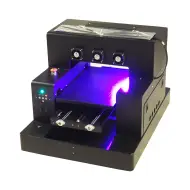
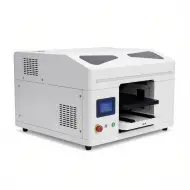
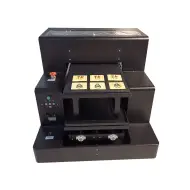
GNFEI F85G3 — Industrial DTG Printer for Masterful Photo Reproduction
Dual Epson i3200 Heads | 1200×2400 DPI Resolution | 3.5 pl Variable Micro-Droplets
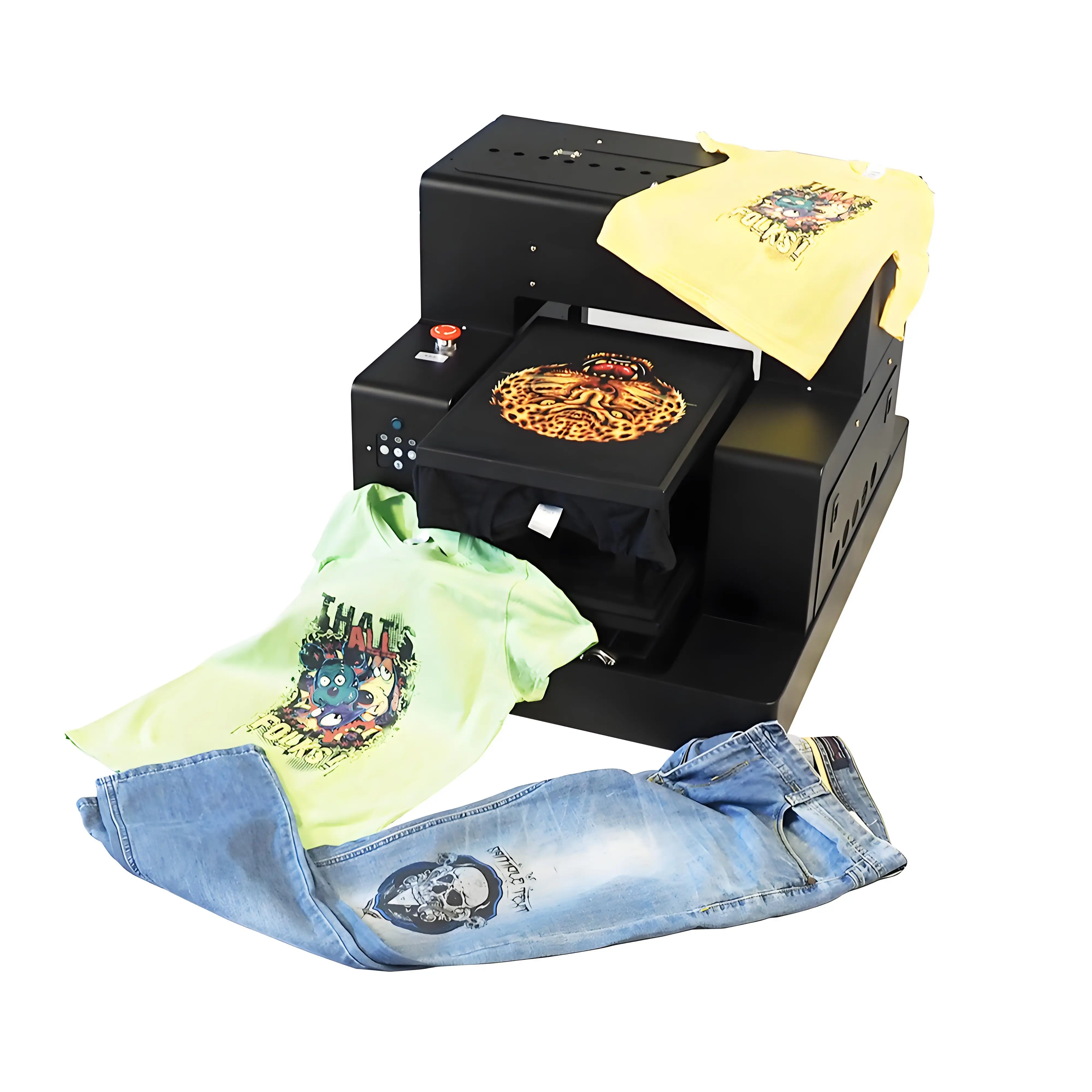
- ✓Dual Epson i3200 Printheads — 3,200 micro-nozzles deliver ultra-crisp 1200×2400 DPI photographic resolution
- ✓Variable Droplet Technology — 3.5 pl micro-drops create seamless, grain-free skin tones and ombre blends
- ✓Stochastic RIP Screening — Zero moiré patterns, flawless shadow fades into dark garments
- ✓Active WIMS White Circulation — Ensures uniform white underbase density for true color saturation
- ✓40×60 cm Maximum Platen — Print full-bleed oversized photo art on hoodies and oversized streetwear
Frequently Asked Questions: Photographic DTG Printing
Bring Ultra-Realistic Photo Apparel to Life
Discover the photographic precision of the GNFEI F85G3 industrial DTG printer with dual Epson i3200 heads and factory-direct pricing.