
Maximizing Streetwear Margins: Why Small Clothing Brands are Switching to In-House DTG Printing
Maximizing Streetwear Margins: Why Small Clothing Brands are Switching to In-House DTG Printing
B2B Streetwear Production Insight
For emerging streetwear lines and boutique designers, reliance on third-party print-on-demand dropshippers or mass-market screen printers severely caps gross profit margins. Transitioning to an in-house best DTG printer for small business (Model GNFEI F85G3) provides complete control over fabric quality, ink curing, and dispatch times. By printing on-demand with zero minimum order quantities (MOQs), streetwear brands slash cost-per-print from $12.00+ outsourcing fees down to less than $1.20 in raw ink and pretreatment costs, achieving vertical integration and a full equipment payback cycle in under 90 operating days.
In the hyper-competitive arena of modern streetwear, a clothing brand's survival relies on two core variables: speed-to-market and print premium feel. Traditional screen printing demands massive minimum orders (often 100+ pieces per design) and expensive screen setup fees, forcing startups to hold dead stock. Conversely, third-party fulfillment services cut margins to the bone, leaving designers with a meager $3.00 to $5.00 net profit per shirt.
To capture premium pricing and scale profitably, independent clothing boutique brands are switching to in-house Direct-to-Garment (DTG) printing. Using compact, commercial-grade systems like the GNFEI F85G3 A3 T-Shirt Printer, designers can print photorealistic full-color graphics on high-end 100% cotton blank shirts, hoodies, and tote bags in minutes. This B2B analysis breaks down the economics, physical setups, and technical systems that allow boutique labels to secure vertical integration and multiply gross profit margins.
The Economic Pivot: In-House DTG vs. Third-Party Outsourcing
For an emerging clothing label, outsourcing custom apparel creation feels safe initially but quickly becomes a margin trap. Dropshipping providers charge $14.00 to $18.00 for printing on a basic blank shirt. Once marketing, ad acquisition, and shipping costs are deducted, the brand’s net profit is virtually zero. Scaling is mathematically impossible under this structure.
By executing print production in-house with an A3 direct to garment printer, clothing labels reclaim their profit margins. A premium heavyweight 240GSM cotton blank shirt costs approximately $4.50. The ink cost per print (using standard CMYK + White underbase) averages $0.80, and pretreatment liquid costs $0.30. The total manufacturing cost is under $6.00. Retailing the custom streetwear tee at $28.00 yields a gross margin of 78.5% ($22.00 net profit per unit).
| Production Metric | Third-Party Outsourcing (Print-on-Demand) | In-House Production (GNFEI F85G3) | B2B Margin Impact |
|---|---|---|---|
| Minimum Order Qty (MOQ) | 1 Piece (But high base cost) | 1 Piece (Profitable from unit 1) | Zero inventory risk |
| Average Manufacturing Cost | $15.00 - $18.00 per Tee | $5.60 per Tee (Blank + Ink + Prep) | Reclaims $10.00+ margin per unit |
| Turnaround & Shipping Time | 5 to 10 Business Days | Under 5 Minutes (Same-day dispatch) | Instant customer gratification |
| Print Touch & Breathability | Variable (Often plasticky DTF heat transfers) | Premium soft hand-feel (Inks bind to fibers) | High-end retail positioning |
| Sample Proofing Speed | Days of waiting & paying full retail | Instant (Proof designs on-the-fly in 2 mins) | Ultra-rapid product testing |
Operational Speed & Print Quality Demonstrations
Before evaluating the hardware configuration, view the F85G3 direct to garment printing system in active production. These B2B operational clips show the printing process, white ink coverage, and completed fabric output:
Print Demo: High-Definition Curing on Black Fabric
Operational Guide: Pretreatment Curing & Heat-Press
Key Technical Systems of the GNFEI F85G3 A3 DTG Printer
Unlike entry-level DIY custom printing rigs, which are prone to printhead failure and messy ink spills, the GNFEI F85G3 is engineered for continuous commercial production in a compact desktop configuration.
Genuine Epson Precision Printhead (1440 DPI)
The mechanical core features an authentic Epson high-resolution printhead. Utilizing microscopic ink-droplet technology, it allows clothing brands to print highly complex designs, color gradients, vintage halftones, and fine vector lines on garment fabric with sub-millimeter placement accuracy and a soft, breathable touch.
Smart Infrared Z-Axis Leveling
Prevents costly printhead damage. Dual infrared sensors automatically detect the fabric surface depth, adjusting the Z-axis Z-leveling tray to maintain a perfect 2mm distance between print nozzle and shirt.
White Ink Stirring & Circulation
White textile inks contain heavy titanium dioxide, which settles and clogs nozzles on entry-level printers. The F85G3 integrates a continuous white ink circulation motor that stirs ink lines during standby to maintain fluidity.
Automated Startup & Shutdown Cap-Flushing
Reduces daily cleanup workflows. The machine runs self-cleaning cycles on startup and shutdown, sealing the printhead cap to prevent dry-out. This maintains a plug-and-play setup for boutique designers, keeping the printer production-ready even after weekends of downtime.
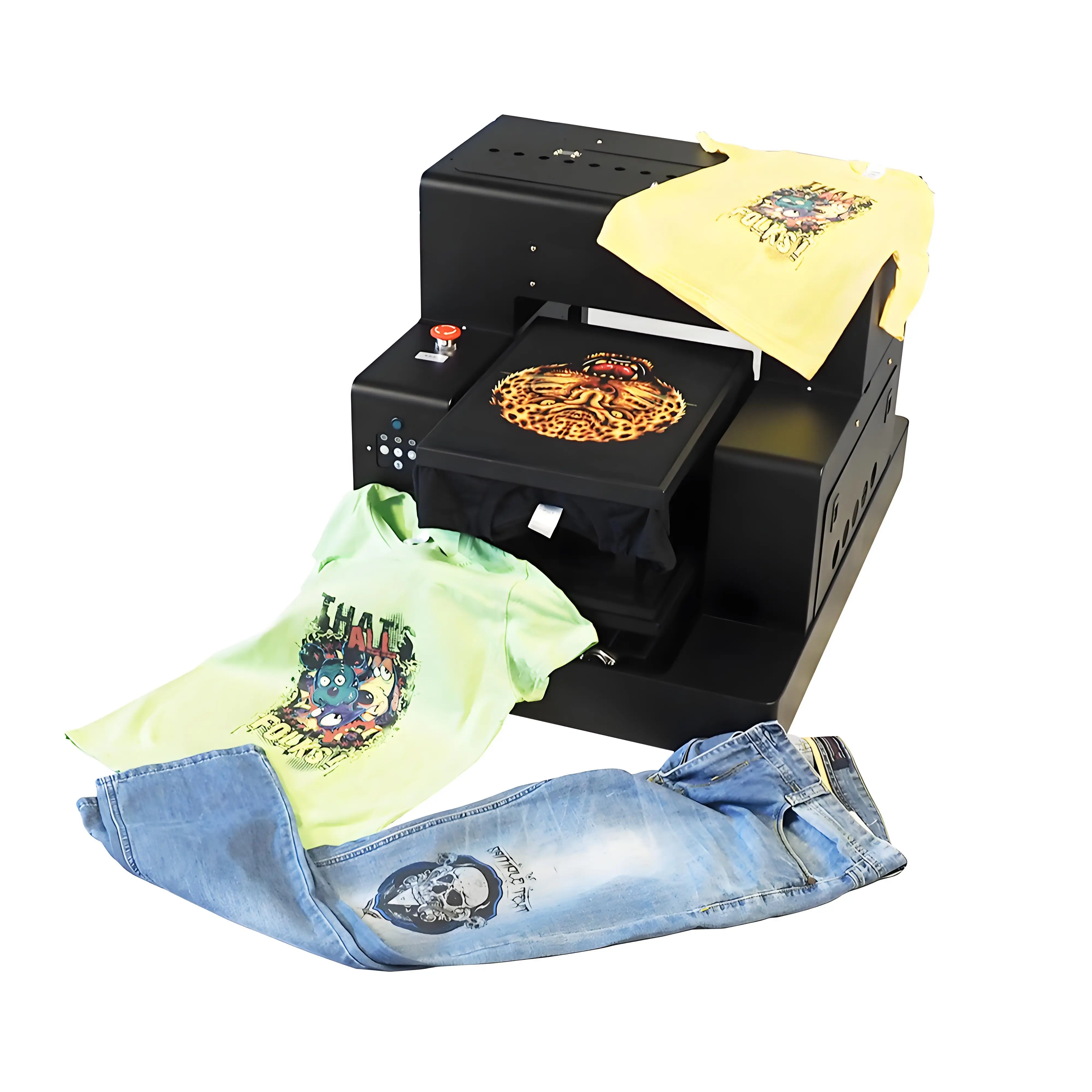
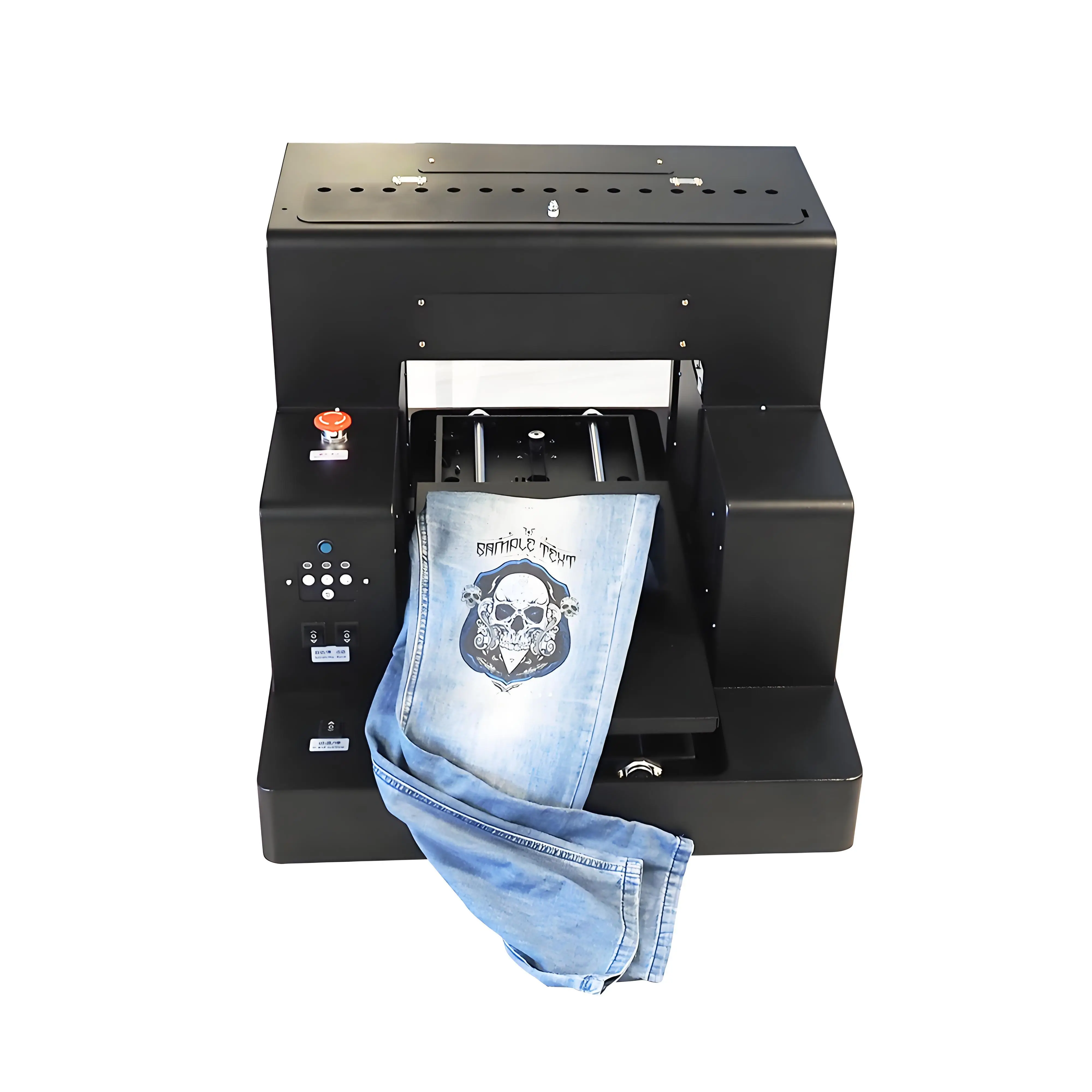
Featured Commercial T-Shirt Printer: GNFEI F85G3 A3 DTG
For startups, custom print shops, and streetwear labels seeking to bring production in-house, the F85G3 represents the perfect balance of commercial output and budget efficiency:
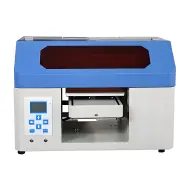
GNFEI F85G3 A3 Flatbed DTG Printer
- Oversized Platen: 420 × 297 mm print area, perfect for full-chest adult streetwear graphics.
- Ink Channels: CMYK + White × 2, ensuring vibrant color prints on both dark and black fabrics.
- Level Calibration: Automated Z-axis adjustment with precise dual-infrared sensors.
- Dimensions & Weight: 80.00cm × 70.00cm × 60.00cm, weighing 81.00kg (Compact steel frame).
- Software Bundle: Includes dedicated B2B RIP software supporting custom white underbase profiling.
Real-World Print Gallery: Cotton, Hoodies & Durability
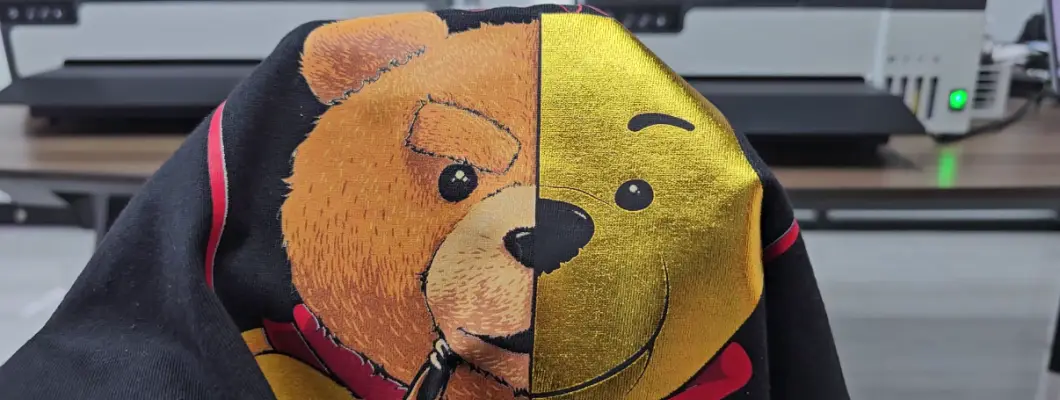
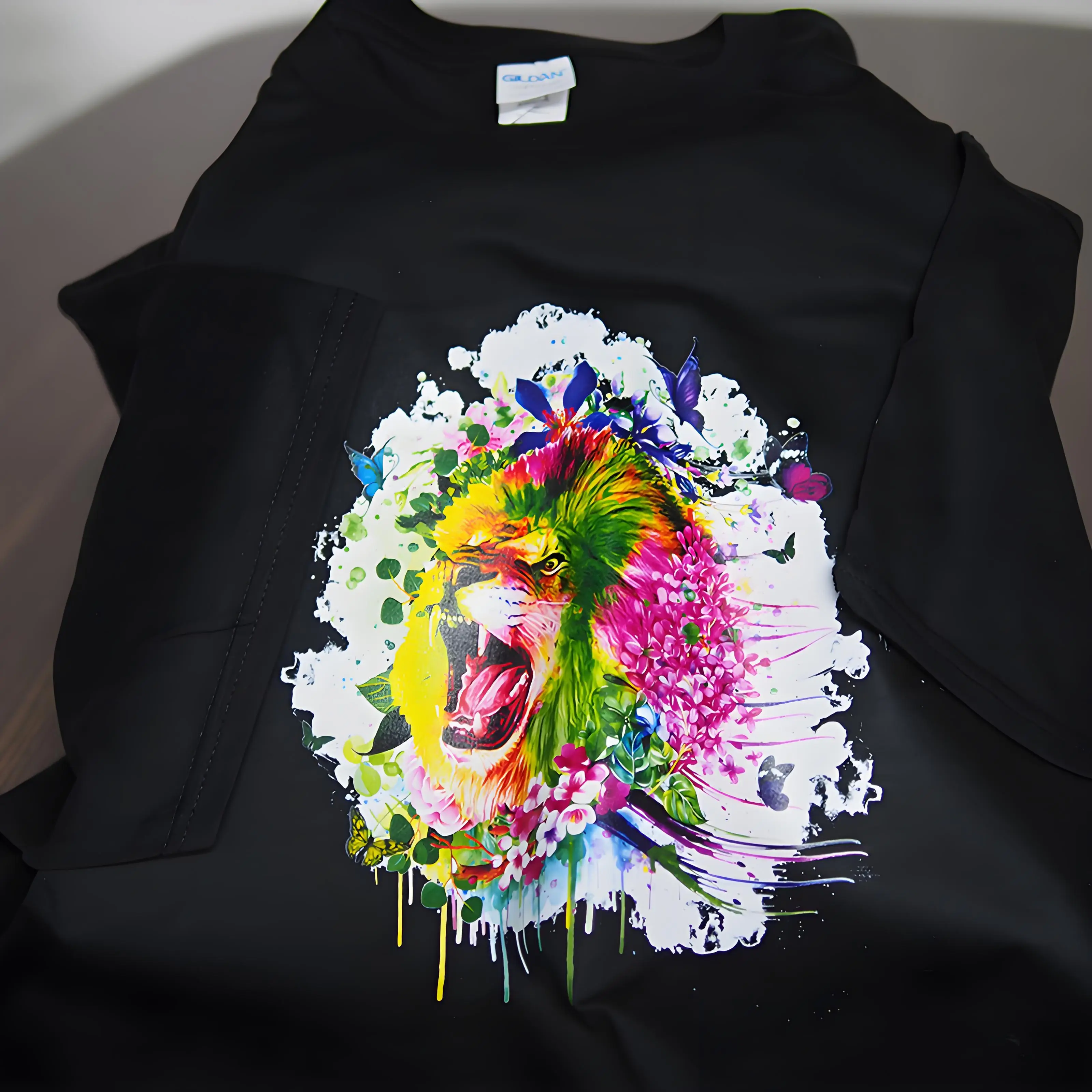
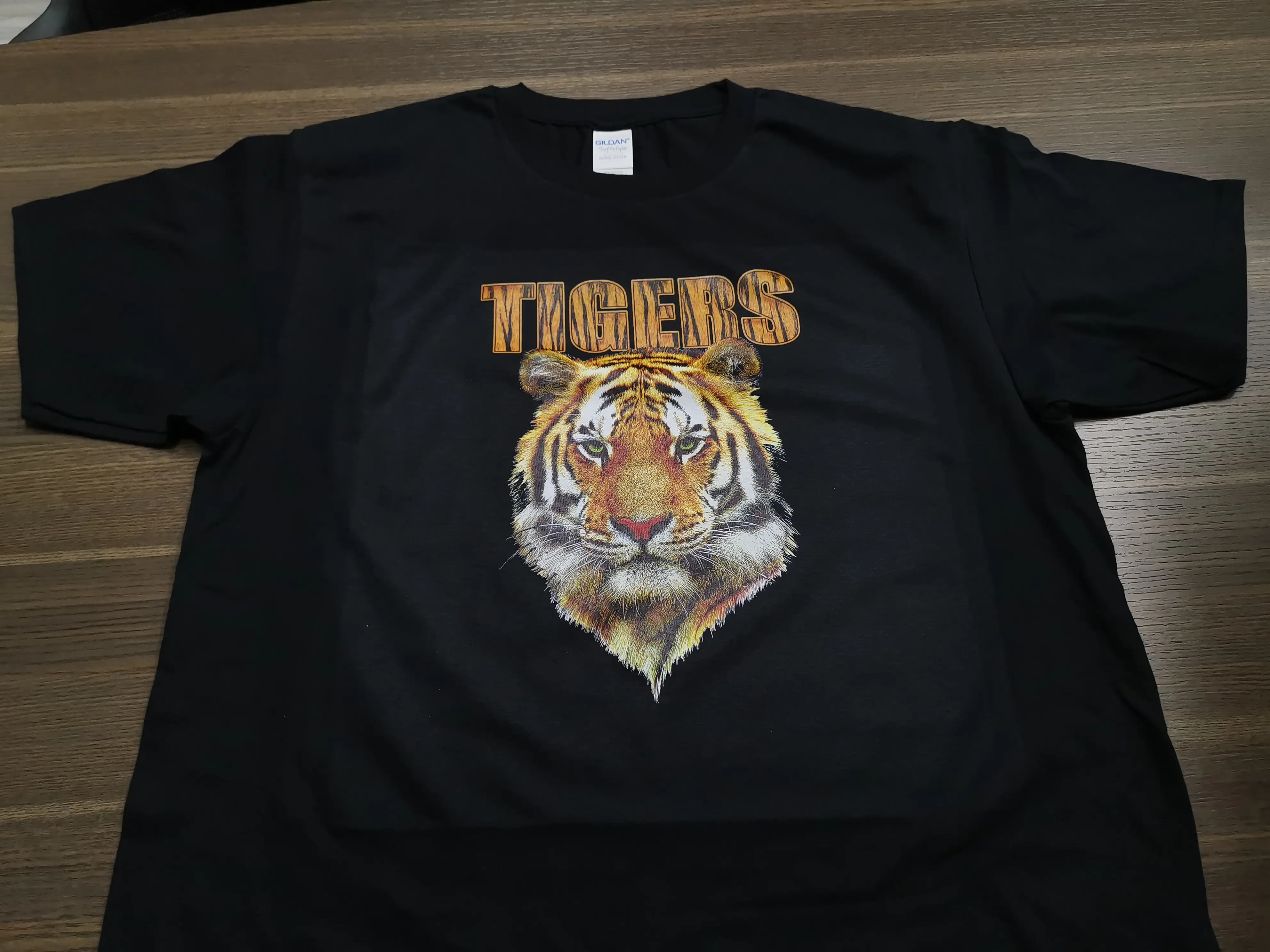
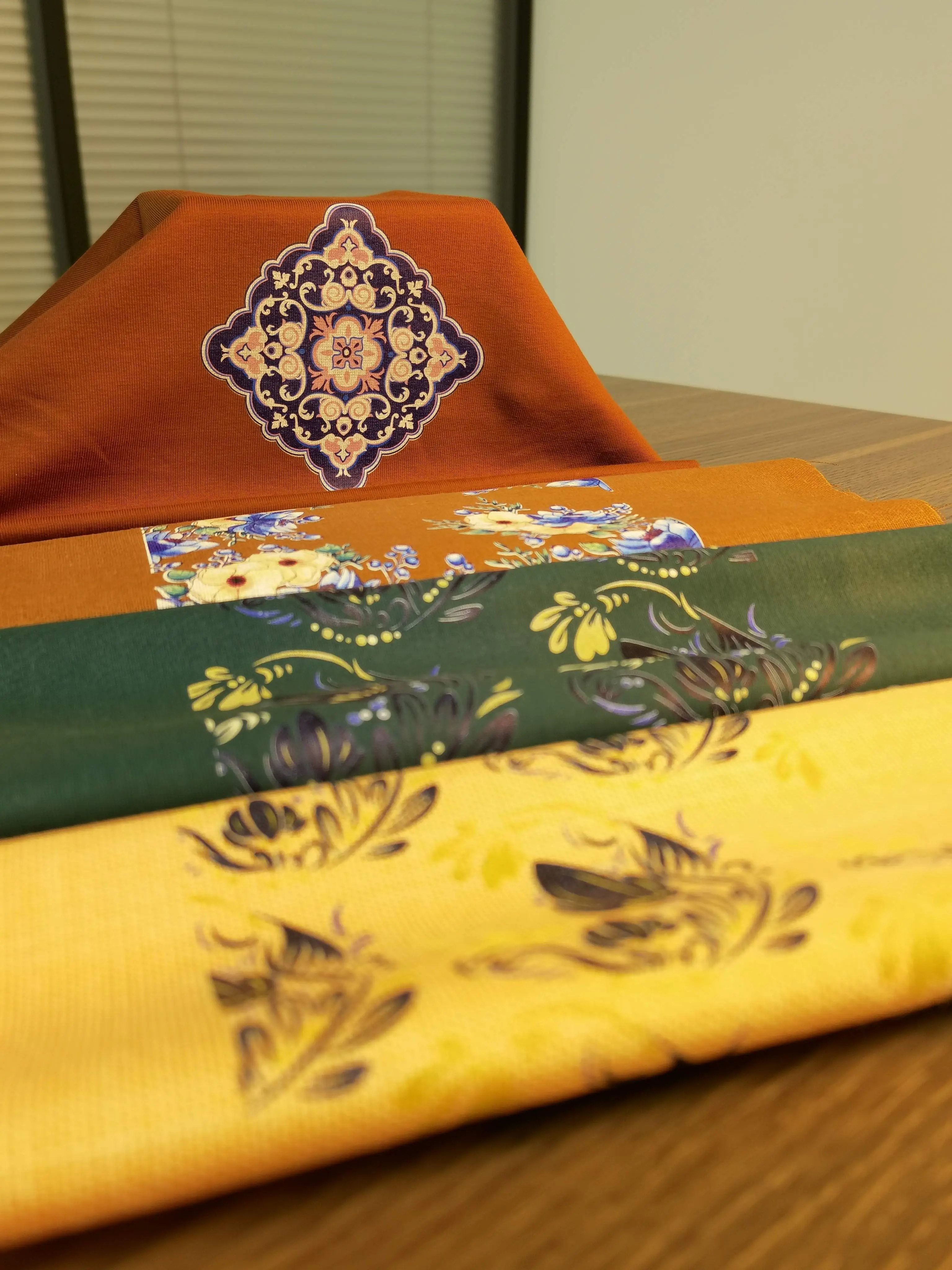
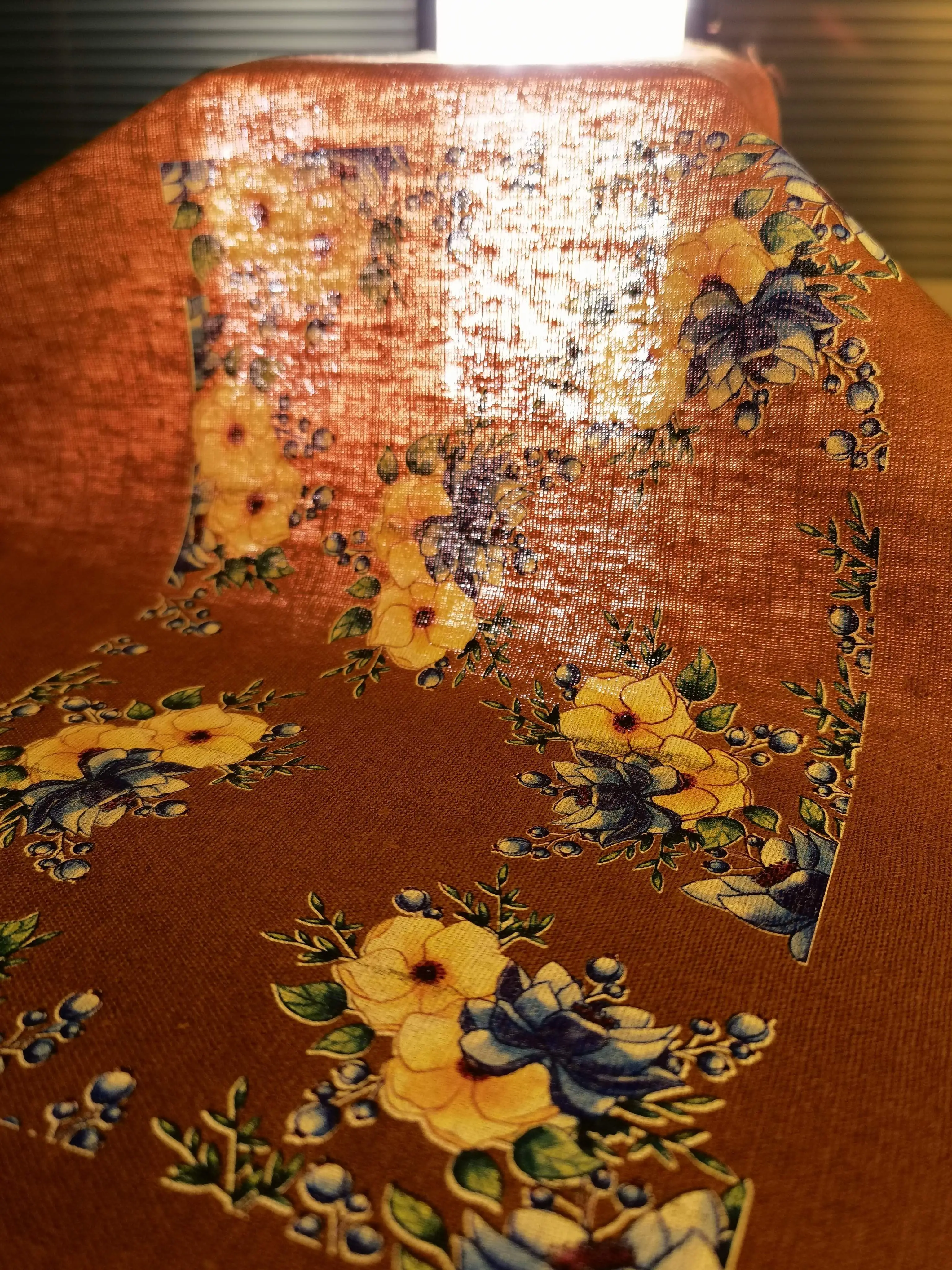
Fidelity matters when charging premium prices ($25.00 - $45.00) for streetwear apparel. These close-up, original photos show the soft, breathable print feel and high density colors printed on dark blanks by the GNFEI system:
Step-by-Step: The In-House DTG Production Workflow
Operating the F85G3 direct to garment printer is simple. It requires less than 10 minutes of training for a barista or studio employee to achieve consistent, retail-quality prints on shirts, hoodies, and tote bags:
Apply Pretreatment (For Dark Shirts)
For dark or black fabrics, spray a light, even coat of DTG pretreatment liquid on the print area. This chemical undercoat acts as a bonding layer that holds the white pigment ink on top of the fabric fibers instead of letting it sink in.
Heat-Press Curing
Place the pretreated garment under a standard heat press for 15 to 30 seconds at 165°C (330°F) to dry the fibers and flatten the shirt surface, creating a micro-smooth printing canvas.
Load Graphic & Print
Mount the garment on the F85G3 platen. Send your artwork (PNG with transparent background) from your RIP software. The automatic infrared height sensors calibrate the platen height, and the Epson head prints the white underbase and CMYK color pass in under 2 minutes.
Final Ink Curing
Remove the printed shirt and place it back on the heat press with a sheet of protective teflon paper. Press for 90 seconds at 160°C (320°F) to permanently cure and lock the textile ink into the cotton fabric fibers.
B2B DTG Printer Commercial FAQs
Review these 15 core questions regarding commercial direct-to-garment operations, print yields, maintenance workflows, and business ROI before making your investment:
1. What are the space and electrical requirements for the GNFEI F85G3?
2. What fabrics are compatible with this DTG printer?
3. How many t-shirts can be printed with a single ink cartridge set?
4. What is the difference between DTG and DTF printing technologies?
5. How long does a single t-shirt take to print on the F85G3?
6. What RIP software is included, and which operating systems are compatible?
7. How does the white ink stirring and circulation system prevent clogging?
8. What is the daily cleaning and maintenance workflow for operators?
9. What happens if the printer is left unused during holidays or weekends?
10. Do DTG prints wash out or fade after laundry cycles?
11. Is a separate heat press machine required to run a DTG business?
12. How does the automatic infrared height sensor work?
13. Is the GNFEI A3 DTG printer suitable for mobile event booths?
14. What are the B2B warranty and technical support terms?
15. How do we order replacement ink cartridges and spare parts?
Leave a Comment