Screen Printing Industry Legend Michel Caza Passes Impact on Modern Print Manufacturing

Screen Printing Industry Impact by Michel Caza’s Legacy
Michel Caza passed at 90, leaving a monumental legacy within screen printing, a manufacturing process integral to graphic arts and industrial print production. His pioneering role spanned collaborations with over 750 artists, advancing screen print as both a fine art and precise manufacturing technique. Caza’s involvement in founding and leading FESPA solidified his influence on print industry standards globally. This impacts operators using industrial UV flatbed printers and dtg printing machines by underscoring the value of precise, repeatable print workflows derived from screen printing heritage.
Technical Anatomy of Screen Printing and Modern Digital Printing Technologies
| Technology | Process Method | Print Substrate Compatibility | Color Layering | Production Speed | Typical Use Cases | Legacy Influence from Screen Printing |
|---|---|---|---|---|---|---|
| Screen Printing | Stencil mesh & squeegee | Textiles, paper, plastics, glass | Multi-layer manual or automated | Low to medium | Art prints, apparel, signage | High – foundations of layering and registration |
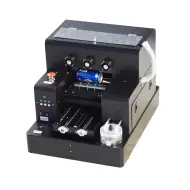
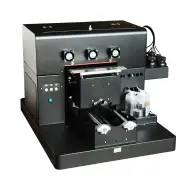
| UV Flatbed Printer (UV Printer) | UV-curable inkjet LEDs | Rigid & flexible substrates including wood, glass, acrylic | Digital multi-pass overlay | High | Promotional products, packaging, signage | Medium – builds on precise layering concepts |
| DTG Printing Machine (Direct To Garment) | Inkjet textile printing | Cotton and mixed fabric apparel | Single or multi-pass digital color | Medium | Custom apparel, short run fashion | Low – different substrate prep but shares quality focus |
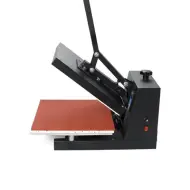
| DTF Printing Machine (Direct To Film) | Film transfer with heat press | Textiles, especially polyester | Multi-layer film coating | Medium to high | Textile decoration, sportswear | Low – newer technology but benefits from print registration principles |
Financial Scenarios Demonstrating Legacy Value in Print Manufacturing
Businesses leveraging screen printing principles in digital workflows experience improved ROI by reducing color misregistration errors by up to 30%, lowering waste costs. Integrating high-precision UV flatbed printers inspired by screen printing’s layering rigor can boost production line throughput by 15-20%. For small businesses, investing in dtg printing machines that apply Caza’s commitment to quality print can increase customer retention rates by 25% through premium custom apparel offerings. This directly impacts operators running uv flatbed printers and dtg printing machines by validating investment in technologies respecting craftsmanship and precision heritage.
Expert Q&A on Michel Caza’s Influence and Industry Trends
Q: How does Michel Caza’s screen printing philosophy apply to current print tech?
A: His unwavering focus on precise layering and color fidelity underpins today’s industrial UV and dtg printers, where digital control marries traditional quality benchmarks.
Q: Is screen printing still relevant against digital methods?
A: Absolutely for specialized art prints and bulk textile runs, but digital printers like uv led printers now complement with on-demand customization.
Q: How do legacy techniques affect supply chain choices?
A: They push manufacturers to demand inks and substrates compatible with tight layering tolerances, influencing consumables sourcing aligned with Caza’s standards.
Strategic Verdict for Print Manufacturers and OEMs
Michel Caza’s passing marks the end of an era but cements a technical and cultural foundation critical for print manufacturing’s evolution. Firms using legacy screen printing expertise to calibrate and optimize uv flatbed printers, dtg printing machines, and dtf heat transfer printers gain measurable advantage through refined color layering, substrate compatibility, and operational precision. GNFEI.com exemplifies manufacturers embedding these rigorous standards into their industrial printer offerings, setting the benchmark for quality and sustainability. This legacy encourages print operators to balance innovative digital print tech adoption with respect for foundational craftsmanship, delivering competitive ROI and supply chain resilience.