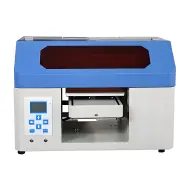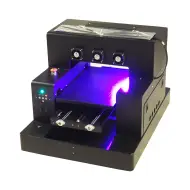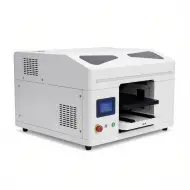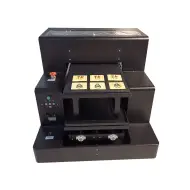
Top 10 DTG Printer Suppliers from China
Top 10 DTG printer suppliers from China, ranked for 2026 buyers
Direct to garment printing has gone from a niche alternative to screen printing into the default production method for custom t-shirt shops, print-on-demand businesses, and e-commerce apparel brands. This guide breaks down ten Chinese DTG printer manufacturers worth shortlisting, what actually separates a commercial dtg printer from an entry level dtg printer, and the technical questions to ask before you wire a deposit on a dtg printer for sale.
Why DTG printer sourcing keeps ending up in China
A direct to garment printer is, at its core, a modified inkjet engine wrapped around a textile platen — and China is where the inkjet component supply chain, the printhead distribution network, and the garment printing know-how all sit within the same few industrial clusters.
Printhead access
Genuine Epson and Brother printhead distribution networks run through the same Guangdong-Shanghai cluster that supplies the rest of the inkjet industry, which is why a dtg printer epson xp600 configuration or a Brother-head alternative are both readily available rather than special-order items.
White ink engineering experience
White ink is the hardest part of building a dtg printer for dark shirts — titanium dioxide pigment settles and clogs nozzles faster than any other ink type — and Chinese factories that have iterated on white ink circulation systems for years have generally solved this more reliably than newer entrants.
A3 and A4 format flexibility
The same factories building compact A4 dtg printer for small business setups also build commercial dtg printer units with dual-platform A3 beds, so a buyer can usually scale formats with the same supplier instead of re-sourcing from zero as order volume grows.
OEM and wholesale fluency
Chinese dtg printer manufacturers are accustomed to dtg printer wholesale orders and private-label requests as a normal order type, which matters if you intend to resell under your own brand rather than the factory's.
How DTG printing actually works, and where it wins against screen printing and DTF
A direct to garment printer sprays water-based pigment ink straight onto fabric fibers using a modified inkjet printhead, instead of pushing ink through a mesh screen or printing onto a transfer film first. Understanding that single mechanical difference explains almost every tradeoff in the dtg printer vs screen printing and dtg printer vs dtf printer debates.
| Method | Setup cost per design | Best for | Hand feel |
|---|---|---|---|
| DTG printing | None — print-on-demand from quantity 1 | Full-color designs, photo prints, varied small orders | Soft — ink absorbs into fabric fibers |
| Screen printing | High — one screen per color | 500+ identical pieces, simple 1-3 color designs | Thicker — ink sits on the surface |
| DTF (direct-to-film) | Low — no pretreatment needed | Polyester, dark garments, mixed fabric types | Slightly raised — film layer on top |
| Heat transfer / vinyl | Low to medium | Single-color logos, names, numbers | Stiff — can crack or peel over time |
The tradeoff that matters most when comparing a dtg printer cotton polyester claim against reality: DTG ink needs natural fiber to bond into. 100% cotton gives the cleanest result, cotton-polyester blends work well above roughly 60% cotton content, and pure polyester or nylon shells generally need a different print method entirely rather than a software workaround.
10 DTG printer suppliers worth shortlisting
Ranked on a mix of product range, export track record, and how much of each company's technical claims are actually verifiable — not on who paid for placement. The scale of these companies varies a fair amount, from large multi-category exporters to focused single-product workshops, and that variation is itself a useful signal when you're evaluating who to wire a deposit to.
GNFEI
FeaturedGNFEI's A3 DTG printer t-shirt printing machine (model F85G3) runs a genuine Epson printhead — not a clone — with a CMYK plus White×2 ink system across six total channels, which is the configuration that actually matters for anyone searching dtg printer with white ink rather than a printer that merely lists white ink as a checkbox feature. The dual A3/A4 format switches between a 420×297mm bed for full adult chest prints and a smaller A4 mode for pocket logos and kids' tees without any hardware change, so a single machine covers both ends of a typical custom t-shirt shop's order mix.
The auto-cleaning white ink system runs scheduled circulation cycles on startup, shutdown, and at configurable intervals — the specific failure point that ruins cheaper t-shirt printer machine builds, since titanium dioxide pigment settles fast on idle days. GNFEI sells factory-direct with no minimum order requirements, CE/RoHS/FCC certification included, and ships worldwide with a 12-month hardware warranty. For the full spec sheet, sample prints, and current dtg printer price, the DTG printer category page covers the full A2, A3, and A4 lineup side by side.
gnfei.com →SinoColor Printing Equipment (Shanghai)
SinoColor is one of the larger, more established names in this category, with a documented floorspace and export figure that's unusually verifiable compared to smaller workshops. Their TP-600D line runs dual 4720 printheads across two platforms for simultaneous A2-size printing, aimed squarely at commercial dtg printer buyers who need higher throughput than a single-station A3 unit, plus an A3/A2 I3200-head line with white ink circulation for buyers comparing a3 vs a4 dtg printer configurations at a slightly larger scale.
Six international service centers is meaningful for an equipment category where downtime is the real cost — a printhead failure that takes three weeks to resolve through a single domestic agent is a different business problem than one resolved through a regional service contact within days.
Guangzhou Disen Electromechanical Equipment
Disen's DTG line sits inside a broader garment-decoration equipment business that also covers embroidery machines, sewing machines, and heat transfer presses — a different starting point than a pure inkjet-equipment factory, and one that can be an advantage if you're building out a full decoration workshop rather than buying a single direct to garment printer in isolation. Their double-station model runs a four-head all-aluminum ink stack with a silent dual-rail crossbeam and a high-power servo motor, built for printing T-shirts, backpacks, and pillows at roughly 80 seconds per A4-size image.
Because garment decoration equipment is their core business rather than a side category, expect more institutional knowledge about how a dtg printer fits into a wider production line than from a factory that only makes one type of machine.
Aily Group
Aily positions itself as a one-stop printing solution provider rather than a single-category specialist, and their DTG M2 model uses a dual-pallet system that lets one print job run while the next garment loads — a meaningful throughput gain over single-pallet entry level dtg printer designs once order volume climbs past hobbyist levels. Monthly pricing updates tied to market changes are a detail worth noting either way: it signals an operation set up for ongoing wholesale relationships rather than one-off export orders.
Their broader catalog (UV, DTF, UV DTF, eco-solvent, sublimation, laminators, ink) makes them a reasonable single point of contact if you eventually want to add a UV or DTF line alongside your DTG printer rather than managing separate suppliers per machine type.
Rainbow Digital
Rainbow's A2 dtg t-shirt printer runs four TX800 printheads, configurable as 4×CMYK for fast printing on white garments or 4×CMYK+WW for dark garment work — giving buyers a single-machine path to cover both light and dark fabric runs rather than needing separate white-ink and color-only machines. The magnetic platen is built for fast garment loading and removal, a detail that matters more than it sounds once you're running back-to-back orders rather than single test prints.
Like most TX800-based machines, the automatic white ink circulation system is the component to ask detailed questions about, since this printhead generation is more sensitive to white ink settling than some newer head designs.
TODOjet
TODOjet's A3 dtg printer uses Epson DX5 or 1390 printheads for 1440 DPI output across a 33×40cm print area, with standard ICC profile testing across different printhead and ink combinations for color accuracy — a detail worth specifically asking about with any supplier, since an unprofiled RIP setup is one of the most common reasons a cheap dtg printer produces inconsistent color from one print run to the next.
The DX5/1390 printhead generation is older and generally cheaper to source replacement parts for than newer head families, which can be a genuine advantage for buyers prioritizing long-term running cost over outright print speed.
Suncome Tech
Suncome builds its DTG line around Brother printheads rather than Epson, which matters specifically if you're trying to standardize spare parts and consumables across an existing Brother-based print shop, or if you've simply had better service experience with one printhead ecosystem over the other in your region. Their catalog also includes Brother-head UV printers up to 1800 DPI with 3D embossed effects, suggesting deeper familiarity with that printhead family specifically rather than treating it as an alternate option.
OEM and ODM support is offered across their line, which is relevant for buyers planning to private-label a dtg printer for resale rather than market it under the factory's own branding.
LINKO
LINKO is primarily known for DTF printers but runs DTG and UV DTF lines alongside that core business, and the company's verifiable scale claims are unusually specific for this category: agents across 62 countries and regions, more than 7,500 customers in 100+ countries, and a stated monthly production capacity of 800-1,000 units. They also supply ink to Adidas OEM manufacturers in China using the same raw material source as Epson ink, which is a meaningfully different claim than the generic "premium ink" language most competitors use.
Eighteen years of continuous operation in an industry where many smaller workshops rebrand or fold within a few years is itself a data point worth weighing alongside the spec sheet.
Foshan Shenlan
Foshan Shenlan's DTG X2S is built around a white ink circulation system specifically engineered to resist clogging, with documented daily and weekly maintenance routines (nozzle test strips, ink pad cleaning, filter replacement every three months) published openly rather than left for the buyer to discover after purchase — a level of maintenance transparency that's genuinely useful when evaluating dtg printer maintenance tips against what a supplier actually expects from day-to-day operation.
Lifetime after-sales service is the headline claim; the more concrete detail is 24-hour online support plus optional on-site installation and training, which matters more for a first-time buyer with no prior DTG operating experience than for a shop replacing a machine they already know how to run.
Guangzhou Fuxin Intelligent Technology
Fuxin's single-station DTG printer runs dual I3200 printheads at 38×47cm print size, positioned as part of a broader digital textile printing catalog rather than a single-product specialty. As with several multi-category suppliers in this list, the practical advantage is consolidating a DTG order with DTF film, powder, or sublimation ink under the same account rather than managing separate vendor relationships for each consumable.
Buyers considering a smaller, more focused supplier like this should weigh the lower visibility against the simpler, more direct sales relationship that often comes with dealing with a smaller operation rather than a larger multi-brand exporter.
What actually separates a good DTG printer supplier from a risky one
Glossy spec sheets look similar across most factories. These are the questions that tend to surface the real difference before you've committed a deposit.
Genuine printhead, not a clone
Ask specifically whether the printhead is a genuine Epson, Brother, or other branded component, since cloned heads behave differently in resolution ceiling and clog resistance than the genuine part.
White ink circulation method
White ink is the single biggest failure point in a cheap dtg printer — ask exactly how the white ink system prevents pigment settling, not just whether one exists.
Real throughput per hour
Quoted speed is almost always for light-fabric prints; ask for dark-garment throughput specifically, since the white underbase pass roughly doubles print time per piece.
RIP software compatibility
Confirm which RIP software (AcroRIP, Wasatch SoftRIP, ErgoSoft) is bundled and whether color profiling is included, since an unprofiled setup is the most common cause of inconsistent print color.
Spare parts lead time
A printhead failure six months in is a business continuity question, not just a warranty question — ask how fast a replacement part actually ships, not just whether one is covered.
OEM / wholesale terms
If you intend to resell under your own brand, confirm MOQ and what's actually customizable (housing, software splash screen, packaging) before assuming it's included in a dtg printer wholesale deal.
Who actually buys a DTG printer right now
The same direct to garment printer serves several distinct business models, each with a different path to recovering the hardware cost, which is part of why dtg printer for small business questions come up so often in supplier inquiries.
Common questions before placing a first DTG printer order
A direct to garment printer sprays water-based pigment ink directly onto fabric fibers using a modified inkjet printhead, similar in principle to a desktop printer but engineered for textiles instead of paper. The garment is pretreated for dark fabrics, placed flat on the platen, and the design prints in a single automated pass with no screens, no transfers, and no setup fees — which is why it's become the default for custom t-shirt shops and print-on-demand businesses running varied small orders.
Yes, but only with a white ink dtg printer specifically — the machine lays an opaque white underbase layer before the CMYK color pass, which is what produces vivid, true-color results on black and dark fabrics rather than washed-out colors. A dtg printer for dark shirts and a dtg printer for hoodies are really the same capability; the underbase step is what makes either possible.
Best results come from 100% cotton garments — t-shirts, hoodies, tote bags, and similar woven cotton goods. A dtg printer cotton polyester blend works reasonably well once cotton content is 60% or higher; pure polyester or nylon shells generally need a different pretreatment approach or a different print method (like DTF) entirely, regardless of how the printer itself is configured.
The core difference is printable surface area. An a3 vs a4 dtg printer comparison comes down to a 420×297mm bed versus a smaller 297×210mm bed — A3 covers a full adult chest print in one pass and handles hoodies and oversized garments more comfortably, while A4 is more compact and suited to pocket logos, kids' tees, or sleeve prints. Many commercial units now offer both formats switchable on one machine.
An entry level dtg printer typically starts around $3,000-$6,000, while a fuller commercial dtg printer configuration can run $10,000-$30,000 or more depending on platform count, printhead generation, and bundled RIP software. Factory-direct dtg printer price quotes from Chinese manufacturers tend to undercut domestic distributor pricing meaningfully, since there's no dealer markup layer in between.
Ink cost per print typically runs $0.50-$1.50 for a standard design on a light garment, roughly doubling once a white underbase layer is added for dark fabric printing. The real number depends heavily on coverage area and ink brand, so ask a supplier for a cost-per-print estimate based on your actual design rather than relying on a generic figure.
Screen printing wins on unit cost at 500+ identical pieces with simple, few-color designs, since the per-screen setup cost amortizes across volume. DTG printer vs screen printing in every other scenario tends to favor DTG: no setup fees, unlimited colors, profitable from a single piece, and no minimum order requirements — which is why custom t-shirt shops and e-commerce apparel brands serving varied order sizes lean toward direct to garment printing as their primary method.
Run a daily printhead nozzle check before shutting down, execute automatic printhead cleaning cycles on startup and shutdown, keep the capping station clean, and gently agitate the white ink tanks daily to prevent pigment settling. These four habits prevent the large majority of clogging issues that account for most cheap dtg printer complaints in online reviews.
Reliability varies more by specific factory than by country of origin — a genuine-printhead machine from an established Chinese dtg printer manufacturer with a proper white ink circulation system performs very differently than a poorly assembled clone-head unit from an unverified seller. The practical filter is asking for the exact printhead brand, requesting a video call of the actual production floor rather than a showroom, and confirming spare parts availability before comparing price against a branded alternative.
Most commercial dtg printer machines are compatible with AcroRIP, Wasatch SoftRIP, or ErgoSoft, running on Windows 7, 10, or 11, with Adobe Photoshop, Illustrator, or CorelDRAW as the design input. Confirm which RIP software is bundled at purchase and whether initial color profiling support is included, since that setup step affects print color accuracy more than almost any other variable.
At standard settings, expect roughly 8-15 light-fabric A4 prints per hour, or 5-10 dark-fabric prints per hour once the white underbase pass is factored in. High-speed draft mode on simple designs can push light-garment output past 20 pieces per hour. Actual throughput depends on design complexity, DPI setting, and the proportion of dark versus light garments in a given order batch.
Yes — this is genuinely one of the stronger ROI categories in specialty printing equipment. The best dtg printer for startups is compact enough for a small studio or retail back room, and no minimum order requirements mean profitable single-piece orders from day one rather than needing to pre-sell a batch. Many direct to garment printing business owners recover hardware cost within 60-90 days running just 10-20 pieces per day at standard retail margins.
Look for CE certification for European market compliance, RoHS compliance for restricted hazardous substances, and FCC compliance if importing into the United States. These three are the baseline for legitimate commercial import in most countries and confirm the machine meets standard electromagnetic compatibility and electrical safety requirements — ask for the actual certificate documents rather than accepting a verbal claim.
Standard lead time is typically 3-7 business days from payment confirmation to dispatch. Express air shipping (DHL, FedEx, UPS) usually delivers within 3-9 business days to the US, EU, and most of Asia, while sea freight for bulk or multi-unit orders takes 15-25 days. Confirm that commercial invoice, packing list, and certification documents are included to avoid customs delays on arrival.
Most mid-size and larger factories accept OEM and dtg printer wholesale requests, ranging from a simple logo swap on the housing to a fully customized software splash screen. Minimum order quantities for deeper customization are typically higher than for an unbranded single unit, so confirm the threshold before assuming it applies to a one-unit order.
Sourcing a DTG printer and want a straight answer on which model fits your shop?
GNFEI ships factory-direct to 60+ countries with A3 and A4 direct to garment printers, genuine Epson printheads, and zero minimum order requirements. Tell us your fabric mix and daily order volume and we'll tell you which dtg printer actually fits — including the real cost per print for your specific design.