UV DTF vs. Direct Flatbed UV Printing: Which Technology is Best for Your Customization Business?
UV DTF vs. Direct Flatbed UV Printing: Which Technology is Best for Your Customization Business?
The custom merchandise and promotional product industries are experiencing a massive technological shift. Central to this revolution is UV curing technology, which allows vibrant, durable designs to be printed instantly onto virtually any substrate. However, as small businesses seek to expand their custom printing capabilities, they face a critical choice: Direct Flatbed UV Printing or UV DTF (Direct-to-Film) Printing. While both methods utilize UV-curable inks and ultraviolet light to create durable, high-gloss prints, their workflows, material compatibility, and production efficiency differ dramatically. Choosing the wrong equipment can lead to high operating costs or missed sales opportunities.
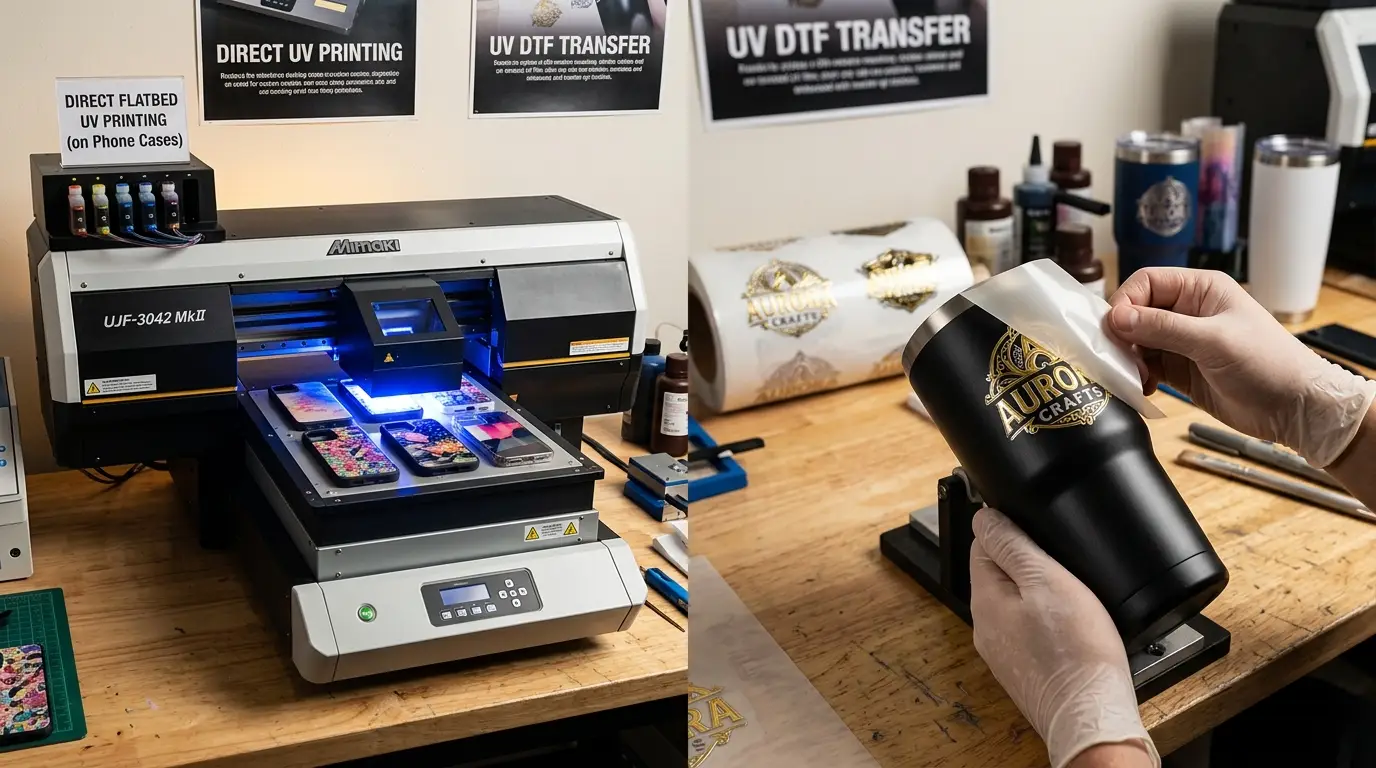
1. Understanding the Core Technology
To make the right choice for your workshop, it is essential to understand how both technologies cure ink and bind designs to target surfaces. Although both use UV LED lights to polymerize liquid ink into a solid plastic film instantly, their application paths are entirely opposite.
Direct Flatbed UV Printing
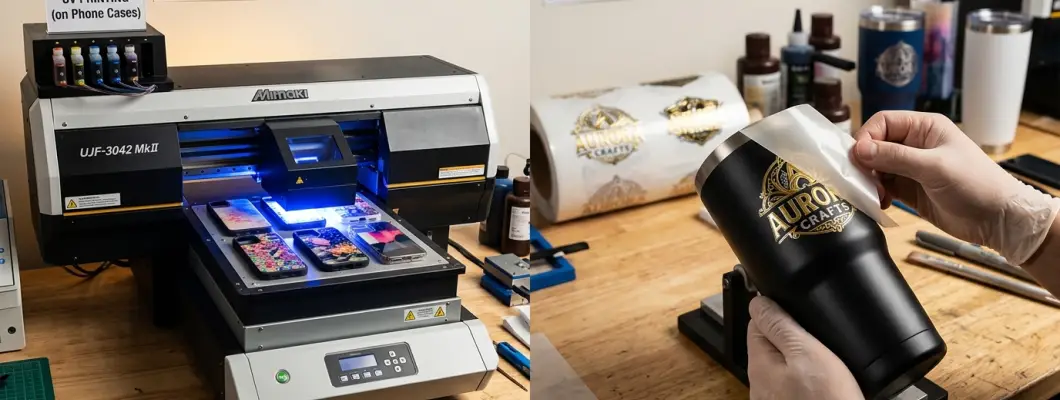
The substrate is placed directly onto a flat vacuum bed. The printhead carriage passes over the product, spraying CMYK, White, and Varnish inks directly onto its surface. An integrated UV LED lamp immediately cures the ink as it lands.
Best for Flat Objects High DurabilityUV DTF Printing (Direct-to-Film)
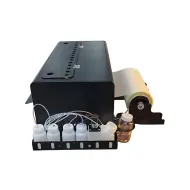
The design is printed onto a specialized PET film (Film A) coated with glue. A layer of white ink is printed over the colors, followed by varnish. The printed film is then laminated with a transfer film (Film B) using a roll laminator. The resulting sticker can be peeled and applied to any hard surface by hand.
Best for Curved Items Zero Setup Needed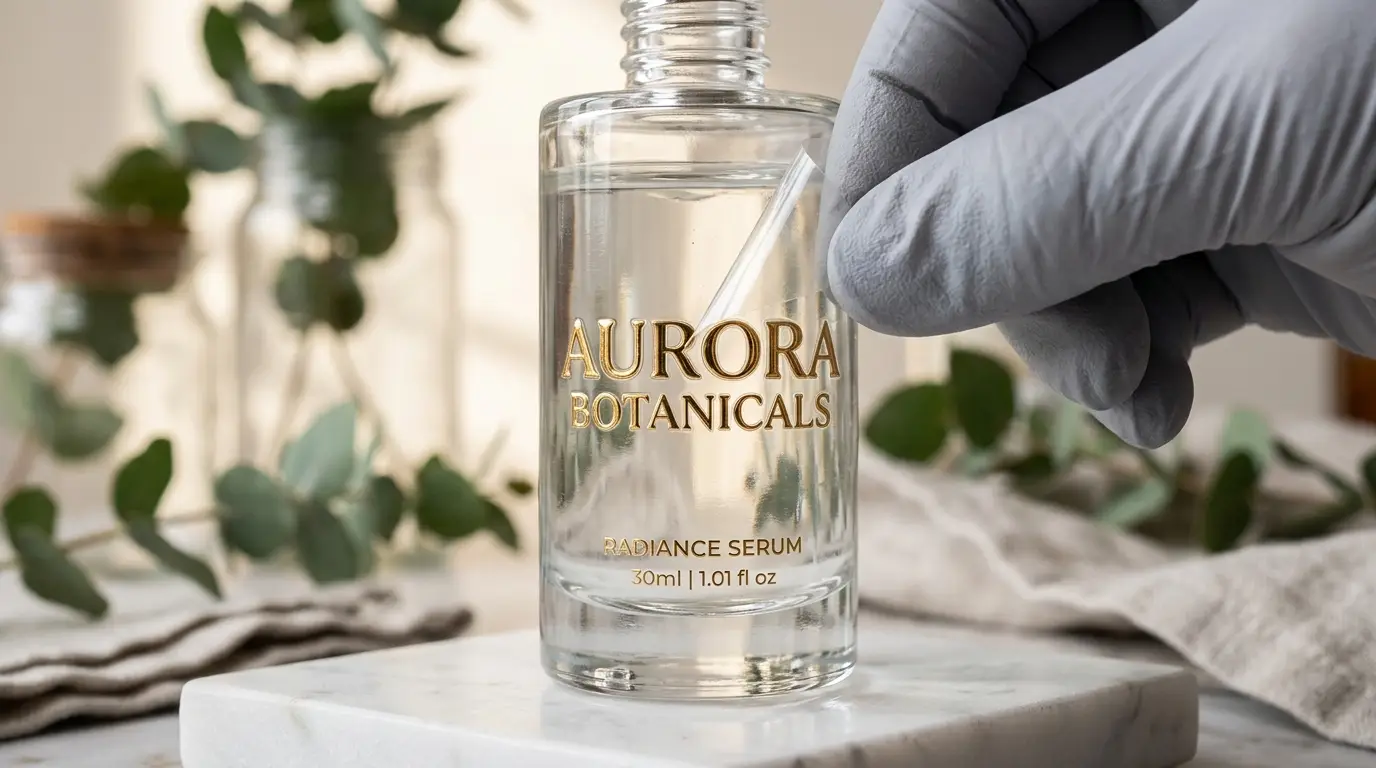
2. Key Comparison Metrics: Which Fits Your Workflow?
Surface Compatibility and Substrate Versatility
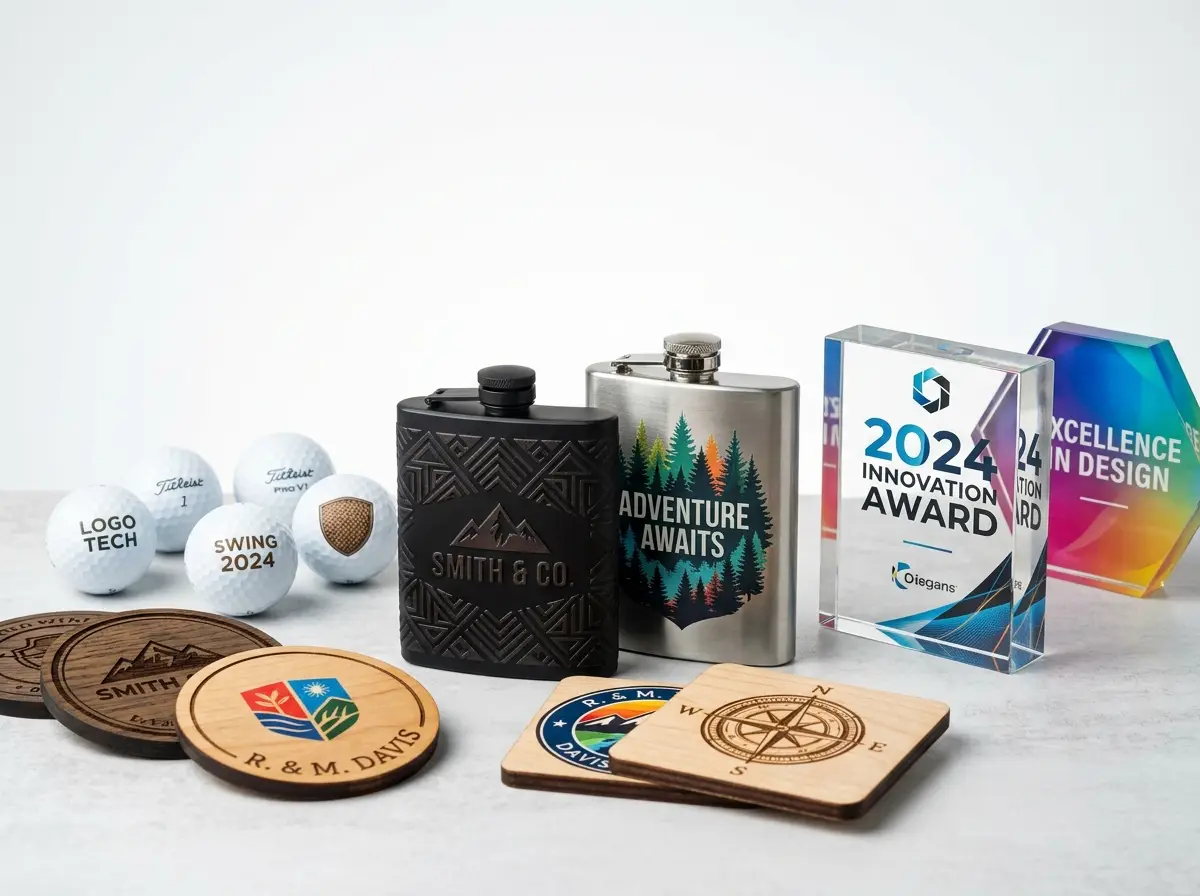
Flatbed UV printers are restricted by physical shape. The product must fit flatly on the print bed with a height variance of less than 2mm to prevent printhead collision. While rotary attachments allow printing on perfect cylinders (like bottles), objects with complex contours, deep depressions, or handles (like mugs or helmets) cannot be printed directly.
UV DTF eliminates this limitation completely. Because the printed sticker is applied manually, you can place high-gloss, embossed decals on helmets, thermos handles, irregular glass bottles, and textured leather journals. The only requirement is that the surface is hard, clean, and non-porous.
Print Adhesion and Scratch Resistance
Direct printing has a distinct advantage on challenging materials like glass, stainless steel, and glazed ceramics. By applying a liquid chemical primer before printing, flatbed UV ink achieves a direct molecular bond with the substrate, making it highly scratch-resistant and dishwasher-safe.
UV DTF transfers rely on a pressure-sensitive adhesive. While modern UV DTF adhesives are exceptionally strong and water-resistant, they do not create a molecular bond. Under heavy friction, scratching, or repeated washing in high-temperature commercial dishwashers, the edges of the transfer can eventually lift.
| Feature / Metric | Direct Flatbed UV Printing | UV DTF Sticker Transfer |
|---|---|---|
| Substrate Shapes | Flat sheets, trays, perfect cylinders (with rotary jig) | Unlimited (curved, irregular, handles, recesses) |
| Adhesion Strength | Maximum (especially with chemical primers) | High (adhesive-based, can peel under severe friction) |
| Workflow Steps | 1. Place product, 2. Apply primer, 3. Print & cure | 1. Print Film A, 2. Laminate Film B, 3. Cut, 4. Apply |
| Labor Intensity | Low (fully automated batch printing on tray) | Medium-High (requires manual cutting and hand peeling) |
| Varnish Gloss Finish | Smooth, flat, spot UV gloss or textured embossing | Thick, raised, glossy 3D decal texture |
3. Recommended Hardware: The Multitasking Powerhouse
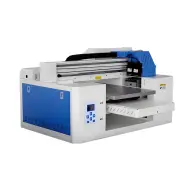
For small businesses looking to maximize their return on investment, choosing a printer that is locked into a single process can restrict future growth. Modern flatbed UV printers solve this problem by serving as a dual-purpose system. You can print directly onto rigid objects placed on the vacuum flatbed, OR you can secure Film A to the bed and print UV DTF sheets in seconds, laminating them afterward on a separate roll laminator.
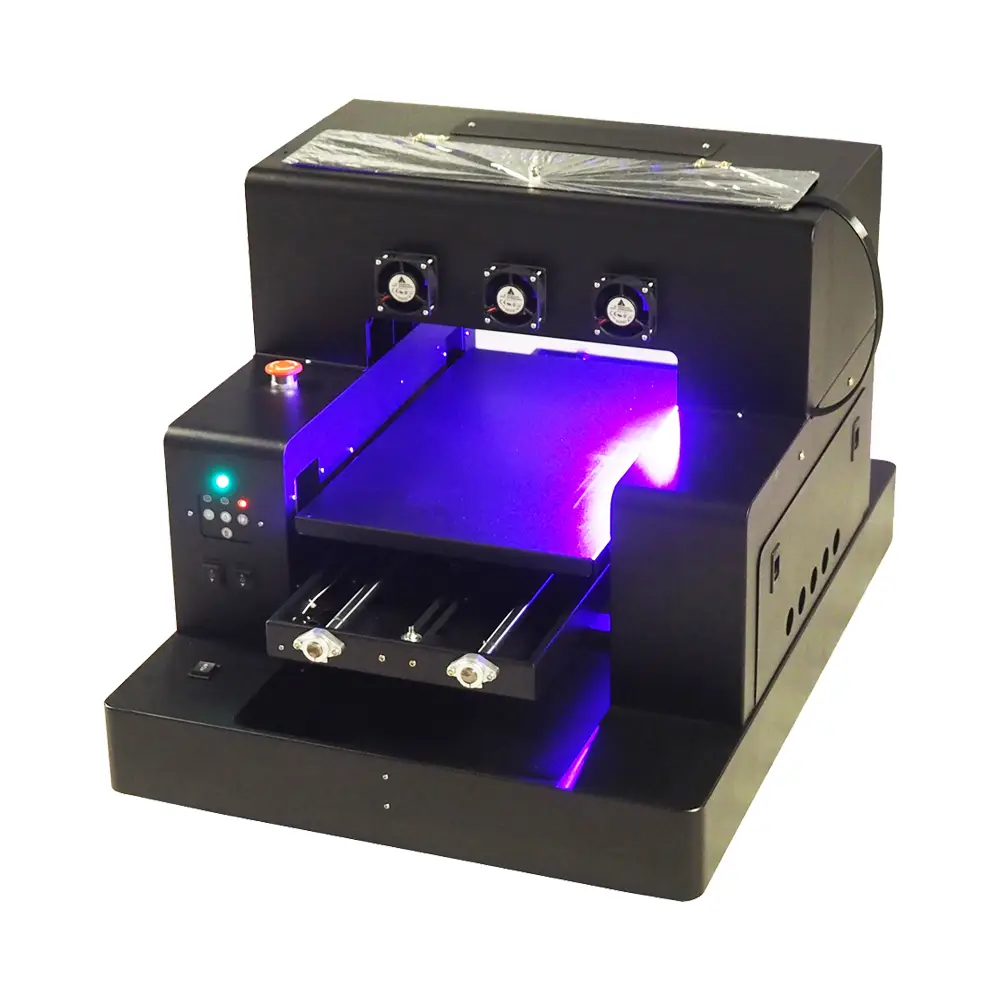
A3 Spot UV Printing Machine & UV Coating Printer
- Supports both Direct Flatbed UV and UV DTF film printing.
- Equipped with dual Epson printheads for white, color, and varnish in a single pass.
- Built-in automatic white ink circulation system to prevent head clogs.
- Vacuum flatbed platform keeps films perfectly flat during printing.
Frequently Asked Questions (FAQ)
What is the difference between direct flatbed UV printing and UV DTF printing?
Which UV printing method has better scratch resistance and durability?
Do I need a primer for UV DTF transfers?
Can a flatbed UV printer print on curved or irregular surfaces?
What is the production cost of a UV DTF sticker?
Is varnish required for UV DTF printing?
Which technology is better for high-volume custom merchandise production?
Can I print white ink and varnish in a single pass?
What equipment is required for UV DTF printing?
What surfaces are compatible with UV DTF stickers?