Direct-to-Garment (DTG) Printing: The Ultimate Guide to Launching a Custom Apparel Brand
Starting a custom apparel brand is one of the most popular avenues for modern fashion entrepreneurs. However, the choice of production method has historically forced startup owners into a corner: either pay high outsourcing fees to print-on-demand dropshippers, or commit to massive screen printing runs that result in expensive dead stock.
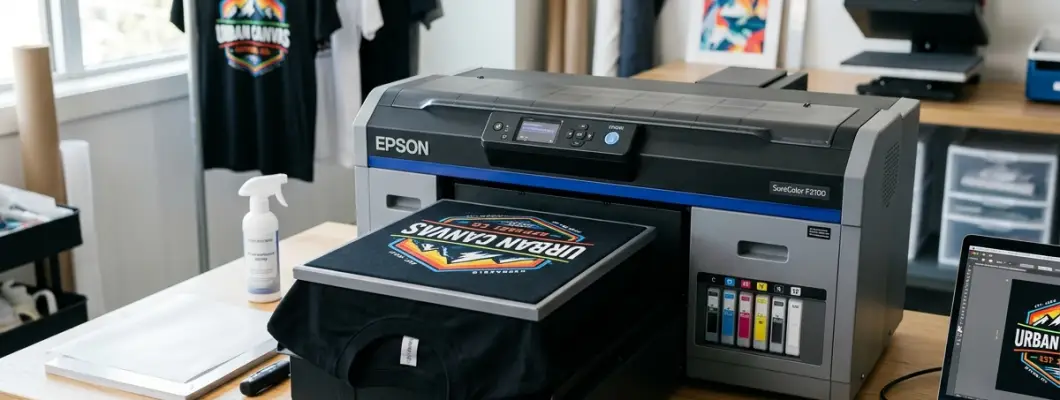
Direct-to-Garment (DTG) printing has emerged as the definitive solution to bridge this gap. By utilizing commercial inkjet technology to spray pigment inks directly onto cotton fibers, custom brands can produce vibrant, photorealistic prints on demand with zero setup times and zero minimum order quantities. In this detailed technology review, we analyze the mechanical systems, cost dynamics, and step-by-step processes required to integrate professional DTG printing into your clothing brand.
The Economics: Reclaiming Profit Margins
For emerging labels, outsourcing shirt printing to a dropshipping provider might seem low-risk. However, these services typically charge $12.00 to $16.00 for printing on a standard cotton shirt. After accounting for ad acquisition costs and shipping fees, your net margin is cut to the bone.
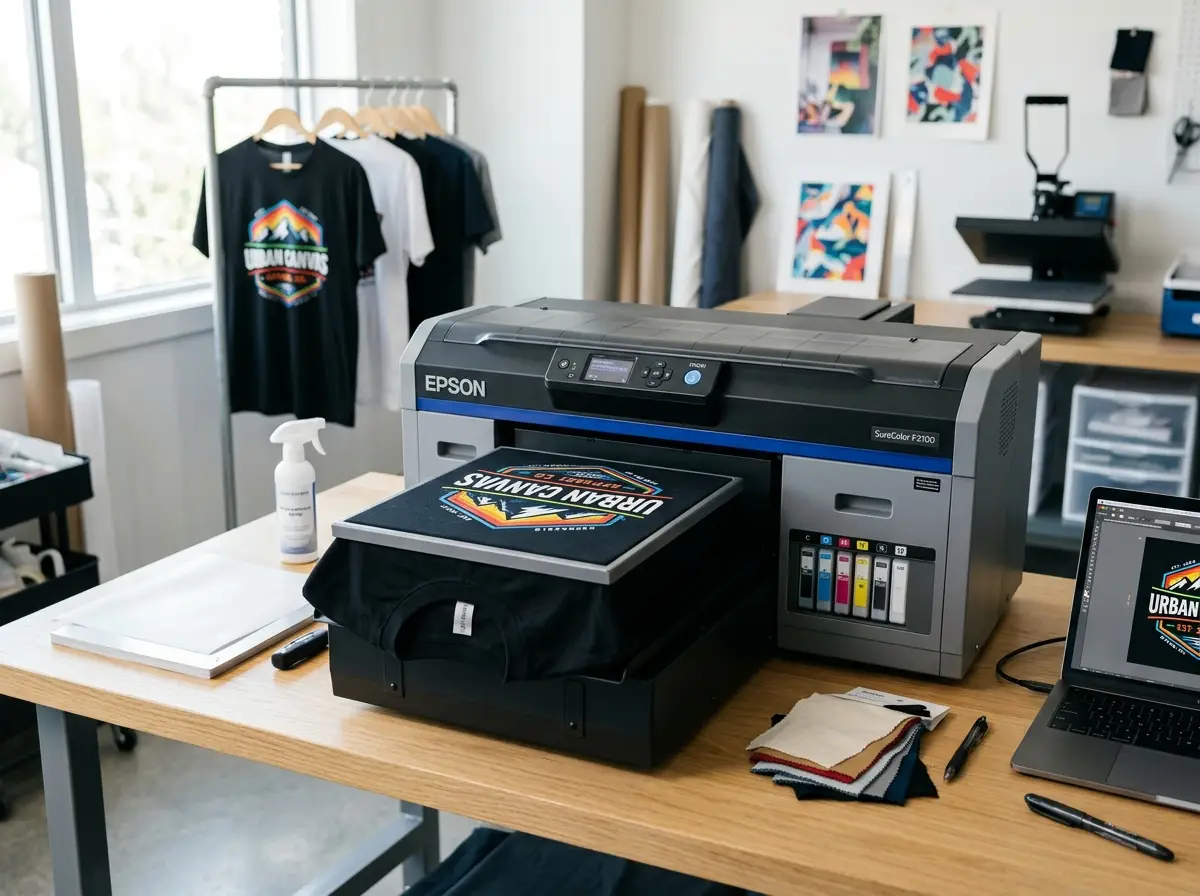
By executing apparel production in-house with a high-resolution A3 direct-to-garment printer, clothing brands regain complete control over pricing and profit margins. Consider the raw cost breakdown: a premium, heavyweight 240GSM cotton blank shirt costs approximately $4.00 to $4.50. The ink cost per printed shirt (CMYK + White underbase) averages $0.90, and pretreatment liquid costs $0.30. The total manufacturing cost per premium shirt is under $6.00, yielding a gross profit of over 75% when sold at standard retail prices.
Outsourced Dropshipping
Charges $14.00 - $18.00 per shirt, takes 5 to 7 days to dispatch, and leaves you with a tiny $2.00 net margin. Quality control depends entirely on a third party.
In-House Production
Reduces cost per shirt to $5.70, prints on-demand in under 5 minutes with zero minimums, and retains a massive $20.00+ profit margin per garment.
The Direct-to-Garment Production Workflow
Operating a professional DTG printing system is straightforward but requires adhering to a structured manufacturing cycle. Following these steps ensures high print washability, vibrant colors, and durable fabric texture:
Pretreatment Application
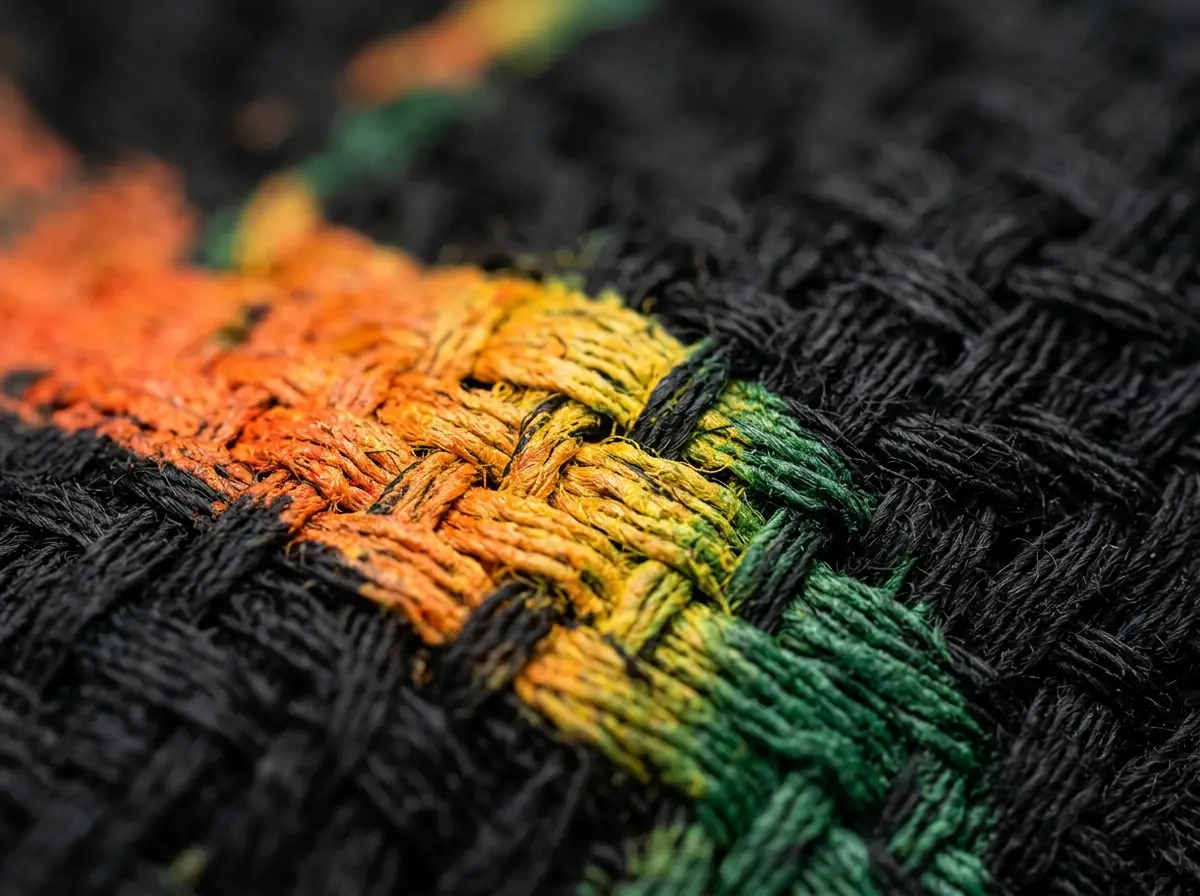
Spray a uniform layer of pretreatment liquid onto the printing area of the garment. For dark cotton shirts, this liquid acts as a chemical primer that prevents the white underbase ink from absorbing into the fabric core, ensuring brilliant white opacity.
Heat Press Flattening
Place the pretreated shirt into a standard flatbed heat press for 30 to 45 seconds at 165°C. This flattens stray fabric fibers, cures the pretreatment liquid, and creates a perfectly smooth, flat canvas for the printhead.
Digital Printing Cycle
Mount the shirt onto the printer platter. The printer's software (RIP software) automatically processes your image, dividing it into a solid white underbase layer and a high-resolution color CMYK layer. The printer sprays ink droplets with micro-accuracy in 2 to 4 minutes.
Final Ink Curing
Return the printed garment to the heat press for a final cure (typically 90 seconds under light pressure). This cross-links the ink polymers with the cotton fibers, ensuring industrial wash durability and preventing fading.
Comparing Technologies: DTG vs. DTF vs. Screen Printing
Choosing the correct custom apparel technology depends on your brand's specific production runs and design requirements. The table below outlines the core functional differences:
| Production Feature | Direct-to-Garment (DTG) | Direct-to-Film (DTF) | Traditional Screen Print |
|---|---|---|---|
| Minimum Order Qty | 1 Unit (On-Demand) | 1 Unit (On-Demand) | 50+ Units (Requires screens) |
| Fabric Feel (Hand-Feel) | Premium soft, fully breathable | Thin polymer film layer feel | Thick ink layer texture |
| Fabric Compatibility | 100% Cotton & high-cotton blends | Polyester, nylon, cotton, canvas | All fabric types |
| Color Complexity | Unlimited (Vibrant gradients & photos) | Unlimited (Vibrant colors) | Limited (1-6 spot colors standard) |
Commercial Features to Look For in a DTG System
When stepping up to custom apparel production, avoid basic DIY conversion kits that lack proper industrial features. Look for these crucial subsystems:
- Active White Ink Stirring & Circulation: White ink containing heavy titanium dioxide will settle and clog nozzles if left stationary. Look for systems that circulate ink continuously to keep printheads functional.
- Automatic Height Adjustment: An integrated infrared height sensor prevents the printbed from hitting the delicate printhead during operation.
- Dual-Printhead Separation: Professional models feature dedicated printheads for white base and color channels, accelerating print cycles.
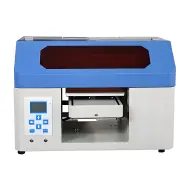
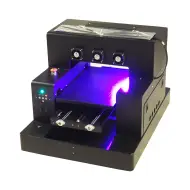
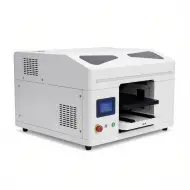
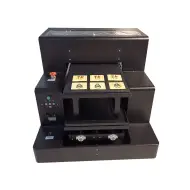
A3 DTG Printer T-shirt Printing Machine
- Authentic high-resolution 1440 DPI printhead
- Continuous white ink circulation & stirring motor
- Smart infrared automatic Z-axis height adjustment
- Dedicated RIP layout & color profiling software
Frequently Asked Questions (FAQ)
What is Direct-to-Garment (DTG) printing and how does it work?
Direct-to-Garment (DTG) printing is a digital textile printing process that sprays specialized water-based pigment inks directly onto cotton fabric using high-precision printheads. The garment is pretreated, flattened on a platen, printed with a digital inkjet printer (including a white underbase and CMYK color layers), and then heat-cured to bind the ink molecules with the cotton fibers.
How durable are DTG prints and how many washes do they last?
Modern commercial DTG prints are highly durable, matching the lifespan of traditional screen printing. A properly pretreated and cured print will easily last 50+ washes before showing any minor fading. Washing garments inside out with cold water and using mild detergents will significantly extend print longevity.
What is the main difference between DTG and DTF (Direct-to-Film) printing?
The core difference is the printing substrate. DTG prints ink directly onto cotton fibers, providing a soft, breathable hand-feel. DTF prints designs onto a special transfer film, which is coated with adhesive powder and heat-pressed onto garments. While DTG is best for 100% cotton apparel, DTF is compatible with polyester, nylon, and sport blends.
Is it necessary to use pretreatment liquid for DTG printing?
Yes, pretreatment is mandatory for dark fabrics and highly recommended for light fabrics. On dark garments, it prevents the white underbase ink from soaking into the fabric fibers, acting as a chemical barrier that keeps colors bright and opaque. On light shirts, it enhances wash durability and color vibrancy.
Can you print on polyester or blended fabrics with a DTG printer?
DTG printing is optimized for natural fibers like 100% cotton, organic cotton, linen, and canvas. While it can print on high-cotton blends (e.g. 80/20 cotton-poly), printing on 100% polyester is not recommended because synthetic fibers repel water-based inks, resulting in bleeding, dye migration, and poor wash fastness.
How much does it cost in raw materials to print a t-shirt in-house?
Printing a standard A3-sized graphic in-house costs between $1.00 and $1.50. This includes approximately $0.80 to $1.00 in raw CMYK and white inks, and $0.20 to $0.30 in pretreatment liquid. This is significantly cheaper than outsourcing, which costs $12.00+ per shirt.
Is a DTG printing business profitable for a home-based small business?
Yes, a custom DTG print setup is highly profitable. Because raw manufacturing costs are under $6.00 (blank shirt + ink + pretreatment) and custom graphic tees retail for $25.00 to $35.00, small business owners retain a 75%+ profit margin, allowing for full equipment payback in less than 90 operating days.
Why does a DTG printer require white ink circulation or stirring?
White textile ink contains titanium dioxide, a heavy pigment that settles to the bottom of ink lines when stationary. Without a continuous white ink circulation or active stirring motor, the settled pigment will clog printhead nozzles, leading to poor print quality and printhead failure.
What is RIP software and why is it required for DTG printing?
RIP (Raster Image Processor) software is the translation bridge between digital graphics files (PNG, PSD) and the printer. It converts image pixels into precise print commands, handles color profiling, calculates ink usage, and creates the separate white ink underbase and color channels.
Can you pre-treat garments in advance and store them?
Yes, garments can be pretreated and heat-pressed in advance. They can be stored in a dry, dust-free environment for up to 3 to 6 months. For optimal print quality, press the stored garment for 5 seconds to remove any reabsorbed ambient moisture immediately before printing.