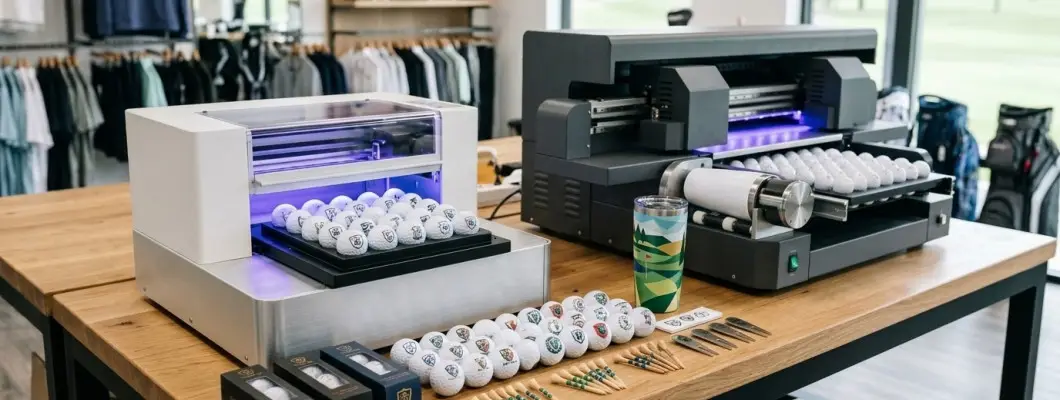
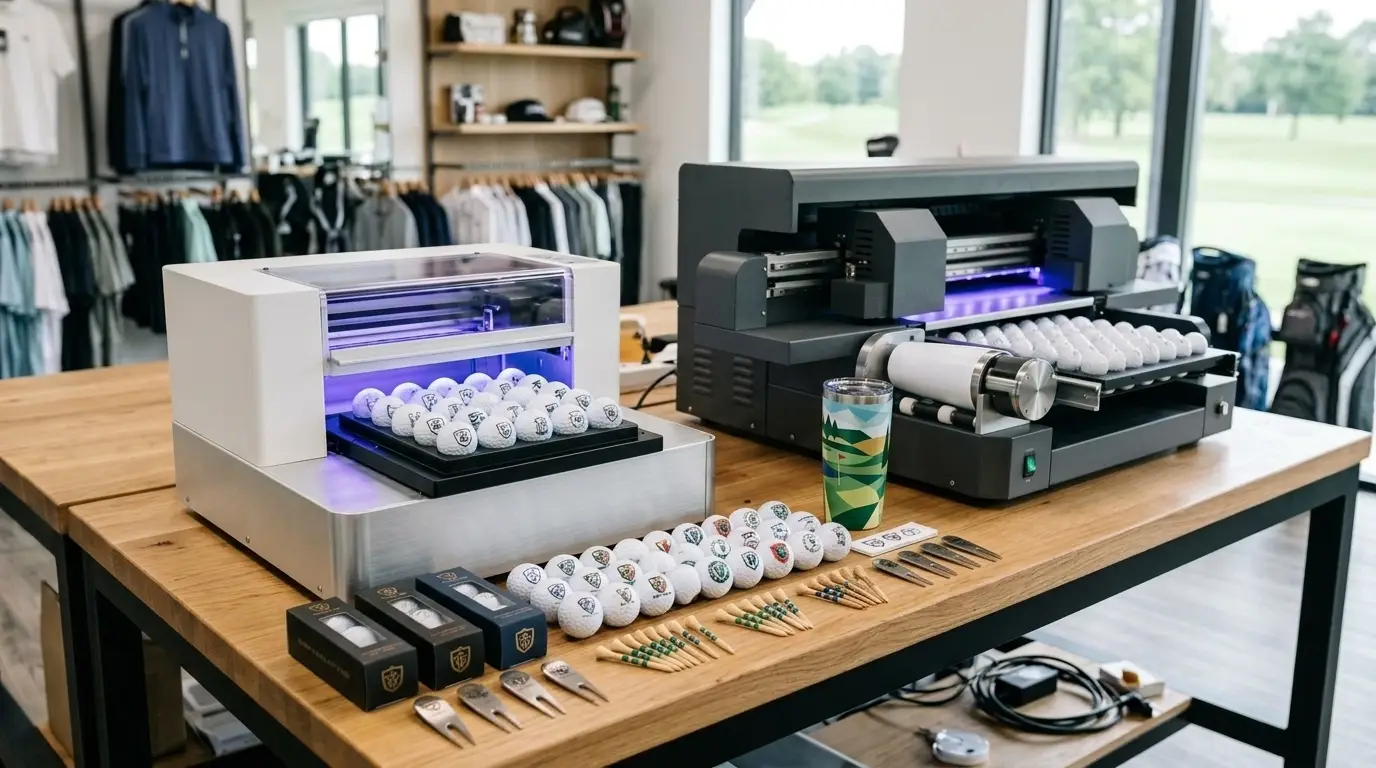
The 2026 quick buyer's verdict: Skip cheap single-ball thermal inkjet gadgets ($300–$800), which use water-soluble dye cartridges that smudge in wet grass and lack white ink. For dedicated golf ball customization, pro shops, and Etsy gift studios under a $2,200 budget, choose a Desktop A4 UV Golf Ball Printer with a 20-ball CNC jig (400–600 balls/hr). If you also want to print custom golf tumblers, water bottles, and 3D embossed gift trophies on the same machine, invest in a Multifunction Rotary + Flatbed UV Golf Printer ($1,900–$2,800) or a Dual-Head Commercial UV Flatbed ($3,200+) for high-volume corporate tournaments.
Personalized golf balls remain one of the highest-margin custom promotional products in 2026—combining a blank ball wholesale cost of $0.45 to $1.20 with custom retail prices of $48 to $85 per dozen. Yet buyers researching their first golf ball printing machine quickly encounter confusing claims around DPI ratings, pad presses versus UV LED curing, single-head versus dual-head speed, and curved-surface focus limits. This step-by-step buyer's guide gives you an engineering checklist to invest wisely the first time.
1. Understanding the 4 Types of Golf Ball Printing Machines in 2026
Before comparing individual model numbers, every buyer must understand the four distinct printing technologies marketed for golf balls—and why commercial studios overwhelmingly standardize on UV LED flatbed systems:
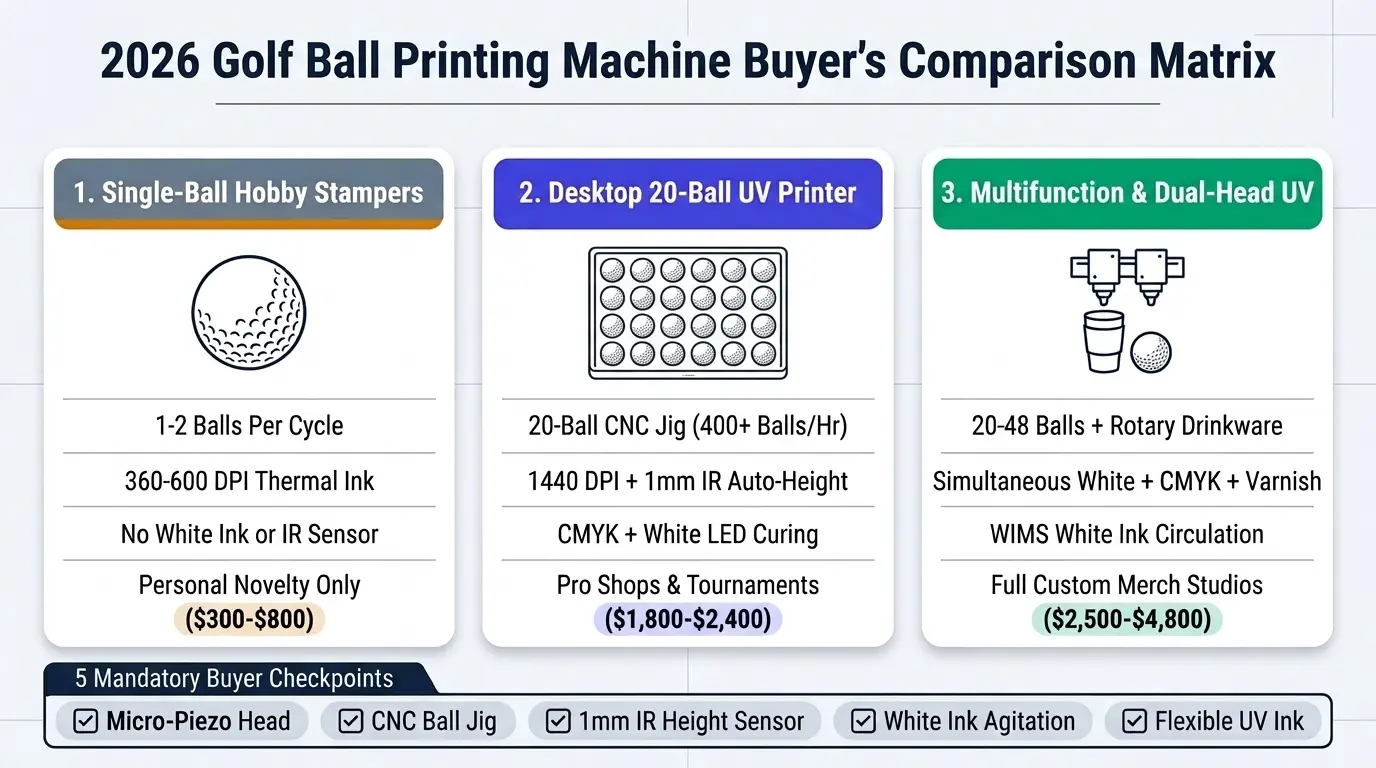
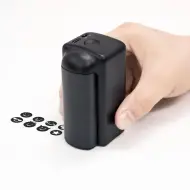
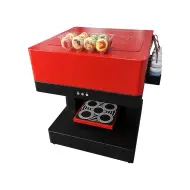
1. Single-Ball Hobby Inkjet Stampers ($300–$800)
Verdict: Avoid for commercial sales. Uses disposable HP-style office dye/solvent cartridges printing 1 ball at a time. No white ink channel, high per-milliliter cartridge cost, and poor abrasion resistance without manual spray clearcoating.
2. Traditional Cliché Pad Presses ($1,500–$6,000)
Verdict: Single-color bulk factories only. Transfers 1 or 2 spot Pantone colors via silicone pad. Requires etching metal plates for every logo, toxic solvent thinners, and 45 minutes of setup—unsuitable for full-color photos or 1-dozen custom orders.
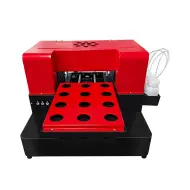
3. Desktop 20-Ball UV LED Flatbed ($1,800–$2,400)
Verdict: Best entry ROI for pro shops & gift sellers. Prints full-color CMYK + White directly onto 20 golf balls simultaneously in 90–150 seconds with instant UV LED curing, zero plate fees, and variable personalization per ball.
4. Multifunction & Dual-Head UV Systems ($2,200–$5,500+)
Verdict: Best all-in-one merch studio platform. Adds a dedicated Gloss Varnish channel, motorized 360-degree rotary chuck for insulated tumblers, or larger A3 / 40x60 cm beds holding 48 to 100+ golf balls per cycle.
2. The 6 Non-Negotiable Hardware Specs to Check Before Buying
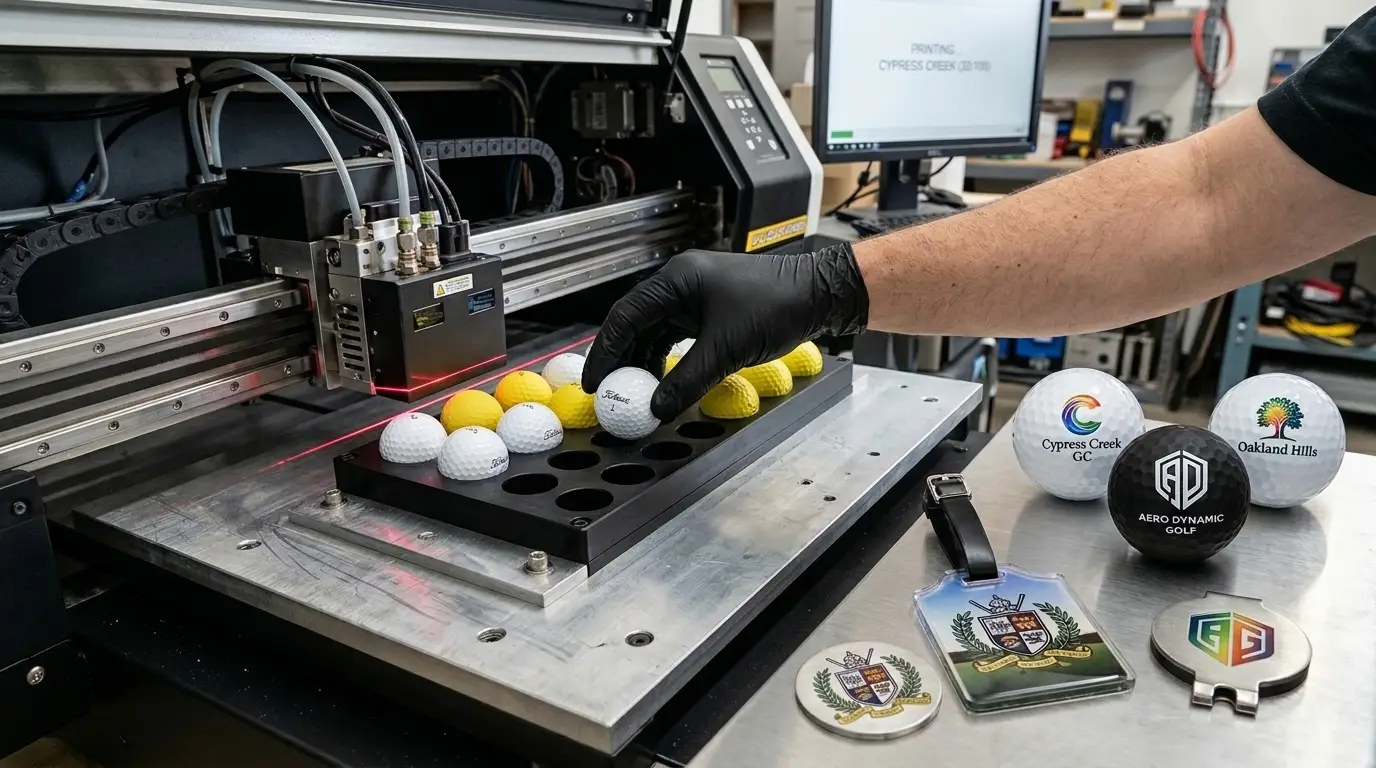
Two desktop UV printers can look nearly identical in exterior photos while delivering drastically different print sharpness and maintenance reliability. Evaluate every prospective supplier against these six engineering benchmarks:
High-Drop Micro-Piezo Printhead (Epson XP600 / TX800 / i3200)
Because a 42.67 mm golf ball curves downward by 1.2 mm across a 20 mm logo crown, the printhead must fire droplets cleanly across a 1.0 to 2.5 mm air gap without overspray misting. Insist on industrial Epson micro-piezo heads delivering 3.5–5 picoliter variable droplets up to 1440 DPI—and verify replacement head pricing ($180–$320 for XP600/TX800 vs. $1,100+ for proprietary heads).
Precision CNC-Machined Multi-Ball Fixture (Jig)
Flimsy 3D-printed plastic trays warp over time and allow balls to roll slightly during carriage acceleration, ruining registration between white underbase and color layers. Ensure your machine ships with a rigid, precision-milled 20-cavity (or 48-cavity) jig calibrated specifically to regulation 42.67 mm spheres with matching RIP Illustrator/CorelDRAW alignment templates.
Infrared Laser Auto-Height Detection & Head-Strike Protection
Manual Z-axis handwheels invite costly head strikes if a ball isn't seated flush in its cavity. An optical infrared beam sensor automatically scans the highest ball apex and sets the Z-table to an exact 1.0 mm nozzle clearance in seconds, protecting your printhead and guaranteeing uniform dot gain across all 20 positions.
Active White Ink Circulation & Stirring System (WIMS)
High-visibility neon yellow, matte orange, pink, and black golf balls require a dense titanium-dioxide ($TiO_2$) white ink underbase so corporate colors pop vibrantly. Without automated tank stirring and peristaltic line circulation, heavy white pigment settles within 48 hours and clogs dampers.
Water/Air-Cooled 395 nm UV LED Lamp + Flexible Ink Compatibility
Golf balls compress up to 25% upon 100+ MPH driver impact and warp if exposed to high-heat mercury lamps. Cold-cure 395 nm UV LED lamps keep Surlyn and urethane covers cool while polymerizing neutral or flexible urethane-acrylate UV inks (100%–180% elongation) for 65+ strike chip-free durability.
Expandable Z-Clearance, Varnish & Rotary Attachment Options
Tournament organizers rarely buy golf balls alone—they also order custom wooden gift boxes, acrylic trophies, metal divot tools, and 20oz insulated golf tumblers. Choosing a machine with 12–18 cm vertical Z-axis clearance and rotary/varnish support multiplies average order value without buying a second printer.
3. Side-by-Side Comparison: Best Golf Ball Printing Machines by Business Tier
To match your daily order volume and product catalog to the exact right chassis, compare GNFEI's four proven UV golf printing configurations for 2026:
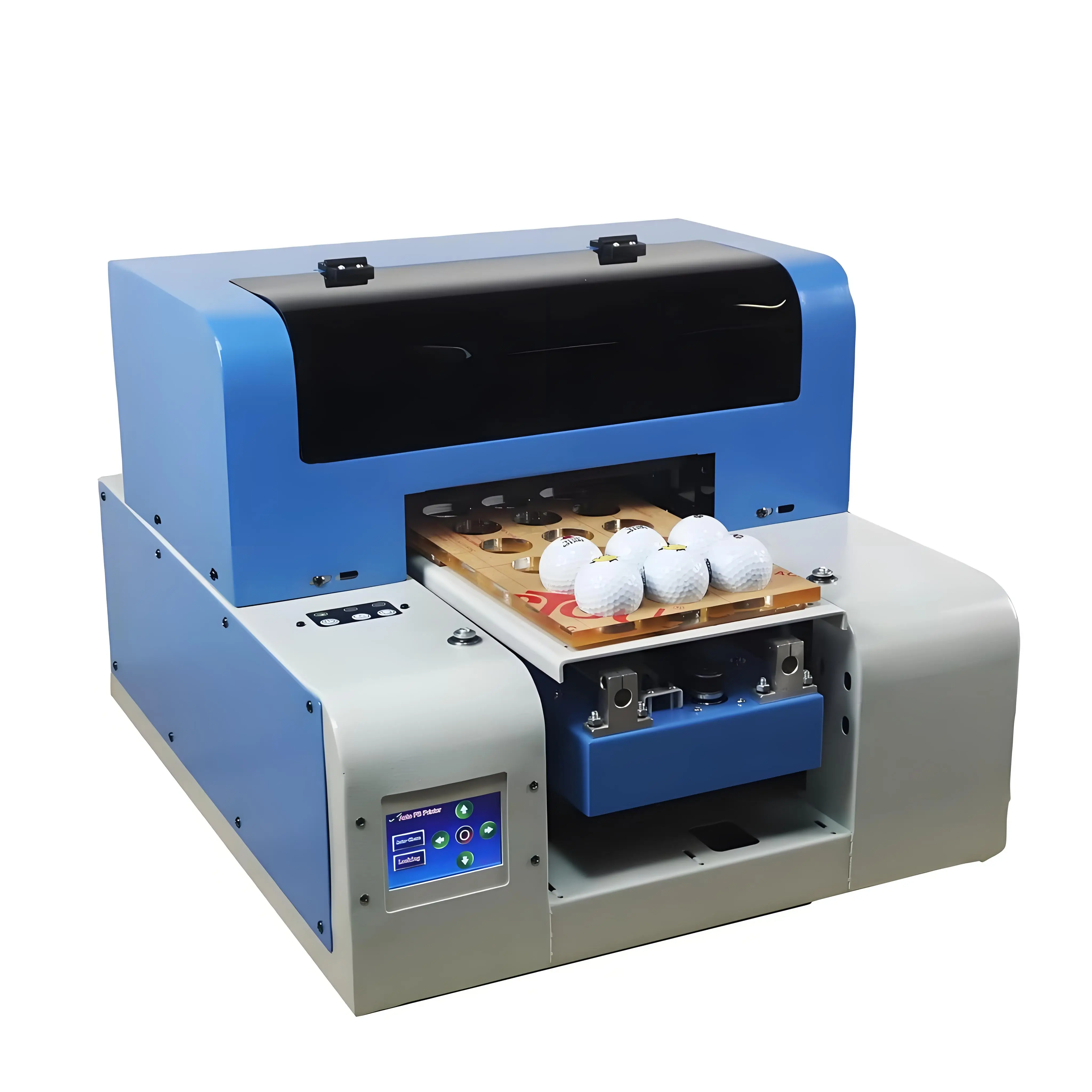
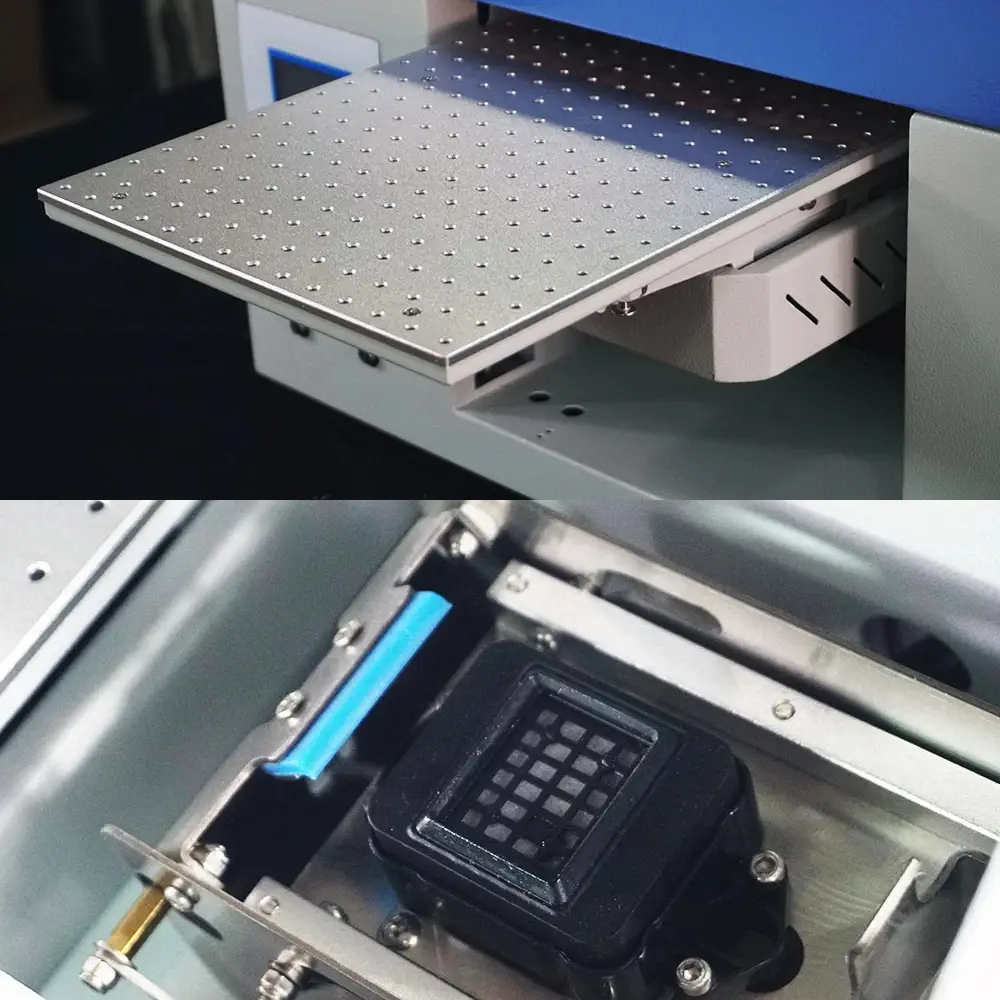
GNFEI F60V4 Multifunction & F23V4 UV Golf Ball Printers
Whether you choose the dedicated F23V4 Desktop Golf Ball Printer or the versatile F60V4 Multifunction UV Printer with cylinder bottle rotation and 3D spot varnish, both systems ship turnkey with our 20-ball precision jig, RIP software, and 1-on-1 engineer onboarding.
- Turnkey 20-Ball CNC Jig: Print 20 personalized golf balls in 90–150 seconds with 0.05 mm accuracy
- CMYK + White + Gloss Varnish: Vivid opacity on yellow/black balls plus raised trophy textures
- Flatbed + 360° Rotary Versatility: Expand into golf tumblers, bag tags, wooden gift boxes & tees
- Ultra-Low Ink Consumables: $0.03–$0.06 UV ink cost per custom ball with 100+ MPH chip resistance
4. True Cost Per Ball & 2026 Return-on-Investment Breakdown
Smart equipment buyers calculate total landed operating costs—including daily maintenance ink flushes, adhesion primer wipes, dampers, and packaging—before signing a purchase order. Here is the realistic unit math on a 1-dozen custom golf ball box:
Total UV Ink + Primer Cost
A 20 mm full-color logo uses ~0.04 ml of UV ink ($0.03–$0.04 per ball at $75/liter bottle pricing) plus $0.005 in IPA and adhesion promoter.
Net Profit Per Custom Dozen
Sourcing wholesale 2-piece balls at $7.20/dozen (or brand-name tour balls at $36/dozen) and selling personalized gift dozens at $39 to $79 yields 65%–80% gross margins.
Full Hardware Break-Even
Fulfilling just two mid-sized 36-dozen charity scramble tournaments—or 3 personalized gift boxes per day on Etsy/Shopify for 25 days—pays off a $2,200 printer completely.
5. Four Costly Golf Ball Printer Buying Mistakes to Avoid
- Mistake #1 — Expecting Edge-to-Edge 360° Full-Wrap Prints Without Reality Checks: Because a golf ball is a true sphere rather than a straight cylinder, flatbed UV printers produce crisp graphics inside an 18–22 mm diameter crown per pass (up to ~24 mm max before curvature blur begins). If a client wants logos on opposite poles, simply flip the balls 180 degrees for a quick second pass.
- Mistake #2 — Buying a Converted Paper Printer Without White Ink Stirring: Unmodified DIY conversions lack peristaltic capping stations and white ink agitation, leading to clogged printheads if left idle over a long weekend. Always verify built-in white ink circulation and wet-capping moisturizing seals.
- Mistake #3 — Ordering Rigid Acrylic UV Ink Instead of Neutral/Flexible Ink: Rigid UV ink cracks when a golf ball compresses 25% against a driver clubface. Specify neutral (semi-flexible) or flexible urethane-acrylate UV ink plus golf ball adhesion promoter when ordering your starter ink kit.
- Mistake #4 — Overlooking RIP Software Dongles & After-Sales Support: Ensure your machine includes licensed RIP software (such as AcroRIP / RIIN / Maintop) capable of simultaneous White + Color + Varnish spot channel generation, backed by live English video technical support and fast DHL spare-part availability.
Frequently Asked Questions (FAQ)
Get Matched With the Ideal 2026 Golf Ball Printer Package
Tell our engineering team your monthly ball volume and accessory goals—we will recommend the exact GNFEI UV model, send live custom logo sample videos, and provide factory-direct turnkey pricing.