
Navigating the Future of 3D Printing: Scaling Challenges for 2025
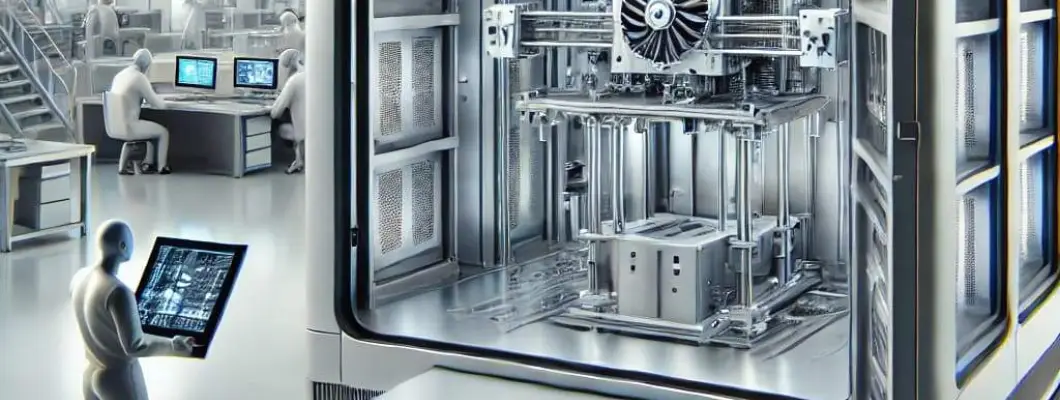
Imagine a bustling startup, filled with the hum of machines and the scent of innovation. This company has been riding the crest of the 3D printing wave, positioning itself at the intersection of creativity and commerce. Yet, as 2025 dawns, the horizon isn't as clear as it once was. Scaling hurdles loom large for businesses eager to capitalize on the best 3D printers coming to market.
Understanding Scaling Hurdles
The allure of 3D printing is undeniable—customization, speed, and cost-efficiency all wrapped into one. However, scaling these operations to meet growing demand presents unique challenges. One must consider various factors: the ability of printers to handle increased loads, the adaptability of software systems, and the necessity for skilled technicians to manage more complex workflows.
Balancing Load Capacity and Efficiency
Scaling requires a keen understanding of load capacity. A printer promising high-speed production might falter when pushed to its limits. Businesses must scrutinize specifications, ensuring their chosen model can sustain performance without compromising quality.
Adapting Software for Seamless Integration
Software systems must evolve alongside hardware advancements. The integration of AI and machine learning algorithms is anticipated to revolutionize operations by predicting maintenance needs, optimizing production schedules, and even suggesting design modifications for efficiency.
Investing in Skilled Technicians
The human touch remains critical. As 3D printing technology becomes more sophisticated, companies will need technicians with specialized knowledge to ensure printers not only function optimally but also innovate continuously.
Quality Trade-offs in High-Volume Production
While high-volume production is tempting, it can often lead to quality trade-offs. Businesses should implement stringent quality control measures to retain the integrity of their products amidst rapid scaling.
Real-World Case Studies
Case Study 1: The Expanding Startup
A startup known for its intricate designs faced scalability issues when demand surged. They invested in advanced printers capable of high-speed production but soon realized their software systems couldn't keep pace, leading to delays. By integrating predictive analytics, they streamlined operations and improved output consistency.
Case Study 2: The Traditional Manufacturer
A manufacturer transitioning from conventional methods to 3D printing struggled with workforce transformation. They retrained employees, emphasizing the value of precision and creativity, which led to a 30% increase in production efficiency.
Case Study 3: The High-Volume Factory
This factory expanded its 3D printing capabilities but faced quality control issues. Implementing a dual-layer quality assurance process helped maintain standards while increasing throughput.
Technical FAQ
- How do I ensure printers maintain performance under increased load? Regular maintenance checks and performance monitoring systems are essential for sustaining high efficiency.
- What software integrations are necessary for scaling operations? Invest in adaptive software solutions that can grow with hardware advancements, including AI-enhanced systems.
- How can I avoid quality trade-offs at high volumes? Implement robust quality control frameworks and continuously monitor production standards.
- Is workforce transformation necessary for 3D printing success? Yes, training programs focusing on new skills and technologies are crucial to keep pace with evolving demands.
- How do I prepare for future technology shifts? Stay informed on industry trends and invest in adaptive technologies that offer long-term scalability.
Strategic Summary
Positioning your business at the forefront of the 3D printing revolution in 2025 is a strategic endeavor requiring foresight and innovation. By addressing scaling hurdles head-on—balancing load capacity, adapting software, transforming your workforce, and maintaining quality—your company can thrive amidst this technological evolution. The key lies in leveraging cutting-edge solutions while nurturing the human element that drives innovation. Embrace these challenges as opportunities to redefine what's possible in 3D printing.
Advanced Technical Insights & Application Analysis
As 3D printing technology evolves, numerous challenges are expected to emerge by 2025, particularly for businesses aiming to scale their operations efficiently. One key advancement driving industry growth lies in the optimization of UV curing techniques. UV-based 3D printing has demonstrated exceptional capabilities in achieving faster curing times and superior material bonding, allowing manufacturers to expedite production while maintaining top-tier quality. This innovation significantly reduces downtimes and boosts overall operational throughput, providing a competitive edge for enterprises in high-volume environments.
Another critical aspect of 3D printing advancements is the integration of advanced ink adhesion technologies. Enhanced ink composition and substrate compatibility have made it possible to achieve higher precision in complex designs without compromising durability or aesthetics. These breakthroughs are especially advantageous for industries like custom manufacturing and design prototyping, where detail and reliability are non-negotiable. Combined with AI-predictive modeling systems, these advancements ensure optimal workflow efficiency while addressing the inherent challenges of 3D printing technology in 2024 and 2025.
Investors and business stakeholders are increasingly recognizing the B2B investment return potential of 3D printing technology when paired with adaptive software ecosystems. Multi-layered production tracking systems, powered by machine learning algorithms, provide actionable insights into resource utilization and cost forecasting. Businesses not only benefit from streamlined operations but also gain the ability to scale strategically while preemptively mitigating risks associated with production bottlenecks or quality degradation during periods of intense demand.
Frequently Asked Questions
- What makes UV curing a game-changer for 3D printing? UV curing dramatically reduces curing time and enhances bonding strength, enabling quicker production cycles while maintaining high material integrity.
- How can advanced ink adhesion technology address quality challenges? Improved ink compositions ensure accurate, durable prints, even when working on intricate designs or challenging substrates.
- Why is AI integration crucial for scaling in 2025? AI systems automate production scheduling, forecast maintenance needs, and optimize workflows, ensuring seamless scalability and reduced operational disruptions.
- What industries benefit the most from evolving 3D printing innovations? Custom manufacturing, prototyping, automotive, aerospace, and healthcare are among the top sectors reaping significant benefits from these advancements.
- How can businesses maximize ROI while adopting cutting-edge technologies? Aligning investments with adaptive systems, quality control measures, and expert workforce training will maximize scalability and long-term profitability.