What is a Coffee Latte Printer and How Does It Work? | GNFEI
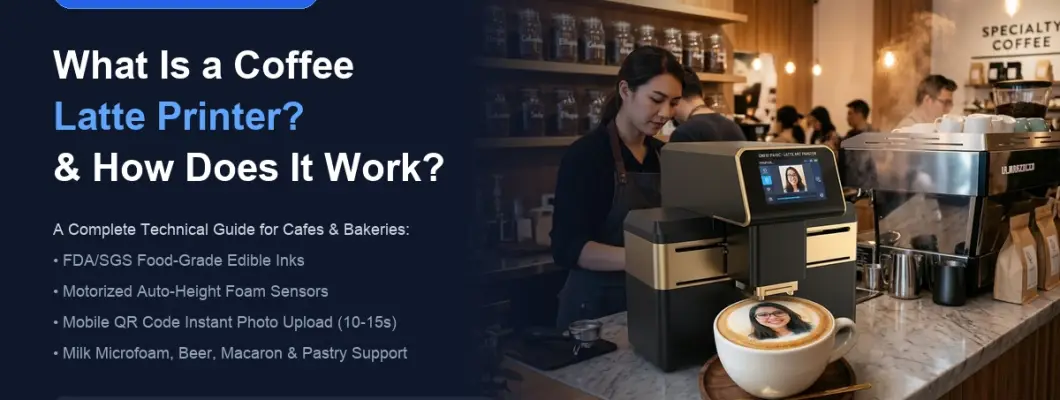
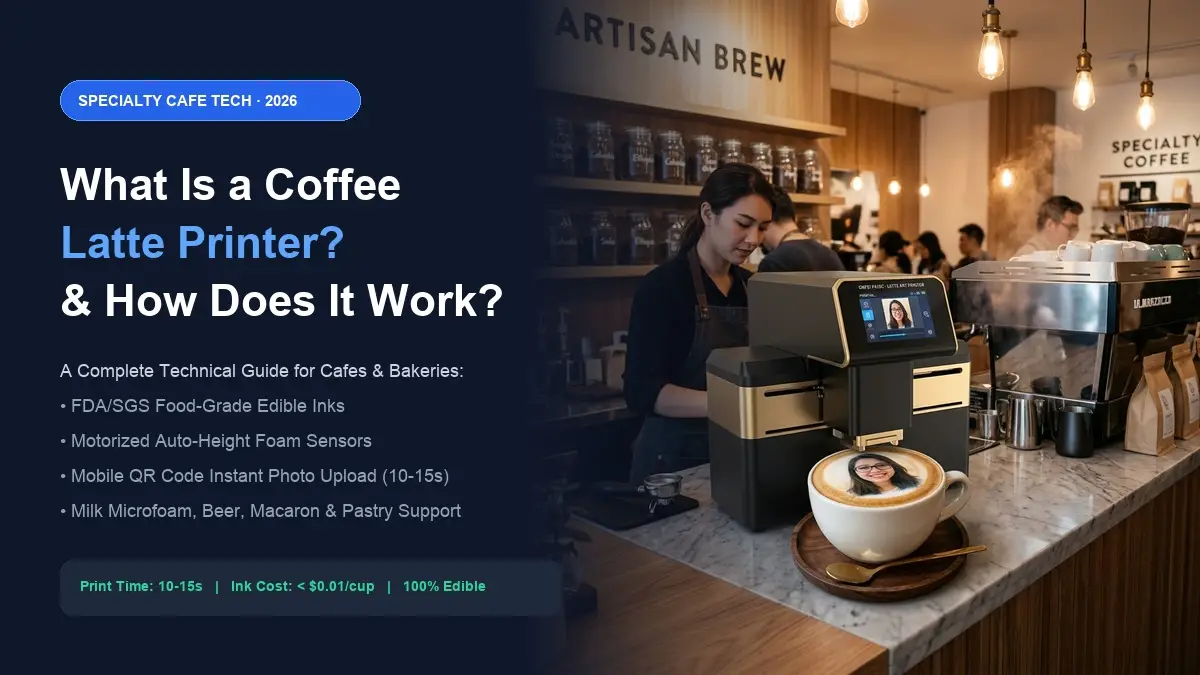
In an era where coffee culture is driven by visual storytelling, social media sharing, and experiential dining, traditional freehand latte art hearts and rosettas are being elevated to extraordinary heights. Enter the coffee latte printer—an ingenious fusion of non-contact digital inkjet engineering and food-grade biotechnology. Within just 10 to 15 seconds, these innovative machines can reproduce high-resolution customer selfies, intricate brand logos, holiday graphics, and personalized messages directly on top of frothed milk, beer foam, or freshly baked desserts. This technical guide explores how latte printers work, the chemistry behind certified edible inks, milk foam physics, and how commercial cafes and bakeries are turning customized drinks into lucrative profit engines.
1. What Is a Coffee Latte Printer? The Core Mechanics
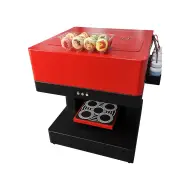
A coffee latte printer (often called a latte art machine, edible selfie printer, or food beverage printer) is a compact, digital non-contact printing system designed specifically for culinary use. Instead of using traditional physical stencils or powdered cocoa dusting, the printer secures a filled beverage cup on an elevator tray, moves high-precision printhead nozzles across the foam surface, and ejects microscopic droplets of food-grade edible coloring to form vivid images.
The defining characteristic of modern latte art printing is non-contact deposition. Because hot milk foam and cold brew creams are fragile colloidal suspensions, any physical contact from a stamp or mechanical arm would immediately deflate the air pockets and collapse the foam. By maintaining a uniform 2mm to 3mm air gap between the nozzle plate and the foam, the printer creates stunning visual artwork without disturbing the structural integrity of the crema.
Motorized Lift Platform
Automated stepper motor tray that accommodates cups and glasses from 50mm espresso cups to 180mm tall travel mugs.
Optical Height Sensor
Dual infrared sensors detect the exact surface elevation of the foam, stopping upward travel at the precise 2-3mm focal clearance.
Food-Safe Inkjet Cartridge
Sanitary cartridge filled with certified edible coloring delivering 600 to 1200 DPI resolution in full CMYK or coffee-monochrome.
2. Step-by-Step Breakdown: How Does the Coffee Printing Process Work?
Commercial latte art printers are engineered to seamlessly fit into fast-paced cafe workflows without requiring baristas to possess graphic design skills. The end-to-end operation from customer order to finished beverage takes less than 30 seconds:
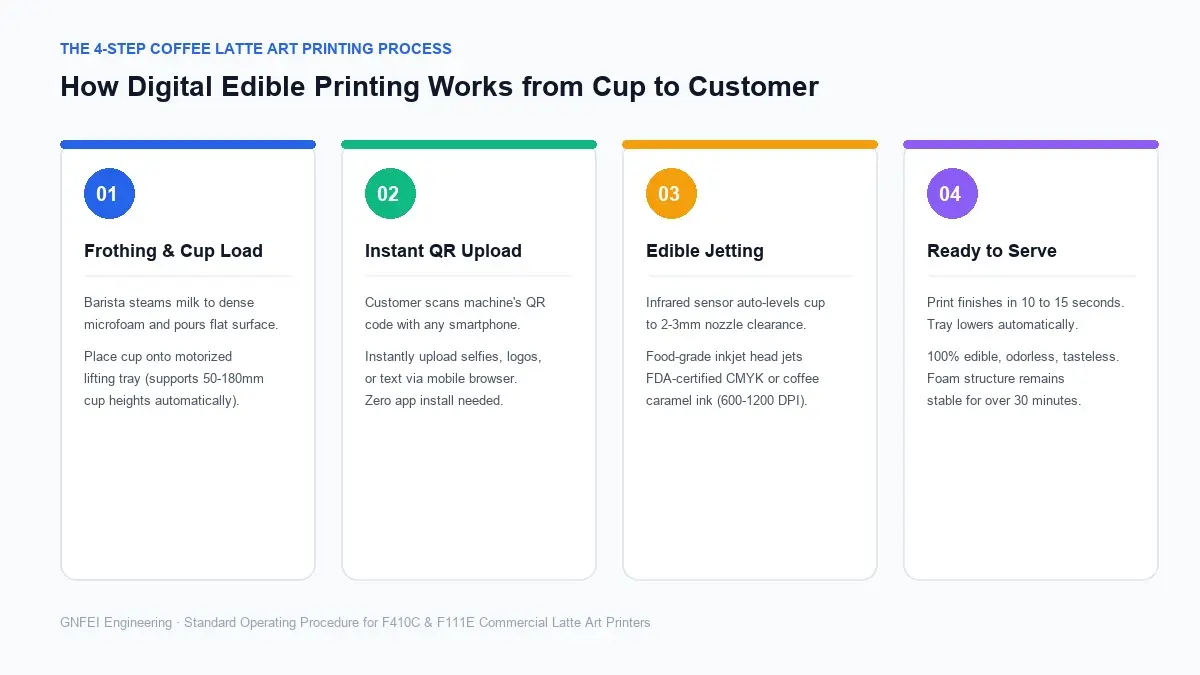
Step 1: Frothing & Cup Loading
The barista brews the espresso and steams milk to a velvety microfoam consistency. The milk is poured into the cup right up to the brim to establish a smooth, flat surface. The cup is then placed onto the printer's motorized circular tray.
Step 2: Instant Smartphone QR Code Image Upload
The customer scans the dynamic QR code displayed on the printer's screen with their mobile camera. A lightweight web portal opens instantly where the customer uploads a selfie, pet photo, logo, or custom message. No app installation or sign-up is required.
Step 3: Auto-Elevation & High-Precision Edible Jetting
Tapping 'Print' initiates the automated cycle. The elevator tray smoothly lifts the cup until infrared sensors align the foam surface with the printhead. The inkjet carriage sweeps across the cup, depositing food-grade edible dye droplets at up to 1200 DPI in 10 to 15 seconds.
Step 4: Immediate Service & Social Media Engagement
The tray lowers automatically, and the barista hands the personalized drink to the customer. Customers immediately photograph and share their photo latte on Instagram and TikTok, driving organic word-of-mouth foot traffic back to the cafe.
3. The Science of Edible Inks: Food Safety, Taste & Certification
The most critical question for both cafe owners and health inspectors is: "What is the ink made of, and is it completely safe to consume?"
Unlike industrial solvent or UV inks that form chemical polymer plastics, edible inks are classified as consumable food additives. They are composed entirely of pure ingredients certified by international food safety bodies:
Edible Ink Formulation & Regulatory Compliance
Commercial edible inks utilize deionized water (carrier base), food-grade propylene glycol and vegetable glycerin (humectants that prevent nozzle drying), and FDA/EFSA-certified food dyes (such as FD&C Yellow 5, Red 40, Blue 1, or natural caramel colorings for monochrome coffee art). GNFEI edible ink cartridges undergo strict SGS toxicity and microbiological testing, certifying they are 100% non-toxic, allergen-free, vegan, kosher, and halal compliant.
4. Foam Physics & Substrate Compatibility: What Can You Print On?
The visual fidelity and sharpness of a coffee print depend heavily on the surface tension and bubble diameter of the receiving matrix. When ink drops strike the foam, they must rest on top of the air-liquid interface without excessive dot gain (spreading) or premature absorption:
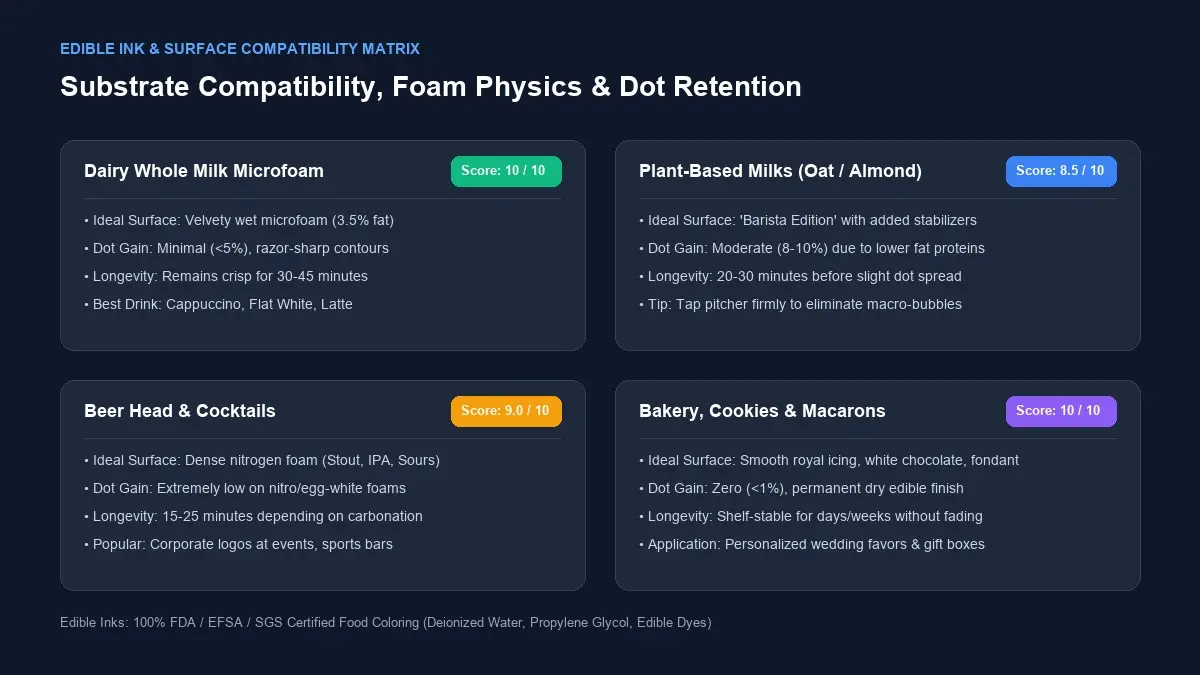
| Substrate / Medium | Print Quality Score | Image Longevity | Barista Preparation Tip |
|---|---|---|---|
| Whole Dairy Milk (3.5% Fat) | 10 / 10 (Gold Standard) | 30 - 45 Minutes | Steam to 65°C with glossy microfoam, groom large bubbles before printing. |
| Barista Oat / Soy Milk | 8.5 / 10 (Excellent) | 20 - 30 Minutes | Use specialized barista editions containing dipotassium phosphate stabilizers. |
| Nitro Cold Brew & Beer Heads | 9.0 / 10 (Very High) | 15 - 25 Minutes | Dense nitrogen bubbles offer exceptional clarity for pub logos and corporate events. |
| Macarons, Cookies & Fondant | 10 / 10 (Flawless) | Permanent (Shelf-stable) | Place flat on cookie tray adapter; ink dries completely on solid royal icing. |
5. Commercial Cafe ROI & Unit Economics: Why It's a Profit Engine
Beyond the novelty factor, commercial food and beverage operators invest in latte art printers because the economics are overwhelmingly favorable. The incremental consumable cost per drink is negligible, while the marketing and revenue impact is immense:
Latte Art Printer Return on Investment (ROI) Model
6. Maintenance & Food Hygiene Best Practices
Because the printer operates in close proximity to ready-to-consume food and beverages, hygiene and printhead care are paramount. Following standard food safety SOPs guarantees crystal-clear print quality and complies with health department guidelines:
Automated Shift Start Clean
Execute a 1-touch automated cleaning cycle each morning. This primes the micro-piezo nozzles with fresh edible ink and flushes any micro-bubbles.
Food-Safe Tray Sanitization
Wipe the motorized acrylic cup coaster with food-grade disinfectant wipes between shifts to prevent milk drops and coffee residue accumulation.
Nozzle Protection Clip Installation
If closing the cafe for more than 48 hours, remove the edible cartridge and snap on the silicone sealing clip to prevent humectant evaporation.
Fresh Steam Wand Technique
Ensure baristas purge and wipe espresso steam wands properly to prevent burnt milk flecks from marring the white foam canvas.
7. Recommended Commercial Hardware: GNFEI Color Latte Art Solutions
Whether you operate a high-volume downtown espresso bar, a wedding dessert boutique, or a catering company, GNFEI commercial edible printers deliver rock-solid reliability and rapid throughput:
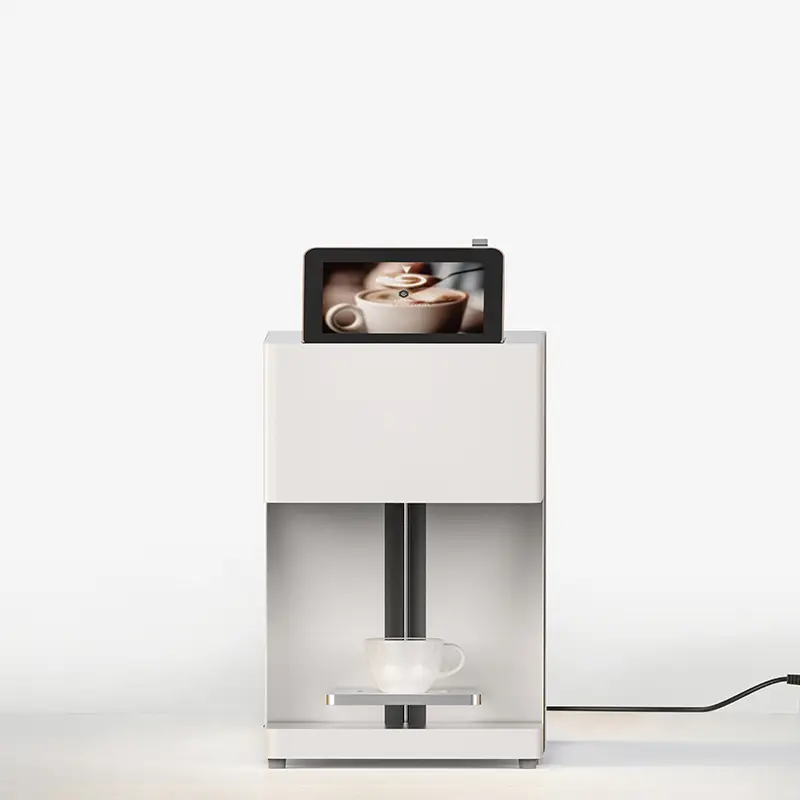
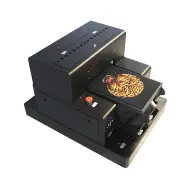
GNFEI F410C Color Version Latte Art Printer
The industry-leading commercial desktop food and beverage printer. Features full-color CMYK edible printing, automated motorized cup elevation, dual optical height sensors, and instant QR-code photo upload.
- Blazing 10 to 15 second print cycle per cup
- Accommodates cup heights from 50mm to 180mm effortlessly
- FDA, EFSA, and SGS food contact safe certified
- Stand-alone Android touchscreen — no PC required
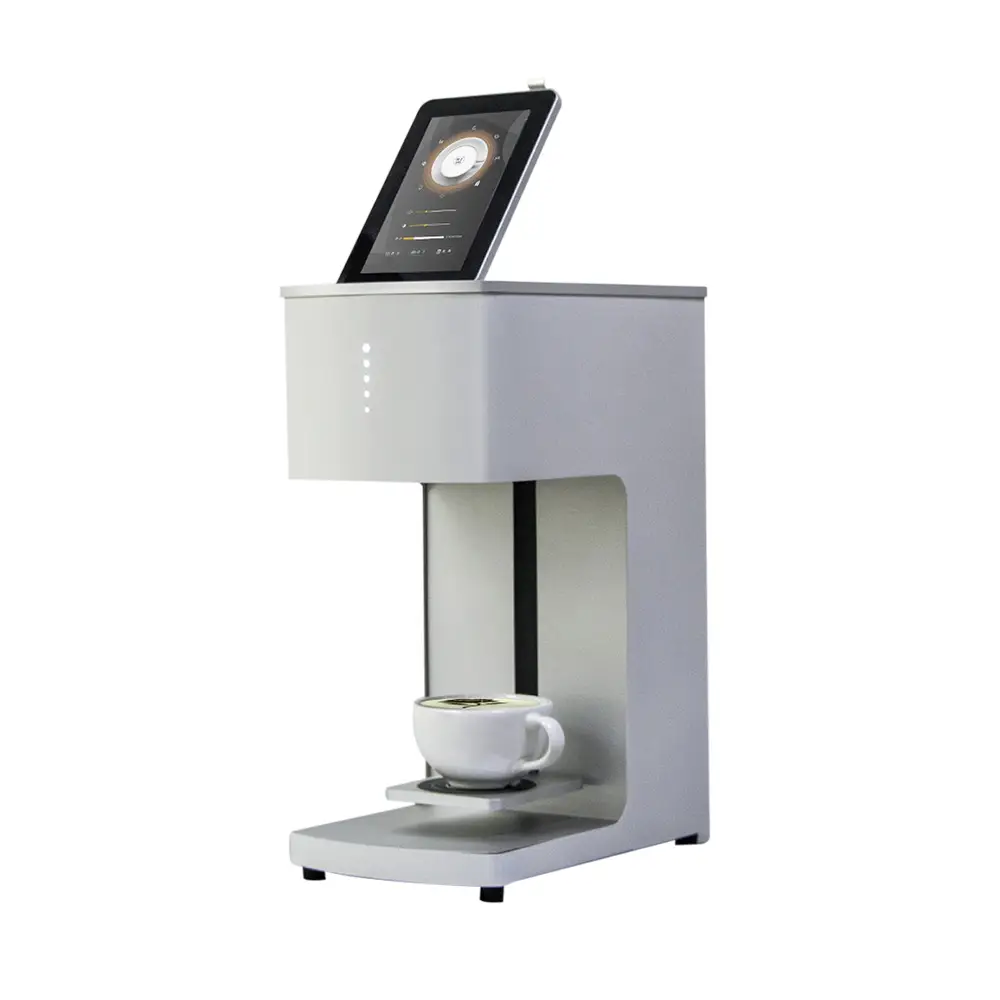
High-Resolution Portrait Latte Art Sample
Examine the intricate facial hair textures, crisp contrast, and flawless skin tones rendered on the foam. The image retains complete clarity without sinking into the coffee base, remaining camera-ready for over 30 minutes.
- Zero taste or scent alteration to specialty espresso
- Extremely low cost: under $0.01 consumable cost per cup
- Supports selfies, brand logos, event slogans, and QR codes
Frequently Asked Questions (FAQ)
Q1. What is a coffee latte printer in simple terms?
A coffee latte printer is a specialized food-grade inkjet machine designed to print high-resolution images, customer selfies, logos, and custom text directly onto the surface of milk foam, coffee crema, beer heads, and bakery goods using certified edible food coloring inks without touching the beverage.
Q2. Does coffee printer ink alter the taste or aroma of the coffee?
No. Certified edible inks used in commercial coffee printers are formulated from natural, food-grade colorants dissolved in purified water and food-grade carrier humectants. They are 100% odorless, tasteless, and gluten-free, ensuring that the original aroma, crema, and flavor notes of specialty espresso and steamed milk remain completely untouched.
Q3. How long does it take to print a photo on a cup of coffee?
A commercial latte art printer takes between 10 to 15 seconds to complete a full-color print on a standard 80mm to 100mm cup diameter. The customer simply scans a QR code with their smartphone, uploads a photo, and the machine automatically detects cup height and completes the print in seconds.
Q4. How long does the printed image last on the milk foam before fading?
On properly steamed microfoam (using whole dairy milk or barista-edition plant milks), the printed image remains sharp and vibrant for 30 to 45 minutes. Because the edible ink droplets float on the surface tension of the dense foam matrix, the artwork does not sink into the liquid until the customer drinks or stirs the beverage.
Q5. Can a coffee printer print on oat milk, almond milk, or cold foam?
Yes. Coffee latte printers work exceptionally well on plant-based milks like oat, almond, and soy, as long as a 'barista edition' milk is used to create tight microfoam. It also prints perfectly on cold brew foam, matcha lattes, beer foam, cocktails, and solid food surfaces like macarons and cookies.
Q6. How much does the edible ink cost per cup of coffee?
Edible ink consumption is remarkably economical. A single cartridge set can produce between 800 to 1,500 full-color latte prints, resulting in an ink cost of less than $0.01 to $0.015 per cup. This delivers exceptional profit margins when offering custom photo lattes as a premium menu upgrade.
Q7. How do customers upload their photos to the printer?
Customers simply scan a machine-generated QR code displayed on the printer's touchscreen using any smartphone camera. This opens a responsive mobile web interface where they can select a photo from their camera roll, crop or add text, and tap 'Send'. No app download or account registration is needed.
Q8. How does the machine adjust to different cup sizes and heights?
Commercial coffee printers like the GNFEI F410C feature an automated motorized lifting platform equipped with infrared optical height sensors. Once a cup is placed on the tray, the platform automatically elevates until the top foam surface is precisely 2 to 3mm beneath the printhead nozzles, preventing collisions and head strikes.
Q9. Is edible ink safe and compliant with health department regulations?
Yes. GNFEI edible inks are 100% compliant with FDA (US Food and Drug Administration), EFSA (European Food Safety Authority), and SGS food safety certifications. They are classified as safe food additives and are approved for use in commercial food and beverage establishments worldwide.
Q10. What daily maintenance is required for a commercial coffee printer?
Daily maintenance requires less than 3 minutes. At the start of each shift, run a quick 1-touch automated nozzle check. At the end of the shift, wipe down the cup tray and capping station with food-safe sanitizing wipes, and install the moisturizing seal clip over the printhead to prevent sugar crystallization in the nozzles.