Hard vs Soft vs Neutral UV Ink: Key Differences & Selection Guide | GNFEI
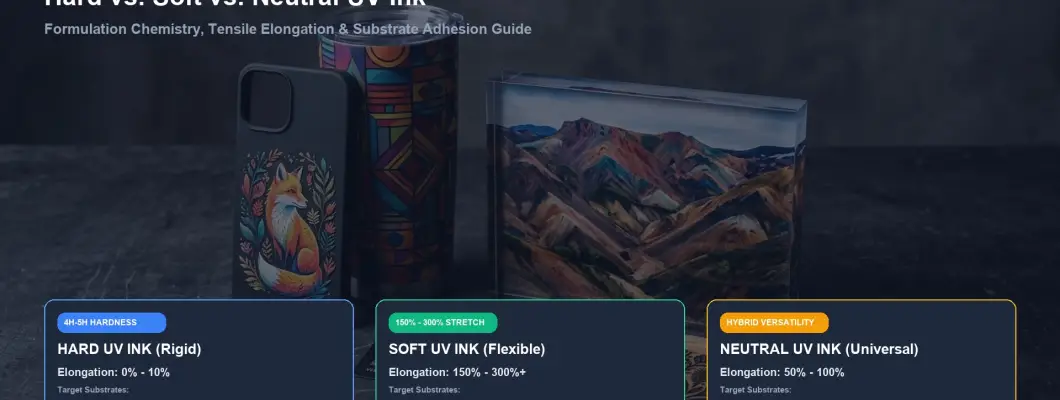
In UV flatbed and rotary printing, choosing the correct UV curable ink is just as critical as selecting the printer itself. While all UV inks appear similar in their liquid state inside the bottle, their cured mechanical performance varies radically. Loading Hard UV Ink onto a flexible TPU phone case will cause the graphic to spiderweb and peel the first time the case is installed. Conversely, spraying Soft UV Ink onto an acrylic award or architectural glass results in an easily scratched, rubbery surface that fails basic fingernail adhesion checks. This engineering guide examines the photopolymerization chemistry, tensile elongation limits, ASTM adhesion standards, and operational guidelines separating Hard, Soft, and Neutral (Hybrid) UV inks.
1. The Chemistry Behind Ink Hardness: Oligomers and Cross-Linking Density
Unlike eco-solvent or water-based inks that dry through solvent evaporation, UV inks consist of 100% solid active components: photoinitiators, monomers, oligomers, and finely milled organic pigments. When exposed to high-intensity 395nm UV LED radiation, photoinitiators decompose into free radicals, triggering near-instantaneous chain-growth photopolymerization.
The decisive factor that dictates whether an ink cures as rock-hard acrylic or stretchy elastomer is the functionality and molecular weight of its oligomer backbone:
Hard UV Ink Chemistry
Formulated with high-functionality (tri- and tetra-acrylate) short-chain oligomers. Polymerization yields an extremely dense, compact 3D cross-linked crystal-like grid.
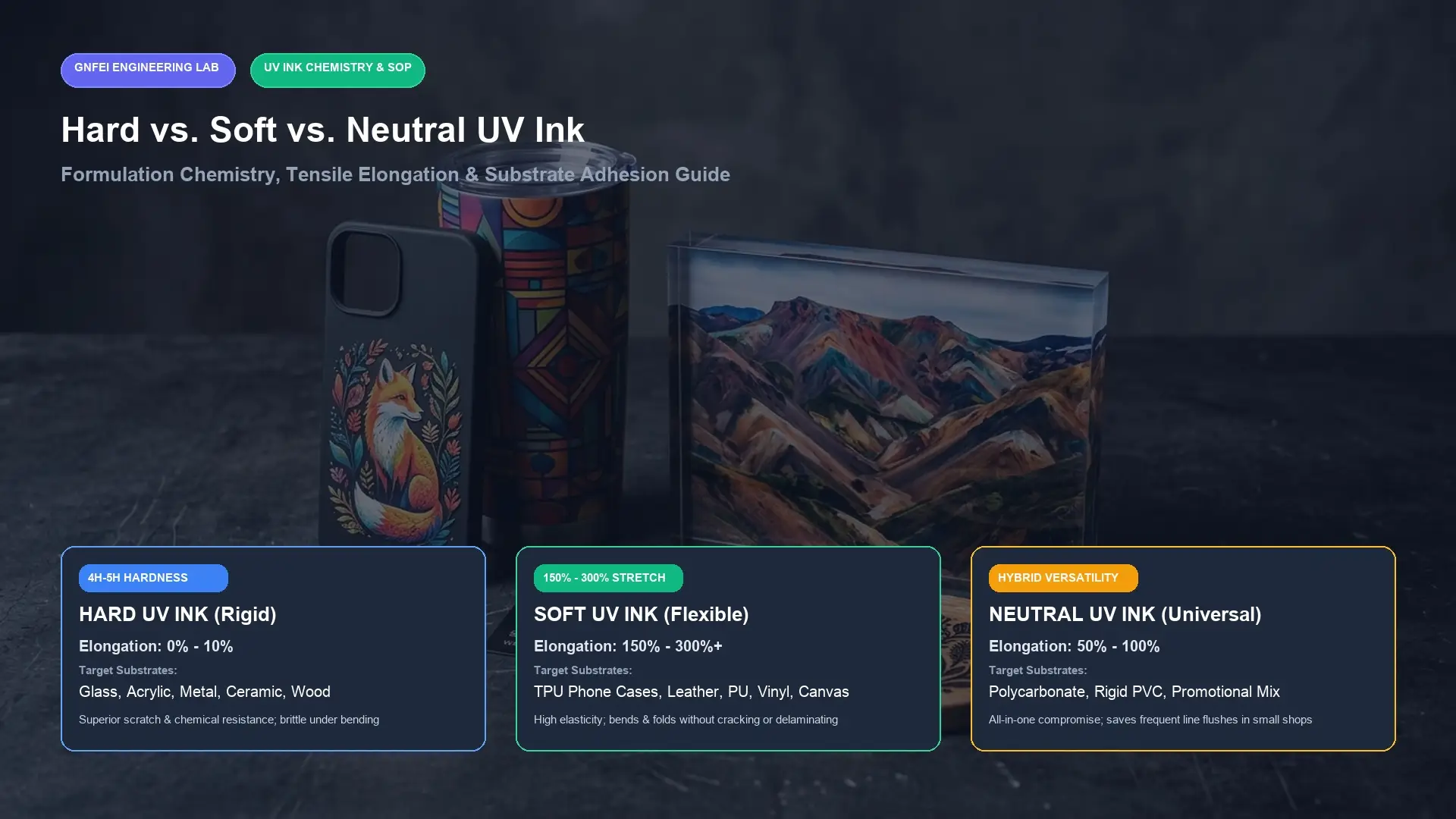
- Tensile Elongation: 0% - 10%
- Pencil Hardness: 4H - 5H
- Scratch Resistance: Maximum
Soft UV Ink Chemistry
Utilizes long-chain, flexible aliphatic urethane di-acrylates and mono-functional diluents. Cross-linking is sparse, allowing molecular chains to stretch, slide, and rebound.
- Tensile Elongation: 150% - 300%+
- Pencil Hardness: < B (Elastic)
- Bending / Crease Recovery: 100%
Neutral UV Ink Chemistry
An engineered hybrid blend combining moderately branched oligomers with flexible spacer chains. Delivers sufficient hardness for rigid gifts without snapping on slight bends.
- Tensile Elongation: 50% - 100%
- Pencil Hardness: HB - 2H
- Substrate Versatility: Highest
2. Hard UV Ink (Rigid Formulation): Strengths & Limitations
Hard UV ink is the industry workhorse for rigid industrial products, signage, and high-wear decorative items. Because its cured surface reaches 4H to 5H pencil hardness, it resists mechanical fingernail scratches, keys, abrasive cleaners, and harsh chemical exposure (including 99% isopropyl alcohol and window detergents).
Primary Substrates for Hard UV Ink
Cast and extruded acrylic (PMMA), float glass, ceramic tiles, anodized aluminum plates, wood plaques, stainless steel tumblers, stone coasters, and rigid composite sign boards.
The Glass & Metal Primer Rule
Hard ink alone cannot form molecular covalent bonds with inorganic, non-porous glass or polished metal surfaces. While it will appear solid immediately after curing, it will peel off in sheets during water immersion or high-humidity handling unless a specialized silane UV glass/metal primer is wiped onto the substrate prior to printing.
3. Soft UV Ink (Flexible Formulation): Elasticity Without Cracking
When printing on materials that flex, stretch, bend, or experience repeated handling cycles, hard ink is guaranteed to fail. Soft UV ink is specifically engineered with long aliphatic urethane chains that provide 150% to 300%+ tensile elongation at break. This allows the cured print to deform concurrently with the substrate without delaminating or developing hairline cracks.
Primary Substrates for Soft UV Ink
Thermoplastic polyurethane (TPU) and silicone phone covers, genuine and PU leather goods (wallets, bag tags, belts), flexible PVC banners, backlit canvas, membrane switches, and thermoformable plastic sheets.
The Scratch Resistance Trade-Off
Elasticity comes at the expense of surface hardness. Soft UV ink has a soft tactile feel (pencil hardness < B). If applied to rigid glass or hard plastic gifts, everyday friction from coins, fingernails, or desk abrasions will quickly damage the graphic.
4. Neutral UV Ink (Hybrid Formulation): The Multi-Substrate Solution
For small commercial production studios, advertising workshops, and custom gift retailers operating a single flatbed UV printer, running dedicated hard or soft ink presents a costly logistical dilemma. Flushing 6 to 8 ink channels to switch chemistries wastes substantial ink and technician time.
Neutral UV Ink (Universal / Hybrid) was developed precisely to solve this problem. Delivering 50% to 100% elongation and HB to 2H hardness, neutral ink allows a single machine to produce acrylic keychains in the morning and TPU phone cases or leather wallets in the afternoon with dependable commercial adhesion.
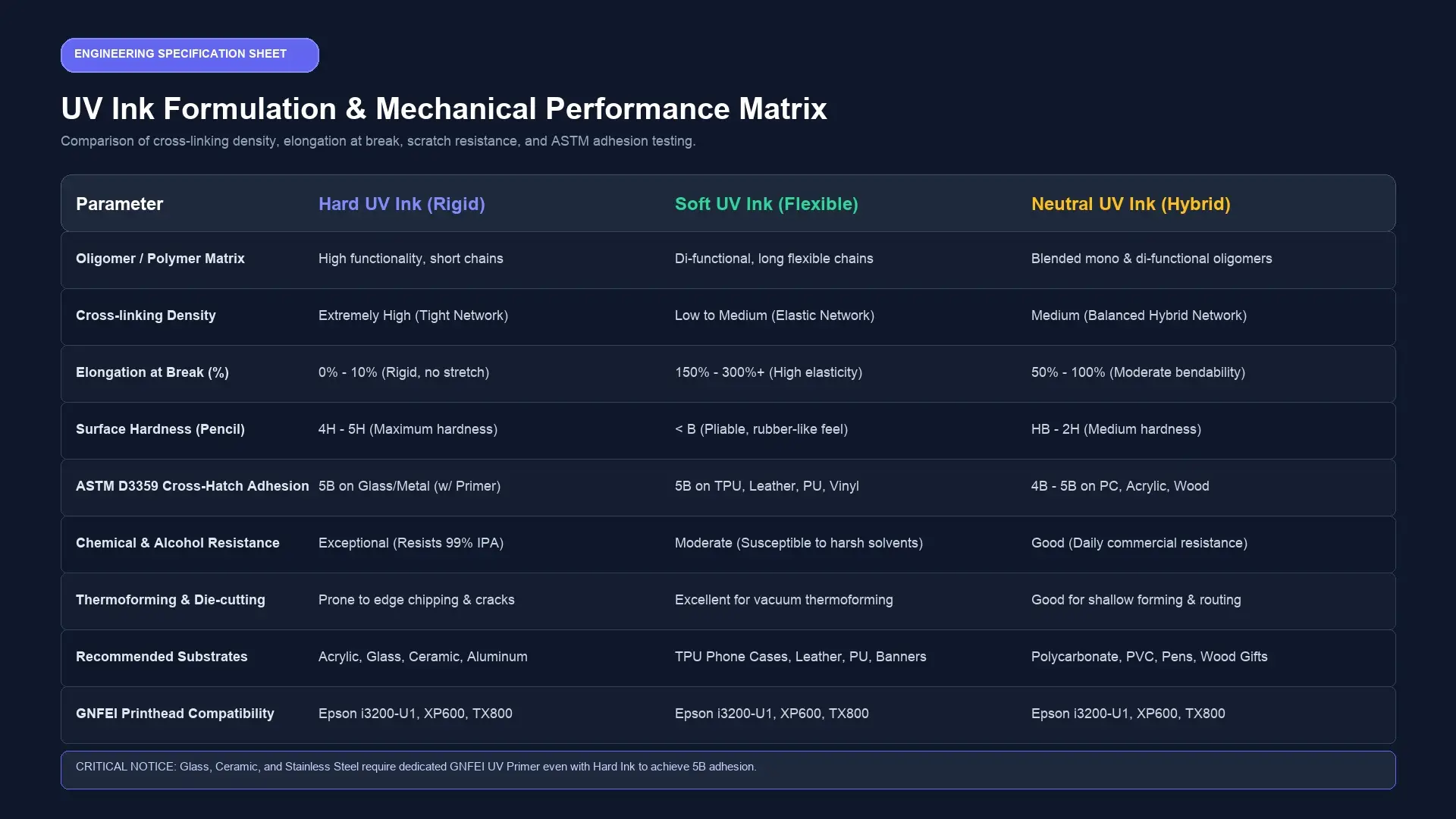
5. Head-to-Head Specification Comparison
| Performance Metric | Hard UV Ink (Rigid) | Soft UV Ink (Flexible) | Neutral UV Ink (Hybrid) |
|---|---|---|---|
| Tensile Elongation at Break | 0% - 10% (Zero flex) | 150% - 300%+ (High stretch) | 50% - 100% (Moderate bend) |
| Pencil Scratch Hardness | 4H - 5H (Maximum hardness) | < B (Pliable / Elastic) | HB - 2H (Medium hardness) |
| ASTM D3359 Cross-Hatch Tape | 5B on Acrylic, Metal (w/ Primer) | 5B on TPU, Leather, Vinyl | 4B - 5B on PC, PVC, Wood |
| Solvent & IPA Resistance | Exceptional (Resists 99% IPA) | Moderate (Vulnerable to solvents) | Good (Standard commercial durability) |
| Thermoforming / Vacuum Forming | Fails (Cracks under heat stretch) | Outstanding (Up to 300% 3D stretch) | Shallow forming only (< 20mm draw) |
| Optimal Printshop Profile | Industrial signage, awards, acrylic | Phone cases, leather, canvas, banners | Mixed promotional & personalized gifts |
6. Fatal Incompatibilities and Failure Dynamics
Understanding what causes ink failure helps operators avoid expensive job reprints and customer returns. Here are the three most common failures observed in production environments:
Failure 1: Hard Ink on TPU/Silicone Phone Cases
Failure Mechanism: Rigid ink creates a glass-like shell across the TPU surface. When a phone is pushed into the case, the substrate flexes by 15-25%. Exceeding the 5-10% elongation threshold causes microscopic tension shears that rapidly propagate into visible spiderweb fissures, flaking off along edge corners.
Failure 2: Soft Ink on Acrylic, Glass, or Metal
Failure Mechanism: Soft ink retains pliable elastomer chains on the surface. Because it lacks high cross-link density, the print has poor scratch resistance (< B). Routine handling, packaging friction, or a light fingernail scrape will leave gouges or rub the pigment off completely.
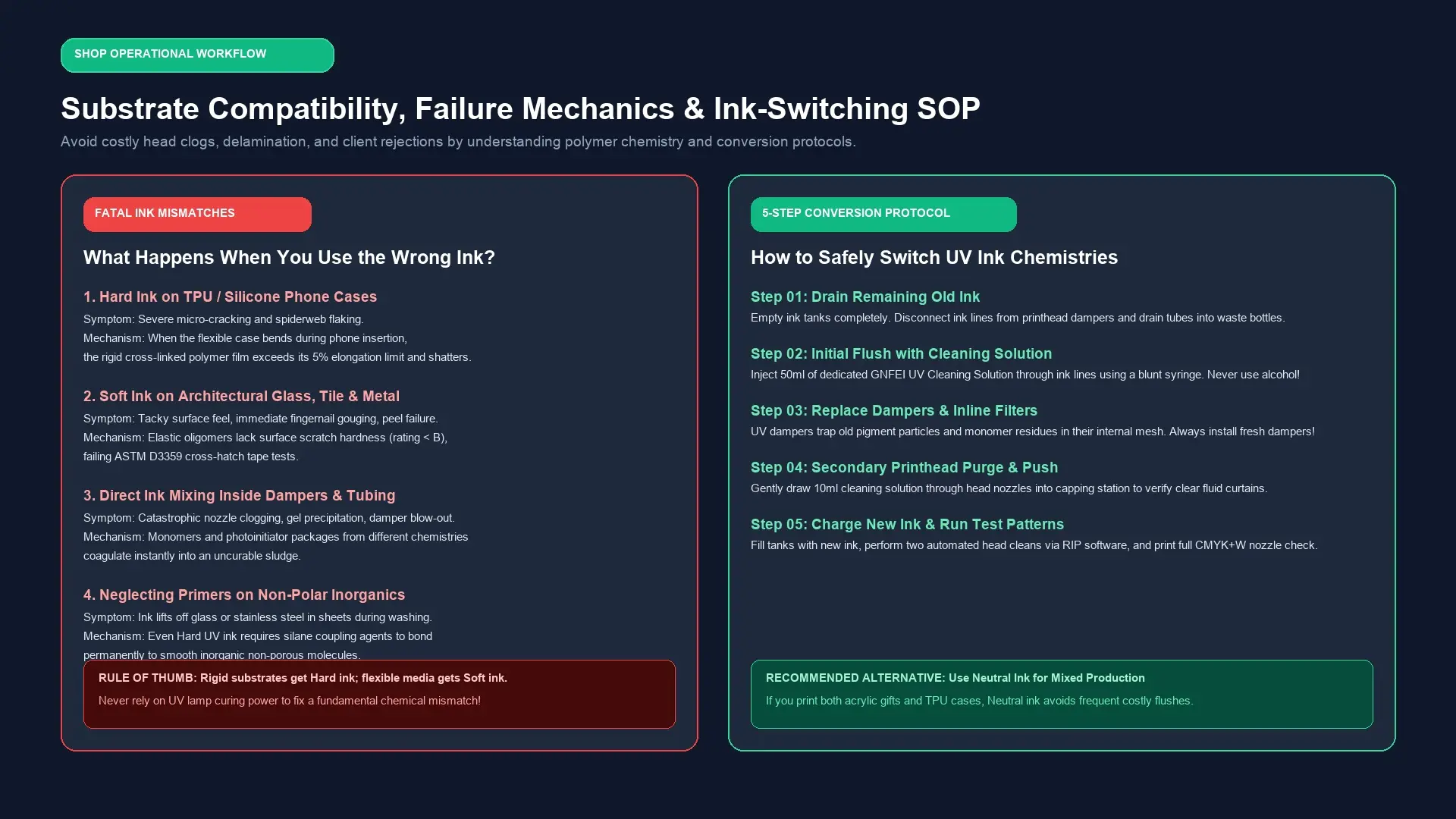
7. The Golden Rule: Can You Mix Inks & How to Switch Chemistries Safely?
CRITICAL WARNING: NEVER mix different UV ink types directly inside ink tanks, tubing, or dampers. Even if purchased from the same ink supplier, mixing hard and soft UV inks creates catastrophic chemical precipitation. The diluent monomers and photoinitiator stabilizers in one formulation frequently induce gelation or pigment shock in the other, forming micro-gels that permanently destroy piezo nozzle chambers.
Standard Operating Procedure (SOP): Safe Ink Chemistry Conversion
8. Recommended Commercial UV Hardware for All Ink Types
Whether your production facility focuses on high-durability acrylic signage, flexible TPU phone cases, or versatile gift customization, GNFEI engineering provides robust hardware designed for seamless compatibility with hard, soft, and neutral UV chemistries.
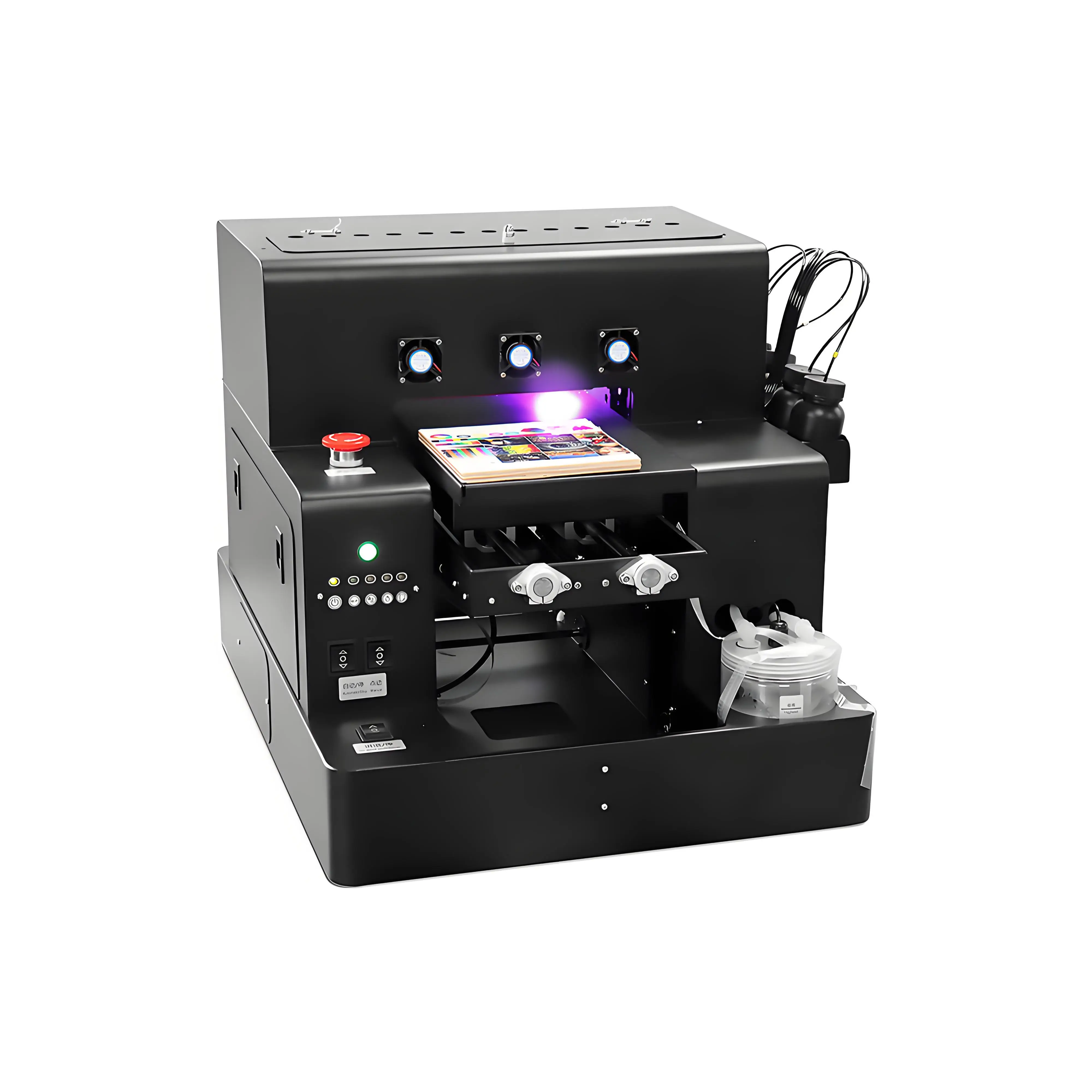
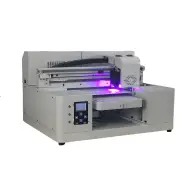
GNFEI F85V4 A4 Compact Commercial UV Printer
The industry standard desktop system for personalized phone cases, acrylic badges, and custom gifts. Engineered with dedicated white ink circulation and corrosion-resistant dampers compatible with hard, soft, or neutral inks.
- High-precision micro-piezo head with 1440x1440 DPI resolution
- Automatic height sensing up to 150mm substrate clearance
- Integrated UV LED water-cooling curing unit for heat-sensitive media
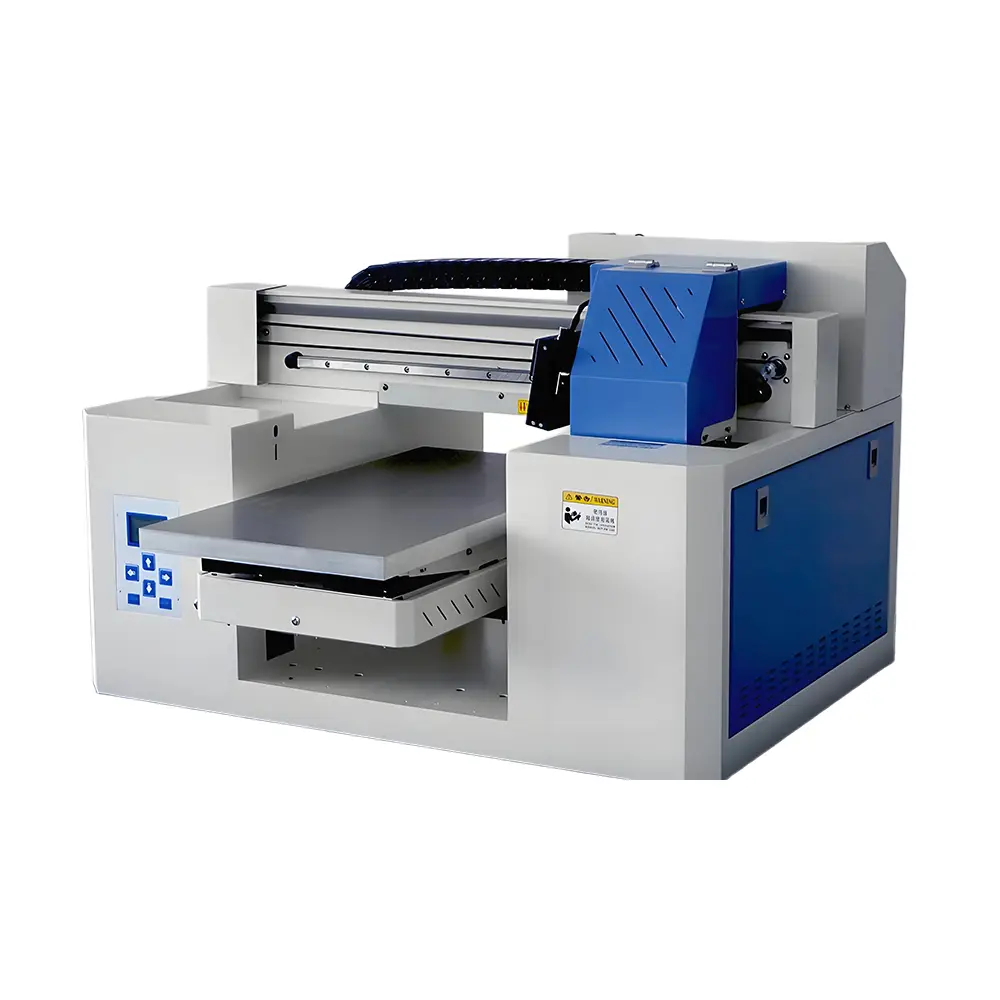
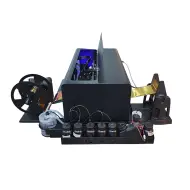
GNFEI F50V3 A3 Dual Head Flatbed & Rotary UV Printer
Engineered for high-volume commercial workshops. Simultaneous White + Color + Varnish printing. Fully supports flatbed substrates, rotary cylindrical tumblers, and modern roll-to-roll UV DTF transfer film.
- Dual XP600 / TX800 printheads for 2.5x printing speed
- Rotary attachment for 360-degree seamless bottle printing
- Industrial vacuum suction bed preventing sheet warpage
Frequently Asked Questions (FAQ)
What is the main difference between hard UV ink and soft UV ink?
The primary difference lies in the oligomer chain length and cross-linking density. Hard UV ink features high-density cross-linking that cures into a rigid matrix with 4H-5H pencil hardness and 0-10% elongation, making it ideal for glass, acrylic, and metal. Soft UV ink uses flexible, long-chain oligomers that cure into an elastic polymer with 150-300%+ elongation, allowing it to bend and stretch on TPU, leather, and vinyl without cracking.
What happens if I use hard UV ink on a flexible TPU phone case?
Because hard UV ink has virtually zero tensile elasticity (0-10% elongation), bending or flexing the TPU case during phone insertion causes the rigid cured ink film to experience immediate tensile fracture. This results in fine spiderweb micro-cracking, flaking, and eventual peeling along stress folds.
Why does soft UV ink fail on glass or ceramic tiles?
Soft UV ink forms an elastic, pliable surface with a pencil hardness rating below B. On smooth, non-porous rigid surfaces like glass or glazed ceramic, it lacks the surface scratch resistance and mechanical bite required to withstand abrasion. A light fingernail scrape or 3M cross-hatch tape test will easily gouge or peel the soft ink layer off.
What is neutral UV ink and who should use it?
Neutral UV ink (often called universal or hybrid UV ink) is formulated with a balanced blend of mono- and di-functional oligomers. It delivers 50-100% elongation and HB-2H surface hardness. It is specifically designed for small commercial print shops that handle a diverse mix of substrates (acrylic keychains, wood plaques, rigid PVC, polycarbonate, and moderately flexible items) on a single printer without performing frequent, costly ink flushes.
Can I mix hard and soft UV inks together in the ink tank?
Never mix hard and soft UV inks directly in the ink tank, lines, or dampers. Even if both inks are from the same manufacturer, different monomer formulations, photoinitiator packages, and surface tension additives can react, causing rapid coagulation, pigment agglomeration, and chemical precipitation that will permanently clog micro-piezo printhead nozzles.
Do I still need a primer if I use hard UV ink on glass or metal?
Yes. Even the highest-grade hard UV ink cannot achieve permanent 5B molecular adhesion on completely smooth, non-polar inorganic surfaces like float glass, glazed ceramic, or polished stainless steel. Applying a dedicated silane-based UV primer creates chemical covalent bridges between the substrate surface and the cured ink film, preventing delamination during moisture exposure or washing.
How do I safely switch my UV printer from hard ink to soft ink?
To switch ink chemistries safely, follow a strict 5-step SOP: 1) Completely drain old ink from tanks and tubes; 2) Flush ink supply lines with 50ml of specialized UV cleaning solution; 3) Replace all ink dampers and inline disc filters to eliminate trapped monomer residue; 4) Purge the printhead nozzles gently with cleaning solution; 5) Charge the new ink, run automated head clean cycles, and verify a 100% nozzle check pattern.
Can soft UV ink be used for vacuum thermoforming and die-cutting?
Yes, specialized thermoforming soft UV inks exhibit high thermal elongation (often exceeding 200-300% when heated to 130-160°C). They can stretch over complex 3D molds without blistering, whitening, or cracking, and allow clean edge die-cutting without edge chipping.
Does ink type affect printhead lifespan or maintenance frequency?
All three ink types are engineered within standard viscosity ranges (typically 3-6 mPa.s at 45°C jetting temperature) compatible with Epson i3200, i1600, XP600, and TX800 printheads. However, soft ink residues on wiper blades and capping stations tend to be slightly stickier, requiring more diligent daily cleaning with lint-free swabs to prevent wiper drag across delicate nozzle plates.
Which UV ink is best for UV DTF transfer printing?
UV DTF (Direct-to-Film) printing generally uses specialized flexible or neutral UV inks. Because UV DTF transfers are peeled and applied to curved surfaces (mugs, tumblers, helmets, electronics) and must conform to slight contours during application, hard ink would crack upon peeling the carrier film or when transferring onto curved substrates.