When Should I Replace Dampers, Capping Stations, and Wipers? | GNFEI SOP
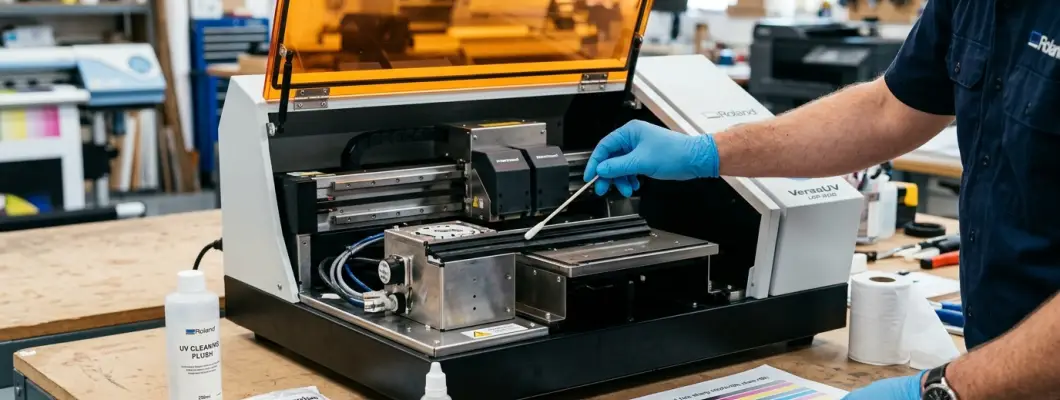
When Should I Replace Dampers, Capping Stations, and Wipers?
The definitive lifecycle schedule for UV printer wear parts: Spot early failure symptoms, master replacement intervals, and protect your printhead investment.
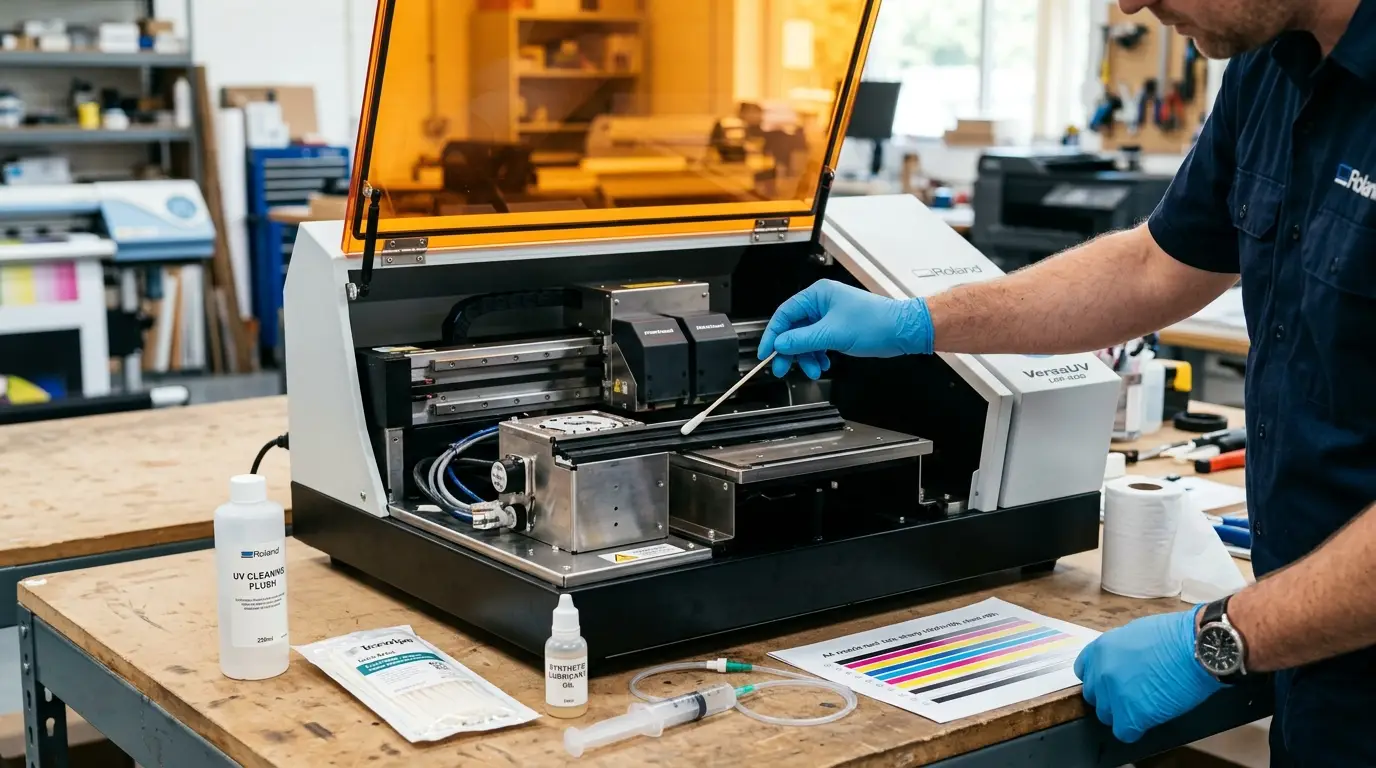
1. The Economic Reality: $5 Wear Parts vs. $800 Printheads
In industrial and desktop UV printing, operators frequently view ink dampers, capping stations, and wiper blades as permanent components of the chassis. This misconception is the single most expensive error in digital printing.
Unlike water-based dye inks, UV-curable ink is an aggressive chemical cocktail of liquid acrylate monomers, prepolymers, photoinitiators, and dense inorganic pigments. Over weeks of continuous operation, exposure to monomers causes silicone elastomers to swell and harden, fine internal filter meshes to accumulate compacted pigment, and squeegee wiper edges to nick and curve.
The Domino Effect of a Degraded Wiper Blade
A hardened or nicked $4 wiper blade scratches the microscopic hydrophobic fluoropolymer coating off the nozzle plate. Without this coating, ink droplets pool unevenly around nozzle exits, deflecting firing angles and causing severe banding.
The Overnight Disaster of a Leaky Capping Station
When a $35 capping station rubber seal loses its airtight perimeter, atmospheric air penetrates the cap overnight. Ink crosslinks and crusts directly inside the 20-micron nozzles, permanently destroying an $800 Epson i3200 or XP600 printhead.
The Invisible Chokehold of Clogged Dampers
A clogged $5 damper starves the printhead of ink during high-speed printing. Operators mistakenly blame ink viscosity or voltage settings, aggressively running high-pressure pump cleans that blow internal nozzle membranes.
2. UV Ink Dampers: When & Why to Replace
Ink dampers perform two critical hydraulic tasks: they buffer physical pressure waves caused by carriage motion and filter particulate through a microscopic stainless steel mesh (~15–20 microns) before ink reaches the piezo chambers.
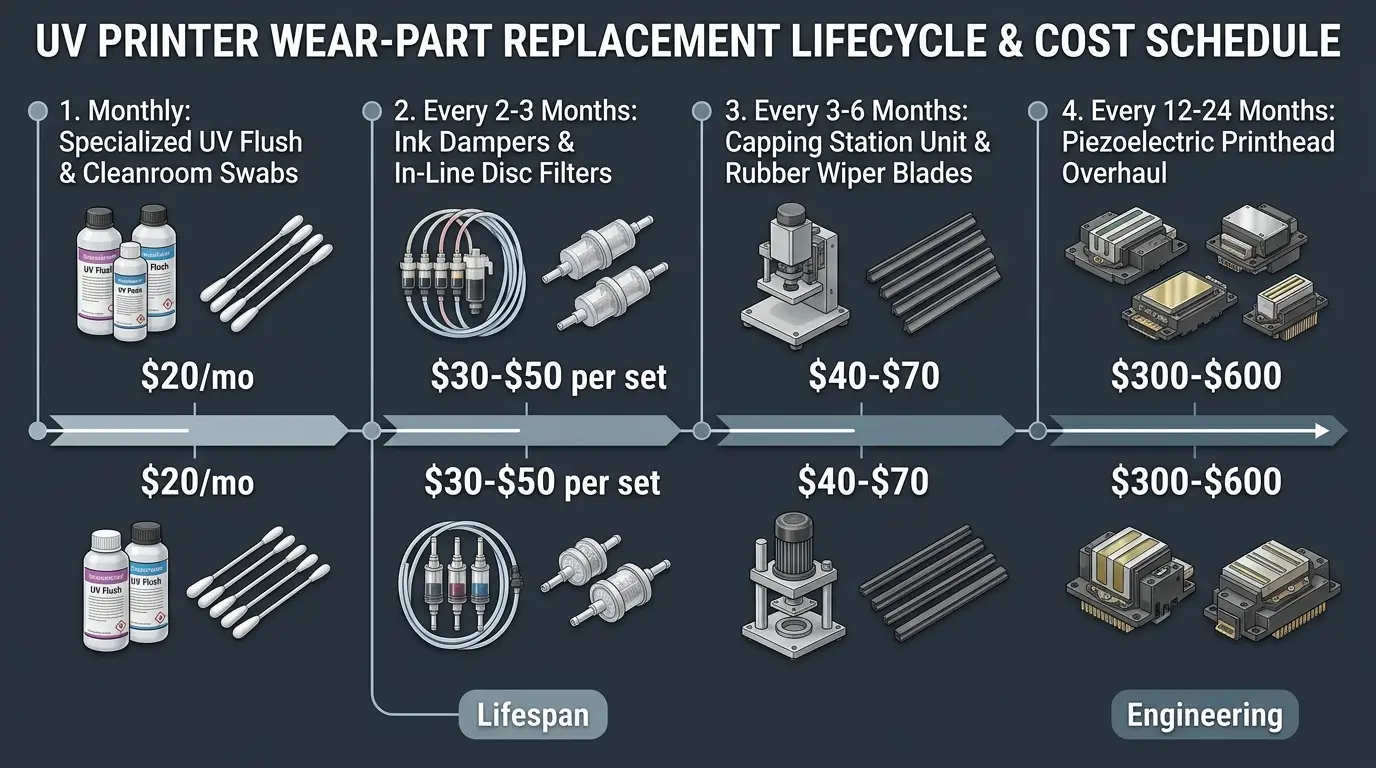
Replace Every 2 to 3 Months
White UV ink relies on heavy titanium dioxide (TiO2) particles, which have nearly triple the density of color pigments. Even with active tank circulation, TiO2 micro-sediment permanently compacts inside the damper filter mesh within 60 to 90 days.
Replace Every 4 to 6 Months
Color channels carry lighter organic dye and pigment molecules. However, the internal silicone membrane gradually loses its responsive elasticity, failing to maintain steady backpressure (-2 to -3 cm H2O) during rapid continuous firing.
Physical Symptoms of a Dying Damper
- Ink Starvation During Production: The morning nozzle check is 100% solid, but 30 to 60 seconds into printing a solid color block, that specific channel abruptly fades and drops out.
- Collapsed Plastic Membrane: The clear plastic film on the side of the damper is drawn inward like a vacuum-sealed bag, indicating severe internal mesh restriction.
- Air Bubbles in Damper Chamber: Cracked luer lock joints or hardened internal silicone O-rings allow air to siphon into the ink line, creating erratic missing nozzles.
- Color Cross-Bleeding: Ruptured internal check valves allow backpressure fluctuations that suck adjacent colors backwards through the manifold.
3. Capping Station Assembly: The Airtight Fortress
The capping station serves two indispensable functions: providing an airtight seal against the nozzle plate during parking (preventing monomers from curing under stray light or drying out) and coupling with the peristaltic waste pump to generate vacuum suction for purges.
Symptoms That Your Capping Station Has Failed
- Hardened or Swollen Silicone Rim: Regular contact with UV monomers and daily flush solvents causes soft silicone to lose elasticity, stiffen, and warp. Once rigid, it cannot form an airtight perimeter seal.
- Weak or Ineffective Software Cleaning: When you initiate a head clean, you hear the peristaltic pump turning, but little to no ink flows into the waste bottle. An air leak along the cap rim destroys the vacuum siphon.
- Random Missing Nozzles Every Morning: If you leave the printer parked overnight and consistently wake up to missing nozzles that require 2 to 3 cleans to recover, the capping seal is leaking air.
- Crusted Sponge Pad: The internal porous sponge becomes saturated with polymerized ink residue, acting like a solid brick rather than an absorbent moisturizing reservoir.
4. Rubber Wiper Blade: The Hydrophobic Squeegee
The wiper blade is a precision polyurethane squeegee engineered to wipe away accumulated aerosol ink mist and stray droplets after each purge cycle. It must be flexible enough to clean the nozzle face without abrading its delicate microscopic coating.
When to Replace the Wiper Blade
Inspect the wiper blade edge weekly under bright lighting. If the top edge feels stiff, appears curved or bowed, or displays microscopic nicks and jagged tears, discard and replace it immediately.
Permanent Nozzle Plate Scratches
A hardened wiper blade acts like a sandpaper squeegee against the mirror-like nozzle faceplate. Once the hydrophobic fluoropolymer layer is scratched, ink droplets pool randomly, causing unrecoverable horizontal banding.
5. Master Wear Parts Replacement Schedule & Annual ROI
Here is the complete schedule, service time, and cost comparison for maintaining commercial UV printers:
| Wear Part | Replacement Frequency | Approx. Unit Cost | Service Time | Primary Failure Symptom |
|---|---|---|---|---|
| White Ink Dampers | Every 2 to 3 months | $4 – $6 each | 10 minutes | White ink starvation & fading during high-speed printing |
| CMYK/Varnish Dampers | Every 4 to 6 months | $4 – $6 each | 15 minutes | Loss of backpressure, color starvation, air leaks |
| Rubber Wiper Blade | Every 2 to 4 months | $3 – $8 each | 5 minutes | Ink smearing across channels, scratched nozzle plate |
| Capping Station Assembly | Every 6 months | $25 – $45 each | 20 minutes | Loss of vacuum suction, morning dried nozzle crusts |
| In-Line Disc Capsule Filters | Every 4 to 6 months | $3 – $5 each | 10 minutes | Restricted bulk ink flow, ink supply lag |
| Peristaltic Pump Tubing | Every 6 to 9 months | $5 – $10 | 15 minutes | Flattened tubing, zero purge suction power |
6. Low-Maintenance Hardware Platforms Engineered for Easy Servicing
Selecting a printer with modular, accessible wear part assemblies and built-in automated white ink agitation dramatically lowers operating overhead:
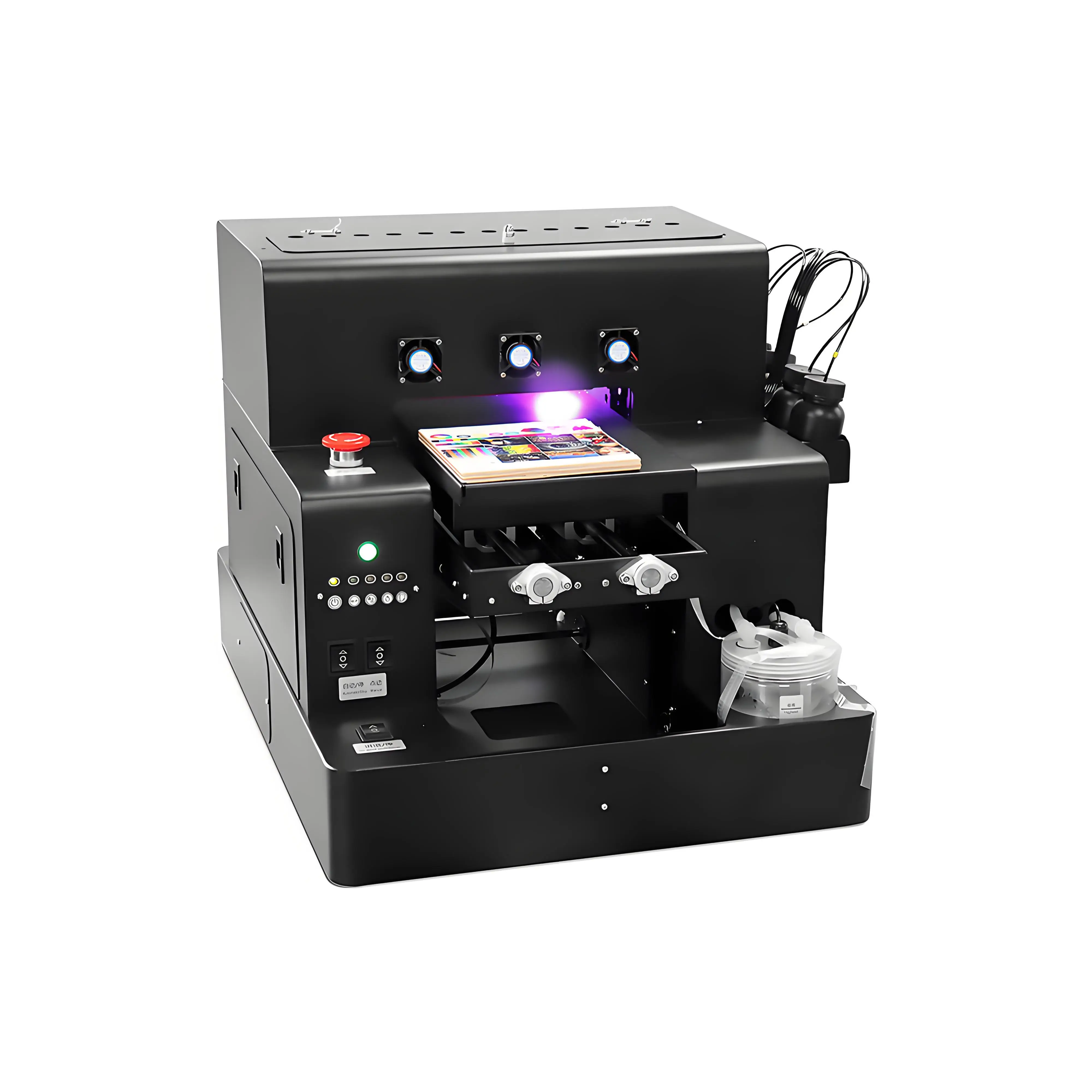
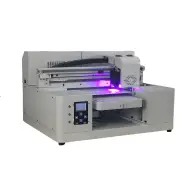
Spot A4 LED UV Printer Cylinder Printing Machine
- Front-access modular capping station unit allows quick 5-minute cap top and wiper replacement without tools
- Automated white ink circulation pump runs on timed intervals to prevent titanium dioxide settling in dampers
- Automatic infrared height sensor prevents head collisions with substrates, protecting wiper and nozzle alignment
- Cold water-cooled 395nm UV LED lamp with 25,000+ hour operating lifespan and minimal heat radiation
- Modular rotary attachment included for printing custom drinkware, bottles, and tumblers
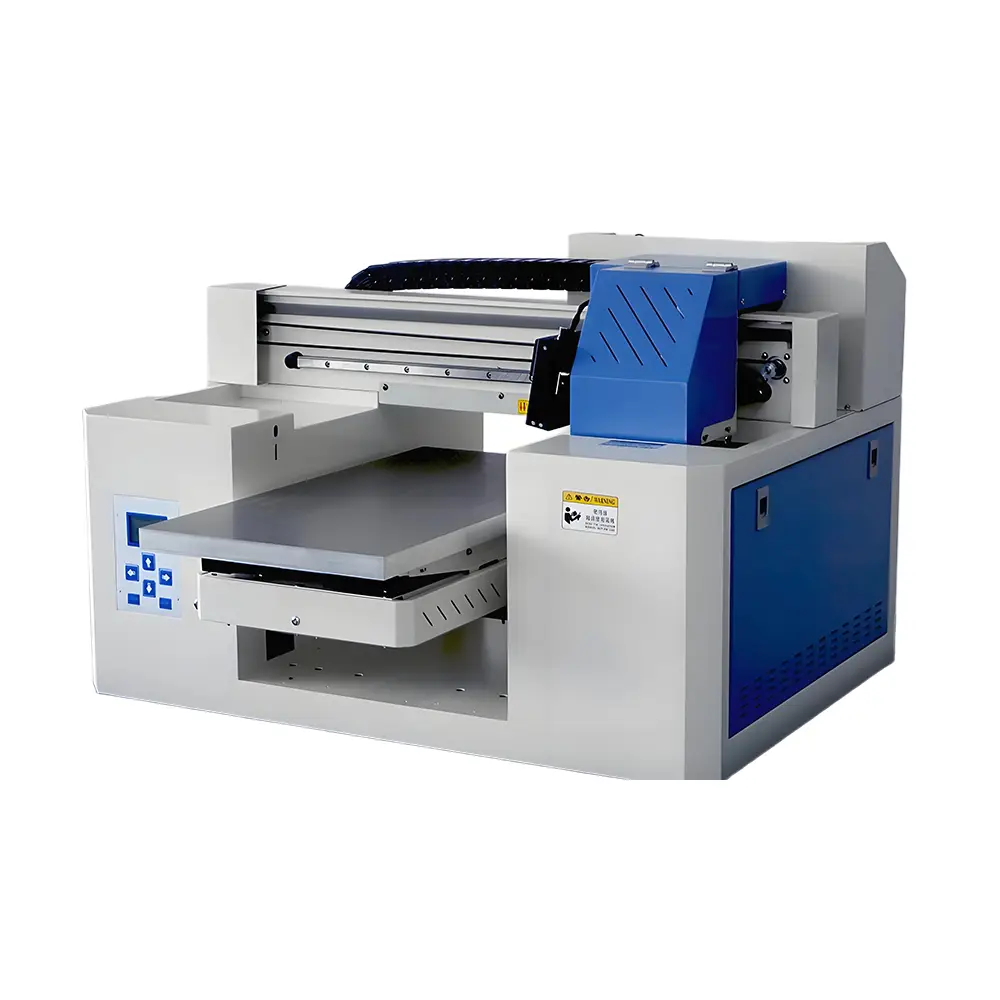
A3 Dual Head UV Printer (Rotary & UV DTF Support)
- Dual independent Epson printheads isolate White from CMYK/Varnish, doubling speed and localizing damper wear
- Twin high-capacity peristaltic waste pumps provide strong, dedicated suction for flawless capping purges
- Integrated negative pressure vacuum suction platen secures lightweight films and flat media firmly
- Motorized 15 cm Z-axis clearance accommodates large custom gift boxes, tumblers, and signs
- Supports Direct Flatbed printing, Rotary cylindrical drinkware, and peel-and-stick UV DTF transfers
Frequently Asked Questions (FAQ)
Q1. How often should white UV ink dampers be replaced compared to CMYK colors?
White ink dampers must be replaced every 2 to 3 months, whereas CMYK and varnish dampers can last 4 to 6 months. White UV ink contains heavy inorganic titanium dioxide (TiO2) pigments that settle rapidly and clog the internal 15-micron stainless steel filter mesh, starving the printhead of ink during high-speed production.
Q2. What are the warning signs that an ink damper is failing?
The primary symptom of a dying damper is ink starvation: the printer begins a job with a perfect nozzle check, but after 30 to 60 seconds of continuous printing, nozzles drop out or fade. Other physical indicators include a collapsed or overly distended plastic side membrane, cracked luer lock collars, or air bubbles visible in the damper body.
Q3. How often should the capping station assembly be replaced?
The entire capping station assembly (silicone cap top, internal porous sponge, and peristaltic pump tubing) should be replaced every 6 months. Constant exposure to UV acrylate monomers and cleaning solvents causes the soft silicone sealing rim to harden and deform, eliminating the airtight seal needed to protect printheads overnight.
Q4. Why is a worn capping station so dangerous to printheads?
The capping station maintains an airtight seal over the nozzle plate when the printer is idle. If the silicone rim hardens or warps, air infiltrates the cap overnight, drying ink inside the microscopic 20-micron nozzle apertures. Furthermore, a leaky cap prevents the peristaltic pump from generating proper vacuum suction during automated cleaning cycles.
Q5. How long does a rubber wiper blade last on a commercial UV flatbed printer?
Under standard production shift conditions, wiper blades should be replaced every 2 to 4 months. As the squeegee edge repeatedly sweeps across the nozzle plate, it absorbs monomers, becoming stiff, curved, or nicked. A degraded wiper scratches the hydrophobic coating on the nozzle plate and smears ink across adjacent color channels.
Q6. Can I clean and reuse old ink dampers instead of buying new ones?
No. Never clean and reuse ink dampers. Dampers are low-cost disposable consumables ($3 to $6 each). Flushing old dampers with solvent loosens dried particulate flakes that break free from the internal mesh and travel directly into the printhead manifolds, causing catastrophic nozzle blockages.
Q7. How do I know if my peristaltic waste pump tubing is worn out?
Peristaltic pump tubing should be replaced every 6 to 9 months. If the flexible silicone tubing loses its elasticity, develops permanent flat spots where the roller compresses it, or becomes stiff from ink residue, the pump cannot create adequate vacuum suction to draw ink through the capping station.
Q8. What is the correct procedure for installing a new damper?
Before seating a new damper onto the printhead inlet post, attach a syringe to the damper outlet collar and draw ink up from the main tank until the damper chamber is roughly 60% to 75% full of ink with zero air pockets. Seat the damper firmly on the printhead post, ensuring the O-ring seals perfectly without tilting.
Q9. What are in-line disc capsule filters and how often should they be changed?
In-line disc filters are secondary disc-shaped capsule filters placed in the ink delivery lines between the bulk ink tanks and the sub-tanks or dampers. They trap coagulated pigment clumps and airborne debris. Replace them every 4 to 6 months to maintain steady ink flow and protect downstream dampers.
Q10. What is the total annual cost of proactive wear parts replacement versus waiting for failure?
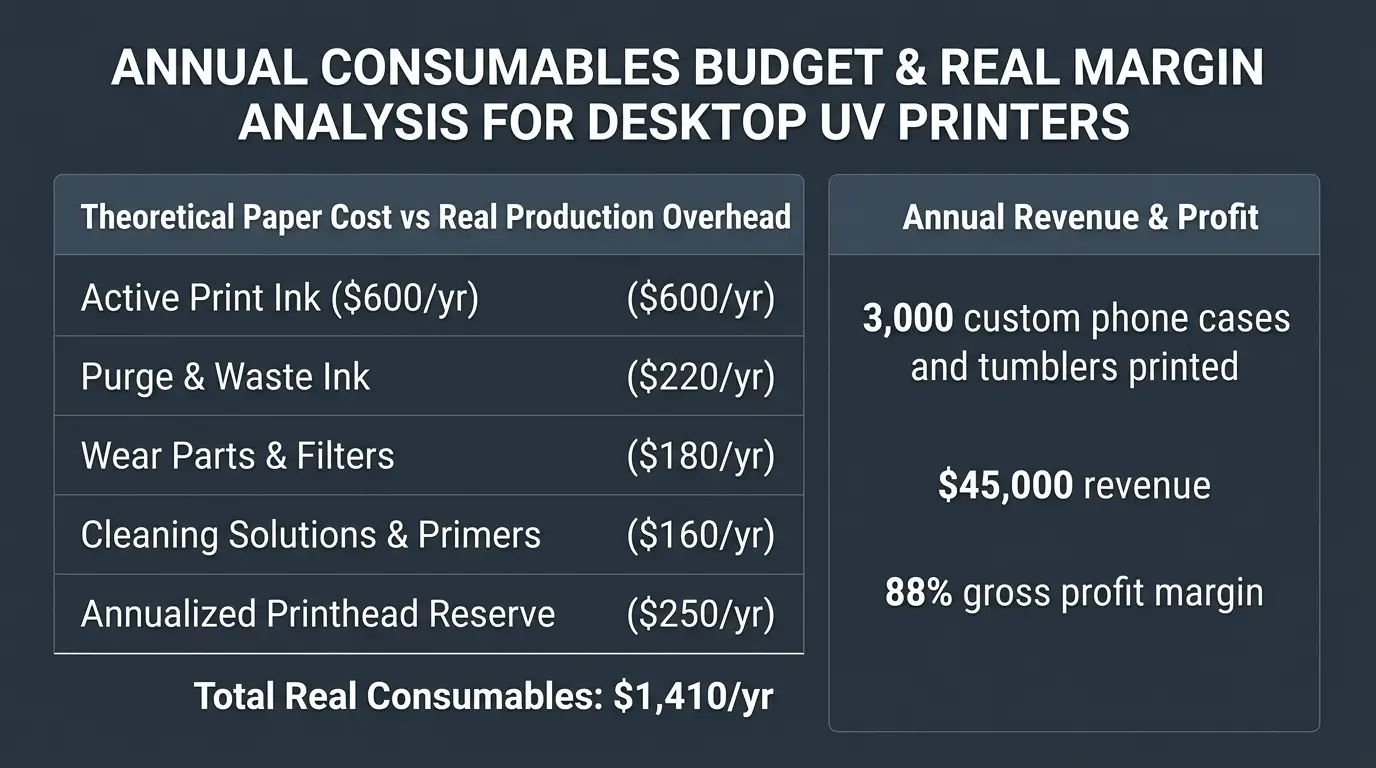
Proactively replacing all dampers, wipers, and capping stations according to manufacturer schedule costs approximately $120 to $180 per year in consumables. In contrast, waiting for wear parts to fail typically results in dried nozzles, faceplate scratches, and blown piezo membranes, forcing premature printhead replacements costing $400 to $1,200 per incident.