Sustainable UV Printing Technologies Gaining Momentum Amid Green Manufacturing Policies

Sustainable UV Printing Technologies Gaining Momentum Amid Green Manufacturing Policies
In recent years, the printing industry has experienced a significant shift towards sustainability, driven largely by increasing environmental awareness and the implementation of stringent green manufacturing policies worldwide. Among the various technologies pushing this transformation, UV printing stands out as a frontrunner due to its eco-friendly attributes and innovative capabilities. As businesses and consumers alike demand greener solutions, manufacturers are investing in sustainable UV printing technologies that reduce waste, lower emissions, and conserve energy, making print production more environmentally responsible. This trend not only aligns with global sustainability goals but also offers a competitive edge for companies embracing eco-conscious practices.

UV (ultraviolet) printing uses ultraviolet light to cure inks instantly upon printing, resulting in rapid production times and high-quality output. Traditional printing processes often rely on solvent-based inks and lengthy drying times, which contribute to volatile organic compound (VOC) emissions and higher energy consumption. In contrast, UV printing leverages environmentally friendly inks that emit minimal VOCs and require fewer hazardous chemicals, significantly reducing the ecological footprint of printing operations. Furthermore, the instant curing process minimizes material waste since there"s less need for reprints or adjustments, aligning with sustainable production principles. As a result, UV printing has become an increasingly popular choice for companies seeking to balance operational efficiency with environmental responsibility.
One of the key drivers behind the surge in sustainable UV printing is the adoption of green manufacturing policies by governments and industry organizations worldwide. Regulations aimed at reducing carbon emissions, limiting hazardous chemical usage, and promoting resource efficiency have prompted manufacturers to develop innovative solutions. For instance, many countries now incentivize the use of low-impact inks and energy-efficient machinery, encouraging businesses to transition to more sustainable technologies. UV printing machines are inherently compatible with these policies because they utilize less power and produce less waste compared to conventional methods. This synergy has accelerated the adoption of UV printing among eco-conscious brands looking to showcase their commitment to sustainability.
Leading manufacturers are also innovating to make UV printing even more sustainable. Some are integrating energy-saving features, such as automatic power-down modes and improved lamp efficiency, which lower energy use during idle times. Others are developing biodegradable or recyclable inks that further reduce environmental impact. Additionally, advanced UV printers now incorporate closed-loop ink systems that minimize ink wastage and facilitate easier recycling of leftover materials. The evolution of these technologies underscores the industry"s dedication to sustainable growth while maintaining the high standards of print quality and durability that clients demand. For consumers, this means access to eco-friendly printed products that do not compromise aesthetic appeal or longevity.
The versatility of UV printing also enhances its sustainability credentials. It allows printing on a wide array of substrates—many of which are recyclable or made from sustainable materials—thereby reducing reliance on non-renewable resources. From signage and packaging to art pieces and decorative items, UV printing offers a flexible, efficient, and environmentally responsible solution. For example, companies can produce high-quality promotional materials with minimal environmental impact, reinforcing their brand"s commitment to sustainability. The ability to print directly on various surfaces without extensive pre-treatment also cuts down on chemical usage, waste, and energy consumption, further aligning with eco-friendly practices.
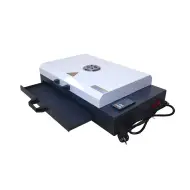
For businesses interested in adopting sustainable UV printing solutions, exploring the latest equipment is essential. The [Spot UV Printing Machine](https://www.gnfei.com/products/spot-uv-printing-machine-glossy-uv-coating-printer.html) exemplifies cutting-edge technology that combines environmental consciousness with high performance. This device offers precise UV coating applications with minimal waste and energy use, making it ideal for companies striving for greener operations. Its user-friendly interface and fast processing times enable seamless integration into existing production lines, offering both efficiency and sustainability. Investing in such machines not only supports ecological goals but also enhances brand image in an increasingly eco-aware market.
Looking ahead, the trajectory of sustainable UV printing appears promising. As environmental regulations tighten and consumer expectations shift toward greener products, the demand for sustainable printing technologies will continue to grow. The industry"s ongoing commitment to innovation—focused on reducing carbon footprints, utilizing biodegradable materials, and improving energy efficiency—will be pivotal. Moreover, as the global movement toward sustainability intensifies, more companies are likely to embed eco-friendly strategies into their core business models, making UV printing an integral part of green manufacturing efforts. This evolution will foster a more sustainable future for the printing industry and contribute significantly to achieving broader environmental goals.
In conclusion, sustainable UV printing technologies are gaining substantial momentum as a result of green manufacturing policies and increasing environmental consciousness globally. Their ability to reduce emissions, minimize waste, and adapt to diverse substrates positions them as a key driver of eco-friendly production. For companies committed to sustainability, adopting advanced UV printing solutions is both a responsible choice and a strategic advantage. As the industry continues to innovate and refine these technologies, we can anticipate a future where high-quality printing coexists seamlessly with environmental stewardship, creating a more sustainable world one print at a time.
Advanced Technical Insights & Application Analysis
Environmentally friendly and low-energy UV printing solutions are transforming production workflows across industries by combining advanced curing technologies with energy-efficient designs. One notable technical advantage is the exceptional ink adhesion achieved through specialized UV curing systems. These systems use high-intensity UV lamps to instantly solidify inks on diverse substrates, such as glass, metal, and recycled plastics, ensuring durability and precision without compromising sustainability. The result is a robust final product with long-term resistance to environmental factors like humidity and UV exposure.
Another critical breakthrough in UV printing technology is its enhanced curing efficiency. Today’s sustainable UV printing machines integrate improved lamp configurations that maximize curing output while dramatically reducing energy consumption. For example, recent innovations in LED UV curing systems outperform traditional mercury-based lamps by consuming up to 75% less power, aligning perfectly with global green manufacturing objectives. Additionally, closed-loop monitoring systems within these printers maintain optimal curing conditions, reducing defects and material wastage during large-scale production runs.
From a B2B investment standpoint, UV printing solutions offer considerable returns by minimizing operational costs and boosting sustainability-driven brand appeal. Companies utilizing low-energy UV printers can achieve faster production cycles, lower power bills, and reduced dependency on non-eco-friendly consumables. These operational efficiencies translate into measurable ROI, especially for businesses aiming to balance profitability with eco-conscious practices.
Frequently Asked Questions
- How does UV printing reduce VOC emissions?
UV printing uses specially formulated inks that emit negligible volatile organic compounds (VOCs), as opposed to solvent-based inks found in traditional printing. The instant UV curing process further eliminates the need for prolonged drying, reducing chemical release into the environment.
- What substrates are compatible with UV printing?
UV printing supports a wide variety of substrates, including recyclable materials like cardboard, glass, metal, wood, and biodegradable plastics. This versatility minimizes reliance on non-renewable resources and enables eco-friendly customization for diverse industries.
- What are the energy-saving features in modern UV printers?
Contemporary UV printers incorporate innovations like LED UV curing lamps, automated power-down modes, and intelligent energy management systems. These features not only reduce power consumption during operation but also minimize idle energy costs.