
The Impact of AI on DTG Printer Efficiency and Print Quality
27 Sep
Posted By
0 Comments
630 Views
Struggling to maximize your DTG printer"s efficiency and print quality? You"re not alone. Many professionals in the textile printing world face challenges like inconsistent prints, downtime, or high resource consumption. But what if there was a way to turn these issues around? That"s where AI comes into play — revolutionizing how we approach digital textile printing. Let"s dive into how AI impacts DTG printer efficiency and print quality, and what you can do to stay ahead of the curve. 
Understanding the Role of AI in DTG Printing
What exactly does AI bring to the table?
Artificial Intelligence isn"t just about robots or automation. It"s about smarter, more adaptive systems that learn and improve over time. For DTG printers, this means enhanced precision, faster setup times, and fewer errors — all without increasing your workload.Imagine a system that *automatically detects and adjusts* to fabric variations or color inconsistencies before printing begins. That"s AI in action. It continuously analyzes print data, learns from each job, and tweaks the process to optimize results.How AI Improves Print Efficiency
Efficient printing isn"t just about speed; it"s about reducing waste and downtime. AI helps in several ways:- **Predictive Maintenance**: AI predicts when parts might fail, preventing unexpected breakdowns that halt production.- **Optimized Print Paths**: AI calculates the most efficient route for printing, reducing ink usage and print time.- **Automatic Color Matching**: AI ensures colors are consistent across batches, reducing reprints and waste.- **Workflow Automation**: From file pre-processing to job scheduling, AI streamlines each step, saving time and effort.By integrating AI, a typical print shop can see a **significant increase in throughput** and a **drop in operational costs**.Enhancing Print Quality with AI
How does AI elevate the quality of your prints?
Print quality is all about accuracy and reliability. AI enhances this by:- **Real-time Color Correction**: AI detects color deviations during printing and compensates instantly.- **Image Optimization**: AI can automatically refine digital images for better transfer to fabric, improving fine details.- **Resolution Control**: AI dynamically adjusts print resolution depending on fabric type and design detail.- **Consistency Across Batches**: AI monitors previous jobs to ensure each print matches the last, eliminating inconsistencies.Think of AI as your digital quality inspector, catching issues early and fixing them automatically, so every print meets your standards.Case Study: AI-Driven Success in Textile Printing
Let me tell you about a friend I chat with regularly, who runs a small print shop. They recently adopted an AI-integrated DTG printer ([check it out here](https://www.gnfei.com/products/a3-dtg-printer.html)). Within just a few months, they reported:- **30% decrease in setup time** because AI optimized their file handling.- **25% reduction in ink waste** thanks to smarter color management.- **Better print resolution** on complex designs, thanks to AI"s adaptive resolution adjustments.- Less machine downtime — AI scheduled maintenance during off-hours, so there was no interruption.Their overall efficiency skyrocketed, and customer satisfaction went up because each shirt looked sharp and consistent.This real-world example shows how AI isn"t just hype — it delivers tangible results.Implementing AI in Your DTG Workflow
Getting started with AI technology
To leverage AI for your printer, here are practical steps:- **Upgrade your equipment**: Consider DTG printers with built-in AI features or compatible software. You can explore options like this A3 DTG Printer.- **Integrate AI-driven software**: Tools that analyze images and optimize printing parameters.- **Train your staff**: Make sure your team understands how AI tools work and how to interpret their feedback.- **Monitor results**: Track key metrics like print time, waste, and customer satisfaction to measure AI"s impact.Remember: AI works best when paired with good dye sublimation habits. Regular maintenance and quality control are still essential.Common challenges and solutions
- **High initial investment**: AI features may add upfront costs but are offset by savings in materials and time.- **Learning curve**: Invest in training, or work with suppliers who support onboarding.- **Compatibility issues**: Ensure your existing hardware and software can integrate with AI modules.By staying proactive, you can smooth the transition and reap the benefits quickly.Future Trends: AI and DTG Printing
Looking ahead, AI is set to evolve further:- **Faster learning algorithms** will adapt more quickly to new fabrics and designs.- **Enhanced predictive analytics** will keep machines running at peak performance longer.- **Personalized print workflows** will become standard, allowing for custom jobs with minimal setup.- **AI-powered quality assurance**—real-time inspection and correction—will be commonplace, pushing print quality to new heights.If you"re serious about staying competitive, investing in AI-enabled DTG printers now can give you a significant edge.FAQs
How much does AI integration cost for a DTG printer?
Costs vary based on the system, but most AI features are bundled with advanced printers or available as software upgrades. Ultimately, the savings in material waste and downtime can offset the initial investment.Can AI completely replace manual adjustments in printing?
AI significantly reduces manual intervention, but some oversight is still needed, especially for complex designs or unusual fabrics. Think of it as a powerful assistant, not a total replacement.Is my current DTG printer compatible with AI software?
It depends on your model. Some newer machines come with built-in AI, while older ones might need upgrades or external modules. Check with your supplier for compatibility.Will AI reduce my overall printing quality?
Not at all. On the contrary, AI enhances quality through real-time correction, optimizing details, and maintaining consistent color profiles.What's the learning curve for adopting AI in my workflow?
Most users find the transition smoother than expected, especially with proper training and support. It"s about adjusting your processes to leverage automation effectively.Feel free to ask if you want more insights on integrating AI into your digital textile printing business.
-17 %
Applications & Industry PotentialThe heating oven for DTF printers enables flawless heat transfer for custom-printed garments and textiles. It cat..
$150.00 $180.00
Ex Tax:$150.00
-67 %
DTF Transfer Film – Premium Film for Vibrant, Durable Prints on Apparel and AccessoriesOur DTF Transfer Film is designed specifically for us..
$0.10 $0.30
Ex Tax:$0.10
-16 %
The A3 Roll DTF Printer T-shirt Printing Machine is a cutting-edge solution for businesses looking to create high-quality custom apparel and accessori..
$990.00 $1,180.00
Ex Tax:$990.00
-35 %
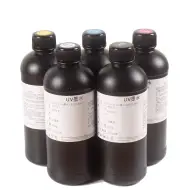
LED UV Ink: High-Performance Curing Ink for Industrial Printing ApplicationsProduct OverviewLED UV Ink is an advanced ultraviolet-curable ink speciall..
$98.00 $150.00
Ex Tax:$98.00
-47 %
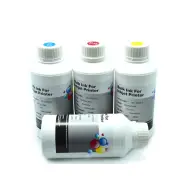
Textile Pigment Ink (DTG Ink) - Premium Digital Textile Printing Solution
Product Overview
Textile Pigment Ink (DTG Ink) is ..
$80.00 $150.00
Ex Tax:$80.00
-17 %
Applications & Industry PotentialThe heating oven for DTF printers enables flawless heat transfer for custom-printed garments and textiles. It cat..
$150.00 $180.00
Ex Tax:$150.00
-67 %
DTF Transfer Film – Premium Film for Vibrant, Durable Prints on Apparel and AccessoriesOur DTF Transfer Film is designed specifically for us..
$0.10 $0.30
Ex Tax:$0.10
-16 %
The A3 Roll DTF Printer T-shirt Printing Machine is a cutting-edge solution for businesses looking to create high-quality custom apparel and accessori..
$990.00 $1,180.00
Ex Tax:$990.00
-35 %
LED UV Ink: High-Performance Curing Ink for Industrial Printing ApplicationsProduct OverviewLED UV Ink is an advanced ultraviolet-curable ink speciall..
$98.00 $150.00
Ex Tax:$98.00
-47 %
Textile Pigment Ink (DTG Ink) - Premium Digital Textile Printing Solution
Product Overview
Textile Pigment Ink (DTG Ink) is ..
$80.00 $150.00
Ex Tax:$80.00