Top 10 UV Printer Suppliers from China
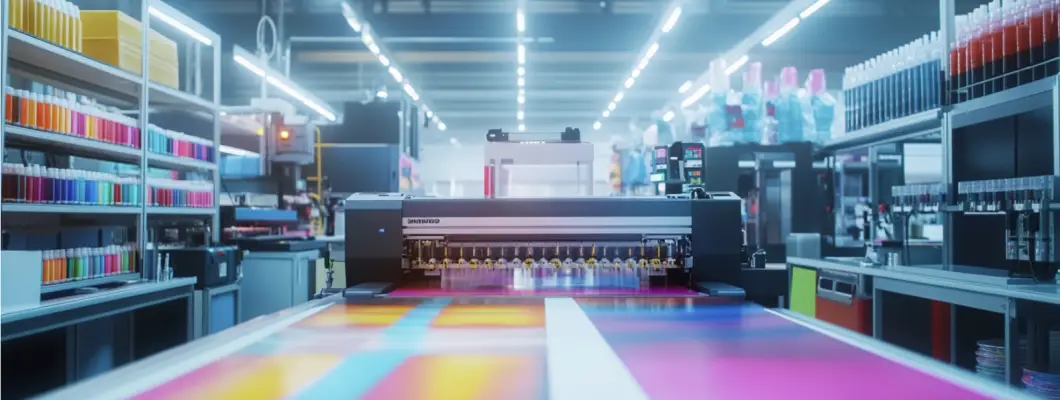
Top 10 UV printer suppliers from China, ranked for 2026 buyers
UV inkjet printing has moved from a niche sign-shop tool to a default production method for personalized goods, packaging, and industrial decoration. This guide breaks down the ten Chinese manufacturers worth shortlisting, what actually separates them, and the technical questions to ask before you wire a deposit.
Why most UV printer sourcing ends up in China anyway
It isn't only price. The Guangdong–Shanghai printhead and inkjet equipment cluster has matured into the deepest supply chain for this category anywhere, which changes what's actually available to a buyer.
Component density
Konica, Epson, and Ricoh printhead distributors, UV LED lamp assemblies, and motion-control parts all sit within a few hours of each other, which shortens lead times and makes custom configurations realistic rather than theoretical.
Format range
The same factories that build desktop A3 units also build 2m+ industrial flatbeds, so a buyer can usually stay with one supplier as their volume or format needs grow instead of re-sourcing from scratch.
OEM fluency
Chinese UV printer factories are used to private-label and OEM requests as a normal order type, not an exception — useful if you intend to resell under your own brand rather than the manufacturer's.
Faster iteration cycles
New printhead generations and lower-cost LED curing modules typically appear in Chinese-made machines within months of release, since several factories sit close to the component makers themselves.
What UV curing actually changes versus other print methods
UV printing solidifies ink the instant it's hit by UV light, rather than letting it air-dry or soak into the material. That single difference is why it ended up replacing solvent and eco-solvent printing for a lot of rigid-material and short-run work.
| Method | Cure / dry time | Surface range | Typical use case |
|---|---|---|---|
| UV inkjet | Instant (LED light) | Rigid & flexible: glass, metal, acrylic, wood, film | Short runs, rigid substrates, personalized goods |
| Eco-solvent | Minutes to hours | Mostly flexible media (vinyl, banner) | Outdoor signage, banners, vehicle wraps |
| Screen printing | Minutes (heat cure) | Flexible & some rigid, needs a screen per design | High-volume identical runs, garments |
| DTG / DTF | Seconds to minutes | Textiles primarily | One-off and small-batch apparel printing |
The tradeoff: UV ink sits as a thin layer on top of the substrate rather than absorbing into it, so flexibility and abrasion resistance depend heavily on the ink formulation a given factory uses — worth asking about directly rather than assuming all "UV ink" performs the same.
10 UV printer suppliers worth shortlisting
Ranked by a mix of product range, export track record, and how much real technical detail is publicly verifiable about each one — not by who paid for placement. Company scale and verifiable detail vary a fair amount across this list, which is itself useful signal when you're vetting a factory.
GNFEI
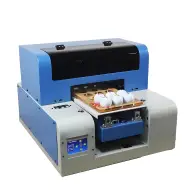
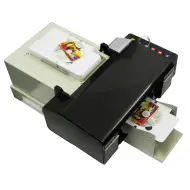
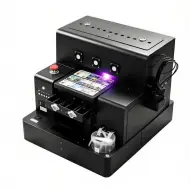
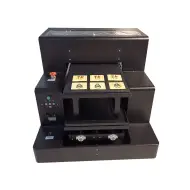
FeaturedGNFEI runs a wider product spread than most factories of comparable size — desktop A3/A4 UV printers, spot-UV varnish machines, large-format flatbeds, plus DTG and DTF lines and a coffee/food printing range, all sold factory-direct rather than through a distributor layer. That range matters in practice: a buyer testing the water with a small desktop unit can scale into a large-format flatbed later without switching suppliers or relearning a new RIP workflow.
The desktop UV lineup (models like the F85V4/F60V4 A4 printers and the GF85V4 spot-UV cylinder unit) targets phone cases, acrylic, wood, and curved or cylindrical objects — a segment that's grown alongside the personalized-gifting and small-batch promotional product market. Spare parts and consumables are sold directly rather than only through regional resellers, which shortens the loop when a printhead or part needs replacing.
gnfei.com →Flora Digital (Shenzhen Runtianzhi)
Flora is one of the longest-established names in this list and one of the few with a public stock listing, which gives buyers an unusually verifiable paper trail compared to smaller workshops. The product range leans toward large-format and hybrid UV printers built for signage, wallpaper, and packaging rather than desktop or small-object printing — a better fit for buyers planning industrial-scale output than for someone starting with a single desktop unit.
Their hybrid printers support both roll-to-roll and rigid-board printing on the same machine, which is useful if your order mix genuinely spans both flexible and rigid substrates rather than committing a factory floor to two separate machine types.
HandTop Tech
HandTop's machines are built primarily for continuous, high-throughput production rather than one-off or short-run jobs, which shows in their positioning toward furniture-panel and packaging decoration lines. If your buying decision is driven by uptime and consistency across long shifts rather than flexibility across many small jobs, this category of factory is generally the better fit than a desktop-oriented one.
Docan Tech
Docan publishes a genuinely wide model lineup spanning glass, ceramic tile, metal panel, and wallpaper printing, with printhead choice (Konica KM512/KM1024, or Ricoh/Epson depending on the model) offered rather than fixed — useful for buyers who already know which printhead ecosystem they want to standardize spare parts around. Resolution and speed vary a lot between their entry and flagship models, so the model number matters more than the brand name when comparing quotes.
KingT UV Printer
KingT sits in the price tier between entry desktop units and full industrial flatbeds, which makes it a common shortlist entry for small-to-medium operations that have outgrown a starter machine but don't yet need an industrial-scale flatbed. As with any mid-tier factory, ask specifically about printhead brand and warranty terms, since machines in this price band vary more in build quality than flagship industrial units do.
Shenzhen Yueda Printing Technology
Yueda's point of differentiation is UV printers built for raised, textured, or layered ("3D") effects rather than flat color reproduction alone — relevant if your product line depends on tactile finishes (embossed packaging, textured décor panels) rather than purely visual print quality.
Shanghai Color Digital Supplier
Color Digital positions itself on manufacturing flexibility and price rather than a single flagship technology — a reasonable option if your priority is negotiating a configuration around a specific budget ceiling, though it means more of the verification burden (factory visit or third-party inspection) falls on the buyer compared to factories with a more standardized published lineup.
INKJET Tech (INKTEC China)
Unlike most names on this list, INKTEC's reputation is built as much around ink chemistry as the printers themselves — relevant because, as mentioned above, ink formulation is one of the biggest hidden variables in UV print durability. A supplier that controls both ends (ink and hardware) can sometimes guarantee compatibility and performance more confidently than one that only assembles machines around third-party ink.
Human Digital Tech
Human Digital's lineup leans toward general-purpose flatbeds aimed at promotional product decorators rather than a specific niche substrate — a sensible default shortlist entry if your product mix is broad (pens, phone cases, small packaging) rather than concentrated in one material category.
Dilli Precision (China operations)
Dilli's Korean engineering background combined with China-based manufacturing gives it a slightly different profile from the rest of this list — generally positioned toward heavier industrial precision work rather than SMB or desktop buyers, and usually at a price point to match. Worth a look specifically if precision tolerance matters more to your application than landed cost.
What actually separates a good UV printer supplier from a risky one
Glossy spec sheets look similar across most factories. These are the questions that tend to surface the real difference before you've committed a deposit.
Printhead brand and generation
Epson, Ricoh, and Konica heads behave differently on cost-per-print and resolution ceiling — ask for the exact model, not just the brand.
Ink formulation and certification
FDA, CE, and RoHS mean different things depending on what you're printing on — confirm certification relevant to your specific end use, not a generic claim.
Real-world speed at your resolution
Quoted speed is almost always at the lowest resolution setting — ask for throughput at the dpi you'll actually print at.
Spare parts lead time
A printhead failure six months in is a business continuity question, not just a warranty one — ask how fast a replacement part actually ships.
OEM / private-label terms
If you intend to resell under your own brand, confirm MOQ and what's actually customizable (housing, software splash screen, packaging) before assuming it's included.
Software language and updates
RIP software quality varies more between factories than the hardware does — ask for a live demo, not a screenshot.
Industries actually buying UV printers right now
UV printing's versatility means the buyer pool spans more industries than most equipment categories — which is also why supplier specialization matters so much when you're shortlisting.
Common questions before placing a first order
Most current-generation machines print on acrylic, glass, metal, wood, ceramic, leather, and rigid PVC, plus flexible substrates like canvas and film on hybrid models. The limiting factor is usually bed thickness clearance and ink adhesion on a given surface, not the printer's resolution.
Because the ink solidifies instantly under UV light rather than slowly drying or soaking in, the cured layer resists scuffing and fading better than solvent-based prints in most outdoor and handled-object use cases — though the ink formulation itself still matters more than the curing method alone.
It varies a lot by factory size. Larger, longer-established suppliers (the kind with their own export department, not just a trading-company front) typically stock common printheads, dampers, and ink cartridges for direct shipment, which matters more once your machine is a few years old and off the latest model lineup.
Sometimes, if you're testing a new product category at low volume and can tolerate downtime risk. The real cost of an unbranded machine usually shows up later, in parts availability and software support, not on day one.
CE for general electrical/machinery safety compliance into the EU, RoHS if you care about restricted substances, and FDA-relevant documentation specifically if the ink will contact food, skin, or anything regulated — ask which certification applies to your specific use case rather than accepting a blanket "we're certified" answer.
Production lead time for a standard model is commonly 2–4 weeks, plus international freight — air freight for smaller desktop units typically lands in under two weeks, while sea freight for large-format flatbeds can run 4–6 weeks depending on destination port.
Most mid-size and larger factories accept OEM/private-label requests, ranging from a simple logo swap on the housing to a fully custom software splash screen — minimum order quantities for deeper customization are usually higher than for an unbranded unit, so confirm the threshold before assuming it applies to a single-unit order.
For a first order above a few thousand dollars, a video call walkthrough of the actual production floor (not just a showroom) is a reasonable minimum, and an in-person visit or third-party inspection is worth the cost for industrial-scale flatbed purchases.
A UV flatbed prints straight onto the final object, which is faster per piece but limited to whatever fits flat on the bed. A UV DTF printer prints onto a transfer film with an adhesive layer first, then applies that film to the object afterward — slower as a two-step process, but it handles curved, irregular, or oddly shaped items (tumblers, cup wraps, helmets) that a flatbed bed simply can't position.
Ink cost per piece is usually a few cents for a small color-only logo, and roughly double that once a white underbase layer is added for printing on dark or transparent objects. Actual cost depends heavily on coverage area and ink brand, so ask a supplier for a cost-per-print estimate on your specific design rather than a generic number.
Routine upkeep — nozzle checks, a cleaning cycle, lamp inspection — is typically a daily or weekly task that takes a few minutes, not a specialist job. The bigger maintenance question to ask a supplier is what happens to print quality if the machine sits idle for a week or more, since white ink in particular can settle or clog without regular circulation.
Most current machines run their RIP software on a standard Windows PC with no unusual hardware requirements, though some software install steps need local administrator rights and a temporarily disabled antivirus during setup. Confirm minimum OS version and whether Mac support exists if that matters to your workflow, since not every factory's software runs on both.
If you can operate a standard inkjet printer and basic design software, the learning curve for day-to-day operation is usually a matter of hours, not weeks — most of the complexity is front-loaded into initial color profiling and material testing rather than daily use. Ask whether the supplier includes video training or remote setup support, since that affects how fast you're actually producing sellable output after delivery.
Most mid-range and higher UV printers support a white ink channel for printing on dark or clear substrates, and many can build up multiple layers of clear or white varnish to create a raised, textured effect without a separate machine. Confirm how many ink channels the specific model has and whether layering for raised effects is a built-in software feature or something you'd have to engineer manually in the RIP settings.
Margin depends entirely on your product and local pricing, but the more useful exercise before buying is comparing total cost per piece (ink, film if using UV DTF, electricity, labor time) against your selling price at realistic daily volume — not just the machine's purchase price. Ask a supplier for a profitability breakdown on your specific intended product rather than relying on generic numbers from a different niche.
Desktop and small A3/A4 UV printers are generally designed for standard household or small-office power outlets and don't need industrial electrical work, though it's still worth confirming voltage compatibility for your country and the floor space needed for the machine plus a workstation. Larger flatbed and industrial models are a different story and usually need dedicated power circuits and more serious ventilation, so check this specifically if you're scaling beyond a desktop unit.
Sourcing a UV printer and want a straight answer on which model fits?
GNFEI ships factory-direct to 60+ countries across desktop, large-format, and OEM UV printer lines. Send your material type and order volume and we'll tell you which model actually fits — including if that means a smaller unit than you were about to ask for.