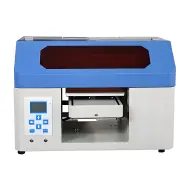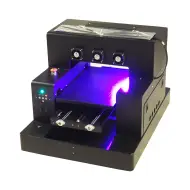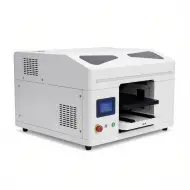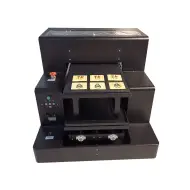
Analyzing operational bottlenecks in DTF transfer film ovens
Understanding the Core Challenges in DTF Printing Ovens
The increasing adoption of Direct-to-Film (DTF) technology has brought about significant advancements in the textile printing industry. Central to this process is the DTF oven, a critical component for curing transfer films. Yet, many businesses experience process inefficiencies when integrating this hardware at scale. This article provides a clinical analysis of hidden operational bottlenecks in DTF printers' transfer film ovens, presenting a data-driven perspective.
The anatomy of inefficiencies
DTF ovens operate as curing units where specially formulated adhesive powders are melted onto films post ink application. Despite apparent simplicity, inefficiencies often arise due to poor thermal distribution, lack of precision in temperature control, and inconsistent throughput capacity. The operational gap becomes evident when scaling production from prototype to industrial-grade demand.
Thermal management and energy inefficiencies
DTF printer ovens that lack uniform thermal management frequently cause uneven curing, leading to substandard transfers and increased waste. For example, an oven with ±5°C temperature variance can compromise films with 20% higher error rates compared to those processed at consistent temperatures. This issue is exacerbated in older or DIY solutions, where thermal insulation and real-time monitoring are often inadequate.
Throughput versus downtime
One of the most persistent bottlenecks in high-capacity operations is the throughput-to-downtime ratio. A typical mid-grade DTF oven with a capacity of six films per minute can lose 20% operational efficiency due to frequent recalibration or cooling cycles. Industrial ovens with automated buildup temperature control tend to reduce this downtime to under 3%, a stark contrast highlighting the value of precision engineering in these units.
Material compatibility challenges
The diversity of substrates used in DTF transfer underscores another operational challenge. Some ovens fail to adapt to varying film materials, resulting in over-curing or under-curing. A typical film rated for 150°C may degrade rapidly when exposed to ovens with inconsistent thermal ramping, reducing its lifespan by 15-30%.
Cost of maintenance and component longevity
Hidden costs often lurk in routine maintenance. Factors like inefficient blower fans, degraded heating elements, and faulty controllers significantly increase total cost of ownership. For example, replacing a heating element every 2,000 load cycles in a mid-grade oven compared to every 10,000 load cycles in a premium unit can cost three times as much in the long run. Preventive maintenance schedules and high-quality materials are therefore non-negotiable for scalable operations.
HTML table: Comparing two DTF oven configurations
| Feature | Mid-Grade Oven | Industrial-Grade Oven |
|---|---|---|
| Temperature Variance | ±5°C | ±1°C |
| Film Throughput (per minute) | 6 films | 12 films |
| Downtime Percentage | 20% | 3% |
| Heating Element Lifespan | 2,000 cycles | 10,000 cycles |
| Material Compatibility | Limited to common substrates | Supports diverse film types |
Three business scenarios
Scenario 1: Small-scale custom apparel manufacturer
For a business producing under 500 garments monthly, a mid-grade oven might suffice. However, scaling operations introduces risks, such as throughput limitations and higher waste rates due to thermal inconsistencies.
Scenario 2: High-volume industrial producer
A factory producing 20,000 garments monthly benefits from an industrial-grade oven. Downtime reductions and improved film curing consistency ensure seamless mass production.
Scenario 3: Research and prototyping lab
Prototyping unique designs often demands high material compatibility and precision in smaller batches. The fine-tuned controls of an industrial unit make it the optimal choice.
Expert FAQ
- How does thermal variance affect print quality?
Thermal variance can create uneven adhesive melting, leading to patchy transfers and compromised adhesion strength. - What is the optimal curing temperature range for DTF films?
Most DTF films cure between 140°C and 160°C; however, precise recommendations depend on the substrate. - Are modular ovens more efficient than integrated units?
Modular systems enhance scalability and enable easy component replacements, reducing downtime in industrial setups. - How do I calculate throughput efficiency?
Throughput efficiency = (Total Films Processed ÷ Theoretical Max Capacity) × 100%. - What are the energy requirements for industrial DTF ovens?
Industrial-grade ovens typically consume 2-4 kW per hour depending on capacity and thermal insulation.
Strategic verdict
The operational efficiency of DTF printing ovens is critical for achieving consistent, high-quality results at scale. While mid-grade models suffice for entry-level production, industrial-grade solutions are indispensable for minimizing downtime, waste, and maintenance costs in high-volume settings. Thorough thermal management and precision engineering will continue to drive innovation in this space, bridging the gap between small-scale and industrial operations.