Can I Use Isopropyl Alcohol (IPA) to Clean My DTG Printhead? | GNFEI
Can I Use Isopropyl Alcohol (IPA) to Clean My DTG Printhead?
In digital printing workshops, Isopropyl Alcohol (IPA) is ubiquitous. It sits on almost every technician workbench in 99% or 70% squeeze bottles, praised as the universal miracle cleaner for electronics, squeegees, glass beds, and solvent ink residues. It costs less than $15 per gallon, dries within seconds without residue, and dissolves grease effortlessly.
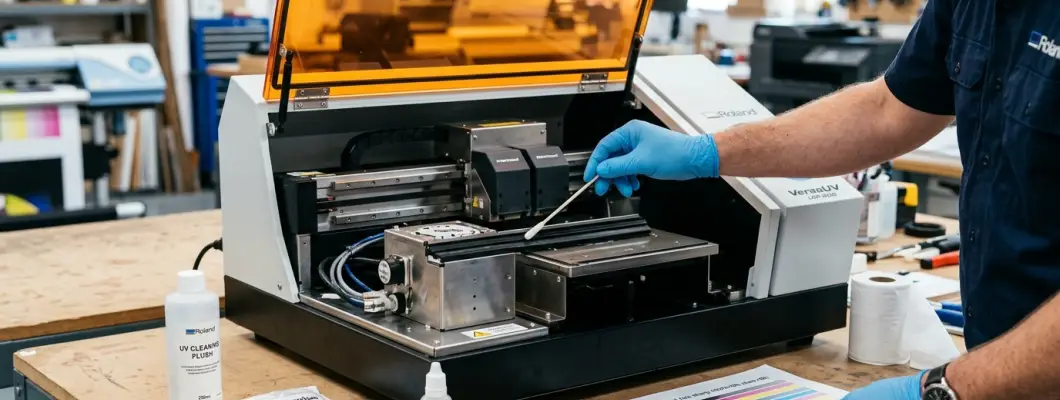
Faced with a stubborn white ink nozzle clog on a $1,000 Epson or Ricoh micro-piezo printhead, frustrated operators naturally ask: 'Can I just soak the printhead in Isopropyl Alcohol to dissolve the dried white ink?' Giving in to that temptation is the fastest way to turn a high-precision printing component into an irrecoverable paperweight. Below, we break down the fluid chemistry and explain why alcohol is poison to DTG printheads.
The Blunt Engineering Verdict: 3 Disasters Caused by IPA
Direct-to-garment (DTG) textile inkjet systems are fundamentally distinct from eco-solvent, UV-curable, or dye sublimation printers. Their inks are formulated on entirely different aqueous polymer chemistry, and their micro-piezo printheads rely on specialized adhesive seals.
Applying Isopropyl Alcohol to the nozzles or manifold of a DTG printhead immediately triggers three catastrophic failure modes:
The physical and chemical destruction mechanisms of IPA on DTG printheads:
1. Instant 'Alcohol Shock' & Acrylic Coagulation
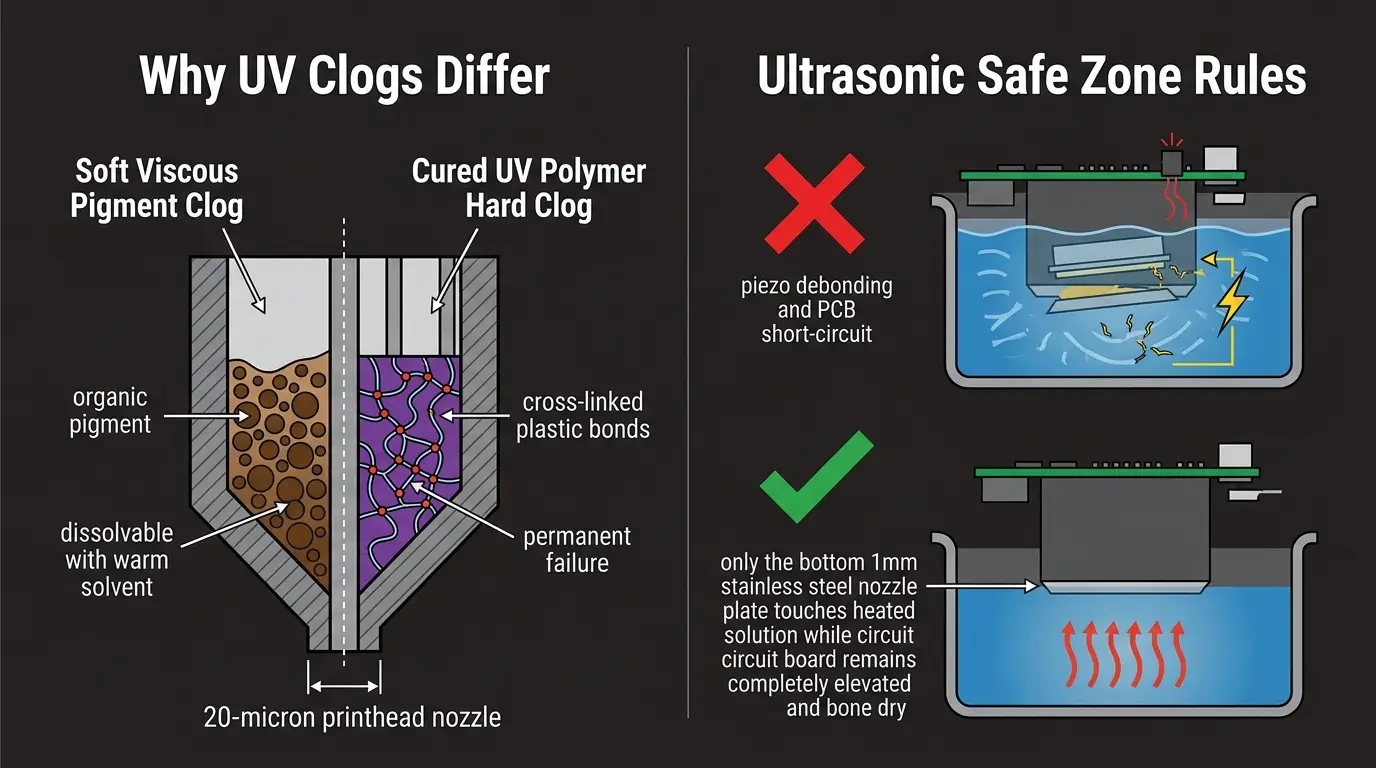
Water-based textile ink contains finely dispersed acrylic latex resins. IPA strips water away from these polymer chains, causing instantaneous coagulation. Instead of dissolving the dried ink, IPA solidifies liquid ink into rock-hard rubbery stones inside the 20-micron nozzles.
2. Epoxy Adhesive Dissolution & Delamination
The polished stainless steel nozzle plate is attached to the silicon actuator wafer using a microscopic layer of structural epoxy resin. IPA penetrates and softens this epoxy bond, causing internal delamination, ink cross-leaks, or the nozzle plate completely falling off.
3. Swelling and Cracking of Silicone Seals
DTG capping station seals, wiper blades, and internal damper gaskets are manufactured from specialized synthetic fluoroelastomers and silicone. IPA leaches plasticizers from these rubbers, causing them to swell, warp, and crack, permanently breaking airtight vacuum capping.
The Chemistry of Alcohol Shock: Why Latex Resins Precipitate
To understand why alcohol destroys water-based inks, one must look at the thermodynamic stability of colloidal dispersions. DTG inks—especially high-opacity white inks—are not simple dye solutions; they are complex colloidal suspensions.
Sub-micron titanium dioxide (TiO2) particles and acrylic latex binders are coated with non-ionic surfactants that create an electrical charge and a protective water hydration shell, preventing the particles from clumping together:
The Molecular Dehydration Mechanism
Isopropyl Alcohol is intensely hygroscopic with a high affinity for water molecules. When IPA enters the ink channel, it violently extracts the water molecules forming the protective hydration barrier around the latex nanoparticles. Deprived of their steric stabilization, the hydrophobic acrylic polymer chains collide and instantly cross-link at room temperature. In less than 5 seconds, fluid ink transforms into a viscous, cheese-like curd that no cleaning cycle can ever dissolve.
If you pour 10ml of DTG white ink into a glass and add 5ml of 99% Isopropyl Alcohol, you will witness this reaction firsthand: the ink immediately curdles into a solid white lump resembling cottage cheese. Now imagine that chemical curdle happening inside 20-micron nozzle channels.
Chemical Reaction Breakdown: Latex Coagulation vs. Epoxy Failure
The technical diagram below illustrates the molecular chain reaction when alcohol contacts water-based acrylic ink and attacks structural printhead epoxy:
What CAN You Clean with IPA in a DTG Shop? Allowed vs. Forbidden Zones
You do not need to throw away your workshop bottle of Isopropyl Alcohol—it remains an excellent cleaning agent, provided it never touches the ink delivery system or printhead.
Strict operational zoning for alcohol usage in direct-to-garment facilities:
Permitted Zone: Printer Exterior & Metal Chassis
Safe Exterior DegreasingUse 70% or 99% IPA on microfiber cloths to wipe down the outer powder-coated sheet metal casing, platen loading tables, exterior covers, and aluminum frame rails.
Permitted Zone: Linear Guide Rails (Prior to Greasing)
Degreasing Old LubricantIPA effectively strips away old, contaminated lithium grease and cotton dust from stainless steel linear motion rails before applying fresh synthetic machine grease.
STRICTLY FORBIDDEN: Printhead Nozzle Plates & Manifolds
Fatal Chemical ReactionNever wipe, soak, flush, or mist the nozzle face, manifold inlet nipples, or internal cavities with any concentration of IPA. Instant acrylic curdling and epoxy failure will result.
STRICTLY FORBIDDEN: Capping Station Rubber & Wipers
Seal Swelling & WarpingWiping silicone capping gaskets or rubber wiper blades with IPA dries out the elastomer, causing distortion and micro-tears that destroy the airtight vacuum seal needed for automated head cleaning.
Solvent Compatibility Matrix: IPA vs. DTG Flushing Fluid vs. Distilled Water
Engineering comparison of solvent properties on water-based textile ink and printhead materials:
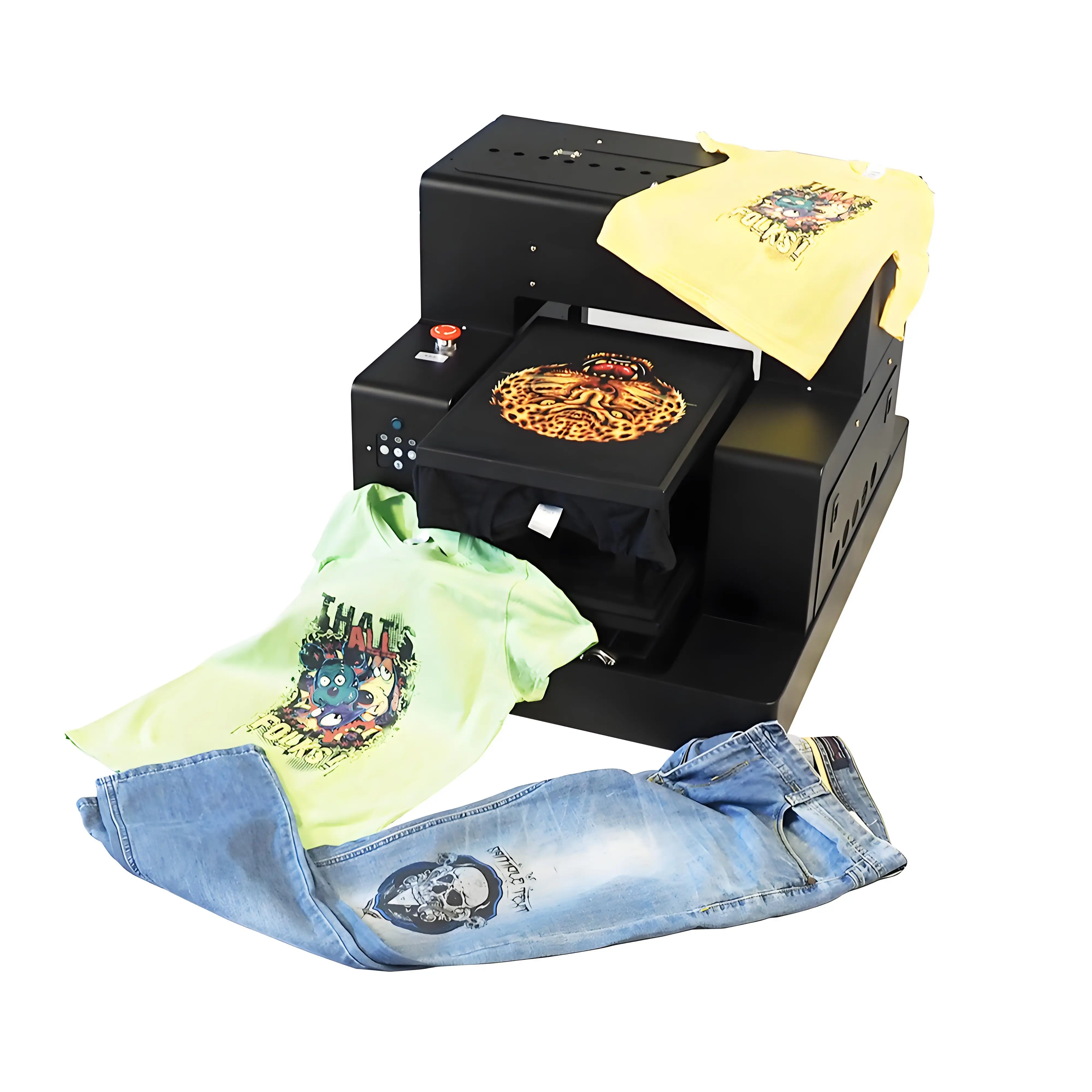
GNFEI F85G3 A3 DTG Garment Printer
Built with industrial-grade micro-piezo heads featuring solvent-resistant internal coatings, paired with factory-integrated 24/7 closed-loop WIMS circulation and airtight silicone capping stations. Engineered to deliver exceptional white ink stability without requiring dangerous recovery solvents.
The Correct Chemical Maintenance SOP: Safe Formulas for DTG Heads
If Isopropyl Alcohol is forbidden, what chemical formulations should apparel decorators use to dissolve dried white ink and maintain printheads safely? Adhere to these 4 professional standards:
Specialized Glycol-Ether Formulations (Butyl Diglycol)
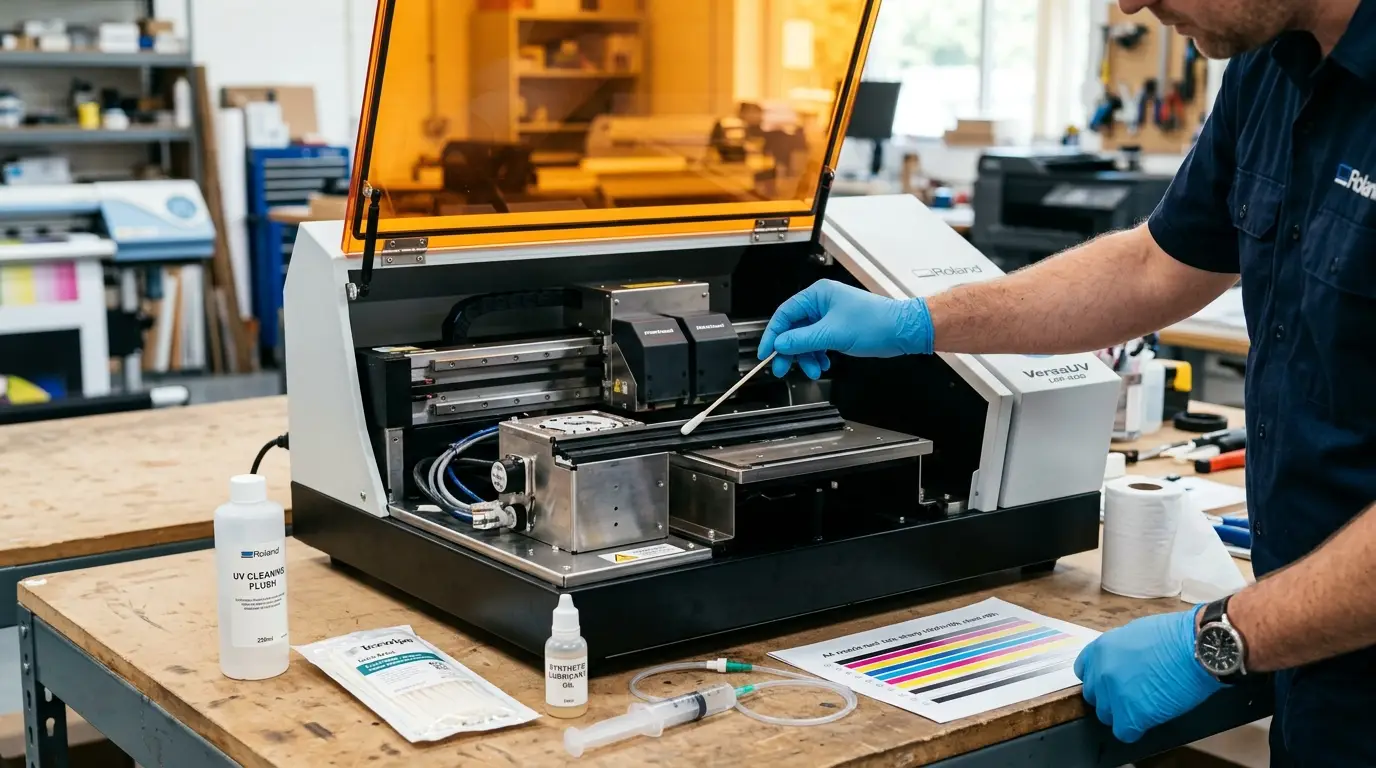
Commercial DTG cleaning fluids are formulated with diethylene glycol monobutyl ether (butyl diglycol), propylene glycol, and non-ionic wetting agents. These polar organic solvents gently swell and liquefy dried acrylic polymers without attacking epoxy adhesives or causing alcohol shock.
Thermodynamic Warming (40°C to 50°C)
Instead of reaching for aggressive chemicals, increase the solvency of approved cleaning fluids by warming them to 40°C–50°C (104°F–122°F) in a warm water bath. Warm glycol ethers dissolve dried pigment cakes up to 400% faster than cold fluids.
Ultra-Pure Deionized (DI) Water for Rinsing
When flushing out cleaning solutions before reloading ink, use only high-purity deionized or distilled water. Tap water contains calcium, iron, and chlorine that trigger mineral precipitation inside micro-piezo channels.
Dedicated Foam Cleaning Swabs (Never Cotton Q-Tips)
Always use lint-free, open-cell polyurethane foam swabs dipped in specialized DTG cleaning fluid to clean around the perimeter of the nozzle plate. Never use drugstore cotton swabs, which shed microscopic fibers that catch on nozzle rims.
Frequently Asked Questions: Isopropyl Alcohol and DTG Printheads
Q1. What happens immediately if I flush a DTG printhead with IPA?
The moment IPA contacts water-based textile ink inside the printhead, it triggers 'alcohol shock.' The acrylic latex binder instantly dehydrates, curdles, and precipitates into a rubbery solid that permanently seals the 20-micron nozzle channels.
Q2. Why is IPA recommended for solvent printers but forbidden for DTG?
Eco-solvent and true solvent printers use aggressive petroleum-based inks that dissolve in alcohols and esters. DTG printers use water-based inks containing acrylic polymer emulsions. The chemistry is completely opposite: alcohol dissolves solvent ink, but solidifies water-based latex ink.
Q3. Can I dilute Isopropyl Alcohol with water to make it safe?
No. Even a 10% or 20% concentration of IPA in water lowers the dielectric constant of the fluid enough to destabilize the acrylic emulsion and trigger latex aggregation. Never introduce any concentration of alcohol into aqueous textile ink paths.
Q4. What should I do if I accidentally put IPA into my DTG printhead?
Immediately flush the channel with warm deionized water using gentle reverse syringe suction to extract the alcohol before it causes widespread coagulation. Follow immediately with specialized DTG flushing solution and perform an extended wet soak.
Q5. Can I use 70% rubbing alcohol to clean the capping station?
No. Rubbing alcohol contains IPA and often fragrance oils or additives. Alcohol dries out and hardens the silicone rubber of the capping station, causing micro-cracks that ruin the airtight seal required for automated suction cleaning.
Q6. Is it safe to clean the wiper blade with alcohol?
Never. Wiper blades are made of specialized nitrile or polyurethane rubber. Wiping them with alcohol strips essential plasticizers, causing the blade edge to become stiff, brittle, and jagged, which will scratch the delicate nozzle plate.
Q7. What is the active ingredient in genuine DTG cleaning fluid?
Genuine DTG cleaning solutions consist primarily of deionized water, glycol ethers (such as diethylene glycol monobutyl ether), humectants (glycerol or propylene glycol), and non-ionic surfactants that lower surface tension and penetrate dried acrylics.
Q8. Can I use window cleaner (like Windex) to clean a DTG printhead?
Never. Window cleaners often contain ammonia, isopropyl alcohol, and artificial blue dyes. Ammonia corrodes copper and nickel electrical traces, while alcohol coagulates the white ink latex binders.
Q9. Can I use IPA to clean the encoder strip of my DTG printer?
Use extreme caution. While IPA removes grease, wiping an optical encoder strip aggressively with pure alcohol can dissolve or smudge the printed microscopic optical index lines. Use a lint-free wipe barely dampened with distilled water or mild optical cleaner.
Q10. How do I dissolve cured white ink without damaging the printhead?
Use warm (45°C) commercial DTG cleaning solution. Perform a passive capping soak for 2 to 4 hours. The warm glycol ethers will slowly re-hydrate and soften the acrylic binder chains without exerting hydraulic pressure or attacking structural epoxies.