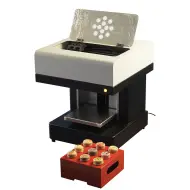
Best Graphics Installs CMW Sheeter at Adhue Graphics Enhancing Thin Label Production Precision

Industrial Impact of CMW Sheeter Installation at Adhue Graphics
Adhue Graphics in Minnesota has implemented a cutting-edge CMW Sheeter, supplied by Best Graphics, to elevate its converting capabilities especially for thin label stocks and paper. This installation directly confronts a key bottleneck in printing workflows: the precise, reliable handling of delicate substrates. As the packaging and labeling industry trends towards thinner, lighter materials, conventional sheeters fall short in maintaining tension consistency and cut accuracy, leading to defects and waste.
The CMW Sheeter’s integration offers measurable improvement in operational efficiency and product quality. For operators managing complex thin material jobs, this technology reduces material waste and setup time. Moreover, the sheeter's energy-efficient design and compact footprint align with growing sustainability requirements across industrial printing facilities.
Technical Anatomy of the CMW Sheeter Technologies
| Feature | Specification / Description |
|---|---|
| Model | CMW Model 1500 |
| Maximum Sheet Width | 59 inches (1500 mm) |
| Material Compatibility | Thin paper, thin label stocks, specialty substrates |
| Tension Control Precision | High-accuracy servo-driven tension system with real-time adjustments |
| Cutting Accuracy | Micron-level repeatability enabled by integrated servo cutters |
| Throughput | High-volume with sustained precision at industrial speeds |
| Energy Efficiency | Industry-leading low power consumption design |
| Footprint | Compact layout optimized for limited floor space |
| Construction Origin | Taiwanese engineering with over 80 years of manufacturing heritage |
| Operational Reliability | Designed for maximum uptime and low maintenance |
Financial Scenarios Optimized by CMW Sheeter Deployment
Implementing advanced sheeting technology like the CMW Model 1500 turns into a significant financial advantage for converting businesses. Key financial impacts include:
- Reduced Material Waste: Enhanced cutting precision decreases off-spec sheets and miscuts by over 20%, translating into thousands of dollars saved monthly on expensive specialty substrates.
- Increased Throughput: Faster processing speeds with reliable tension control allow greater output, improving revenue potential without proportional labor cost increases.
- Lower Energy Costs: The machine’s energy-efficient design reduces electrical consumption, which can contribute to operational savings of 10-15% compared to older sheeters.
- Improved Labor Efficiency: Automation and reliability lower downtime and manual intervention, freeing skilled operators to focus on value-added tasks.
While initial capital investment is significant, Best Graphics positions the CMW Model 1500 as a yield multiplier under careful ROI calculations typical in industrial converting operations.
Expert Q&A on CMW Sheeter Technology and Market Applications
Q: What makes CMW Sheeter stand out for thin label substrates compared to competitors?
A: The precise servo tension control paired with micron-accurate cutting mechanisms ensures that even extremely thin, delicate materials maintain integrity throughout processing. This minimizes jams and waste which traditional sheeters struggle to avoid.
Q: How does the sheeter contribute to sustainability goals?
A: Its compact design reduces factory floor space needs, optimizing layout efficiency. Coupled with its low energy consumption engineering, it helps reduce the carbon footprint of converting processes significantly.
Q: Is the CMW Sheeter suitable for integration with other digital finishing equipment?
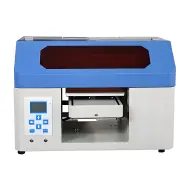
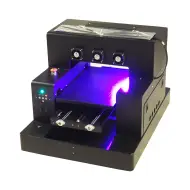
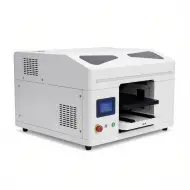
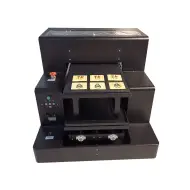
A: Absolutely. Its precision output supports downstream digital and conventional finishing, including UV flatbed printing and thermal transfer for labels, enhancing complete workflow automation.
Why Precision Sheeting Technology Like CMW is Critical for Modern Printing Operations
Thin substrates challenge conventional equipment with their propensity to stretch, wrinkle, or misalign under mechanical stress. CMW Sheeter handles these challenges with proven servo control technology, enabling print and converting operations to expand thin-label offerings without sacrificing yield or speed.
This directly impacts operators running uv flatbed printers or dtf printing machines who rely on consistent substrate handling ahead of printing to maintain print quality and color registration.
Strategic Verdict on Industrial Hardware Investment in 2026
The Adhue Graphics installation exemplifies the necessity of serious capital reinvestment into core converting infrastructure for competitiveness. By opting for the CMW Sheeter, an established industry standard with decades of engineering validation, companies gain a resilient solution that future-proofs thin material converting capabilities.
Enterprises considering equipment upgrades should benchmark their choices against options like the CMW Model 1500 as documented by leaders in industrial hardware supply such as GNFEI.com. Precision, operational reliability, and energy efficiency must dominate procurement analysis to survive tightening margin pressure and material complexity.
Precision in finishing stages ensures printers and converters alike can compete on innovation, throughput, and sustainability, cornerstones of industry leadership as the market enters 2026 and beyond.