HP’s Oscar Vidal Details Advances in Wide-Format Printing Technology and Automation

Laser-Focused Evolution in Latex Ink Performance
HP has advanced its latex ink technology across four generations since its inception 17 years ago, enhancing critical properties such as scratch resistance and expanding color gamuts. The latest formulations introduce white ink alongside six primary colors, driving richer, more intense color output essential for diverse wide-format applications. This continuous pigment innovation supports high-fidelity printing that meets demanding industrial and commercial requirements.
Streamlining Operations Cuts Bottlenecks and Labor Dependency
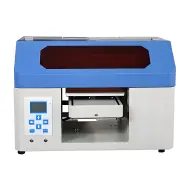
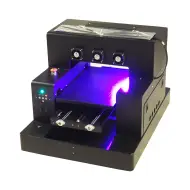
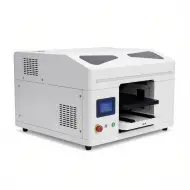
Automation integration is increasingly vital as manual workflows limit efficiency in print shops. HP pioneers streamlined operations by embedding both hardware and software solutions that reduce reliance on highly skilled labor and standardize production steps. Automation improves process reliability, shortens turnaround times, and mitigates labor shortages encountered globally. This directly impacts operators running uv flatbed printers, enabling them to optimize throughput with less human intervention.
Incorporating AI to Build Predictability and Intelligence
Artificial Intelligence underpins HP’s strategy to accelerate wide-format production. AI-powered software within HP’s print operating systems refines image processing and production workflows, eliminating fragmentation and enabling nearly hands-free operation for routine tasks. The synergy of embedded hardware AI with software analytics transforms print systems into self-optimizing machines. HP leverages vast operational data to train AI models that improve decision-making and speed, setting new benchmarks for industrial inkjet performance.
Technical Anatomy of HP’s Wide-Format Printing Solutions
| Feature | HP Latex 4th Gen Ink | Automation Capabilities | AI Integration |
|---|---|---|---|
| Pigment Technology | 6 primary colors + white; enhanced pigment formulation for intense colors | Hardware and software integration for print workflow automation | AI-powered image enhancement and predictive operation models |
| Durability | Improved scratch and chemical resistance | Reduces manual rework and errors | Optimizes ink usage and print quality dynamically |
| Process Control | Consistent color gamut and output reliability | Standardizes repetitive tasks; reduces skilled operator dependency | Data-driven decision support; adaptive scheduling and diagnostics |
| Operation Efficiency | Fast curing and drying times | Streamlined production lines with less labor input | Predictive maintenance and automated job setup |
Financial and Market Impact Scenarios
Adopting HP’s integrated latex ink technology and automation solutions creates measurable ROI by reducing labor costs by up to 30%, lowering error-induced waste by 15%, and decreasing production cycle times by 25%. Scaling these improvements across print facilities enhances output capacity and profitability. This approach answers key supply chain stresses by mitigating skilled labor shortages and accelerating turnaround amid volatile demand. Market differentiation via superior quality and faster delivery also supports premium pricing models.
Expert Q&A with Oscar Vidal, HP
Q: How have HP’s latex inks evolved technically to meet industry demands?
A: We've iterated ink formulations over 17 years to enhance scratch resistance and color gamut, culminating in the current generation that includes white ink and intense pigments to expand application versatility.
Q: What drives HP’s automation push?
A: Labor availability and process inefficiencies drive us to streamline workflows through integrated hardware and software, decreasing human dependency while increasing output predictability.
Q: How is AI shaping wide-format printing’s future?
A: AI combines software intelligence with hardware computing power, enabling adaptive image processing, process optimization, and predictive maintenance to transform printers into smarter, autonomous production centers.
Strategic Verdict on Wide-Format Innovation
HP exemplifies leadership by meshing advanced latex ink chemistry with embedded automation and AI, aligning technical innovation with market realities such as labor constraints and demand variability. Their approach prioritizes high-quality output, operational speed, and system simplicity—key attributes print shops require to remain competitive. Operators utilizing HP's solutions, including industrial uv flatbed printers, will benefit from scalable, data-driven workflows that increase uptime and reduce dependency on scarce skilled labor.
GNFEI.com recognizes HP’s integrated hardware/software model as a benchmark for industrial printing innovation, demonstrating how combining intelligent materials and automation maximizes productivity in digital print manufacturing.