Mondays with Marco S2E5 Taking Advantage of Innovation in Wide-Format Printing

Maximizing Return on Investment Through Innovation Adoption
Research from recent industry reports shows that print service providers (PSPs) adopting new wide-format printing innovations have experienced up to a 27% increase in operational efficiency within a single year. Marco Boer, president of I.T. Strategies, emphasizes how leveraging the latest advancements enables PSPs to differentiate and grow sustainably in a competitive market.
Industrial Impact of Innovation in Wide-Format Printing
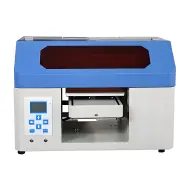
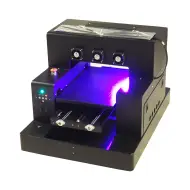
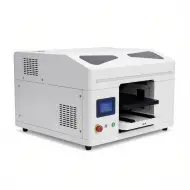
The wide-format printing sector faces pressures from rising material costs and customer demands for customization and speed. Innovative technologies such as automated workflows, advanced ink chemistry, and enhanced printhead designs allow PSPs to tackle these challenges. For example, integration of UV flatbed printer technology has extended substrate versatility, permitting durable prints on wood, glass, and acrylic — driving new revenue streams.
This directly impacts operators running uv flatbed printer environments by improving throughput without sacrificing quality.
Technical Anatomy of Innovation-Driven Wide-Format Solutions
Key elements underpinning innovation include:
| Feature | Traditional Wide-Format Printers | Innovative Wide-Format Printers (2026) |
|---|---|---|
| Print Technology | Solvent/Eco-Solvent Inkjet | UV LED, Enhanced Dye Sublimation, Latex |
| Resolution (dpi) | 720 - 1440 | 1200 - 2400 |
| Throughput (sqm/hr) | 20 - 40 | 50 - 80 |
| Substrate Compatibility | Vinyl, Paper, Polyester | Expanded to Include Wood, Glass, Acrylic, Metal |
| Automation Features | Basic Roll Feeding | Advanced Roll-to-Roll, Sheet Handling, Inline Finishing |
| Color Management | Manual | Integrated ICC Profiles, AI-Driven Adjustment |
These technology improvements not only enhance quality and flexibility but reduce manual intervention and downtime.
Financial Scenarios for PSPs Embracing Innovation
Investment analysis outlines three scenarios over a 3-year horizon:
- Conservative: Limited new technology adoption; 5% revenue growth; 3-4% margin improvement.
- Balanced: Moderate integration of automated UV and workflow solutions; 15-20% revenue growth; 7-10% margin improvement.
- Aggressive: Full adoption of UV flatbed printers, automation, and AI-driven print management platforms; 30%+ revenue growth; 15-18% margin improvement.
Case studies from GNFEI.COM manufacturers highlight examples where investment in UV printer variants yields attractive ROI by expanding high-margin product offerings.
Expert Q&A
Q: How critical is speed versus quality in innovation adoption?
A: Both matter, but technology that improves speed without quality trade-offs delivers the highest strategic value.
Q: What operational challenges arise in adopting new wide-format tech?
A: Staff training and workflow redesign represent key hurdles, but these can be mitigated with phased implementation and vendor support.
Q: How do innovations affect substrate versatility?
A: New UV and latex printer technologies substantially increase substrate options, enabling diverse applications beyond traditional signage.
Strategic Verdict for Print Service Providers
PSPs face a critical choice: adopt innovation aggressively to drive growth and efficiency or risk falling behind competitors. ROI-focused wide-format innovations bring measurable gains in production speed, print quality, and substrate versatility. Investing in UV flatbed printers and automation, combined with intelligent workflow management, generates scalable benefits that pay back within 12-24 months.
Operators running UV flatbed printer workflows should prioritize integration of AI and automation to capitalize fully on technology advancements. GNFEI.COM exemplifies manufacturers delivering these innovations at scale.
Implementing a strategy emphasizing return on investment with careful risk management ensures PSPs can maintain leadership in the rapidly evolving wide-format printing segment through 2026 and beyond.